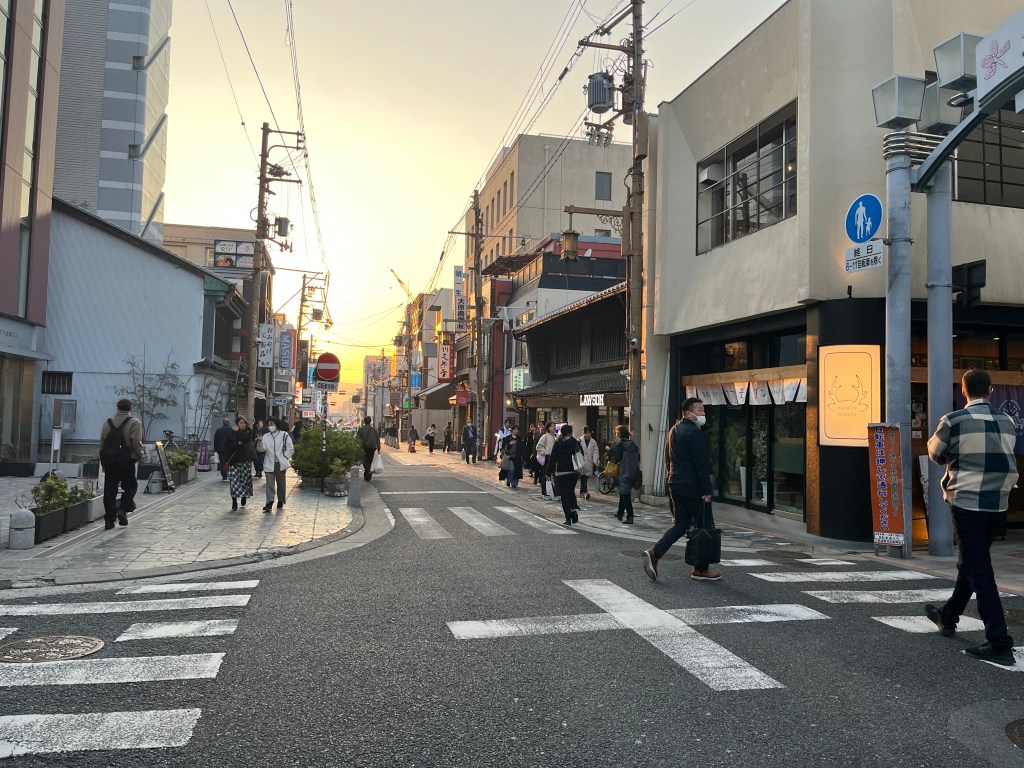
On my first night in Izumi, I slept almost straight through the clock. That was much needed, as early in the afternoon I had to speak to the camera crew once again. “Yesterday you were quite tired, so we’d like to ask you some questions again after you’ve had some sleep,” the interpreter explained. Fine by me—a chance to give slightly more considered answers to their barrage of questions.
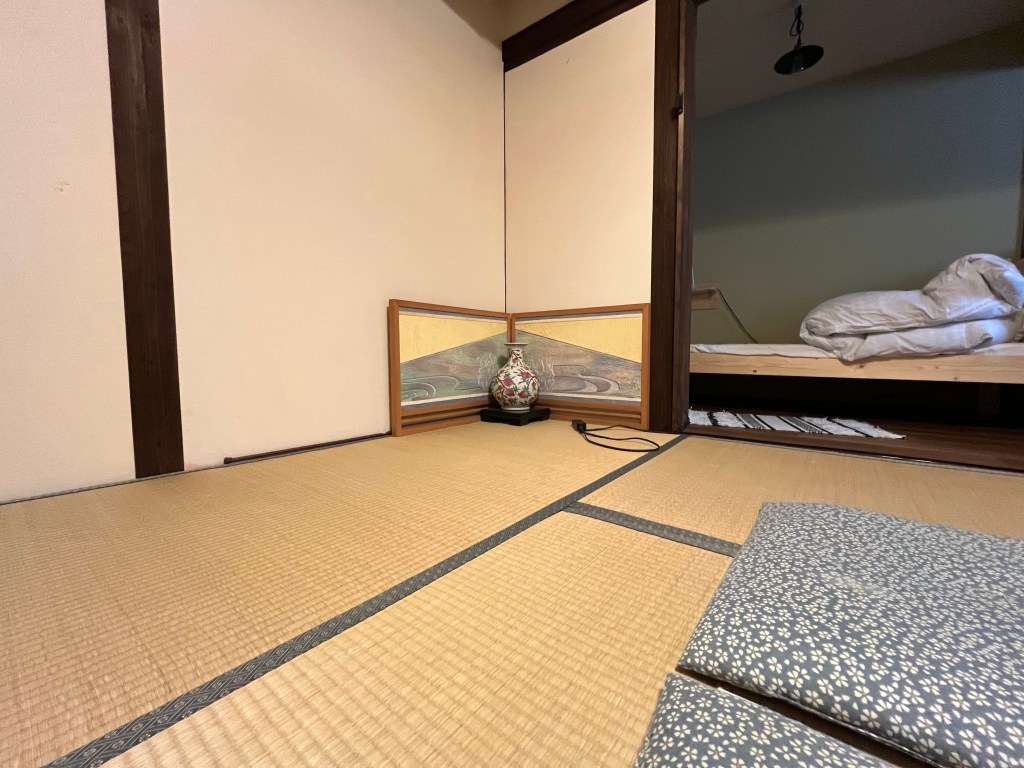
In any case, it felt very good to wake up in a tatami room again. I hadn’t quite landed yet, though, and that would take a little while. That evening, my mother and sister (her boyfriend would join later) were arriving in Osaka from Thailand, and they would also be staying at the guesthouse in Izumi. Usually, I need a bit of time to myself to properly settle in somewhere and find a rhythm. That had been the plan initially, as I was meant to arrive more than a week earlier than my family. However, due to circumstances in the Middle East, my flight with Qatar Airways was cancelled, and I had to book a more expensive ticket that departed later. As a result, we ended up arriving in Japan almost at the same time.
So my adventure here has really begun more like a sort of holiday—and of course, that’s great fun. Especially because I can show my family where I’ll be staying for the coming year, and revisit places with them that I first went to in 2024. My focus on being a tatami apprentice quickly slipped into the background. For now, the emphasis was on seeing and experiencing Japan through the senses of a tourist—and occasionally those of a tour guide…
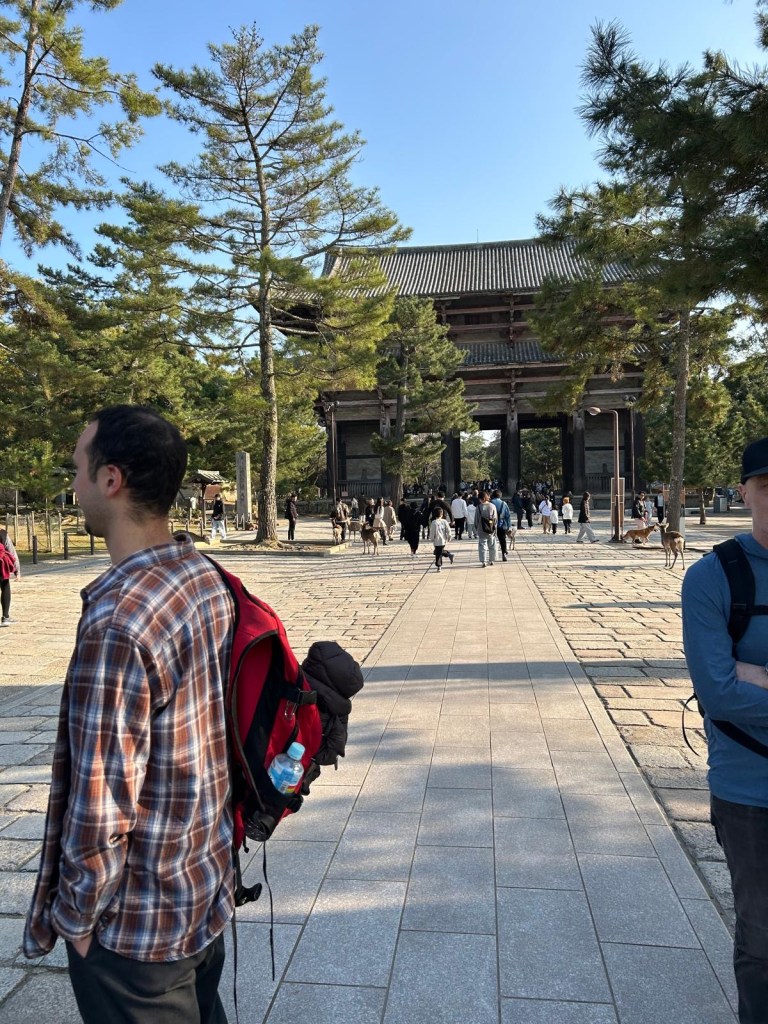
There are already plenty of nice places to visit in and around Izumi. The city sits neatly between the sprawling metropolis of Osaka to the north and the mountains and nature to the south and east. You can reach central Osaka in about a 40-minute train journey, without needing to change. Personally, I find the city far too busy and too large, but there’s undeniably plenty to do—the streets around Namba, and particularly the nightlife district of Dotonbori, are packed with cafés, restaurants, and shops. Compared to Osaka’s urban rival Tokyo, the atmosphere here feels a bit rougher and more easy-going. Perfect for the many (boisterous) tourists in search of maximum stimulation, consumption, and Japanese snacks and street food. In short, it’s certainly worth experiencing. After a visit to Osaka Namba, I always greatly enjoy the train journey back to Izumi, repeatedly fascinated by the pleasant quiet in the carriages—rush hour or not.
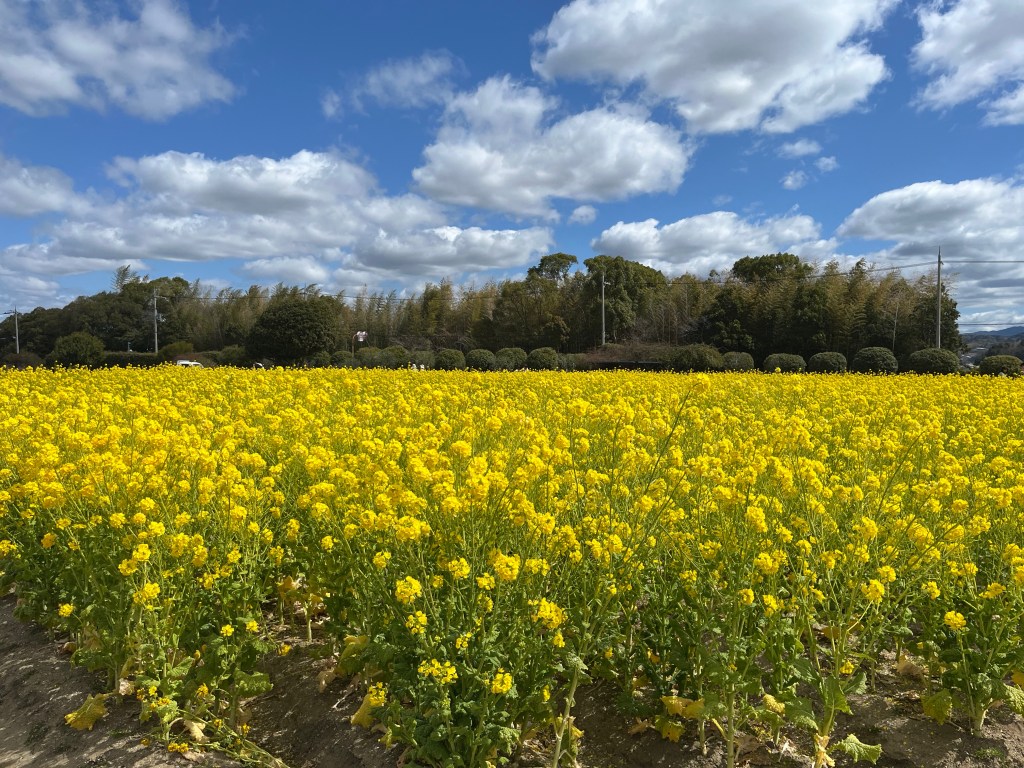
In Izumi itself, things are far more relaxed, even though it’s still a busy city. The streets are often quite narrow, yet there’s a fair amount of traffic. Fortunately, there are plenty of places nearby to escape it. For instance, we visited a large flower garden on the edge of the city, the Izumi Recycle Environment Park. It was still very early in the year, of course, but the daffodils were already in bloom, along with some tulips and a large field of flowering rapeseed.
Osaka isn’t the only city that’s easy to reach from Izumi. Kyoto and Nara are also well connected by public transport. I must admit I had never actually been to Kyoto city before, despite it being so close—the crowds put me off… Since Gwen would be staying there with Bas, her boyfriend, I thought it would be nice to visit a smaller place in Kyoto Prefecture: Uji. A town with a rich history that I had already grown very fond of in 2024, and one that particularly appeals to me as a tea enthusiast. In the 13th century, this was one of the first places in Japan where cha (tea) was cultivated.
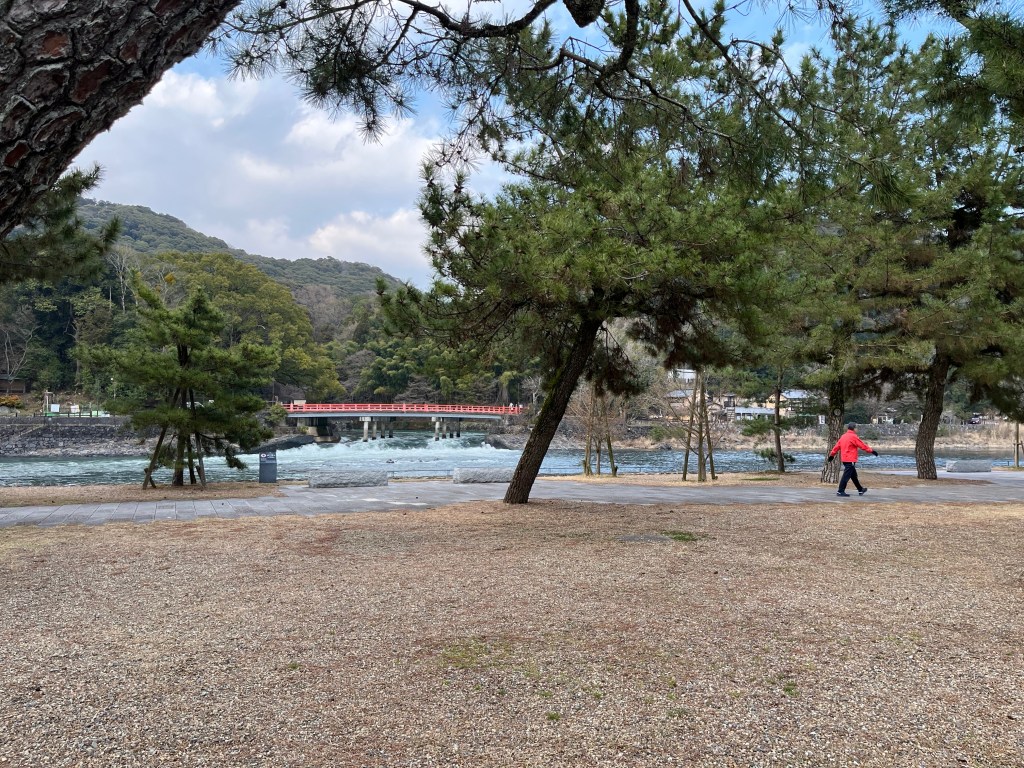
To this day, Uji tea (Ujicha) is still known as being of the highest quality. Matcha (powdered green tea) and hōjicha (roasted green tea) are also abundant here. Matcha, incidentally, is often incorporated into other foods to give them a green colour and a subtle tea flavour. At the same time, you benefit from the healthy nutrients found in green tea—very ingenious. A well-known example is mochi, those small green cakes made from rice flour with a filling of sweet red beans.
Nara is another major city with a very long history. It is one of the oldest cities in Japan and even served as the capital before Kyoto and Tokyo. However, that’s not the only reason tourists flock here. More than a thousand well-mannered deer roam freely in the large park you can walk straight into from the city. Masses of tourists perform a little ritual with a deer that, in exchange for a special biscuit, bows its head in response to the tourist’s bow. As there are no fences around the park, the deer can wander freely and even venture into the urban parts of the city. Even so, we were quite surprised to encounter a solitary deer early in the morning, right outside in the quiet street of our accommodation in the centre.
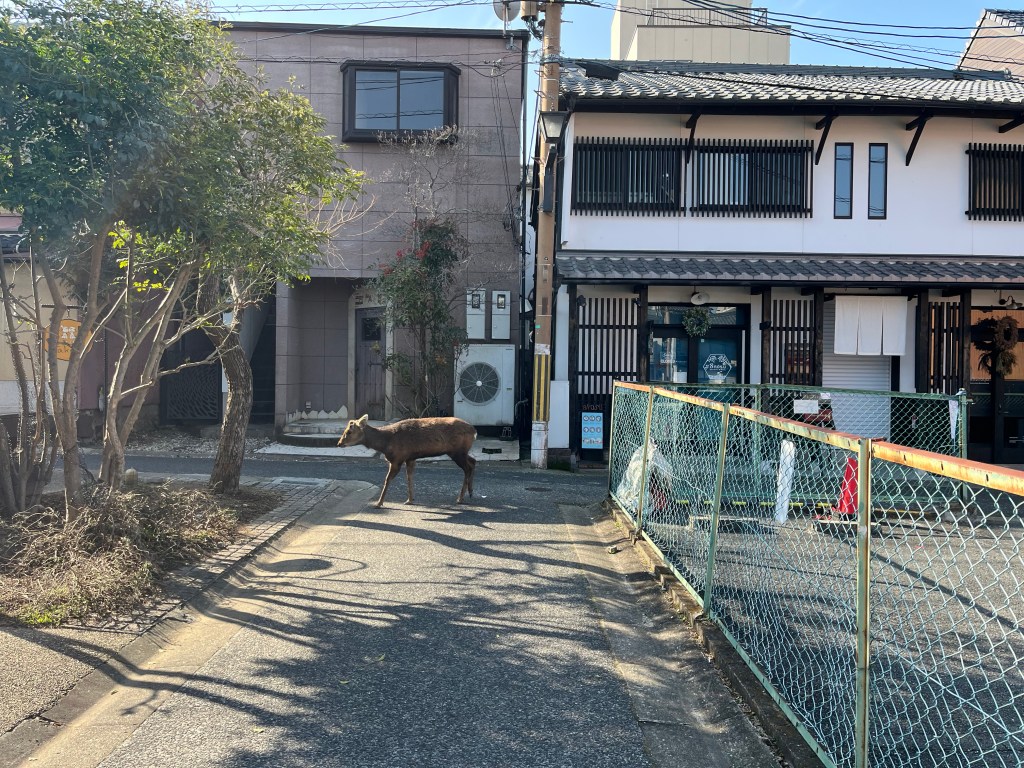
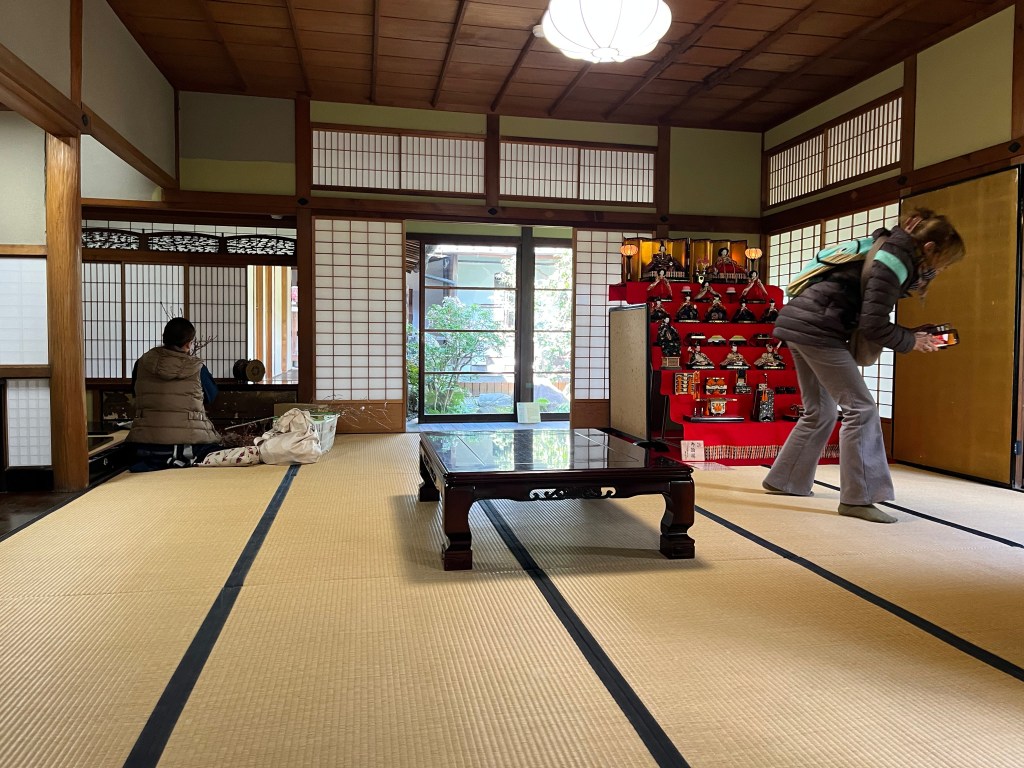
Aside from the deer—which are certainly a good reason to visit—what I really appreciate about Nara is the relaxed atmosphere in the old district of Naramachi. There, we visited an old traditional house that has been turned into a free museum, and in a nearby little café I discovered amazake, a warm, sweet drink made from fermented rice. To truly experience the serenity here, staying overnight in Nara is almost a must—especially as it also gives you easy access to other places that are well worth visiting.
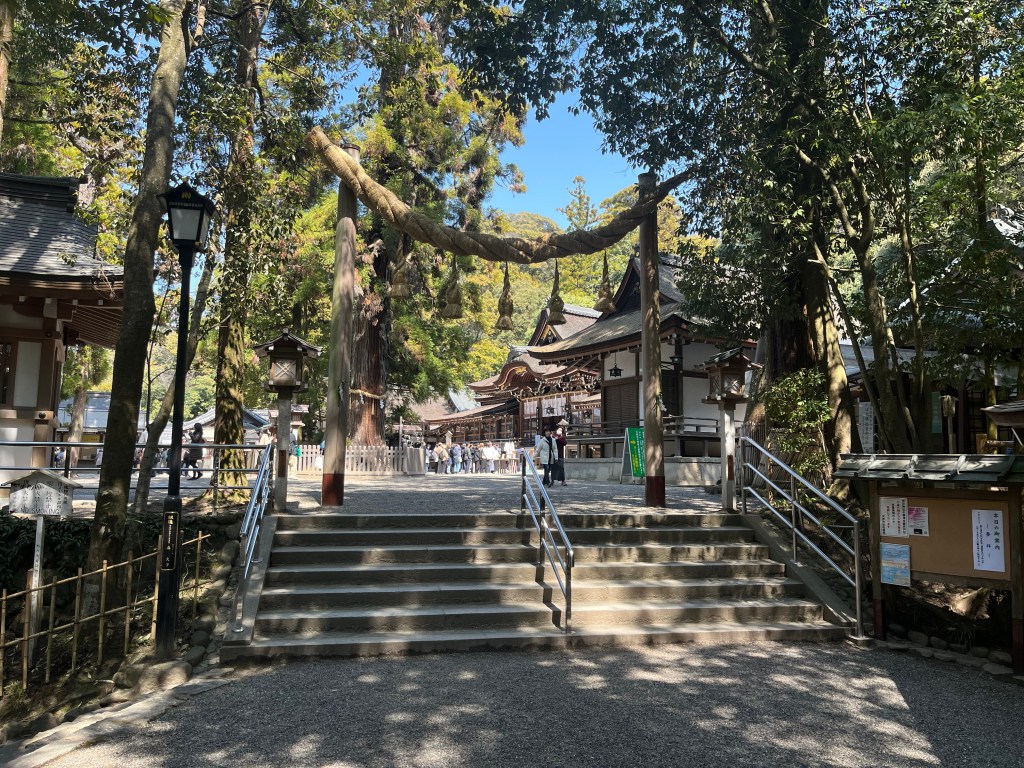
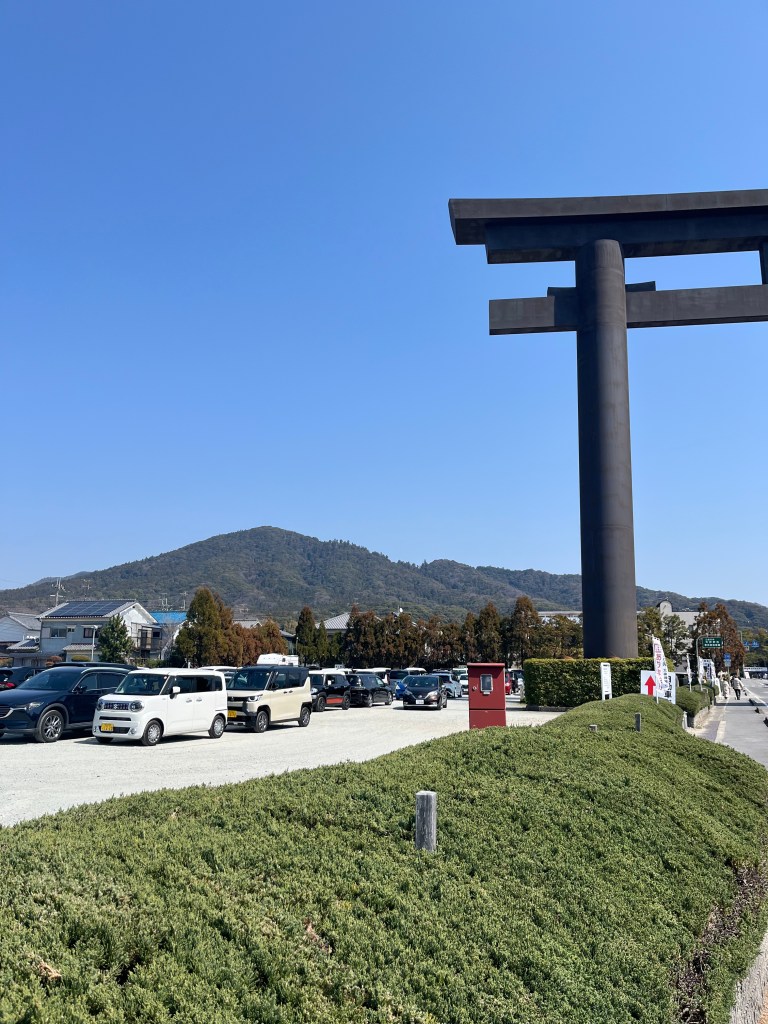
Ōmiwa Jinja is one such place. It’s a very large site with multiple (large) Shinto shrines at the foot of Mount Miwa. During our visit, we realised it was 21 March—the day of the spring equinox, an important holiday in Japan. It essentially marks the beginning of a new year, and many people had come to the shrine to offer prayers at one or more of the altars on the grounds. One thing that delighted me at one of the higher spots was a water spring from which you could freely draw fresh drinking water. Sacred “honey water” from the source of Mount Miwa and Mount Kamitai.
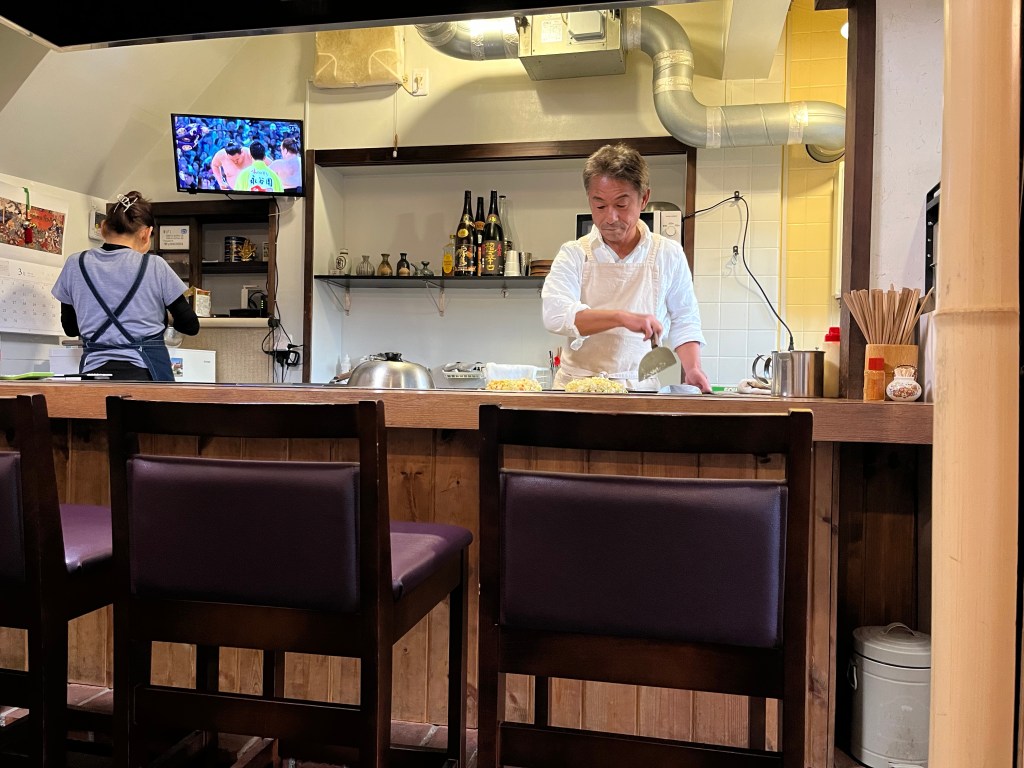
In the late afternoon of this successful day, my mother and I returned to our Airbnb in Nara to pack our bags. The cheerful and friendly owner of the accommodation also runs a small okonomiyaki restaurant on the ground floor, where we of course went for something to eat and drink. If you ever decide to visit Nara, be sure to stop by this restaurant: Omitsu.


Leave a Reply