It’s now late April, and I’m still a month behind in recounting events on this blog. I’d really like to share what I’ve already learned and experienced in the world of tatami, but it doesn’t feel right to do so without first describing—at least briefly—the days just before the true start of my apprenticeship in Japan. So here’s a continuation of the holiday period in Japan in March 2026.
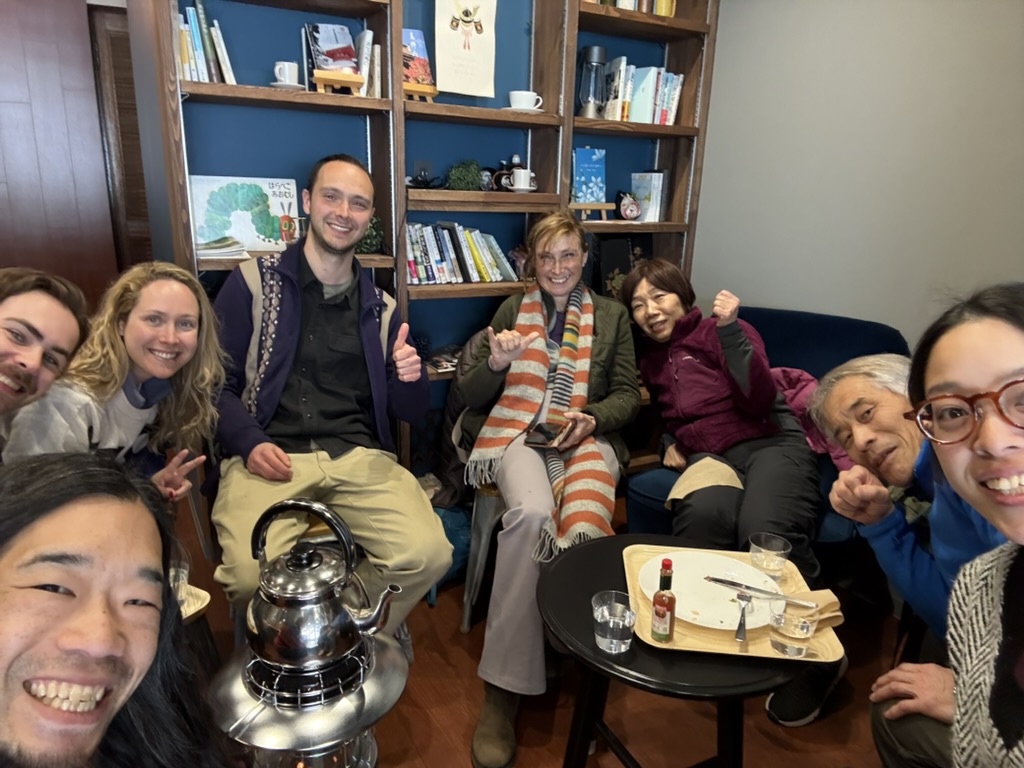
The days in March were still genuinely cold. This was especially true in the old mountain village called Koya, about an hour’s drive from the guesthouse in Izumi. With two cars and two families (mine and Issei’s), we set off towards the mountains in the morning. Although you can reach almost anywhere in Japan quite easily by public transport, travelling to Koya by car saves no less than two hours. Two years ago, I had already visited Koya and travelled back to Izumi by bus, several trains, and a cable car—something that took at least three hours.
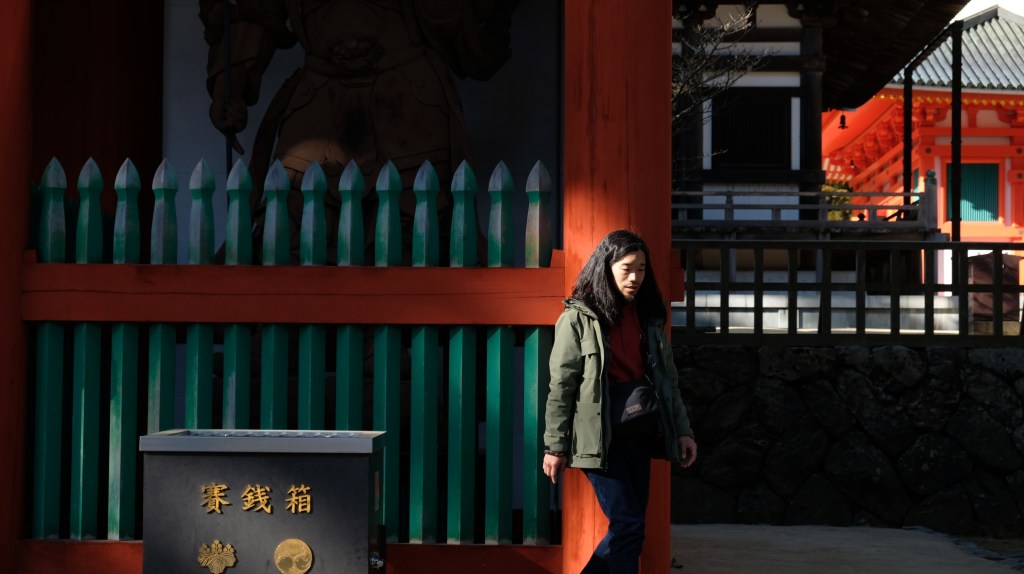
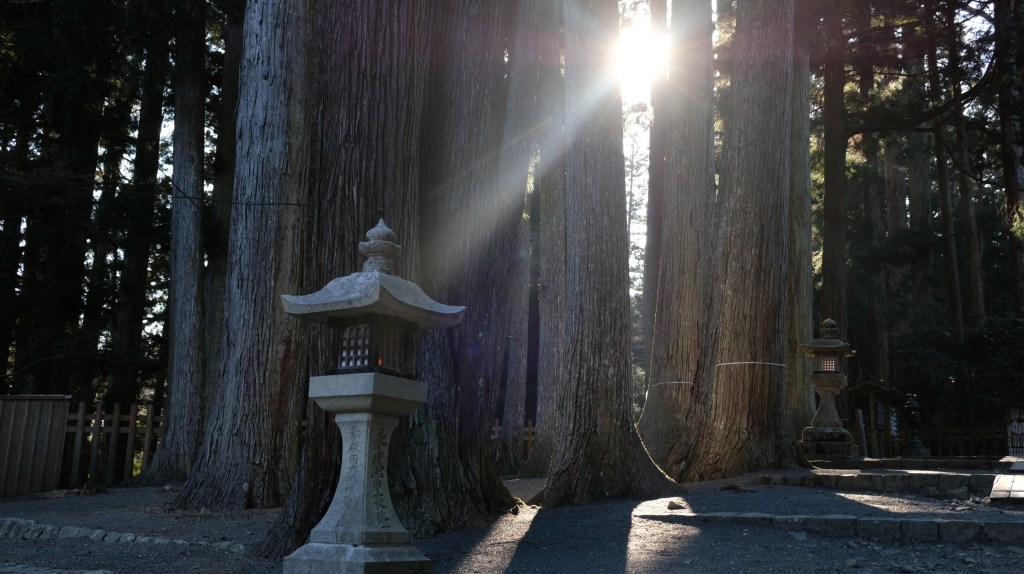
This time, we were treated to transport and a guided tour by Issei, Kana, and Issei’s parents—who themselves visit Koyasan several times a year with great pleasure. During the last twenty minutes of the drive, the route becomes increasingly beautiful, winding along mountain roads with stunning views through and above the trees. Before long, we reach the entrance gate to the village. Koya is known as the birthplace of Shingon Buddhism, where it originated in the early 9th century AD, as well as for the many Buddhist temples built there over the centuries. As you drive through, you immediately sense that this is no ordinary mountain village, but a place created for practising esoteric Buddhism and attaining enlightenment in tranquil natural surroundings.
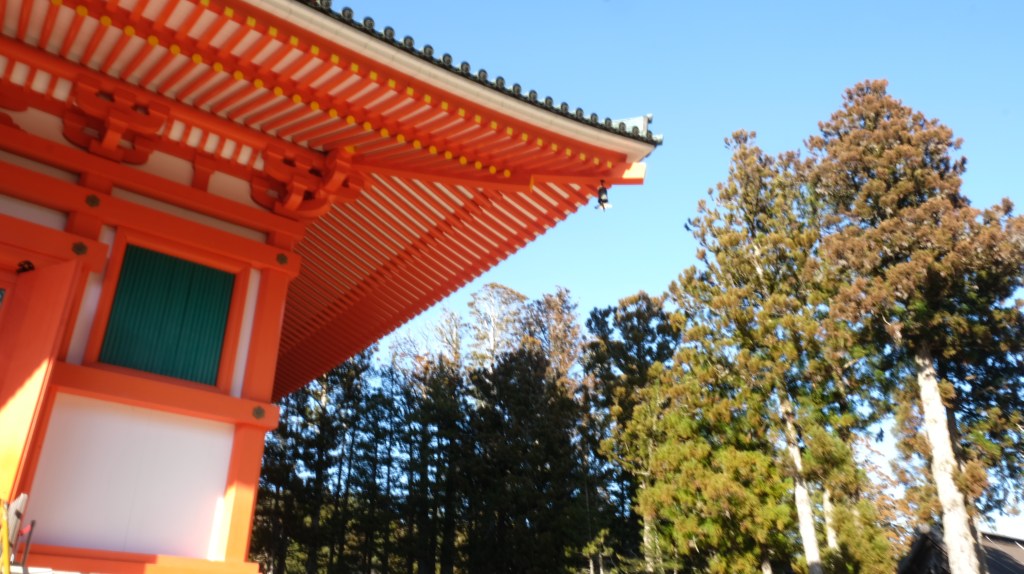
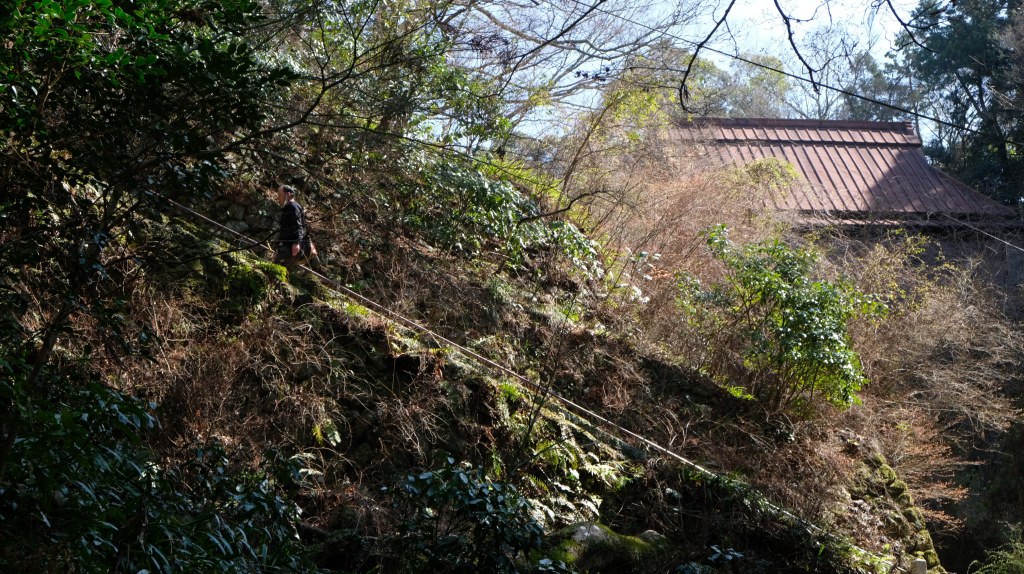
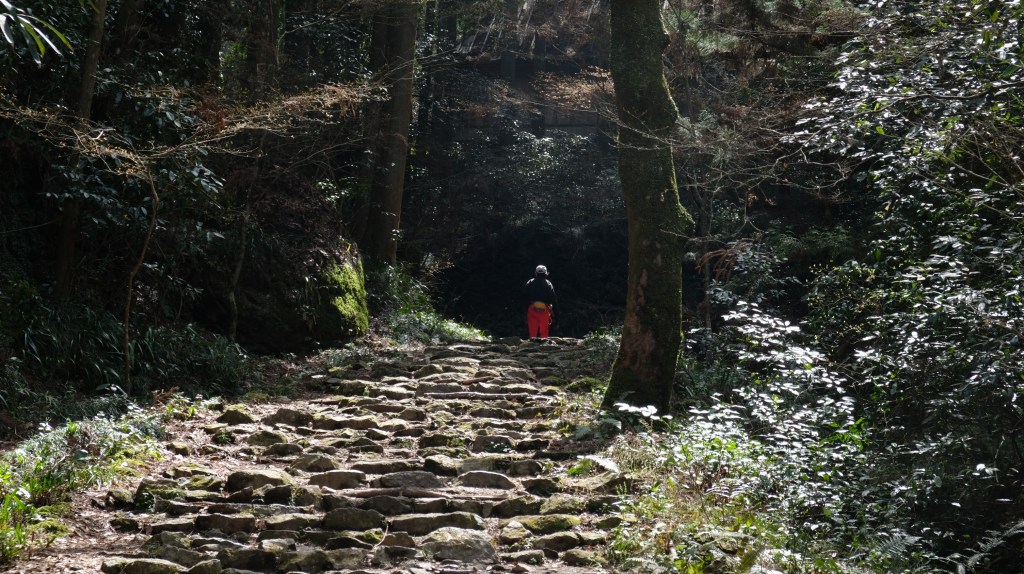
Besides the renowned Koyasan, there is another mountain pilgrimage site near Izumi, albeit a much more modest one: Makiosan. A drive of just 20 minutes—or about an hour by bicycle—takes you to the start of a short walking trail leading to the summit, where an old Buddhist temple is visited by many (often older) Japanese part-time pilgrims. I had been there several times before, and I always enjoy returning. This time, I went with my mother.
On the way up, a Japanese woman made a clear effort to engage with us and greeted us in English. Our pace was somewhat slower than hers, so we let her pass. Meanwhile, my mother was busy recording and analysing unfamiliar bird sounds using something like a Shazam for birdsong. Normally, I would walk up at a quicker pace myself, but strolling along actually made me appreciate the mystical, green, and serene environment even more. It also gave me more time to experiment with my camera and capture this calming landscape.
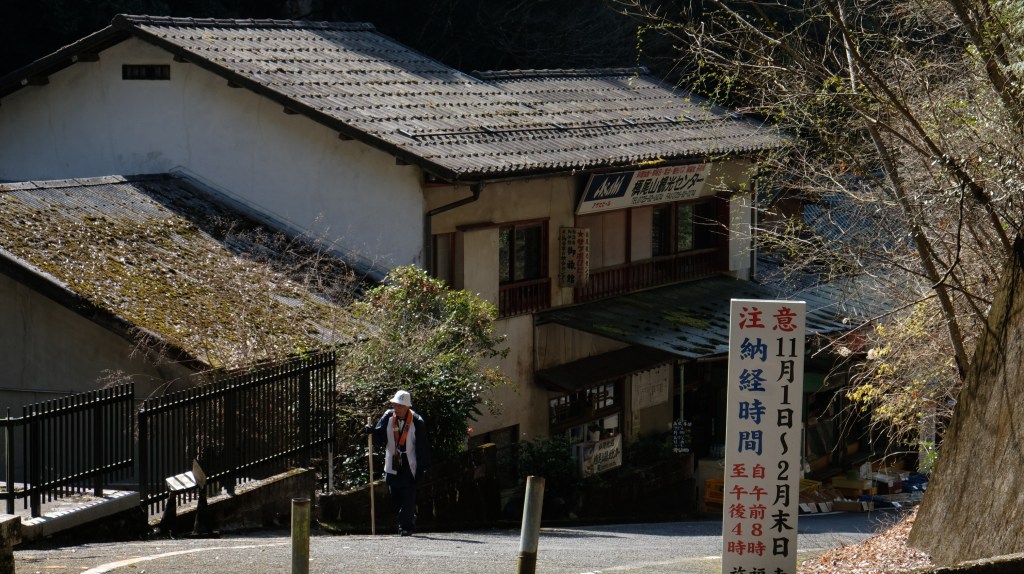
Once at the top, I headed straight for the small toilet building, and nearby sat the young woman and her partner whom we had let pass about half an hour earlier. This time, she spoke to me. We chatted briefly, but it was clear she wanted to give me something—a leaflet with information about the film Rental Family, along with the suggestion to go and see it. “It’s good for learning Japanese,” or something along those lines, she said. It turned out she was the sister of the director, Hikari.
The film is about an American actor who moves to Japan but struggles to find work. He eventually ends up at a company where he plays the role of a family member in people’s everyday lives. Apparently, this is a real service that exists in Japan. The film certainly sounds worthwhile, and the reviews are quite positive. So far, however, I haven’t seen it yet, and there have been very few opportunities to catch it in cinemas. Next month, I’ll have another chance to see it in Kyoto—a place I’ve never been before…
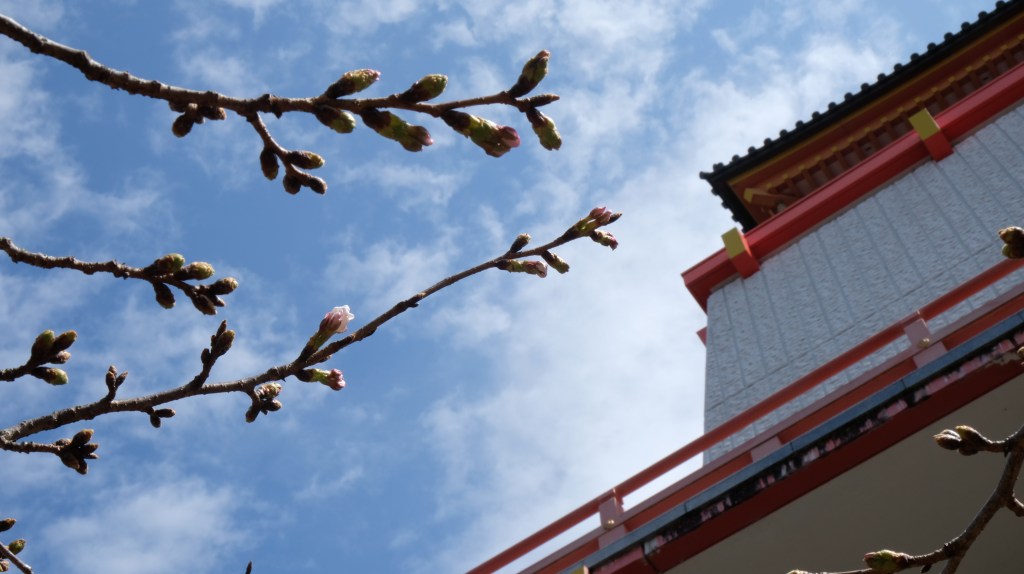
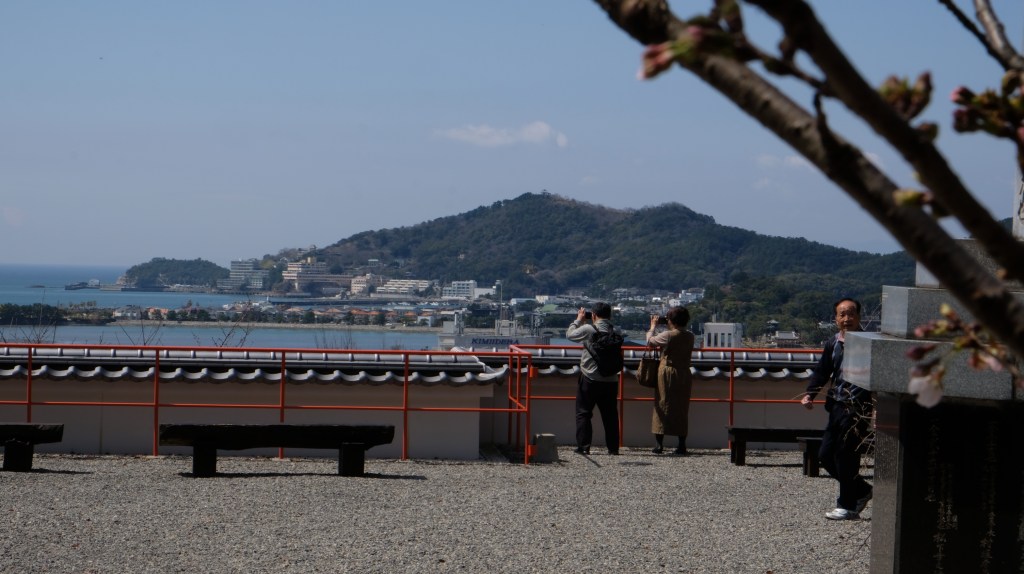
One place I had visited before, back in 2024, is Wakayama. Like many places in Japan, it’s well worth another visit. The cherry blossom season had just begun, and a spot near Wakayama known for its many blossoms is Kimii-dera—a temple (dera means temple). It was a beautiful, sunny day, though the only downside was that the trees were nowhere near full bloom, or mankai (満開). Still, it was more than worth visiting this lovely temple, which also offers a fine view over the outskirts of Wakayama and Wakayama Bay.
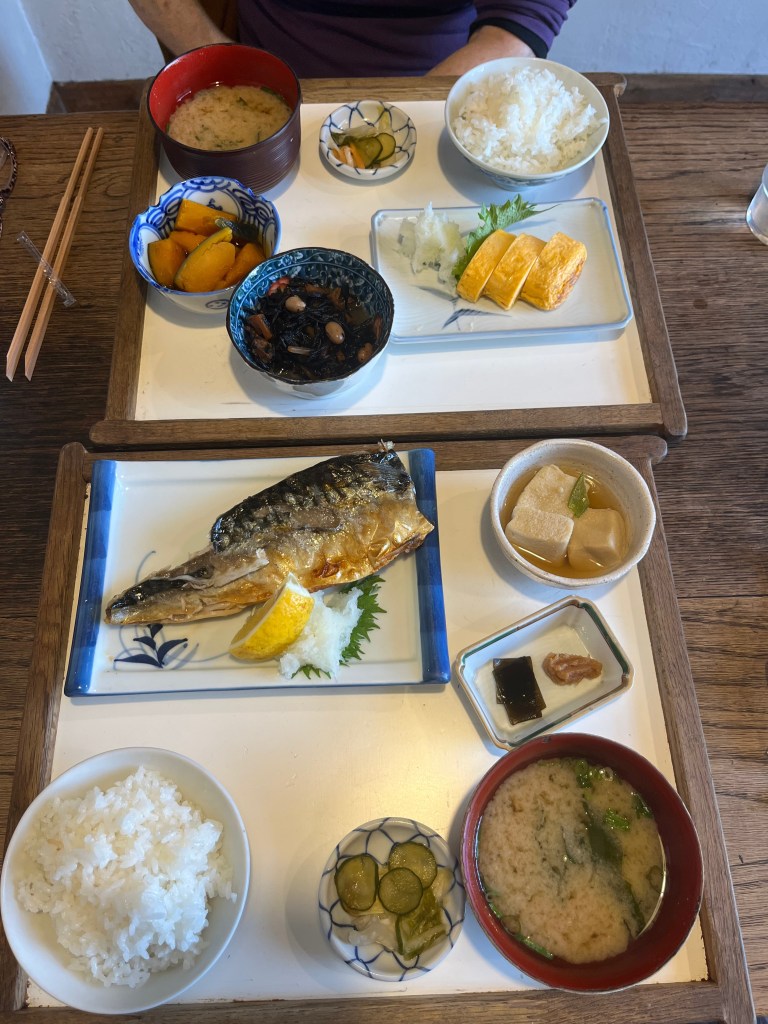
We also had an old Japanese garden on our itinerary in Wakayama, but we needed to find somewhere for lunch as well. Issei had given us a tip, and by coincidence, it was located exactly halfway between Kimii-dera and the garden. The place was called Wakaya, a teishoku restaurant where fresh fish and side dishes are served neatly arranged on a tray. It was certainly one of the tastiest and most memorable lunches I’ve had in Japan.
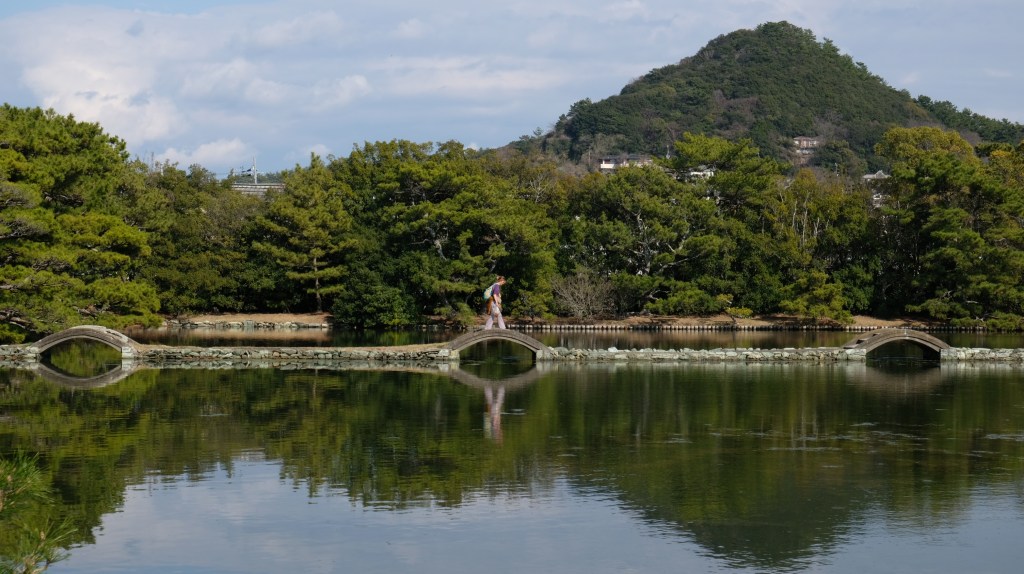
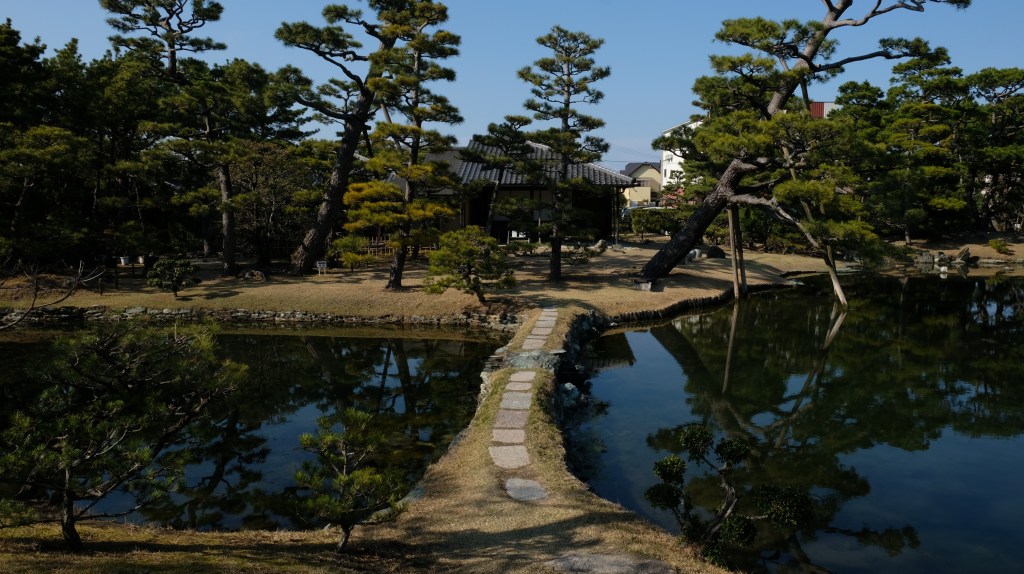
With full stomachs, we walked through a suburban area of Wakayama towards Yosui-en, a garden from the early 19th century featuring a large pond, stone bridges, and hundreds of matsunoki (松の木). In fact, there were hardly any other types of trees to be seen, which delighted me as a fan of matsunoki. Despite its size, we had the entire garden to ourselves, which made it all the more enjoyable. Surprisingly, this remarkable garden remains relatively undiscovered. On the one hand, I felt a bit sorry for the man in the ticket booth; on the other, he seemed extremely relaxed and friendly—no doubt a result of the garden’s peaceful atmosphere.
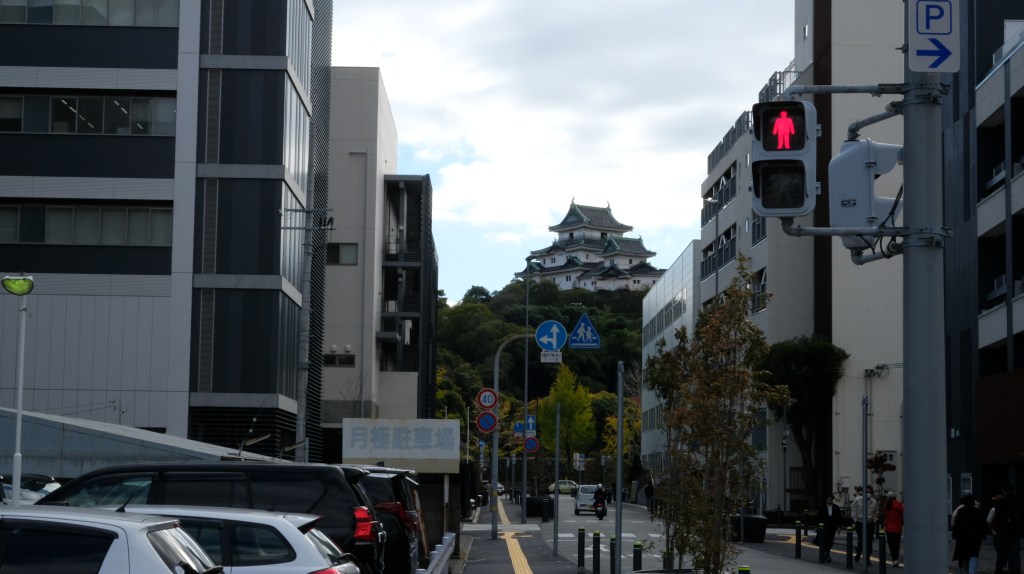
Of course, no visit to Wakayama would be complete without seeing Wakayama Castle. The castle stands atop a large hill in the centre of the city, rising majestically above the surrounding buildings. Its exterior is the most impressive, as it most closely resembles the original structure. Inside, however, the concrete floors and staircases make it clear that it’s a reconstruction—the original having been bombed by American forces during the Second World War.
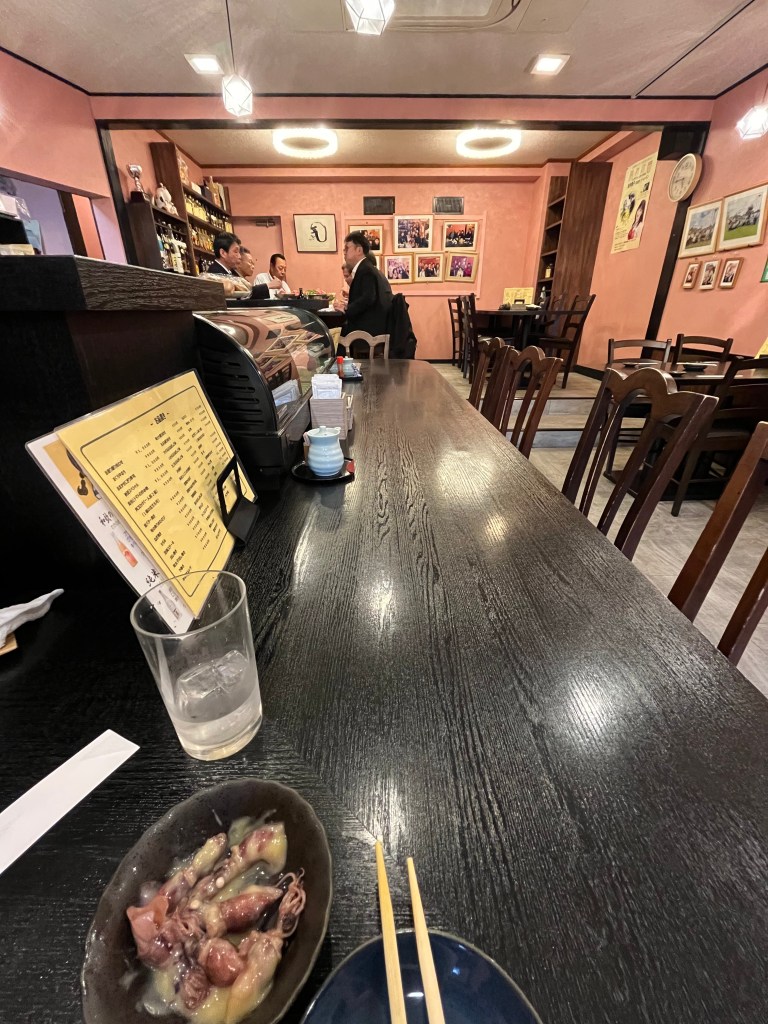
We ended our day in Wakayama with a visit to an old and distinctive izakaya (居酒屋) called Yoshino. It was a refined little establishment with a slightly feminine interior that appeared unchanged for the past 30 to 40 years. It felt like stepping into a time capsule. The elderly Japanese owner, who ran the place together with a younger woman, was perhaps the only sign that time had indeed moved on. A group of businessmen in suits were clearly having a great time there—on a Monday, no less. We left early and walked towards Wakayama Station, heading back to Izumi.
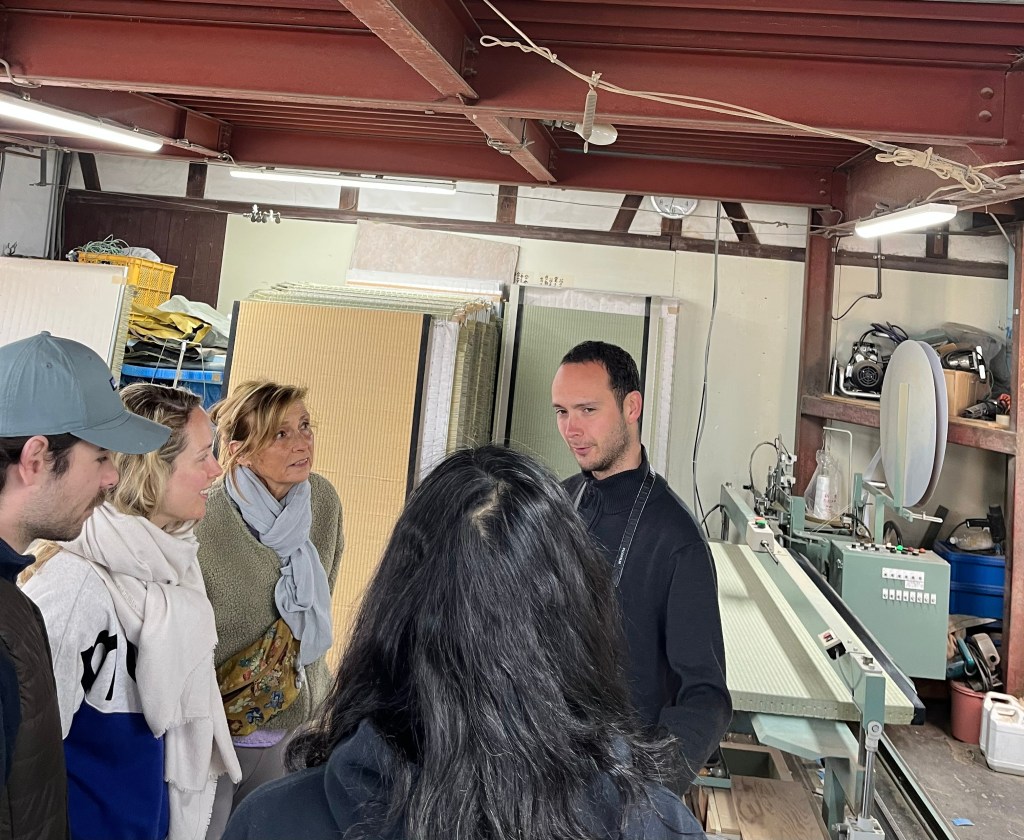
Naturally, my family also had to be properly introduced to the tatami mats that brought me to Japan. Sleeping on them is, of course, a lovely experience, but since the small factory is located right next to the guesthouse, a tour and workshop there were certainly in order. Like many international visitors before them, my family got an inside look at how tatami mats are made and how production has evolved over the centuries. For me, it was a useful refresher, although I was also expected to provide some explanations—for instance, about the fact that measurements are not done using two, but three different standards: Tokyo size, Nagoya/Kyoto size, and Osaka size. More on that later…
The days with my family flew by and have now become fond memories. However, I wasn’t here on holiday, but to learn a craft. The TV crew from Tokyo would also return once I had said goodbye to my family and officially started my apprenticeship. They were due to stay for three days, and their arrival was fast approaching. I still had a few days to myself before my new routine began—and before I was once again being filmed, though fortunately only for a short time.


Leave a Reply