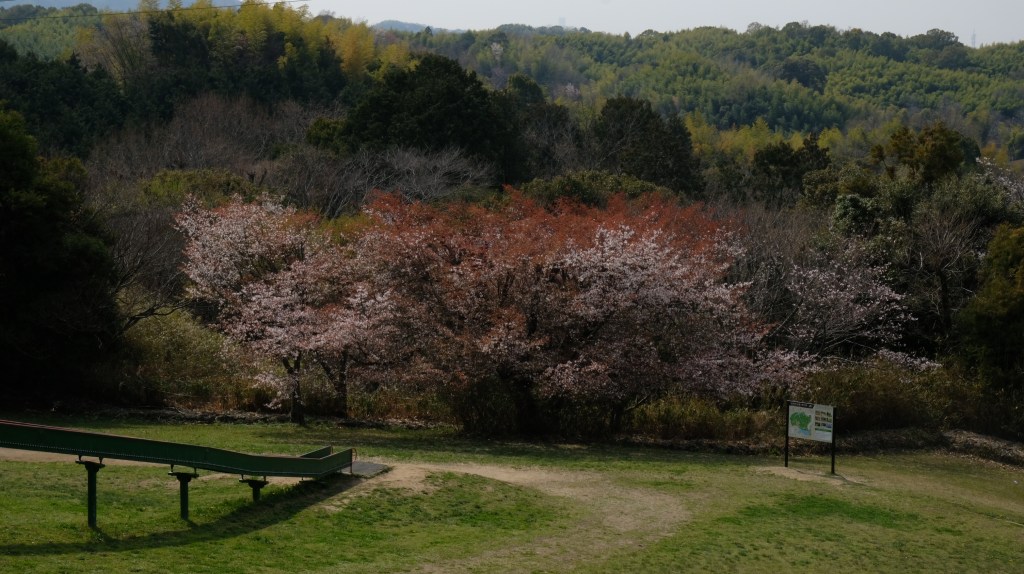
It was late March and I had already waved my mother off at the airport. The cherry blossoms were now truly beginning to bloom, and I had a few days to myself. The weather was on my side, so I was keen to get out and about over the coming days. I had therefore promptly followed through on my intention to buy a bicycle here. Initially, I was looking for a sporty second-hand one, but in the end I opted for a brand-new bike. Naturally, of Japanese make. Compared with the Netherlands, it was a bargain. This bicycle cost roughly half the price of my second-hand one back home. My cyclist’s heart beat a little faster with this purchase.
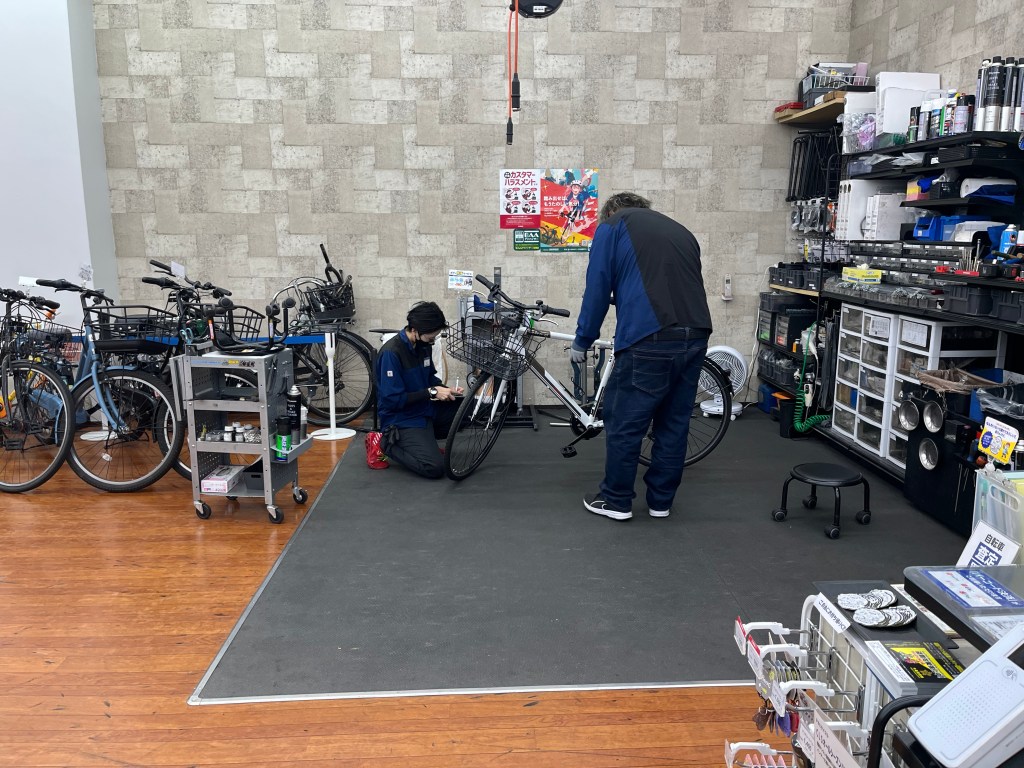
Of course, I soon set off on my bike. Distances in Japan are quite large, and many beautiful places aren’t easily reached on foot. The same applies to Izumi, where many of my favourite spots are not within walking distance. The bicycle therefore provides a great deal of freedom of movement, although not without its risks. This mode of transport is far less integrated into Japanese roads and culture. As more (unpredictable) cyclists weave their way between pedestrians and traffic, stricter rules for cyclists will come into force in Osaka from 1 April.

With my new bicycle, I revisited Izumi Recycle Park, as well as Matsuoji Park, which offers not only calming nature but also a beautiful temple that is usually wonderfully quiet.
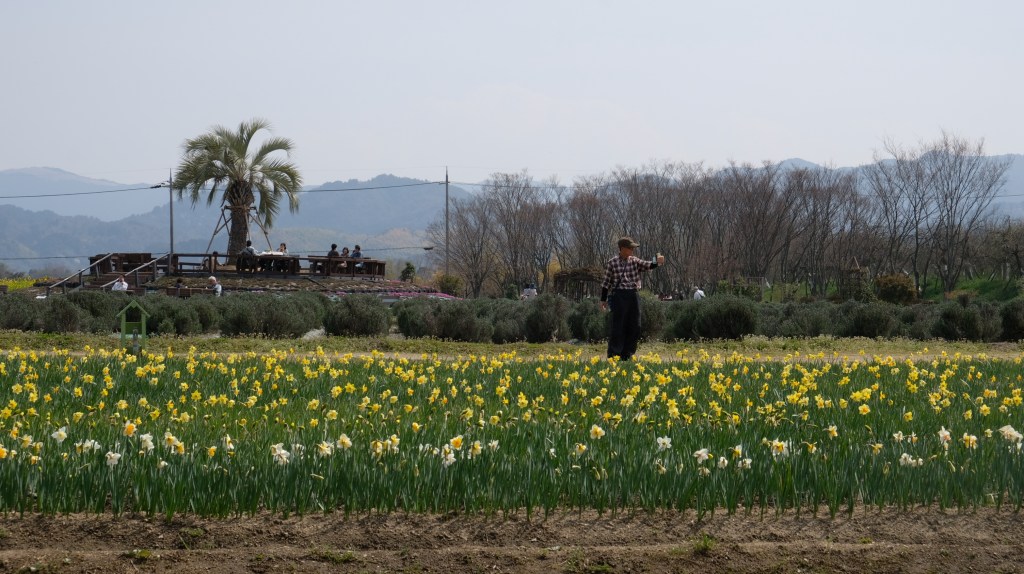
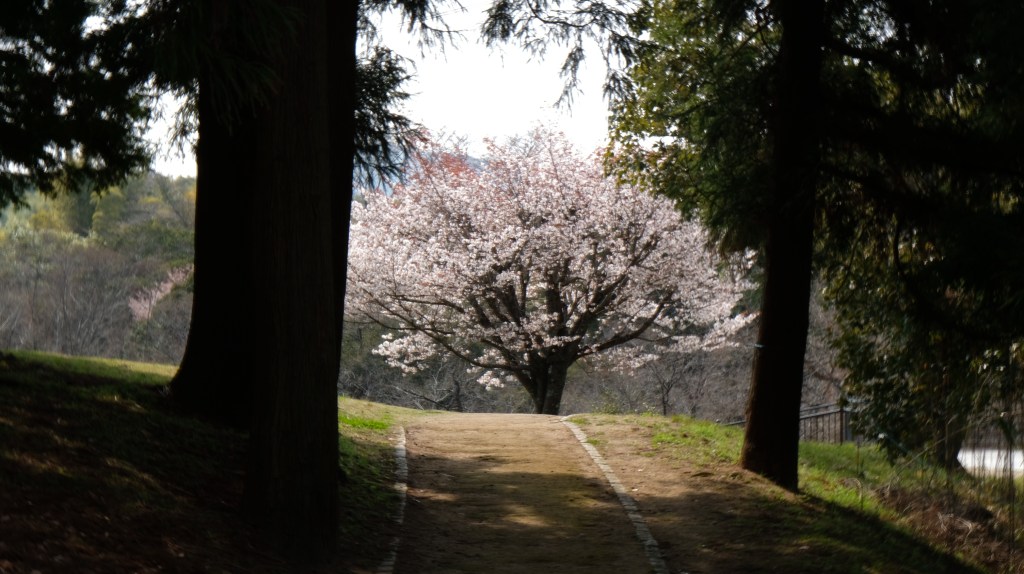
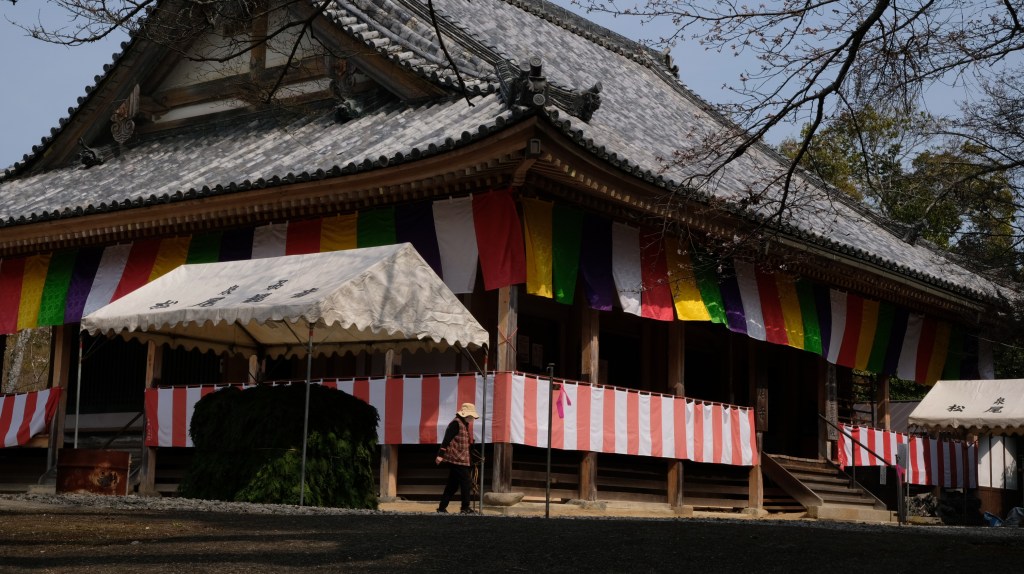
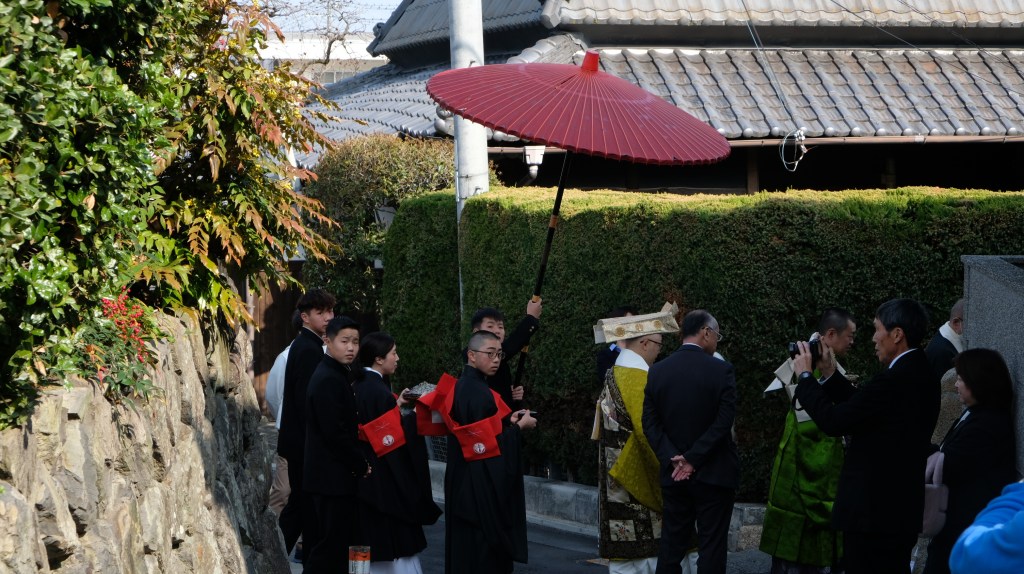
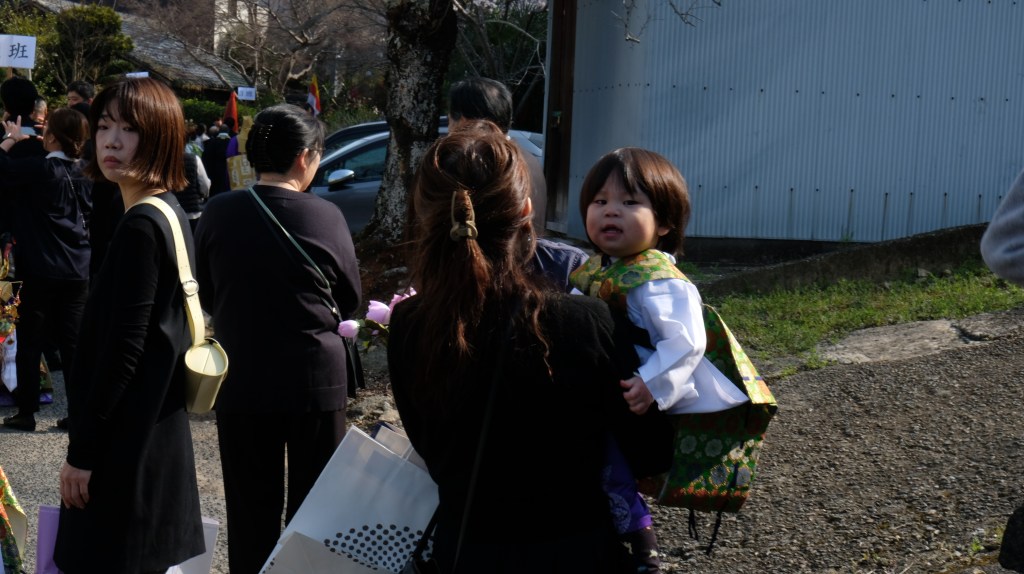
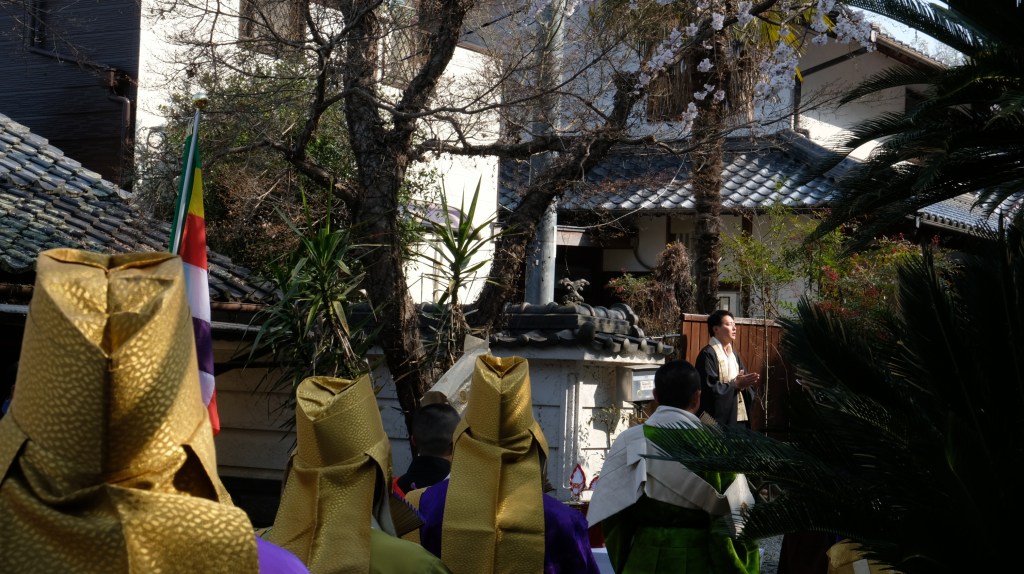
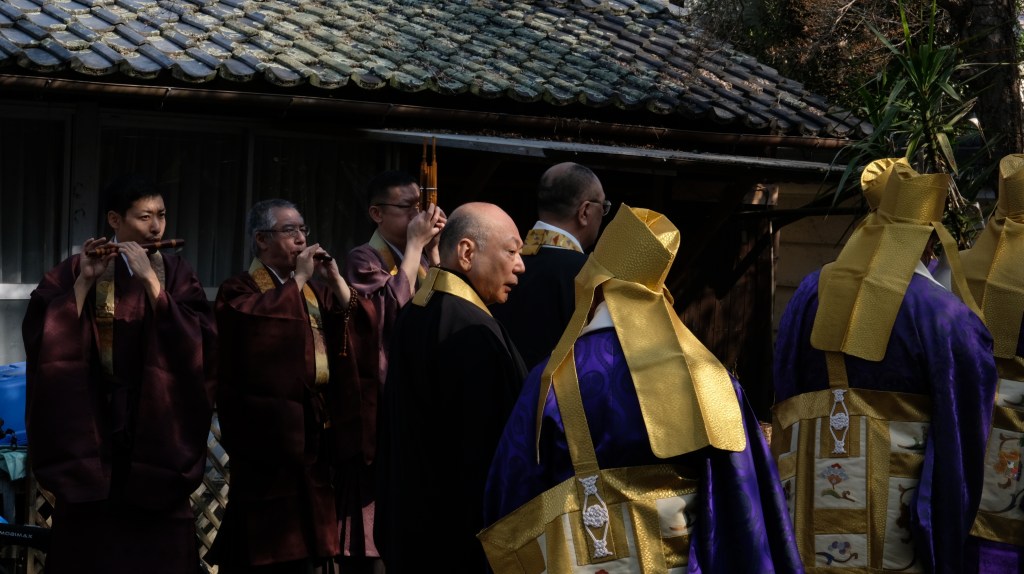
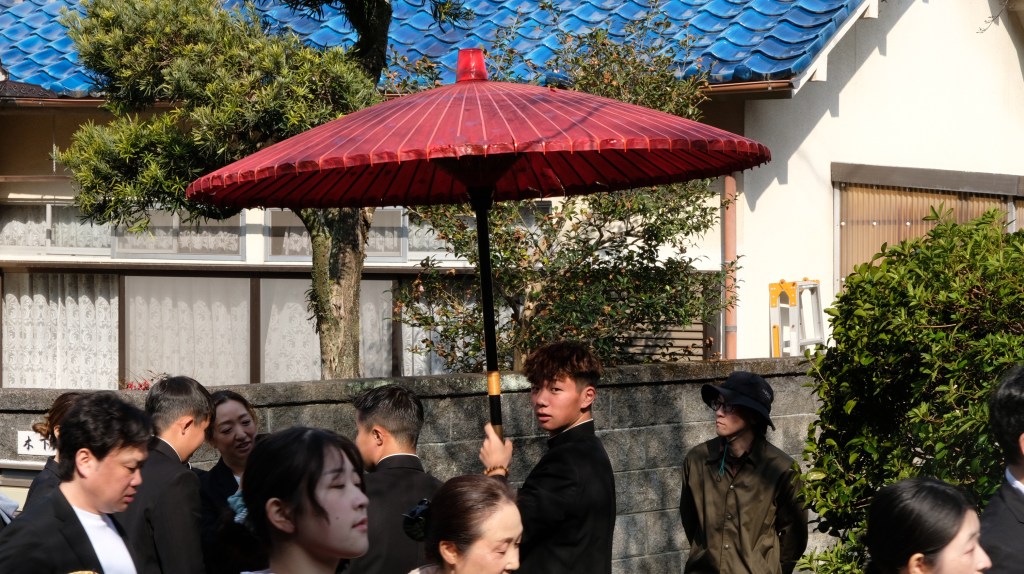
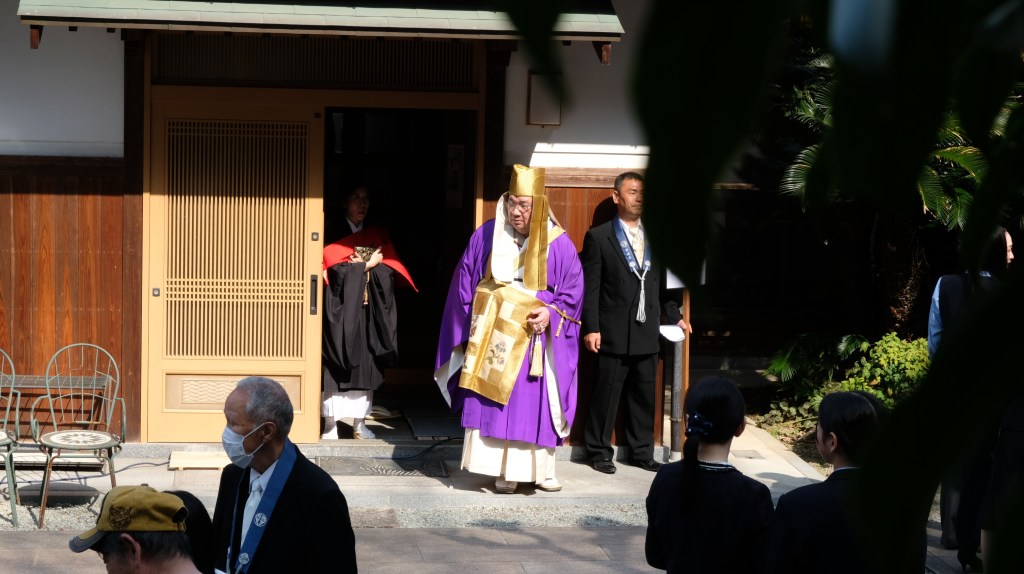
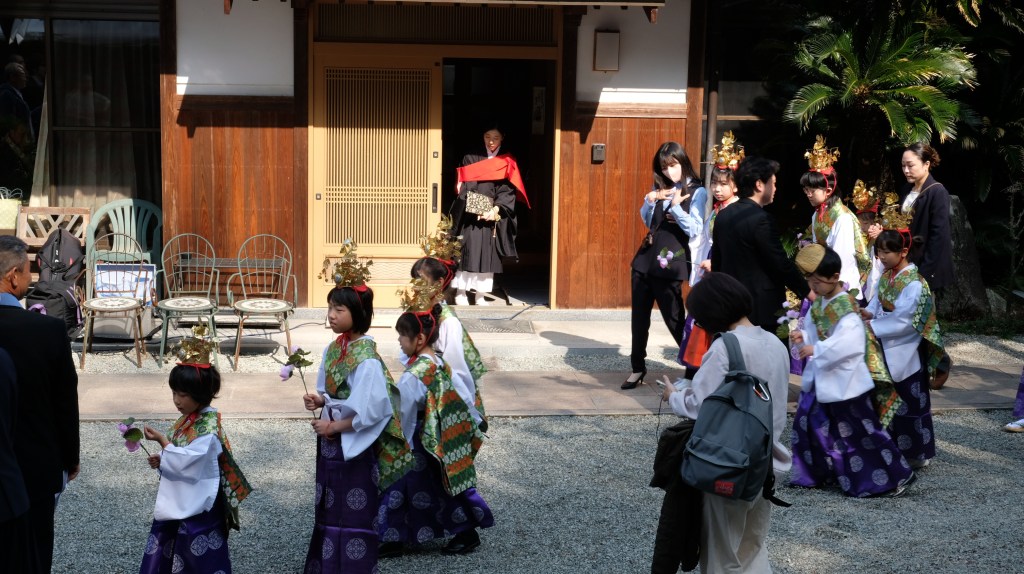
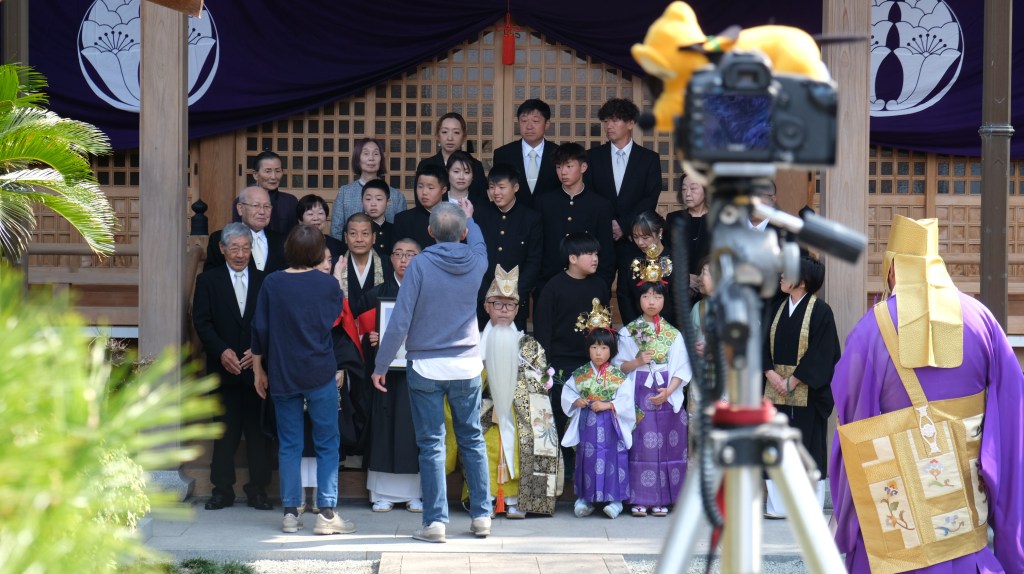
I was also taken by my sensei and his wife to a special Buddhist ceremony at a nearby shrine. It marked the official installation of the new chief priest of the shrine — a change that typically occurs only once every 50 years. Despite this unique occasion, it was quite a small-scale ceremony that would not normally attract outsiders like myself. The following photos convey the atmosphere reasonably well, I think.
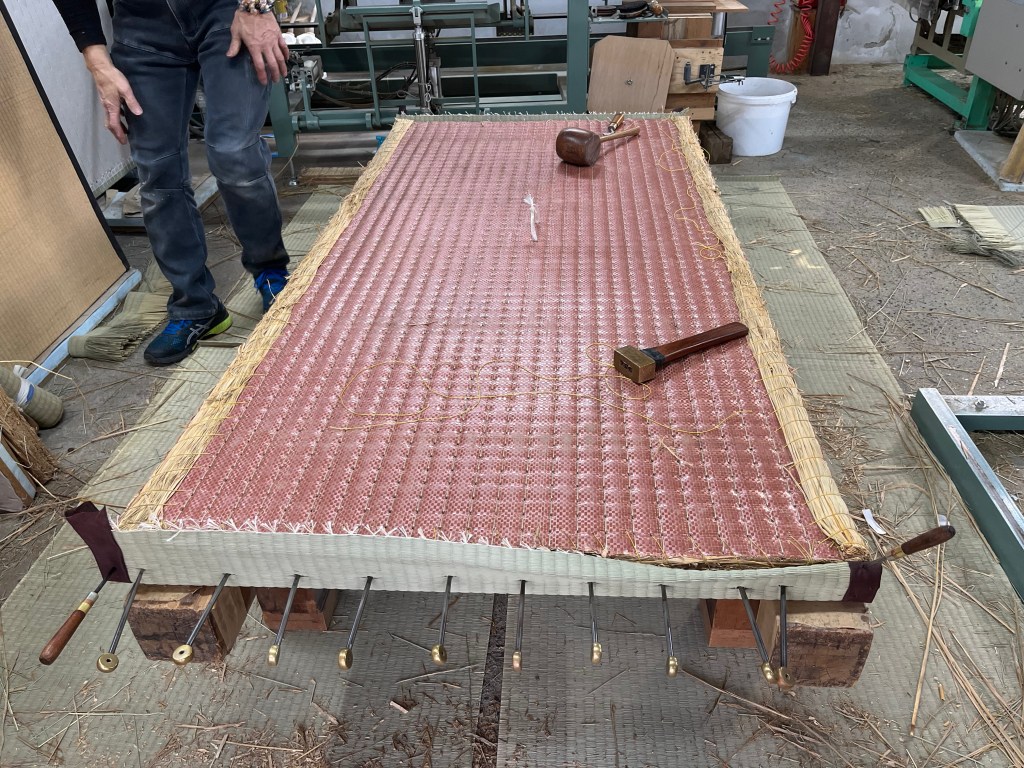
The next day, Sunday 29 March, my apprenticeship truly began. The television crew from Tokyo would be filming again over the coming days, as I would now start working in the workshop under the guidance of my sensei. At least, on the first day I was allowed to observe as he made a tatami mat in the traditional way, without using a single machine. It is a craft that has been practised like this for centuries. Only since the 20th century have machines been introduced, greatly easing and speeding up the work. Hiromasa, my sensei, learned the old traditional production method from his father about half a century ago.
It is therefore quite special to watch a craftsman at work in a way that has remained unchanged for centuries — using specialised tatami tools, great precision, and focused dedication. Like me, the camera crew watched the process with admiration. The materials used in a traditional tatami mat are rice straw (the base), igusa (rush grass for the surface), cotton or hemp fabric for the sides, and hemp thread to stitch the components together. Broadly speaking, the entire process can be divided into three phases:
• Kamachi (attaching the igusa surface to the rice-straw base)
• Hirazashi (attaching the side fabric)
• Kayashi (finishing the stitching along the length of the tatami mat)
There are, however, more elements involved in making a complete tatami mat, but I will go into those later once I begin working on them myself. Seeing how much work goes into making just a single mat is astonishing. Hiromasa, an expert, spent no less than seven hours on it. Nowadays, with the help of machines, producing one tatami mat takes about 20 minutes.
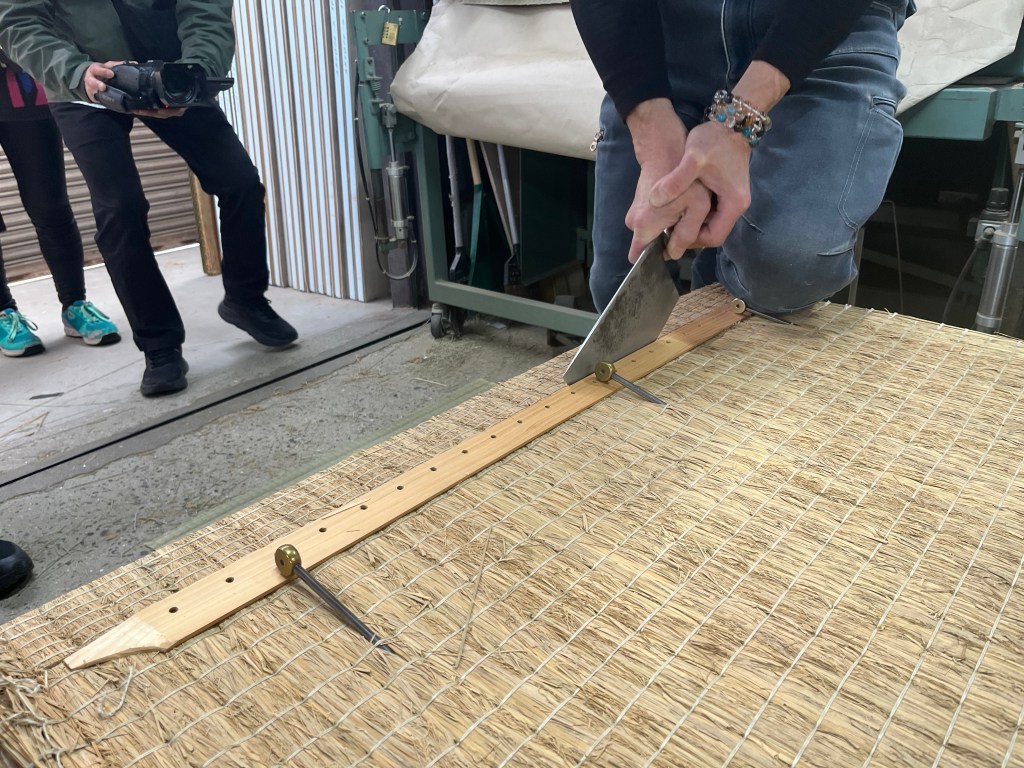
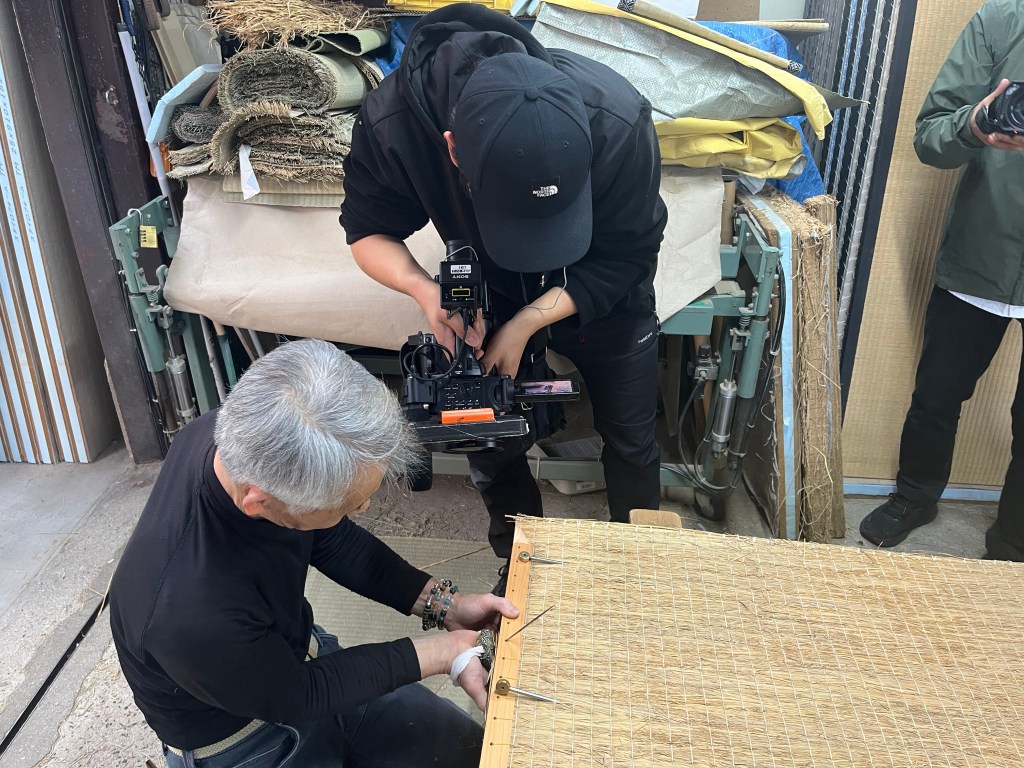
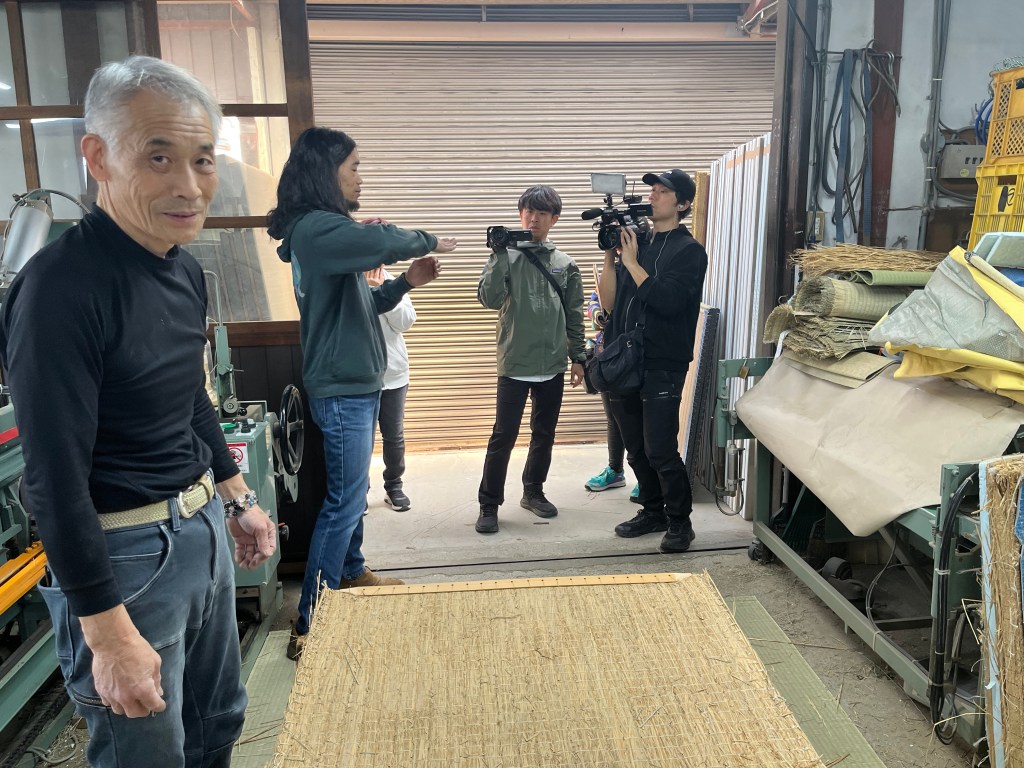
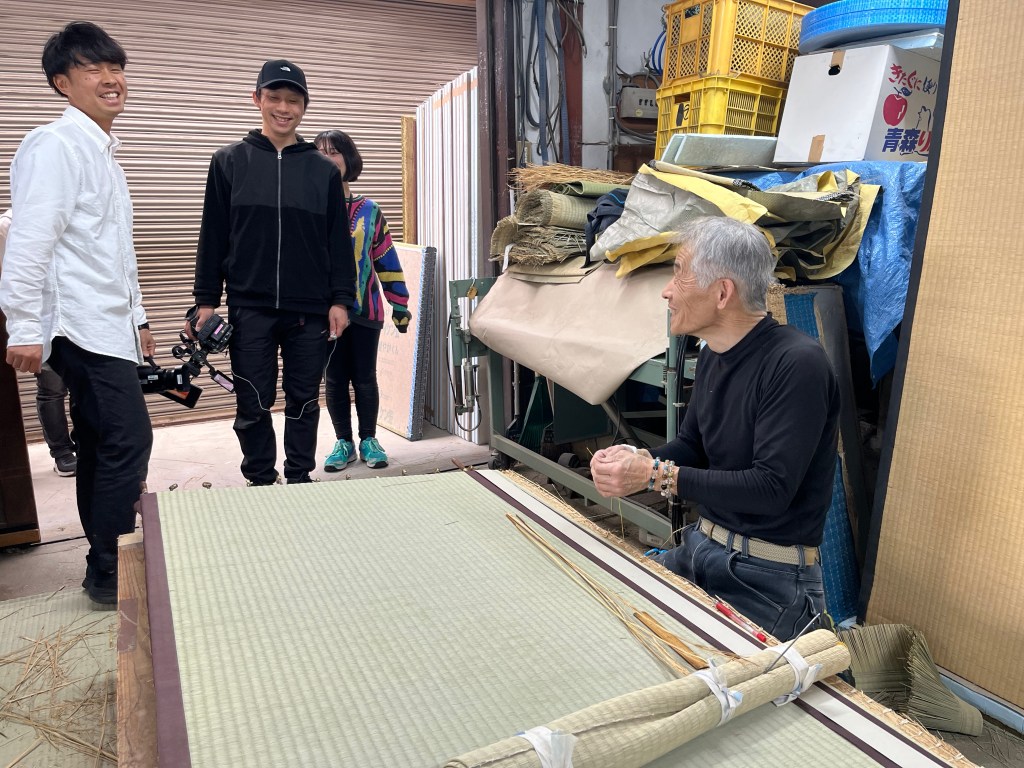
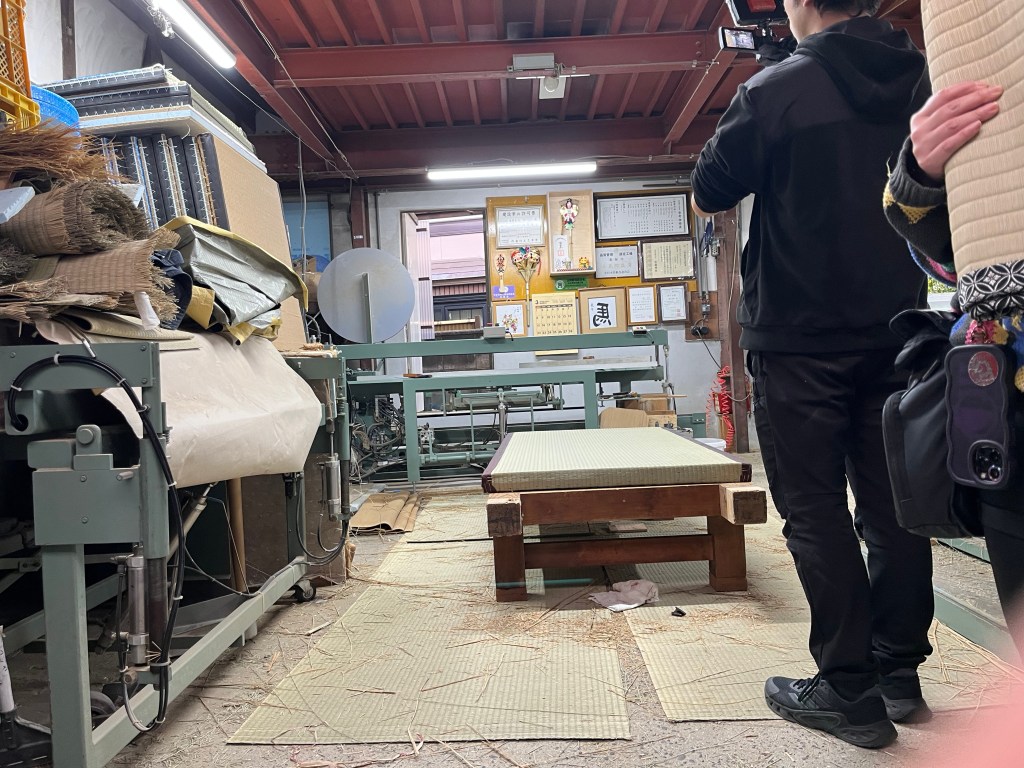
I think it was a wonderful opportunity for Hiromasa to show the television crew just how much ingenuity, blood, sweat and tears go into making a tatami mat — something many Japanese people themselves seem unaware of, judging by the crew’s reactions. I am therefore very curious to see how they will edit all their footage into a segment of no more than 20 minutes. Not only will it include images of the master at work, but also footage of my ‘routine’. As far as I know, it is also a humorous programme…
That first morning the camera crew came to film was particularly overwhelming for me. They wanted to start filming in my room early in the morning, to capture a shot of me waking up after my ‘first night’ on the tatami floor. They wanted to pick up where they had left off — namely, me finally falling asleep on my futon on the grass after my return to Japan. And so it went. I woke up with the camera crew right in my face. Once again, they filmed everything, from making my cup of tea to eating my breakfast. I do believe they genuinely appreciated the cup of tea I offered them.
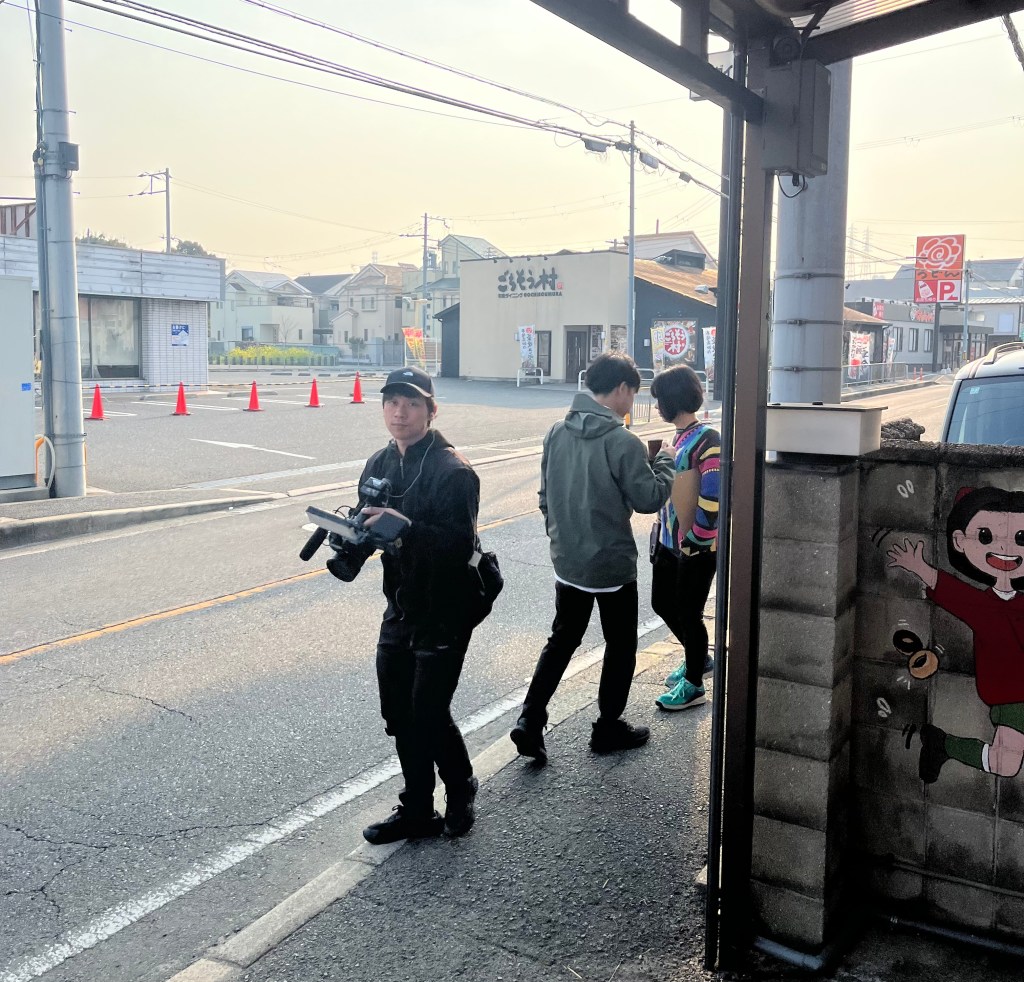
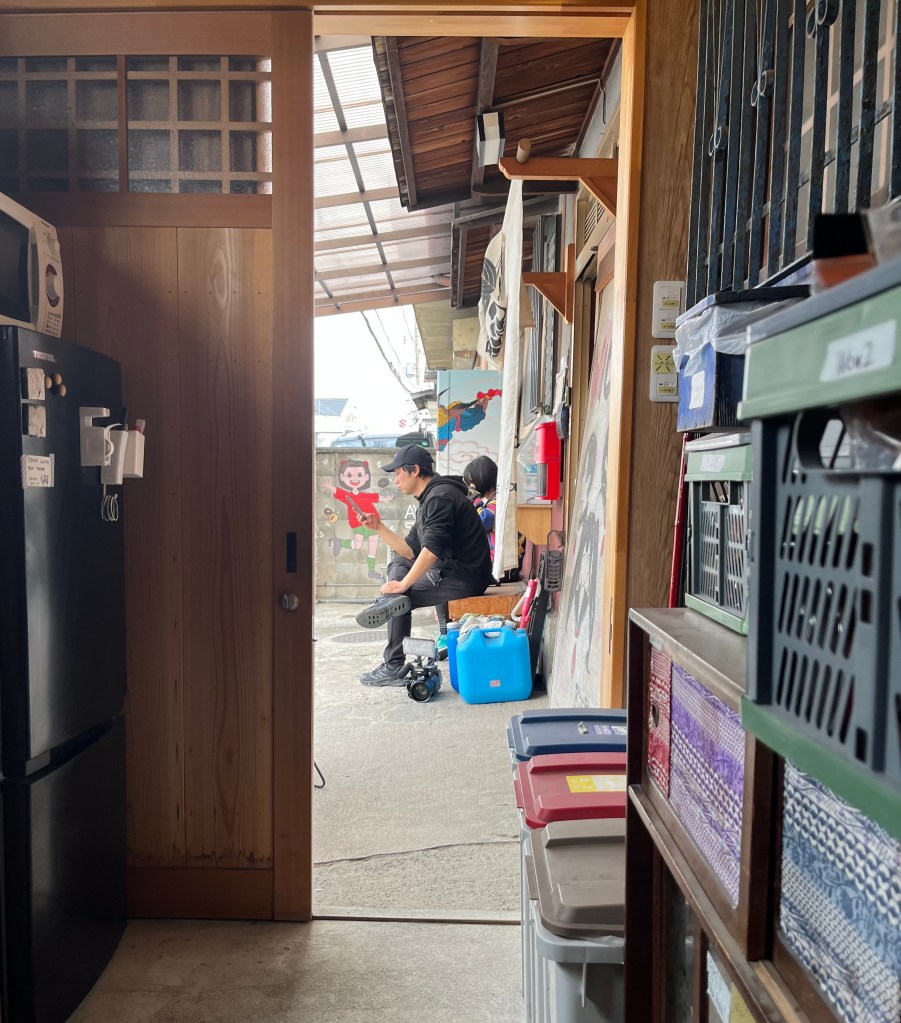
It was a long day, this first day of my apprenticeship, but also a very special one for which I am extremely grateful. I already had a great deal of respect for my sensei, but seeing up close how he single-handedly makes a tatami mat in the traditional way has only deepened my admiration. It feels like a very long road for me to ever reach a level where I might even begin to approach those skills. And the television crew is, of course, curious about that as well. Over the next two days, they will be very present to document my still undeveloped abilities…


Leave a Reply