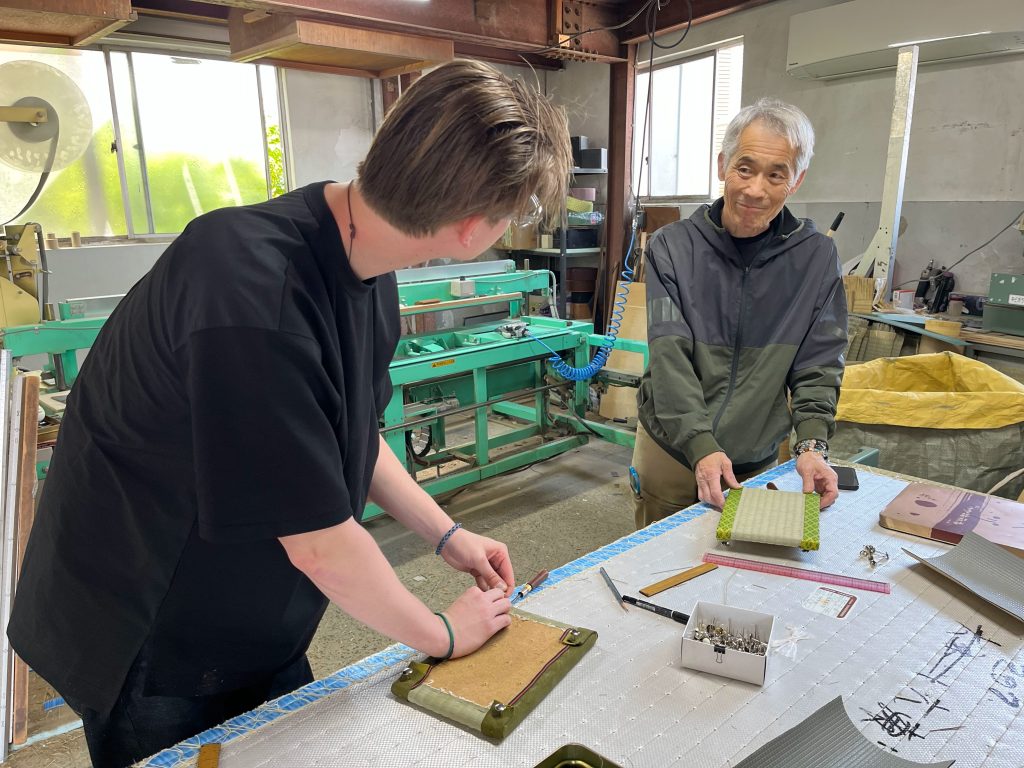
The Golden Week began at the end of April, and Fujitatami quickly filled up once again with new guests. One of the first to arrive was a Dutch traveller from Nijmegen, Ilya. He soon expressed an interest in the tatami workshop offered by the guesthouse. As there were no other guests available to attend the workshop at the time, he received a private session. Having already assisted Hiromasa several times with conducting the workshop in English, the workshop could now, for the first time ever, be held in Dutch.
During the workshop, we briefly explain the history of Fujise, the tatami company where Hiromasa serves as the third-generation craftsman at the helm, as well as the materials used in the production of tatami mats. A distinction is mainly made between traditional and modern materials. Traditional tatami mats are made entirely from natural materials, such as a rice straw base, igusa rush grass, and cotton or hemp side fabric. Modern mats make greater use of synthetic materials such as Styrofoam (polystyrene foam) and plastic. However, igusa — whether Japanese or Chinese — remains an important material in many mats.
Measuring, one of the most important aspects of tatami production, is naturally also covered. Although it is rather complicated and I do not yet have any practical experience with it, it is still possible to explain some of the basic principles. Measurements are not taken in centimetres or inches, but in traditional Japanese units known as bu, sun, and shaku. This system is still used in Japanese crafts, such as traditional architecture and, of course, tatami-making.
It is also important to understand that Japan has never had one uniform tatami size; dimensions vary by region. This is because rooms differ in size depending on the area. The three main standards are Tokyo (small), Nagoya (medium), and Osaka (large).
After explaining all this — and hopefully not causing even more confusion — Hiromasa demonstrates two of the three machines he works with daily to produce tatami mats at remarkable speed. These are truly ingenious machines that make the tatami-maker’s work considerably easier. In short, the machines take care of the labour-intensive and time-consuming tasks: cutting and stitching.
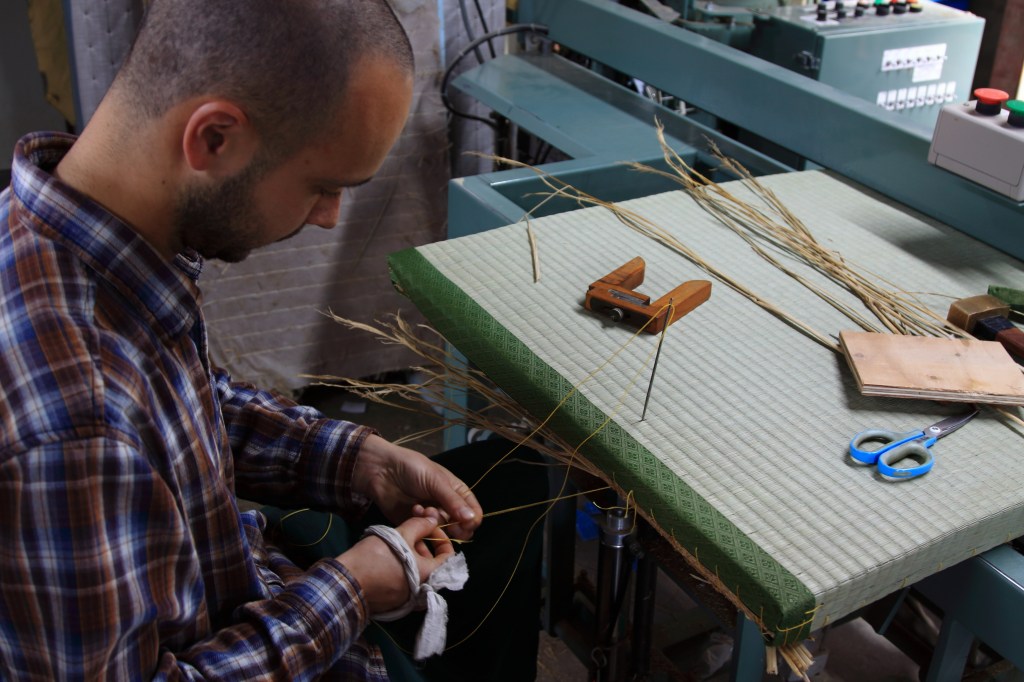
It therefore sometimes feels a little unfair that I still spend so much time stitching and cutting by hand, whilst nowadays machines can simply do this work. But naturally it is important first to master the fundamentals in order to properly understand all the principles of tatami production.
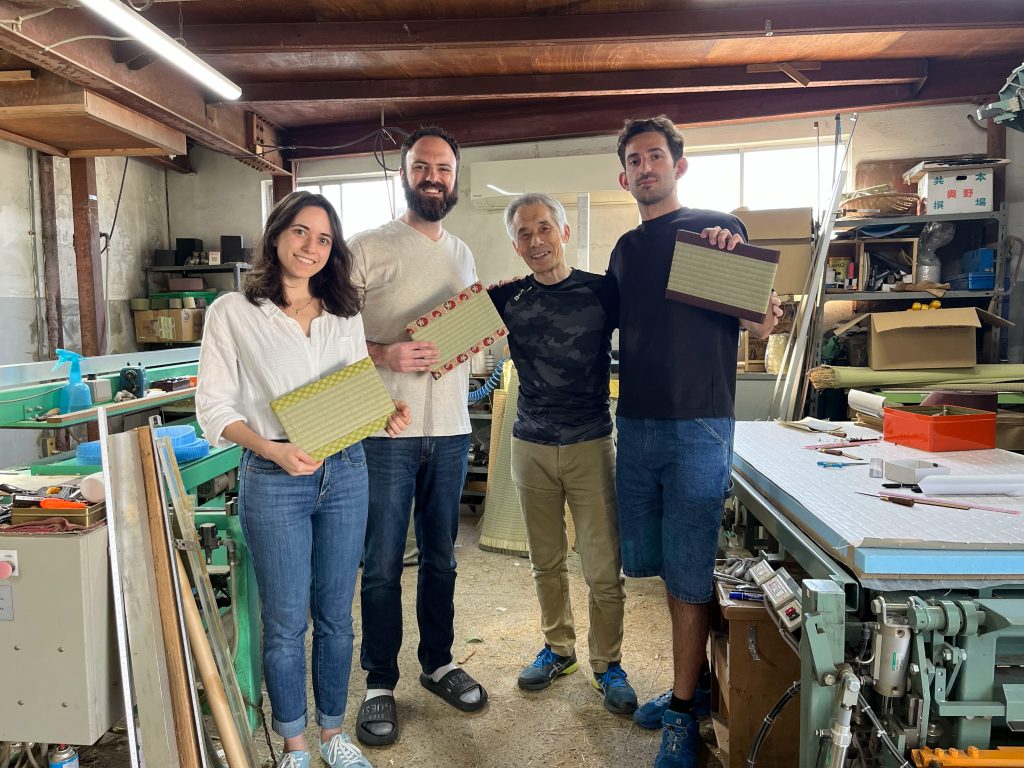
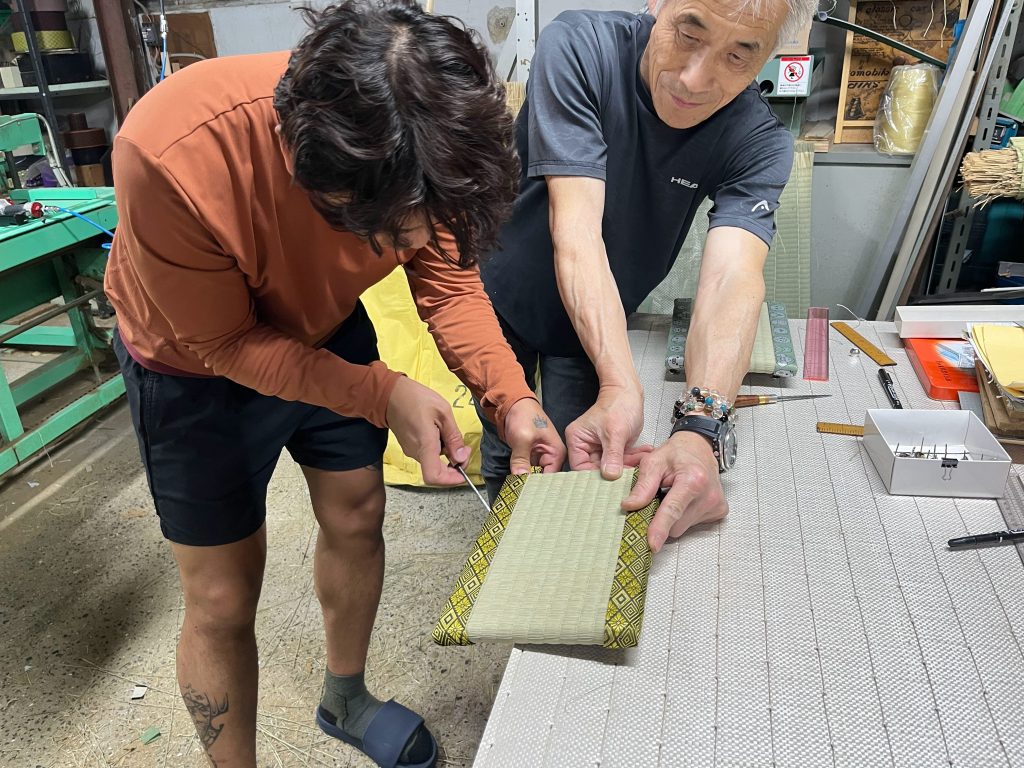
Following the demonstration, the workshop participant gets to make a miniature tatami mat under the guidance of the master craftsman. And I, the apprentice, naturally help out as well. After about an hour of crafting, the result is a small mat measuring roughly 10 by 20 centimetres, complete with a self-chosen side fabric and high-quality Japanese igusa. A lovely souvenir, and both a visual and aromatic reminder of traditional Japanese culture.
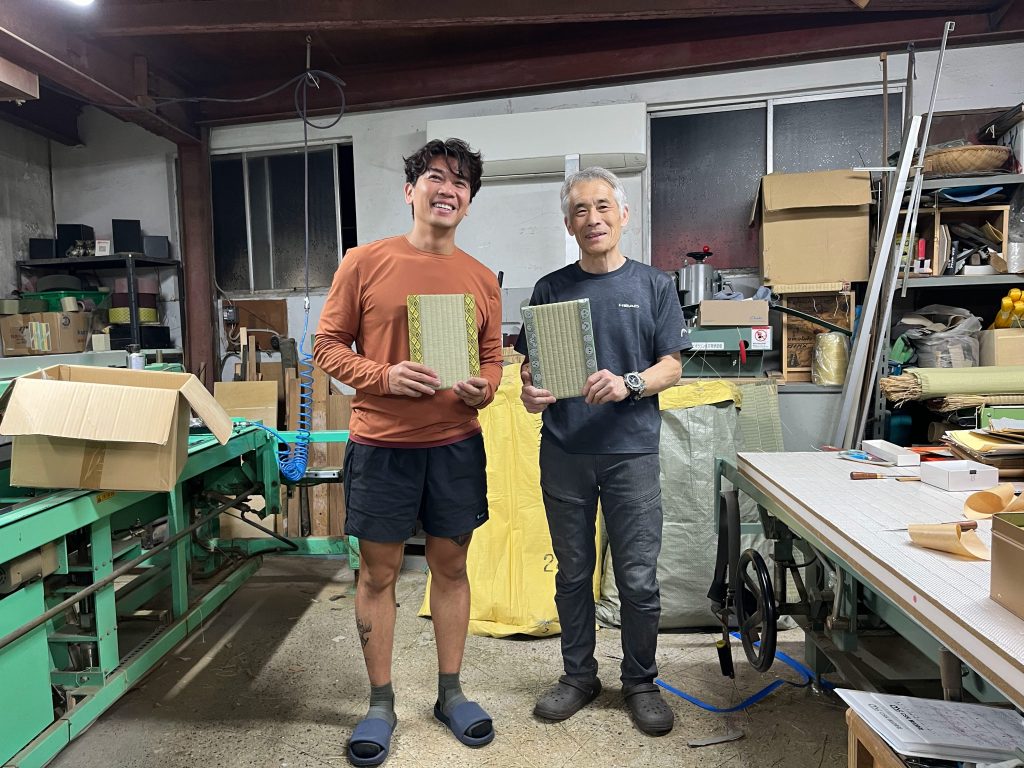
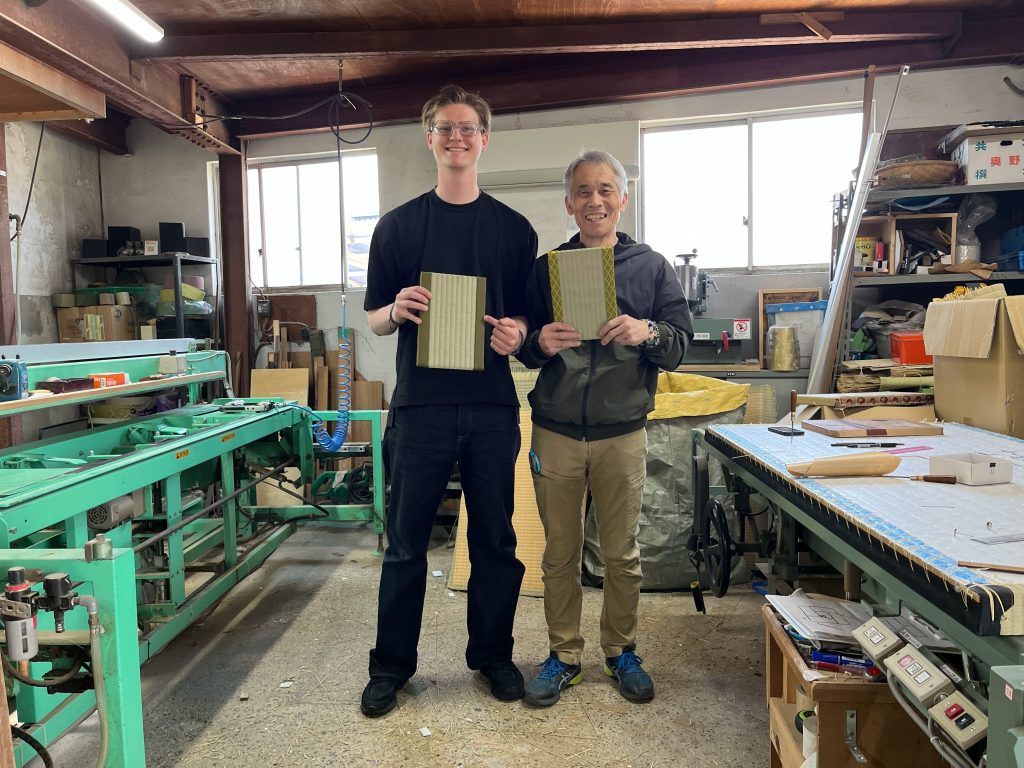
Between practising and occasionally giving workshops, tatami mats are also delivered to private customers. One such customer lived nearby in Izumi and had commissioned Hiromasa to make eight new tatami mats for a room in his house. As the man turned out to be mildly allergic to igusa, he had decided to replace the old tatami mats — around 35 years old, with rice straw bases — with mats featuring a synthetic top layer. It was the first time I accompanied Hiromasa to a customer’s home to install new tatami mats. I was amazed by how precisely all the mats fitted together, with absolutely no gaps whatsoever. With the necessary stamping and shuffling, Hiromasa pressed the mats firmly into position. The customer was extremely pleased with his new floor.
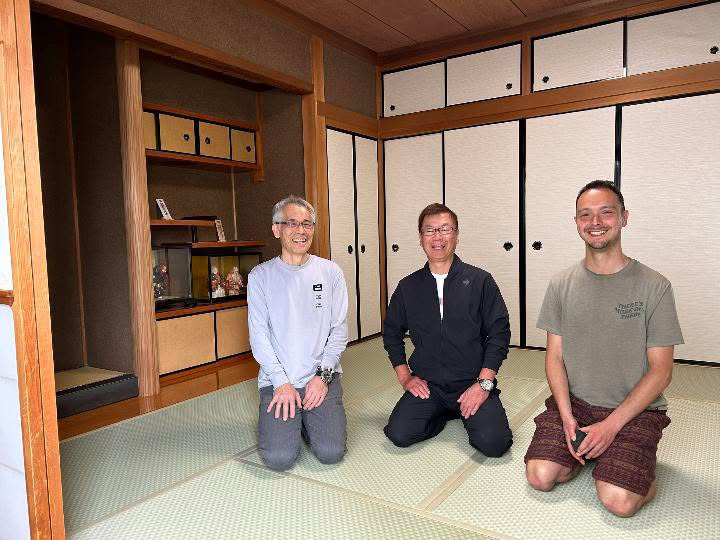
Whilst the tatami mats were being replaced, we attracted the attention of his neighbour and his family. For most people, seeing tatami mats being replaced is not an everyday sight. The neighbour, Kagawa-san, a friendly gentleman, was highly fascinated despite — or perhaps because of — not having tatami mats in his own home. Hiromasa happily explained aspects of his work to him, and I occasionally managed to join in with a few words of Japanese (or English). We concluded the conversation by exchanging Instagram accounts.
Meanwhile, Issei had also received a particularly interesting email from Paris, sent by the popular Japanese clothing company UNIQLO. In connection with the upcoming sumo tournament to be held in Paris, they were seeking collaboration with practitioners of traditional Japanese culture. Apparently, they had discovered Issei because of the artwork he creates on tatami mats, and they were keen to use such mats for an installation at an exhibition. To be continued…
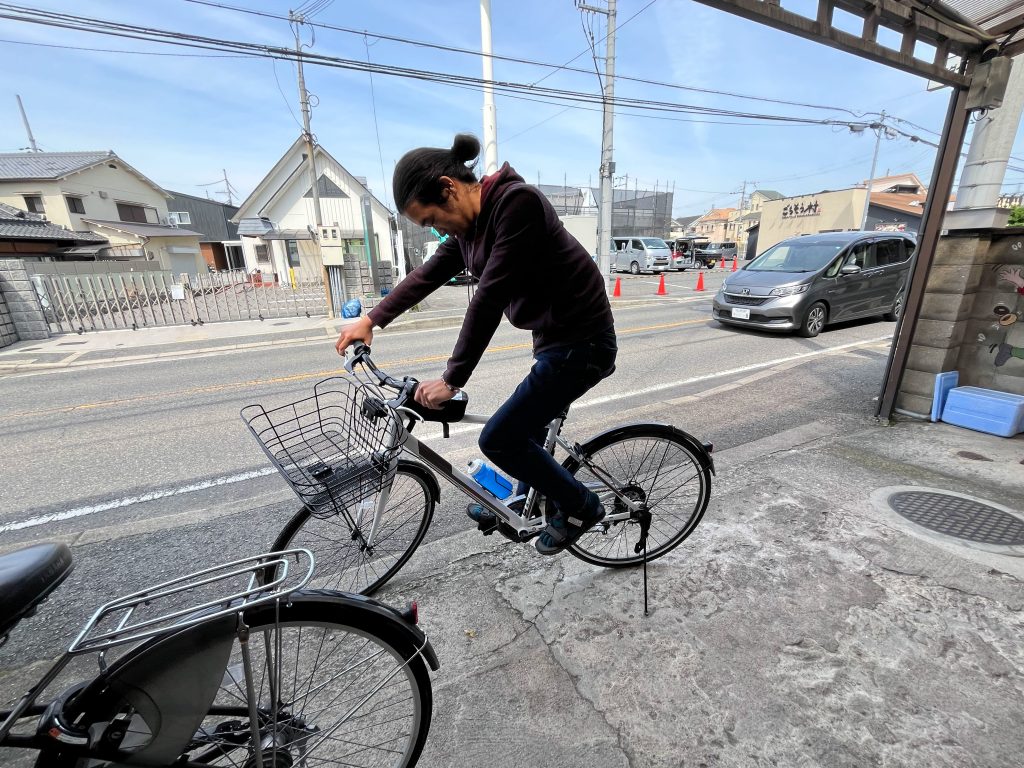
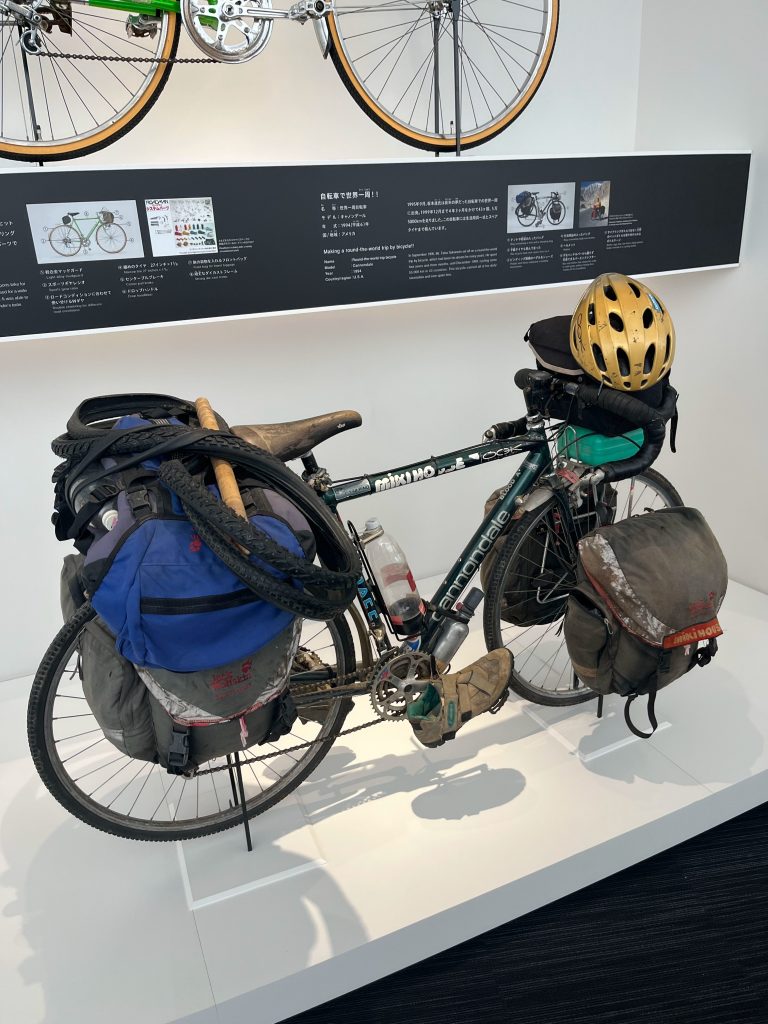
As for the rest of Golden Week? I visited the birthplace of Japanese bicycle manufacturing: Sakai City, more specifically the Shimano Bicycle Museum. Naturally, I cycled there, and the brand-new museum certainly did not disappoint.
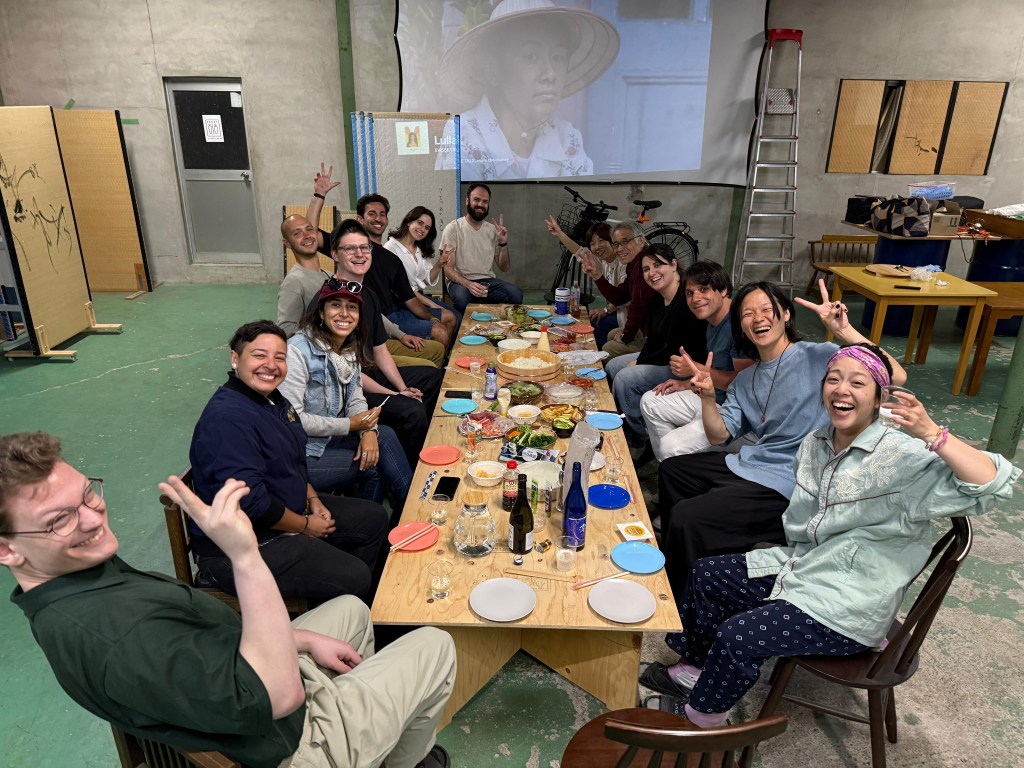
We also organised a large sushi party as a farewell celebration for Cagla, the Turkish volunteer who was leaving after five weeks. With a fully occupied guesthouse, additional guests, and Issei’s parents attending, it was certainly a grand occasion. It also happened to be Ilya’s final evening. He had actually been meant to leave earlier that day, but after realising he had mistaken his flight date, he was fortunately still able to attend the sushi feast.
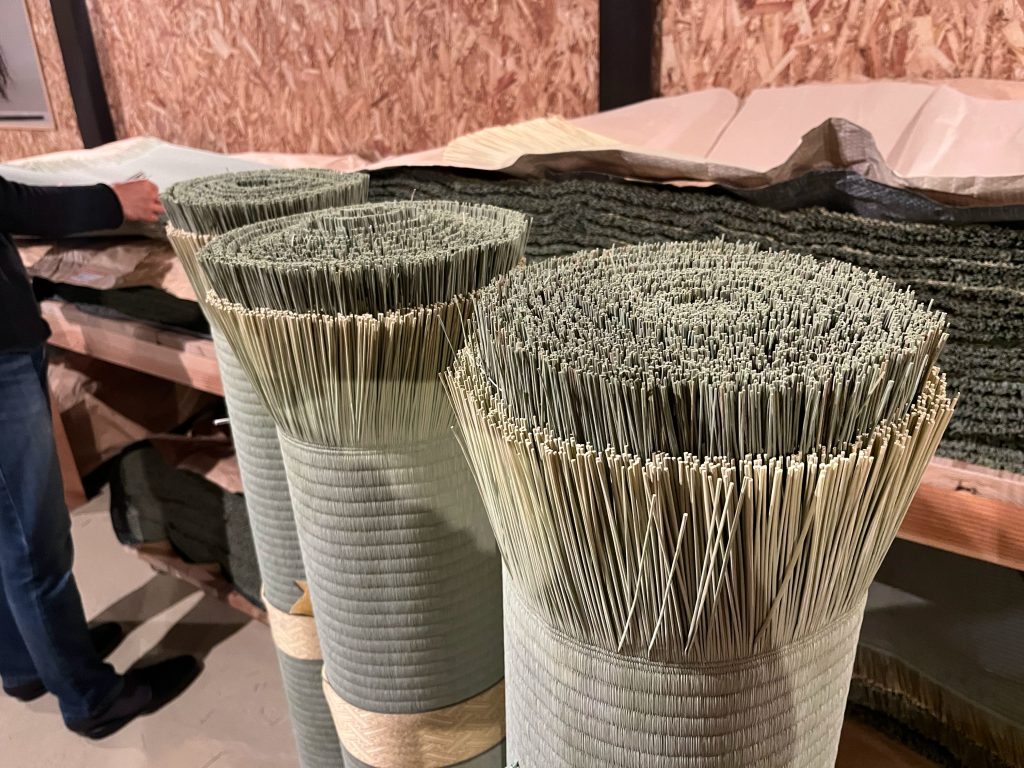
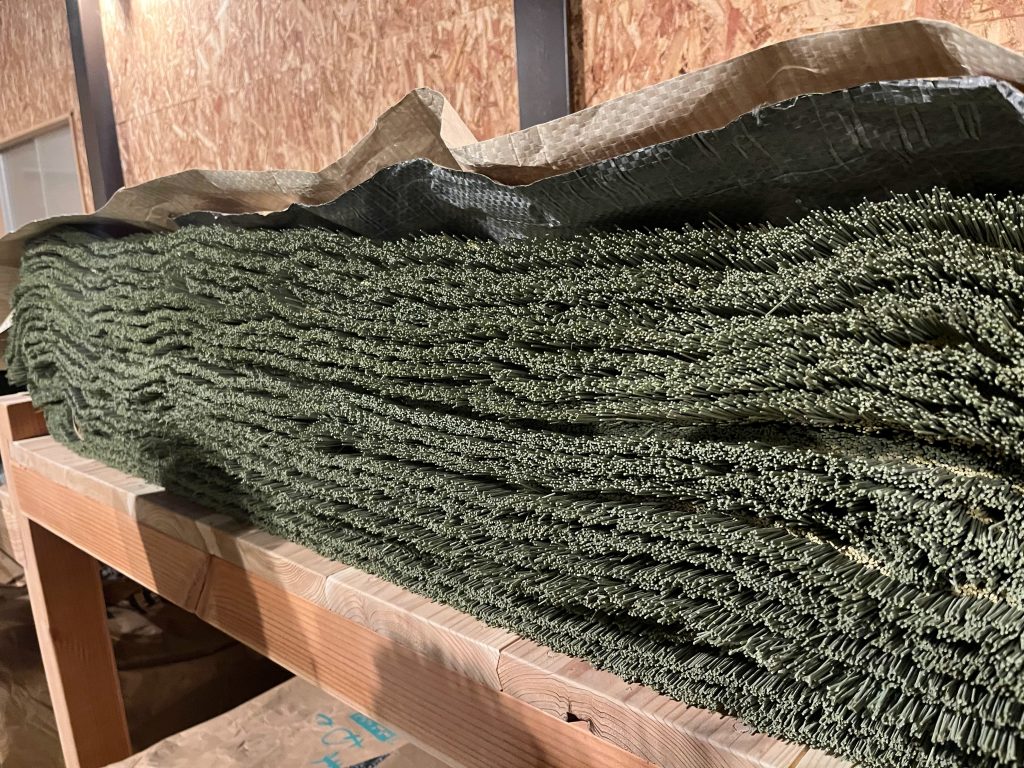
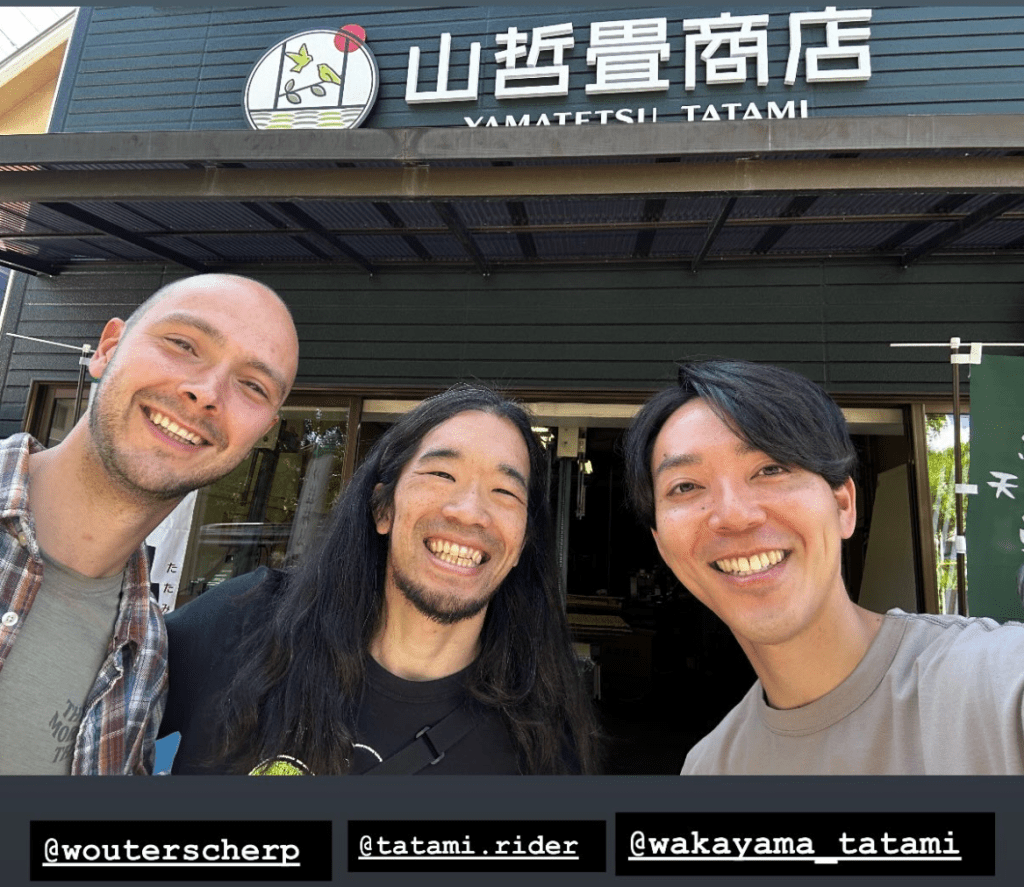
On 7 May, I visited a beautiful, small-scale yet impressively organised tatami factory in Wakayama City together with Issei and Hiromasa: Yamatetsu. It is run by Shota-san, someone of my own age who learned the trade from his father. Among other things, they showed us their storage area for igusa. They had recently purchased exceptionally high-quality Japanese igusa from Kumamoto, and its quality was strikingly apparent both visually and aromatically. Naturally, such premium igusa comes at a considerable cost that not everyone can afford.
The purpose of our visit was to establish connections with colleagues within the tatami world and with the new generation of tatami craftsmen. Naturally, business cards were exchanged in the characteristically respectful Japanese manner. With a young craftsman such as Shota-san leading a decades-old company, it is wonderful to see that tatami culture continues to be passed down to future generations.
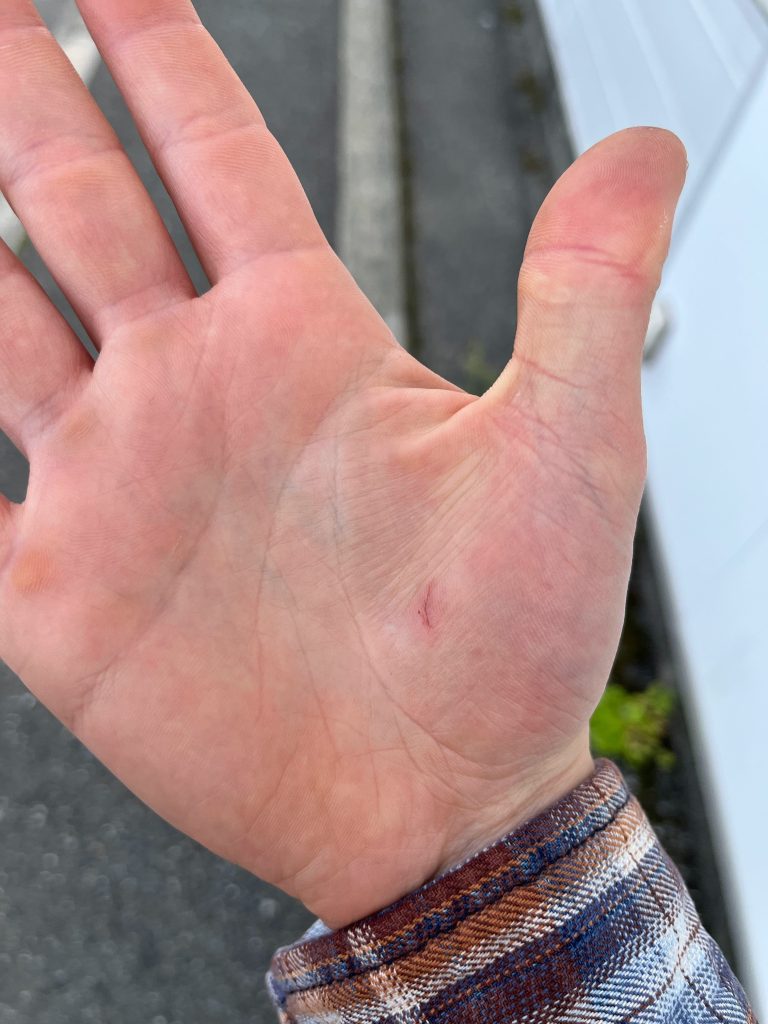
Whilst I was still busy mastering the basic skills in the workshop in Izumi, I also earned my first (minor) injury caused by the needle. During a brief lapse in concentration, the back of the needle slipped away from my teate (hand protector) as I pushed the needle through the mat. As a result, I drove the back of the needle directly into my palm, causing a small injury. I hope my sensei forgives me…
In the meantime, I had kept in touch with Kagawa-san via Instagram and invited him to come and see Fujise and my activities as a tatami apprentice. He visited on Saturday 9 May with his family and brought delicious mochi as a gift. Thank you! He also brought along his professional-looking camera, as he turned out to be an enthusiastic hobby photographer just like myself. He took excellent photographs of what a normal day in the workshop looks like for me, several of which I have already placed on the homepage. It was once again a lovely meeting with him and his family.
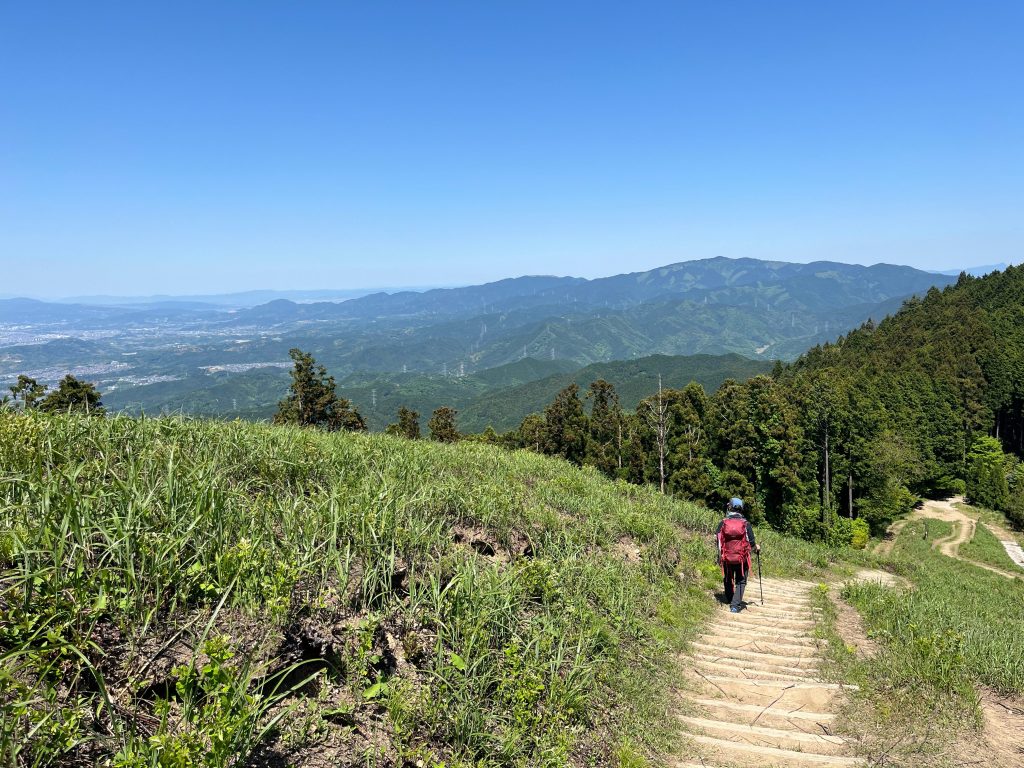
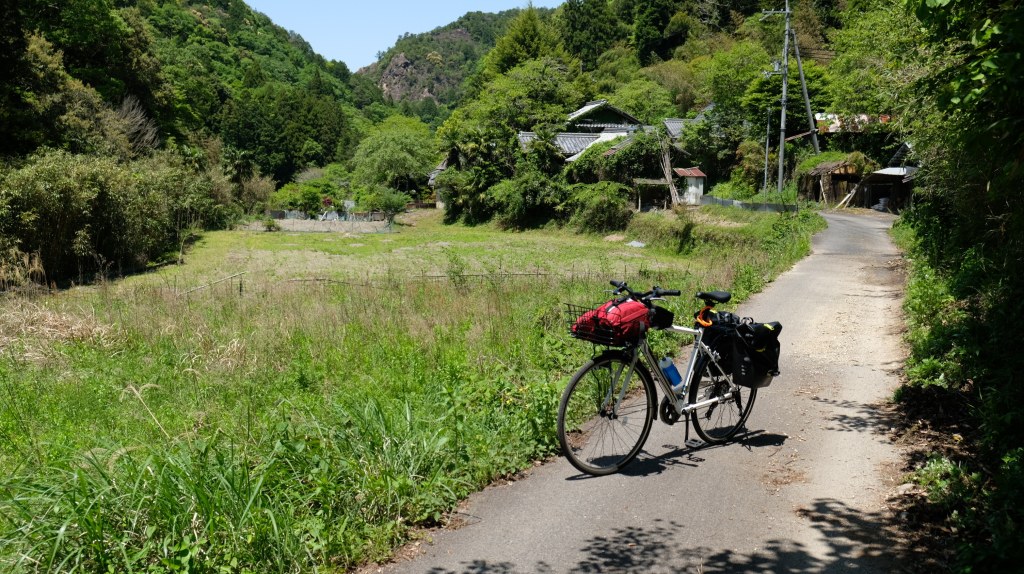
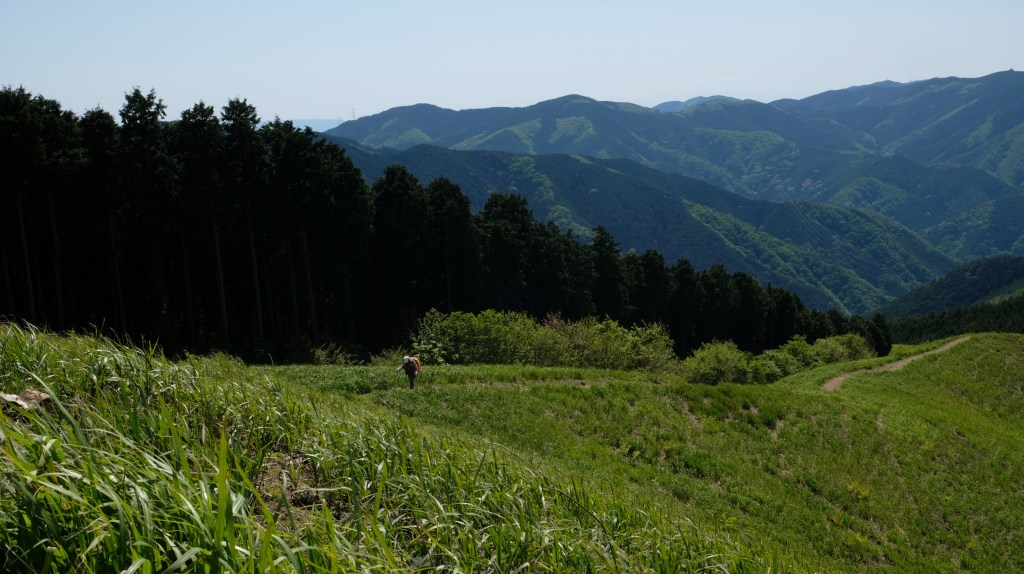
I concluded the week with a gruelling expedition to Mount Iwawaki in the south of Osaka Prefecture. A traveller staying in the guesthouse from the United States, Parham, had previously completed the journey and had also encouraged an Italian long-term resident, Vincenzo, to undertake it. With my optimistic mindset, I assumed I could easily manage it as well: a day of cycling and hiking to a mountain summit sounded pleasantly peaceful. It ultimately turned out to be one of the most exhausting undertakings I can remember.
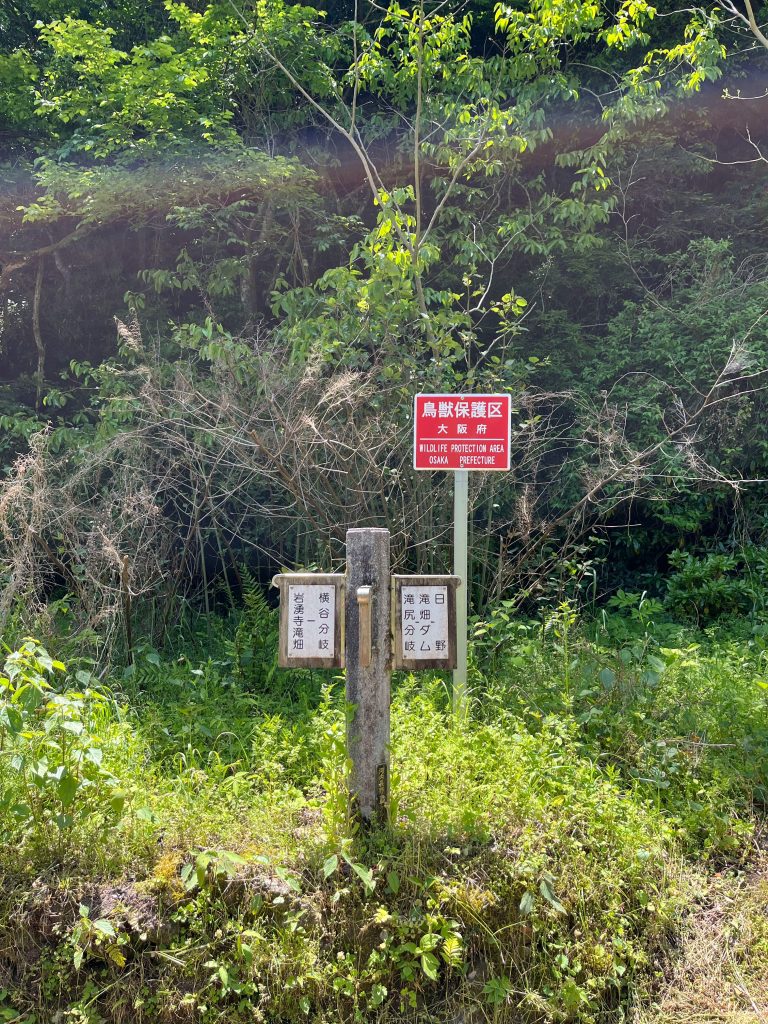
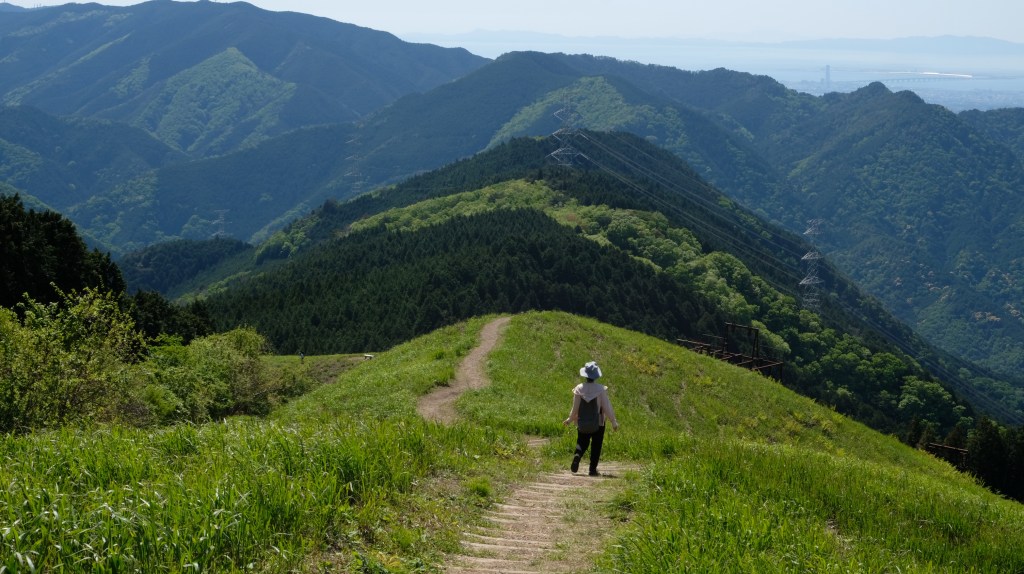
According to Google Maps, cycling to the start of the hiking trail would already take nearly two hours, but it ended up taking considerably longer because the final three to five kilometres consisted of steep mountain roads. With an overly heavy bicycle carrying only seven gears, I was forced to walk this section whilst pushing the bike beside me. By the time I arrived at the trailhead, I was already exhausted. But with Parham and Vincenzo having completed the climb before me — and knowing I was certainly not the least fit amongst us — I was determined to reach the summit of Mount Iwawaki. This was followed by another hour of climbing along poorly maintained paths filled with uneven steps and large rocks.
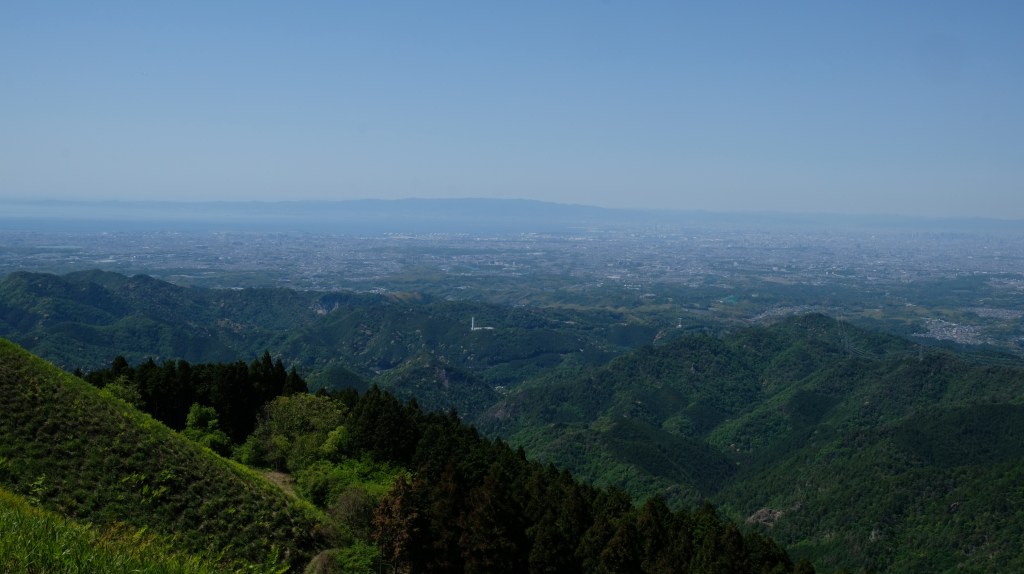
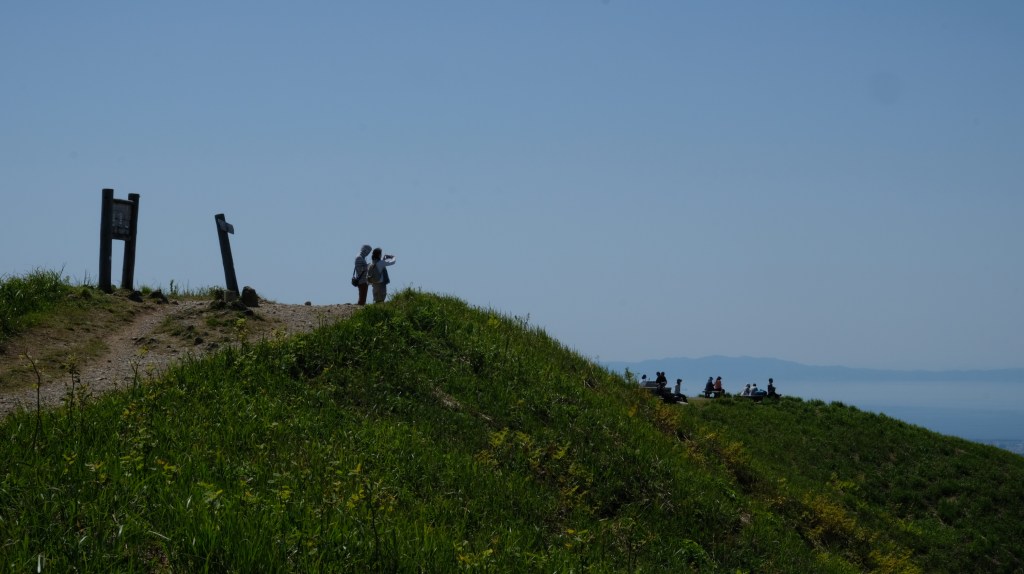
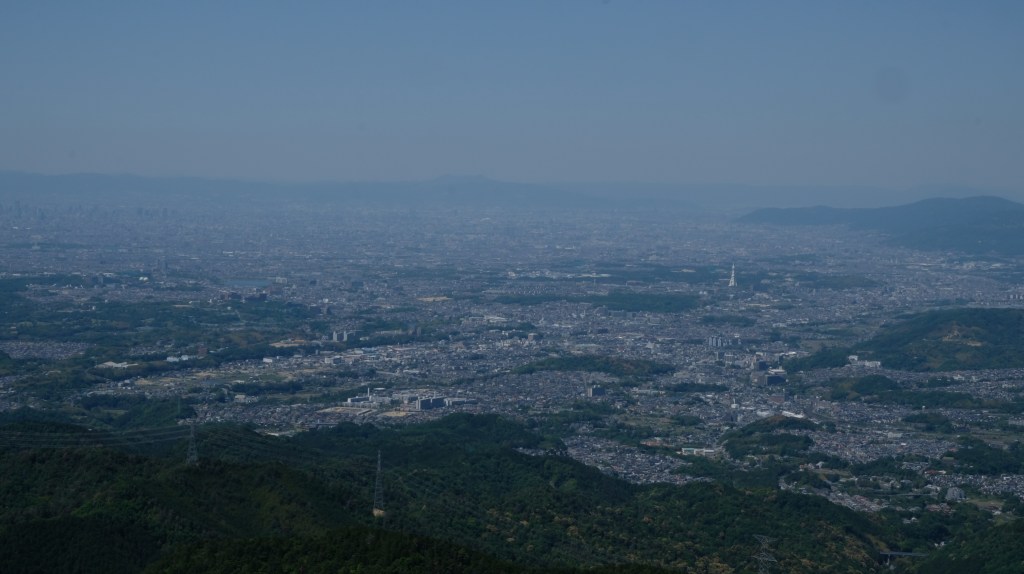
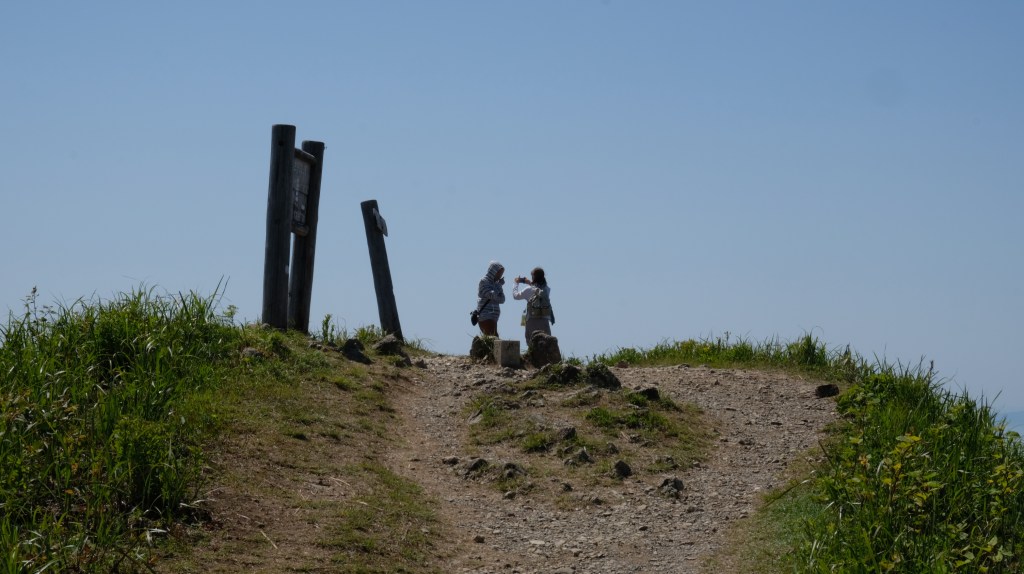
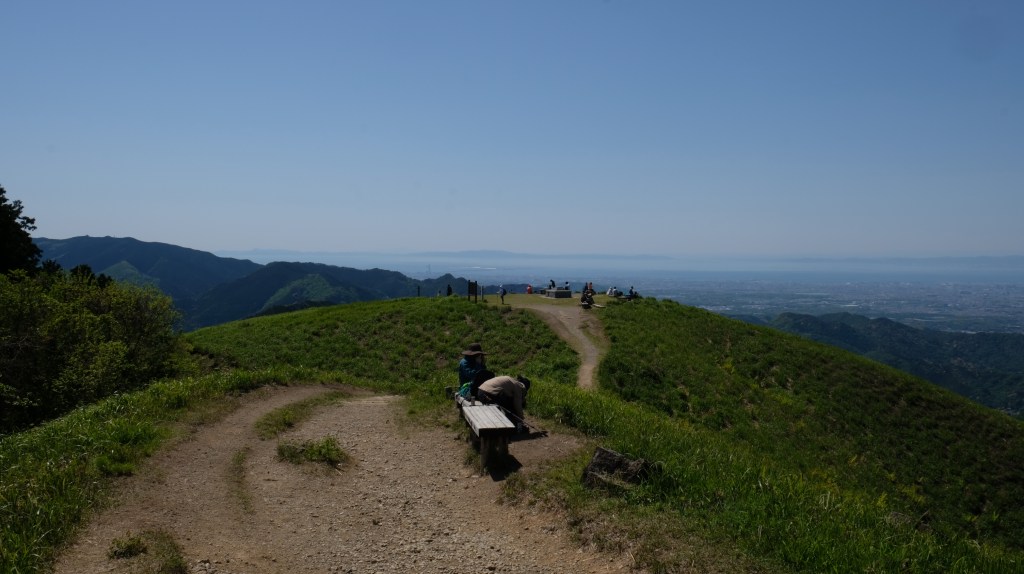
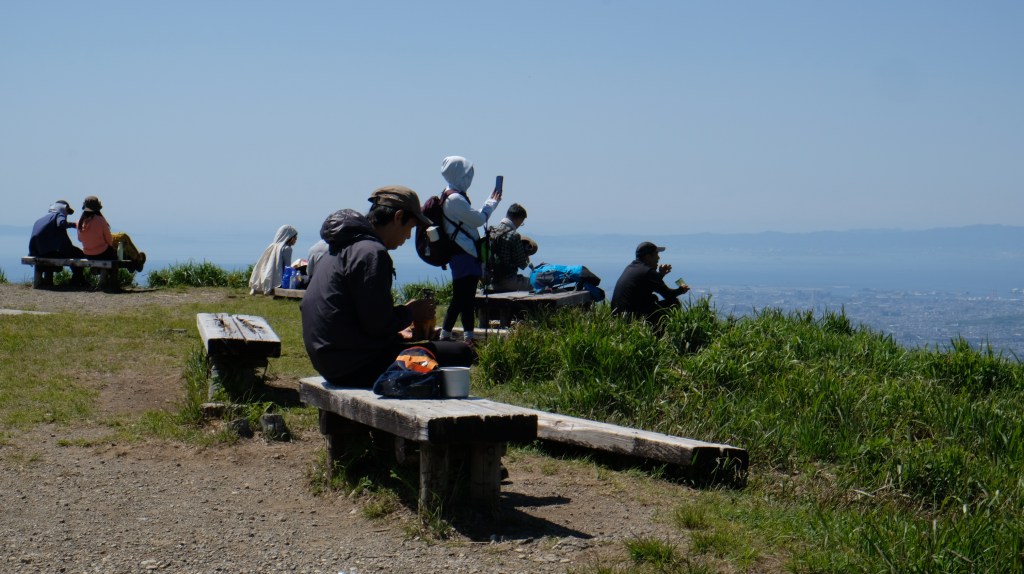
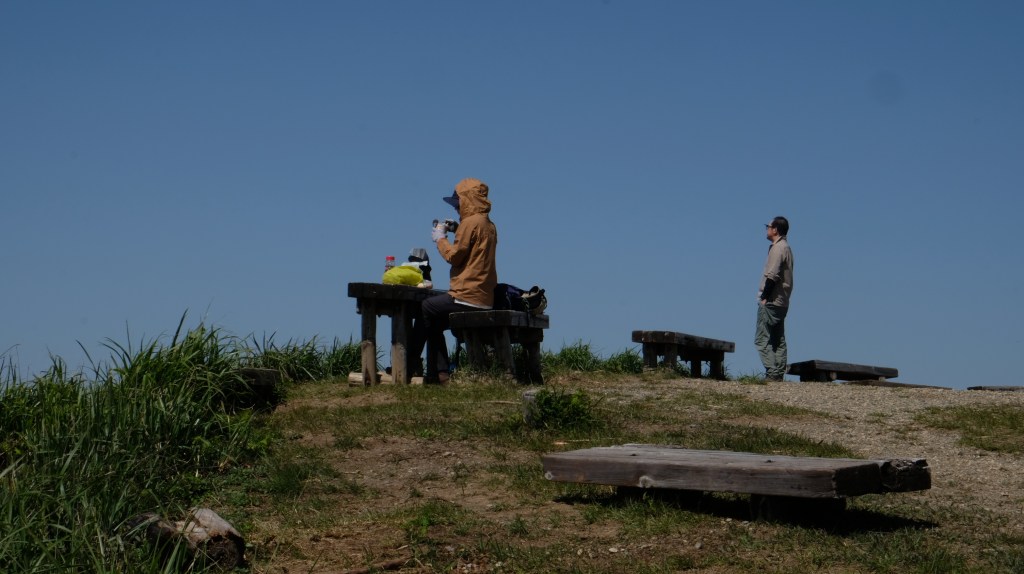
The feeling of finally seeing the summit come into view during the final stretch was magnificent. And once at the top, the view was absolutely worth the effort. I was certainly not the only person to reach the summit that day, but I was probably the only one who had cycled there. I thoroughly enjoyed the panoramic view across Osaka and the smaller towns further south, including Izumi. Kobe could also be seen in the distance. Unfortunately, apart from a single banana, I had not brought any snacks to reward myself for the ordeal. Whilst hungrily watching the other hikers enjoying their hot snacks, I comforted myself with the thought that the view and the achievement itself were reward enough for the time being.
I ended the day with a well-earned visit to the nearest onsen, followed by dinner at an Indian-Nepalese restaurant for a plate of curry with naan — my obsession of recent weeks. As I enjoyed the curry, naan, and a bottle of Kingfisher beer, the television in the restaurant happened to be showing a Westerner trekking through the Himalayas for several days. It certainly put my own ordeal of the day into perspective.


Leave a Reply