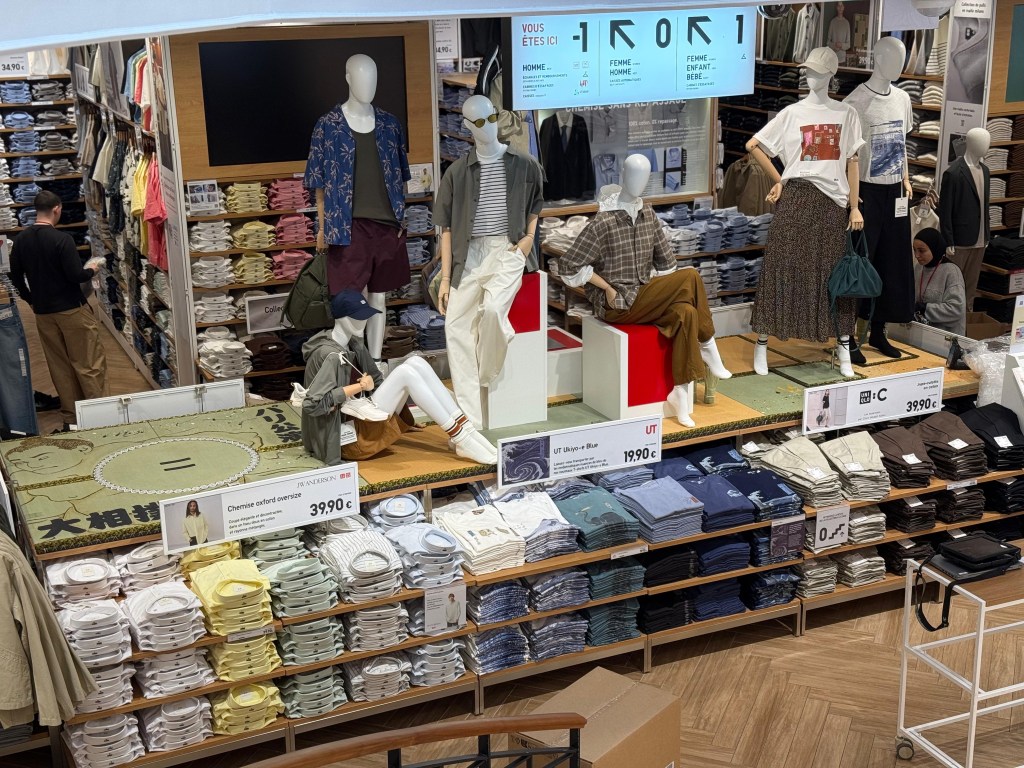
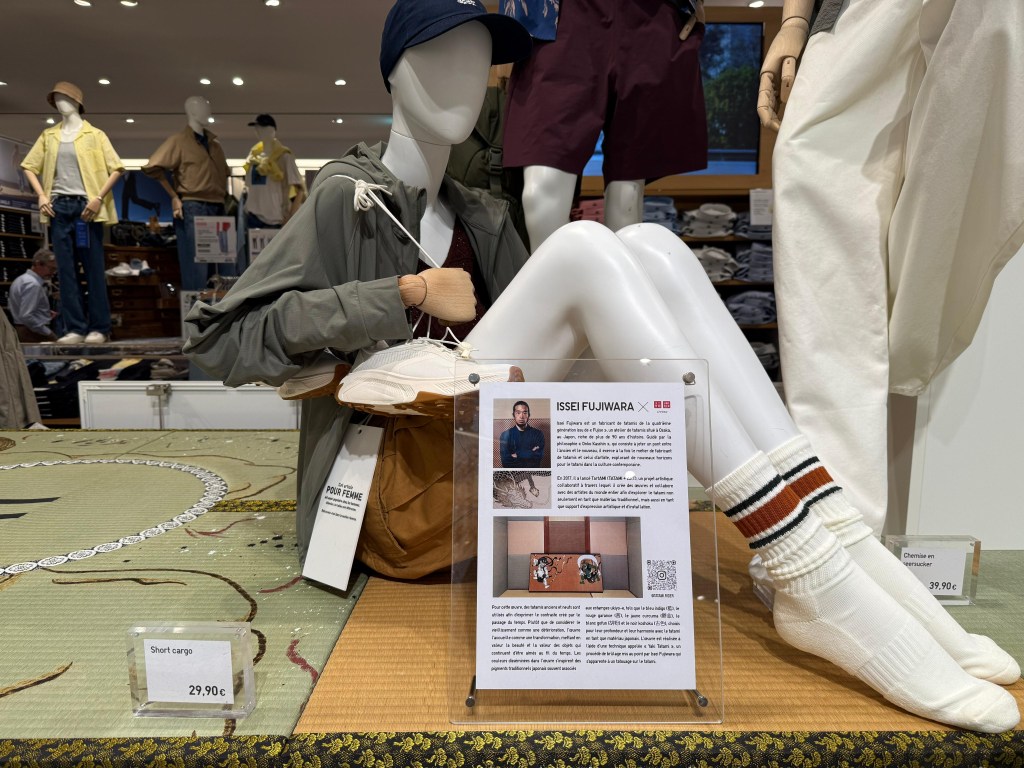
A little while ago, Issei received a surprising message from Paris from the popular Japanese clothing brand UNIQLO. In the lead-up to the international sumo tournament being held in Paris on 13 and 14 June 2026, they were looking to collaborate with a Japanese artist. Somehow, they came across the work that Issei has been devoted to for almost ten years: using (old) tatami mats as canvases and adorning them with artistic, distinctly Japanese imagery in his own unique style. They most likely discovered him through his Instagram account, which is certainly worth a look.
The commission UNIQLO had for Issei was to create a tatami installation that would honour both traditional Japanese craftsmanship in the form of tatami mats and the historic yet still immensely popular sport of sumo wrestling. It was a unique opportunity to showcase Issei’s passion, and his father’s craftsmanship, to a large international audience. However, as is often the case in both the fashion and art industries, the deadline for completing the installation was already looming from the outset.
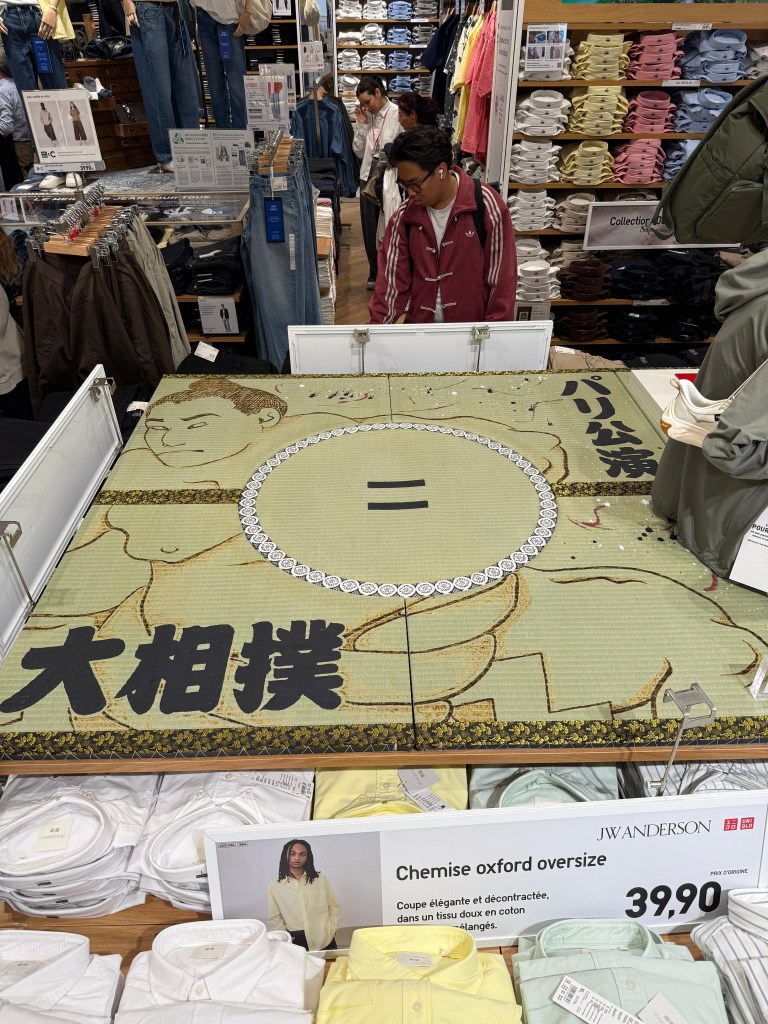
Numerous phone calls with UNIQLO Paris and its Japanese representatives were required before agreement could be reached on the final design of the installation. The basic concept was approved fairly quickly: two rows of tatami mats, with a circular tatami mat incorporated into the left-hand section, representing the characteristic ring of the ancient sport, the dohyō (土俵). What artwork Issei would be allowed to apply to the mats, however, became the subject of lengthy discussions.
Issei produced numerous designs, all of which he showed me. Every time, I was impressed by the way he depicted sumo in his own distinctive yet unmistakably Japanese style. Unfortunately, the client was unwavering in its demands, insisting that the imagery on the mats should be considerably more “basic” – in other words, more restrained and realistic. After several rounds of revised proposals, an agreement was eventually reached.
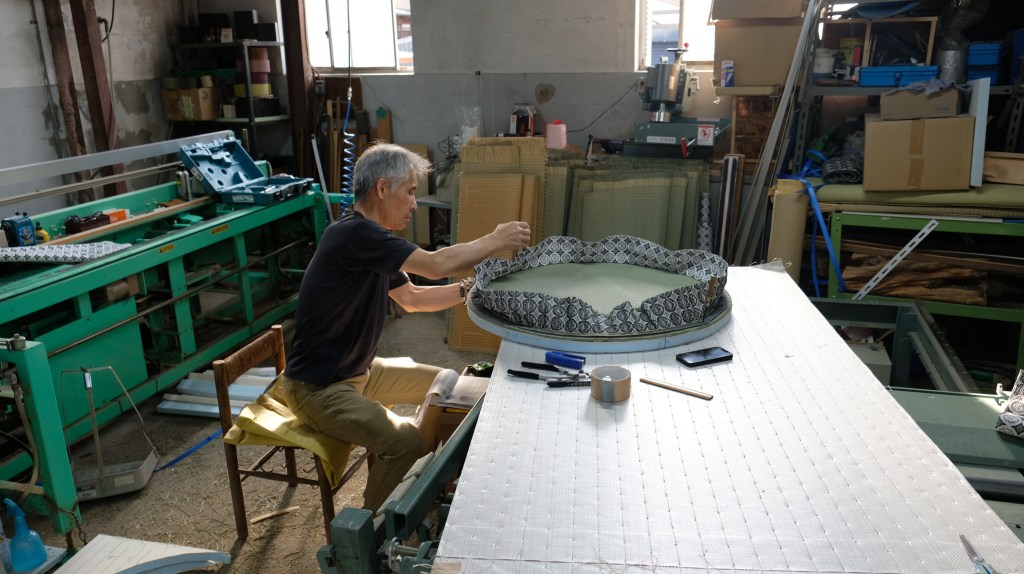
Meanwhile, Hiromasa was busy producing the tatami mats themselves – the canvas upon which Issei would work. This first required collecting custom-made tatami bases from a specialist Styrofoam manufacturer in Gojo, Nara. The thickness of these bases was particularly important, partly because a special type of heri (decorative edging fabric) had been selected, but also because the mats needed to be as lightweight as possible. The plan was for Issei to personally transport the mats to Paris and assemble the installation before the exhibition opened on 20 May.
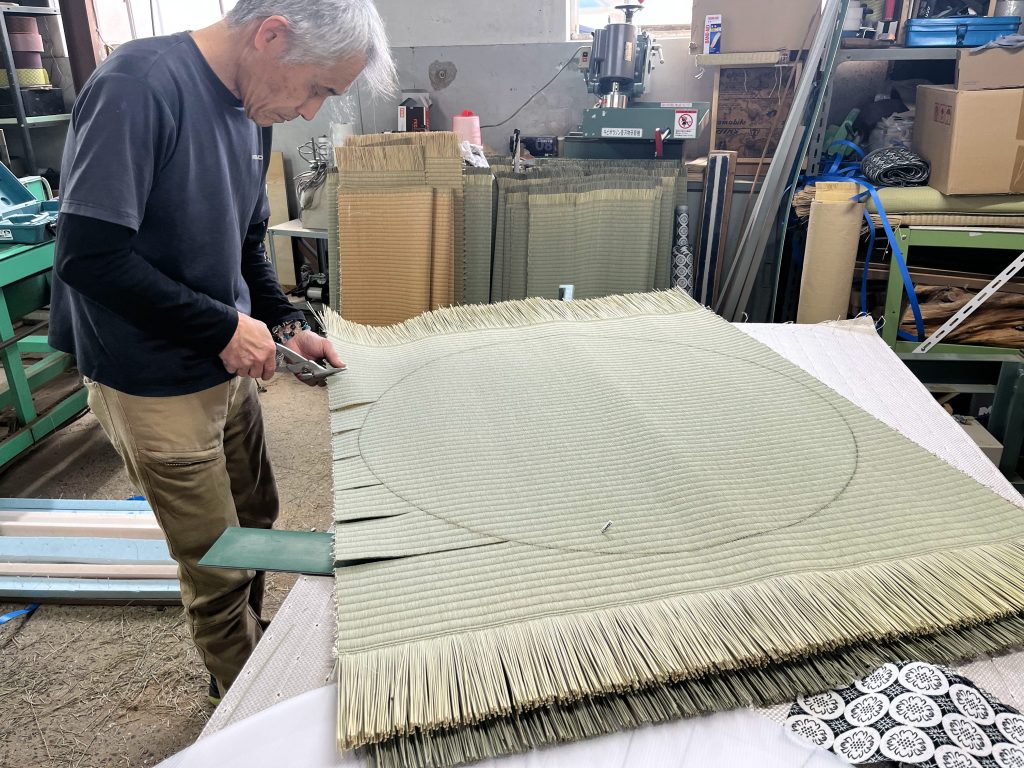
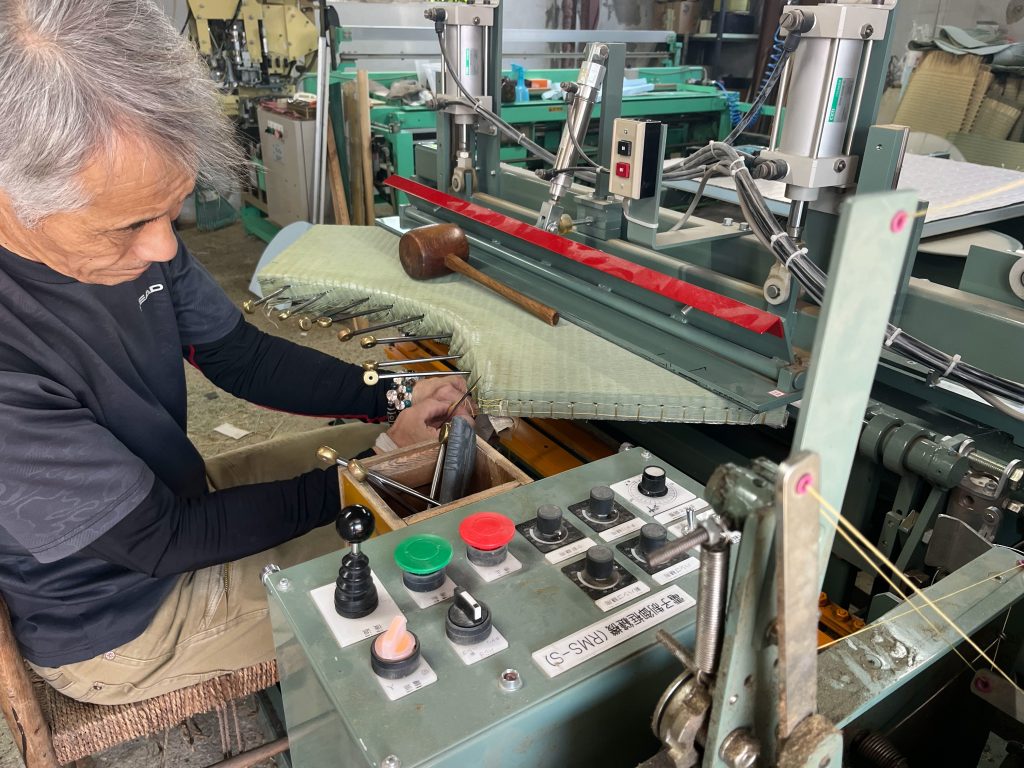
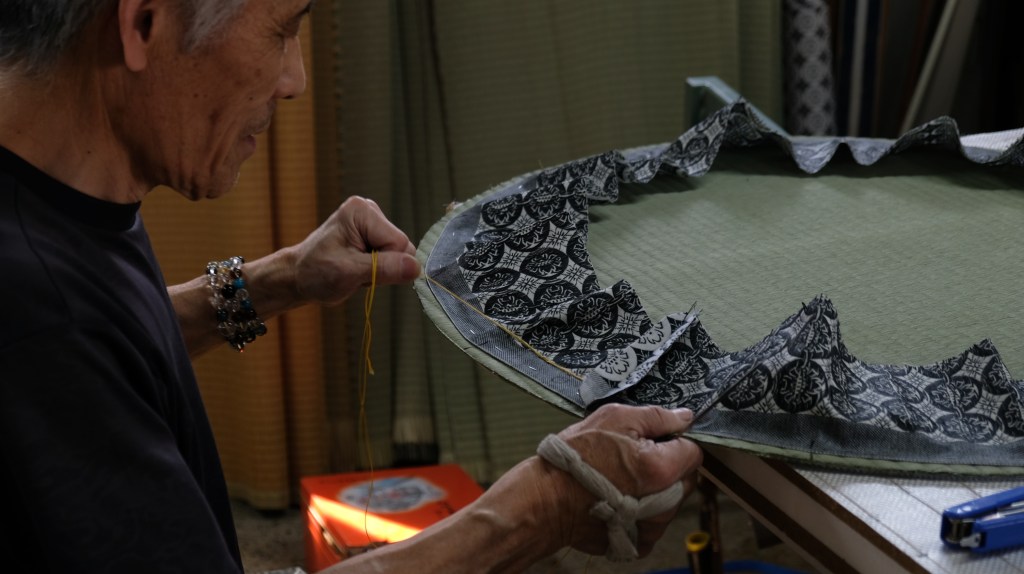
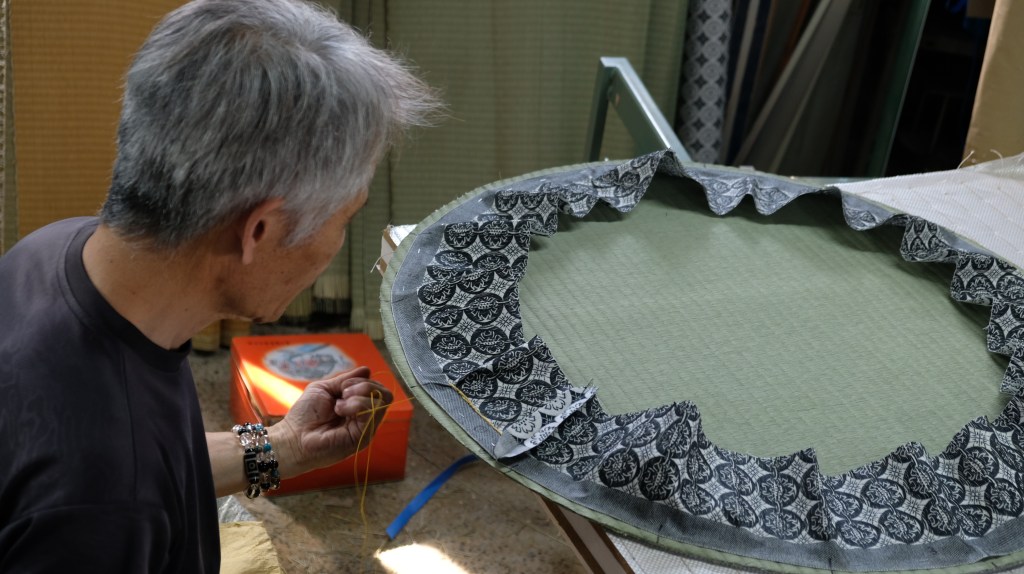
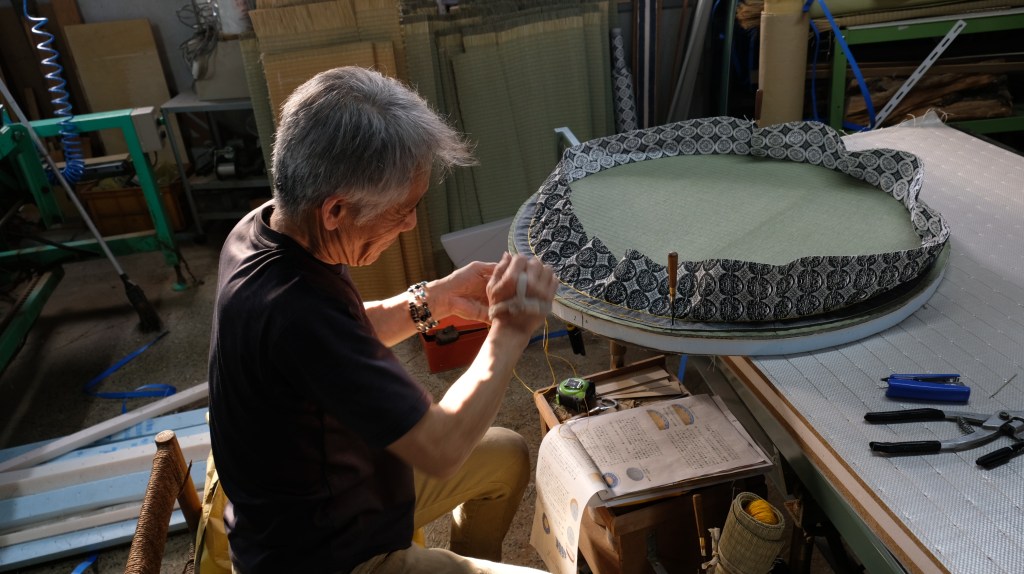
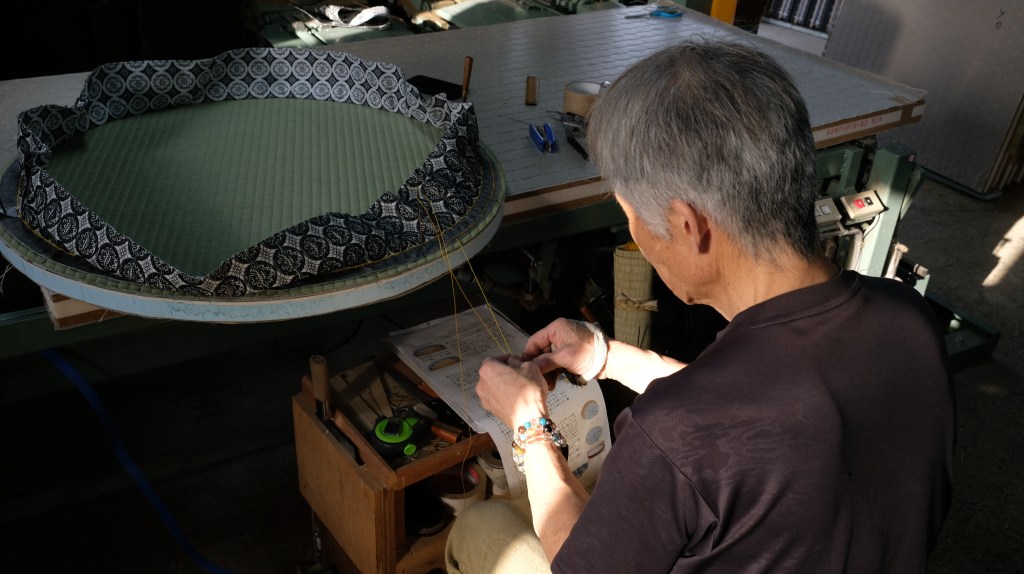
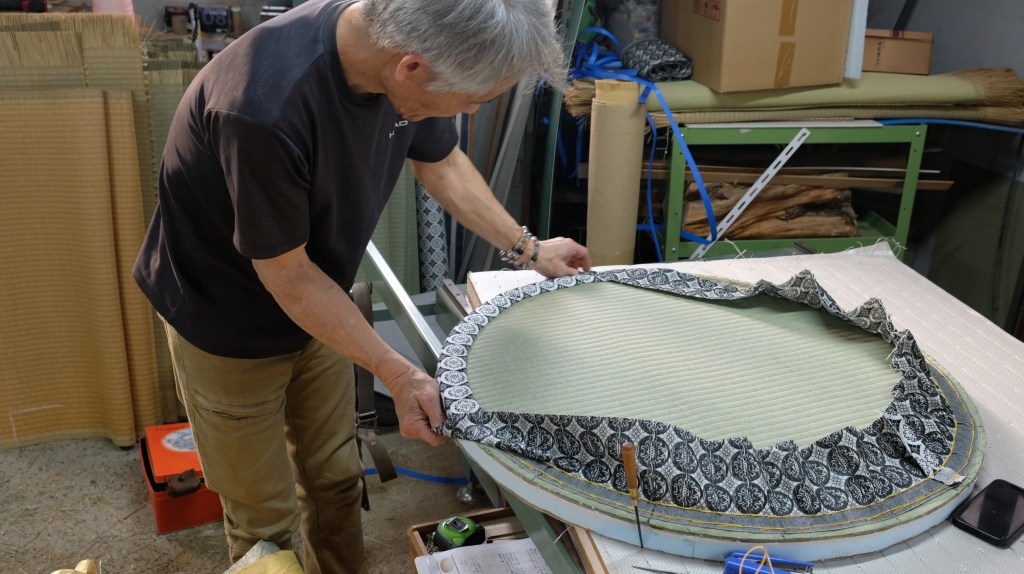
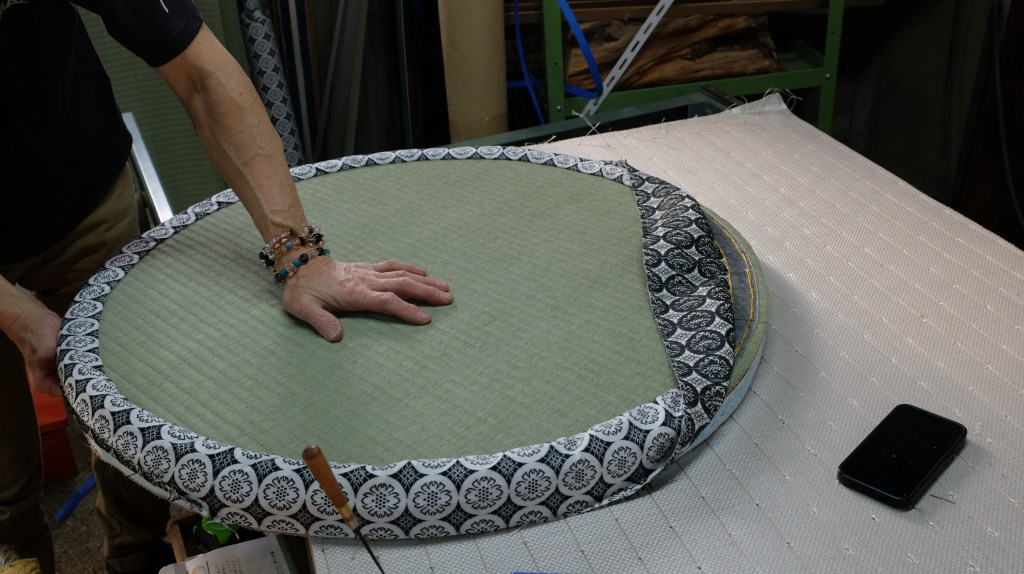
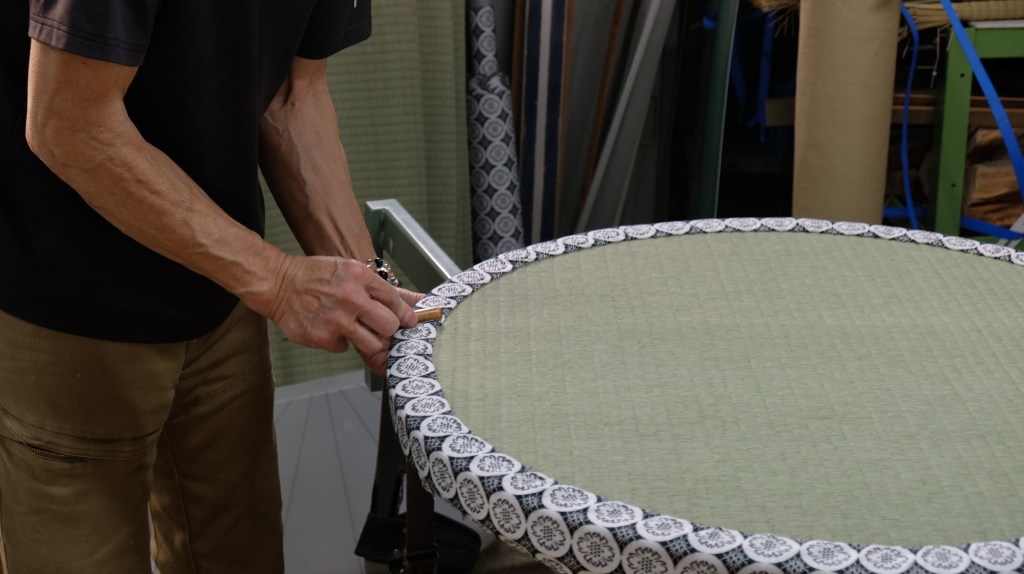
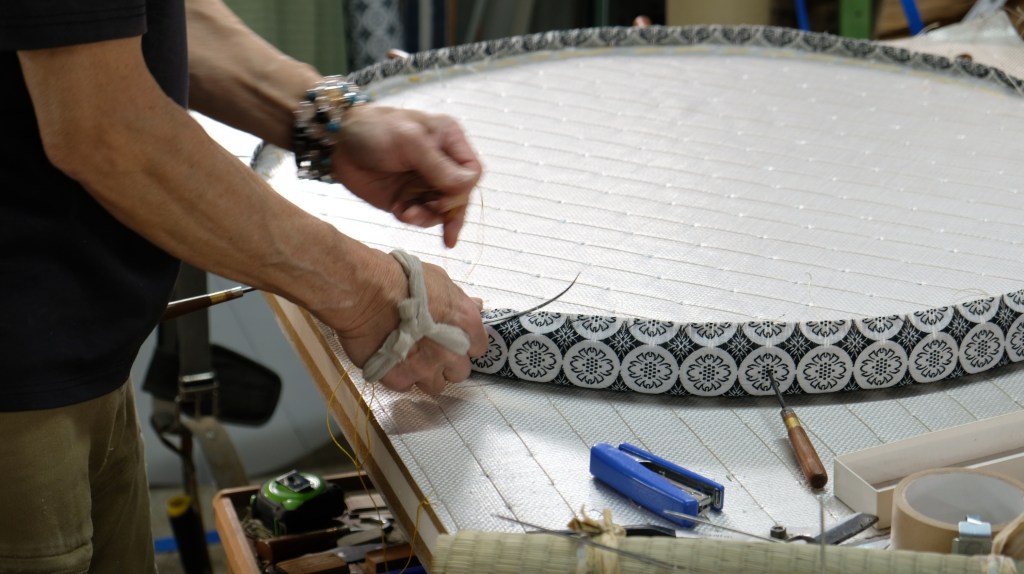
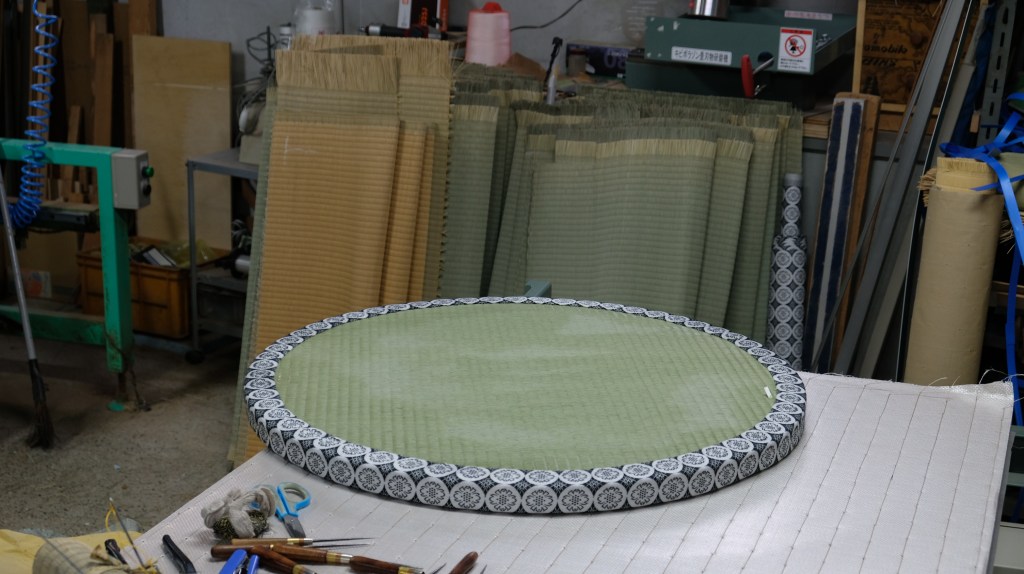
With considerable time pressure, father and son set about creating a number of highly specialised tatami mats. It was the first time Hiromasa had made a circular tatami mat of this size. It turned out to be a task that required an entire day. Owing to its unconventional shape, almost everything had to be done by hand – machinery offered little assistance. As challenging as this was, the four surrounding tatami mats proved even more difficult. Each of these mats required a quarter-circle cut from the inner edge so that they would fit perfectly around the circular centrepiece.
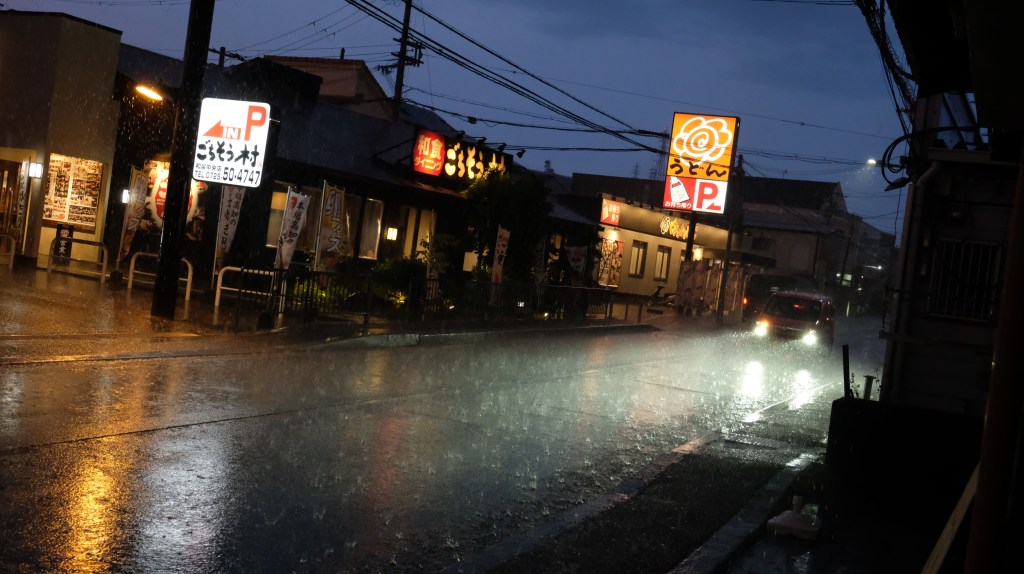
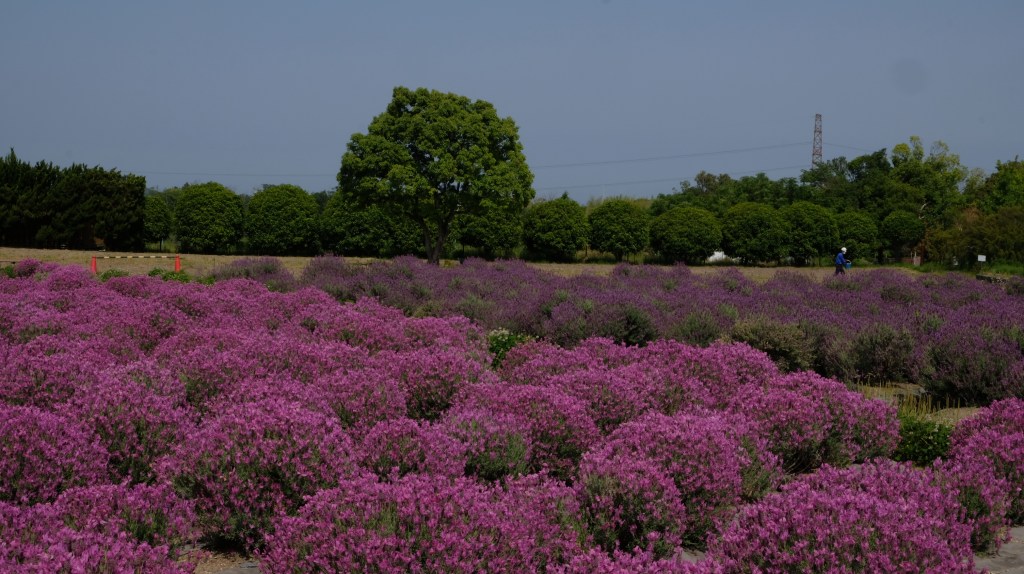
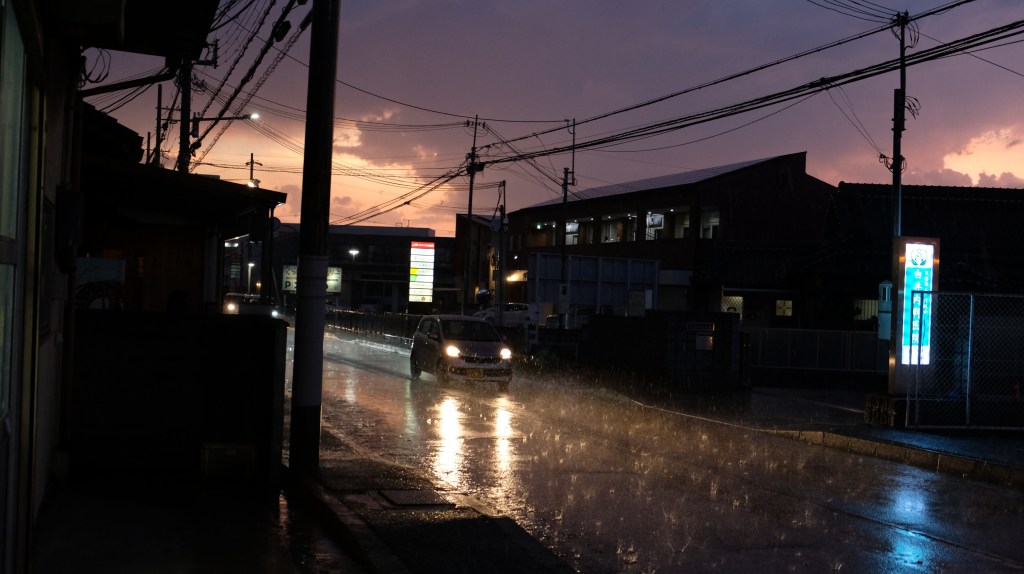
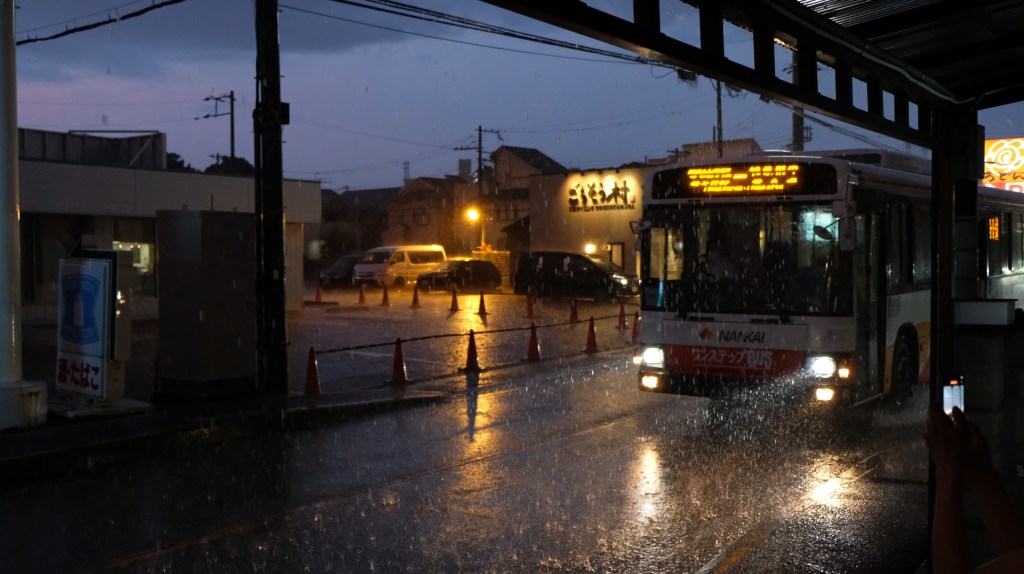
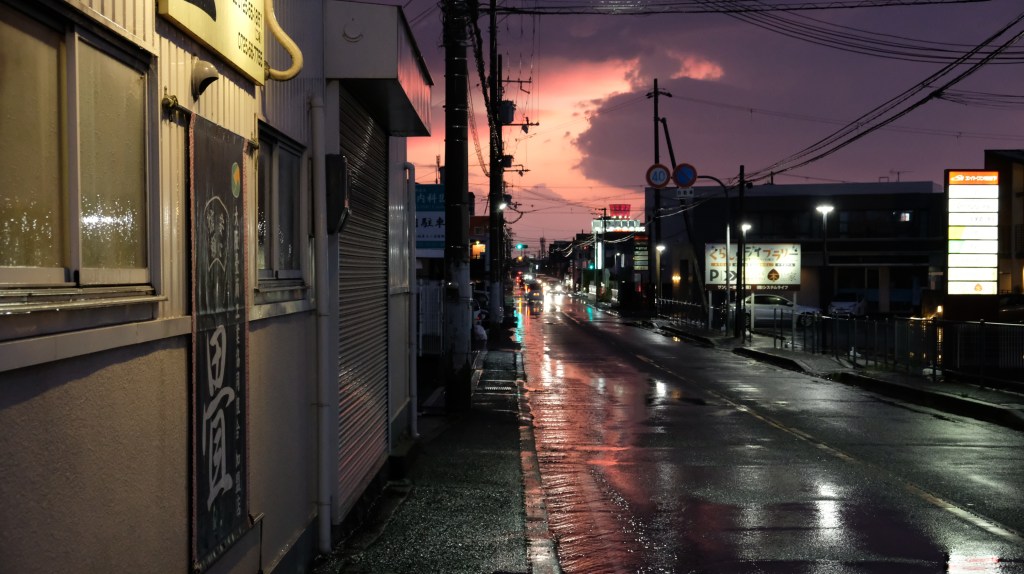
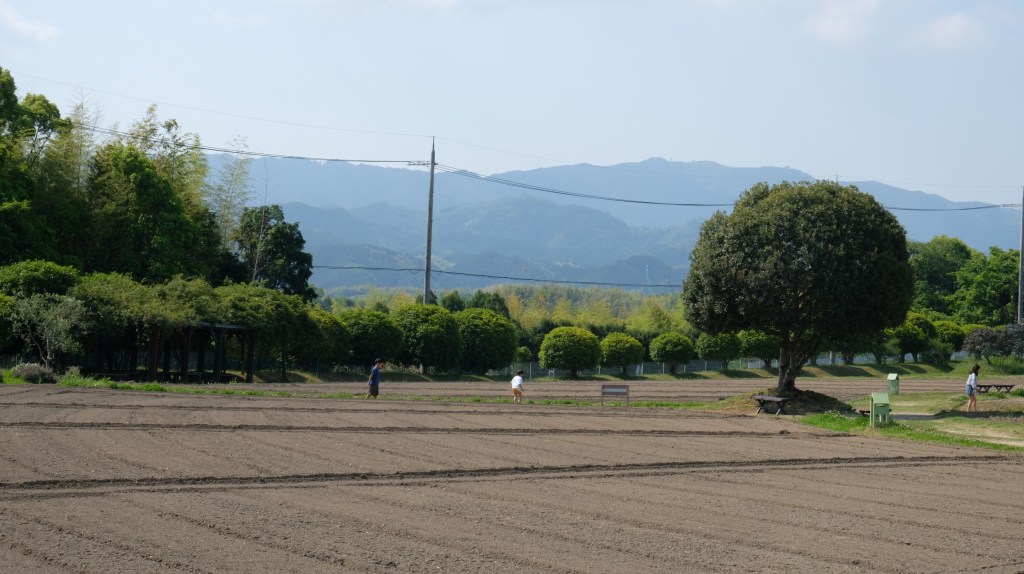
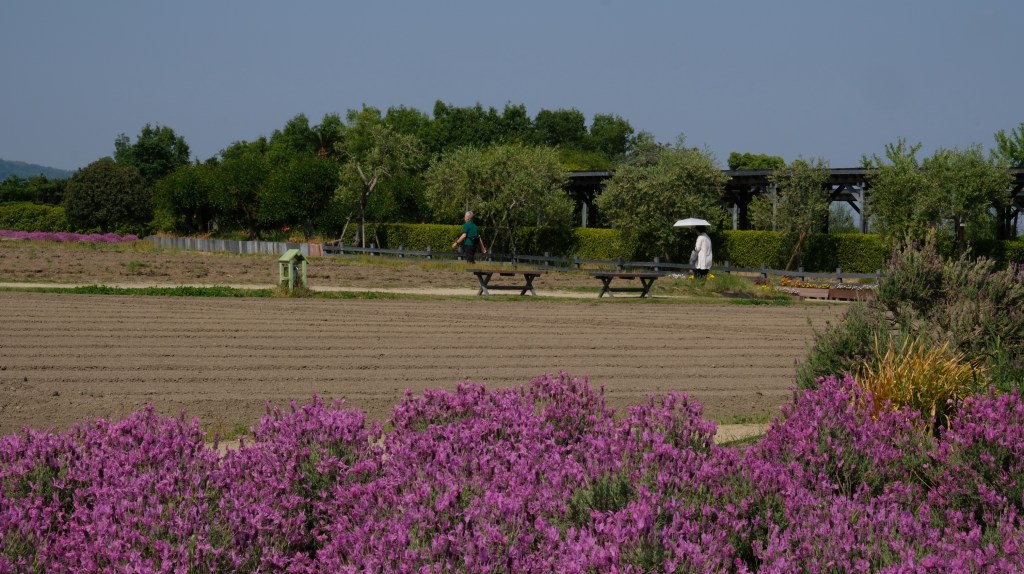
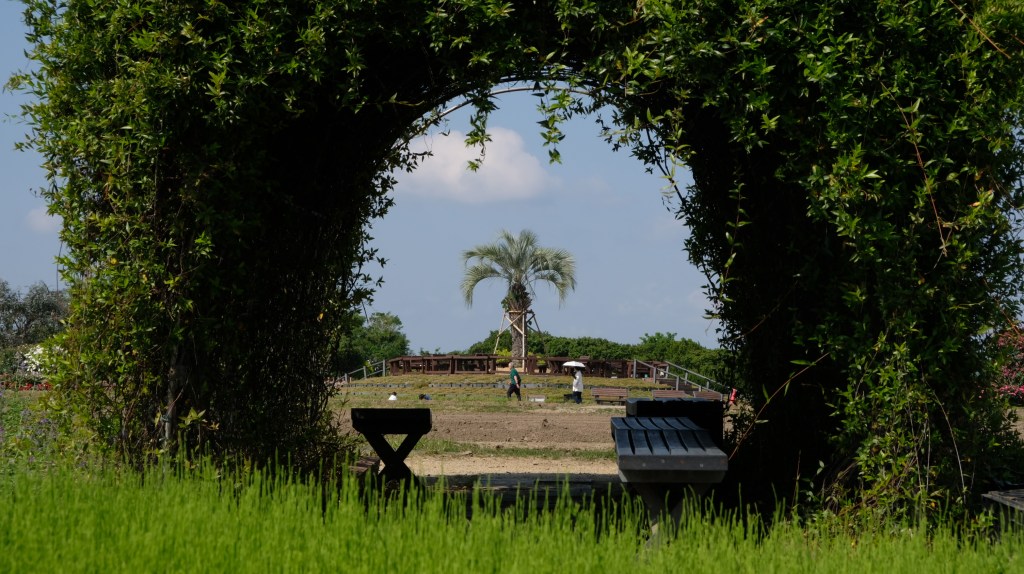
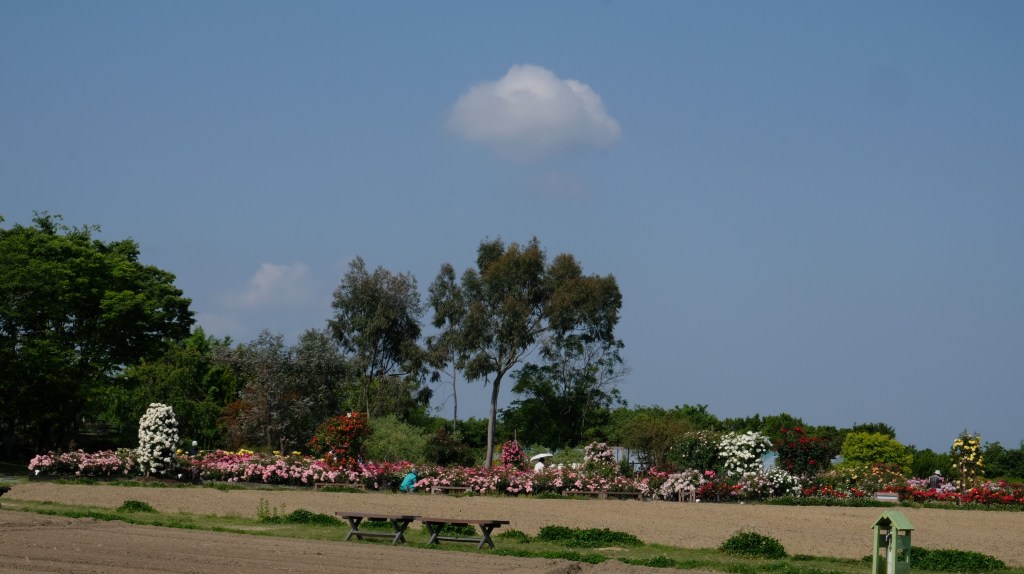
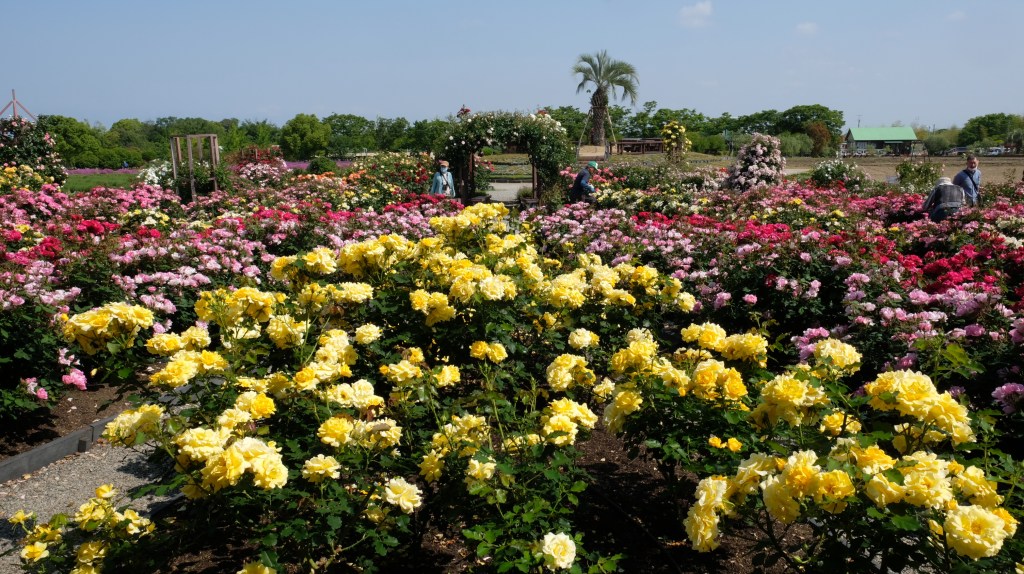
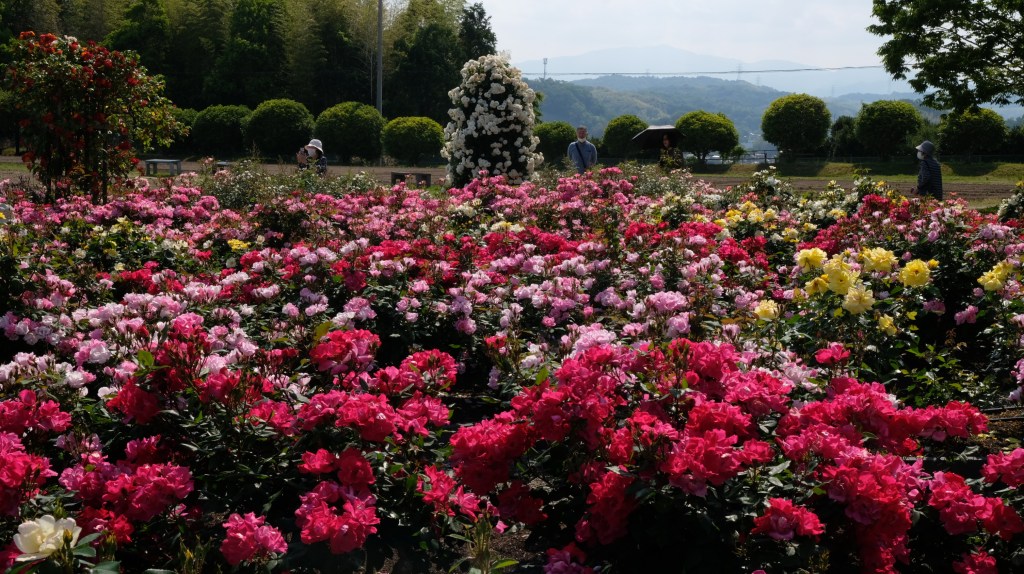
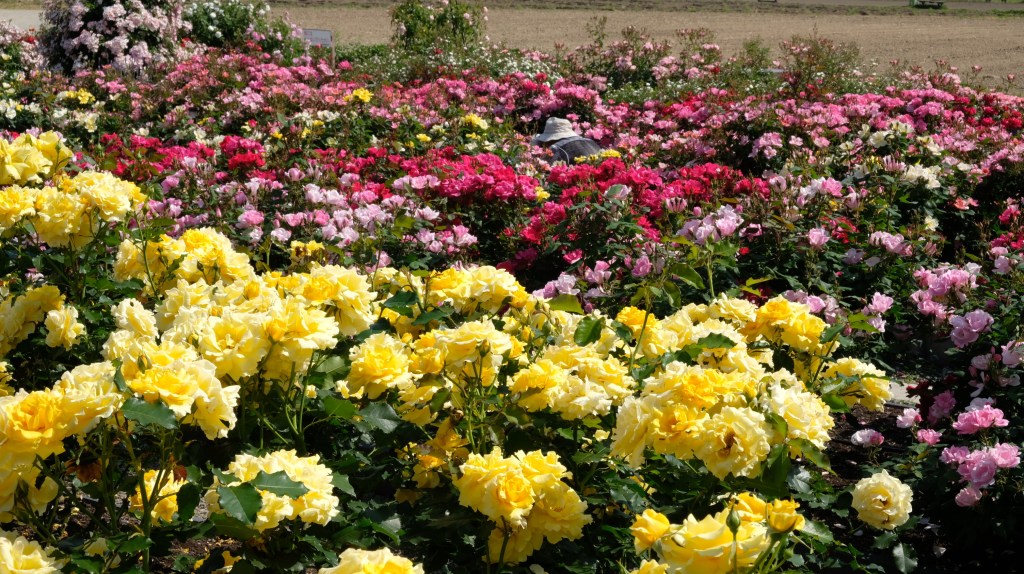
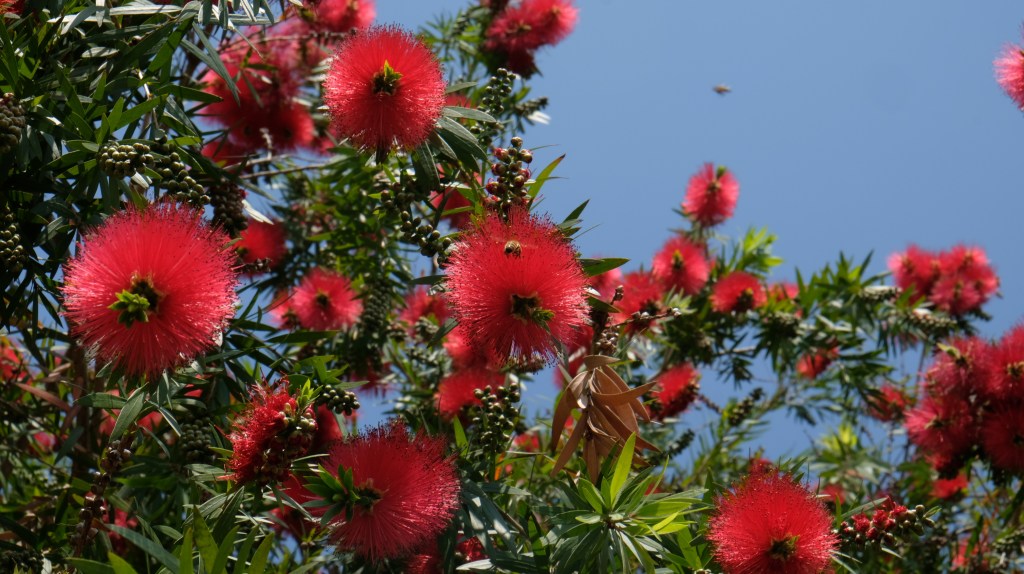
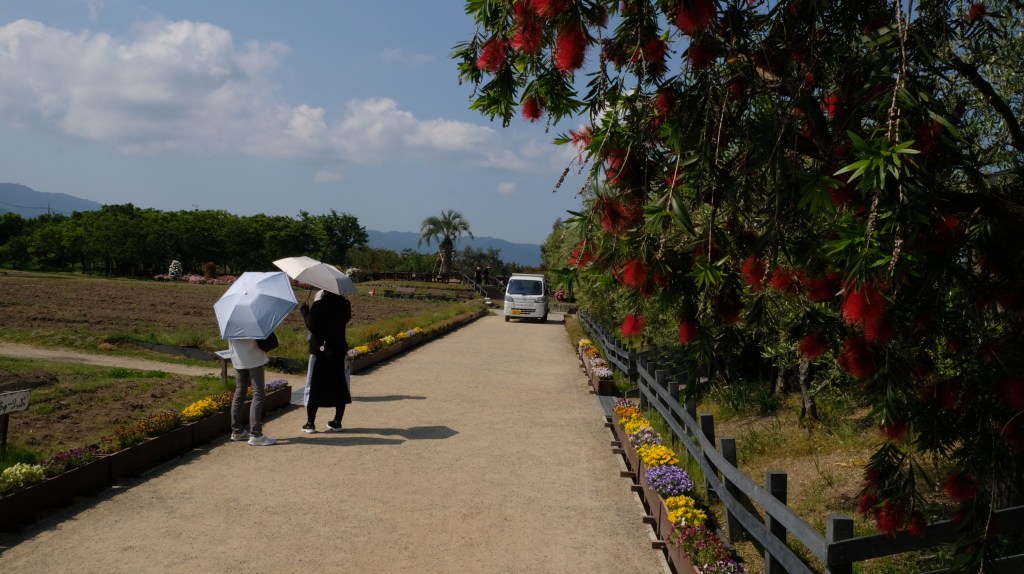
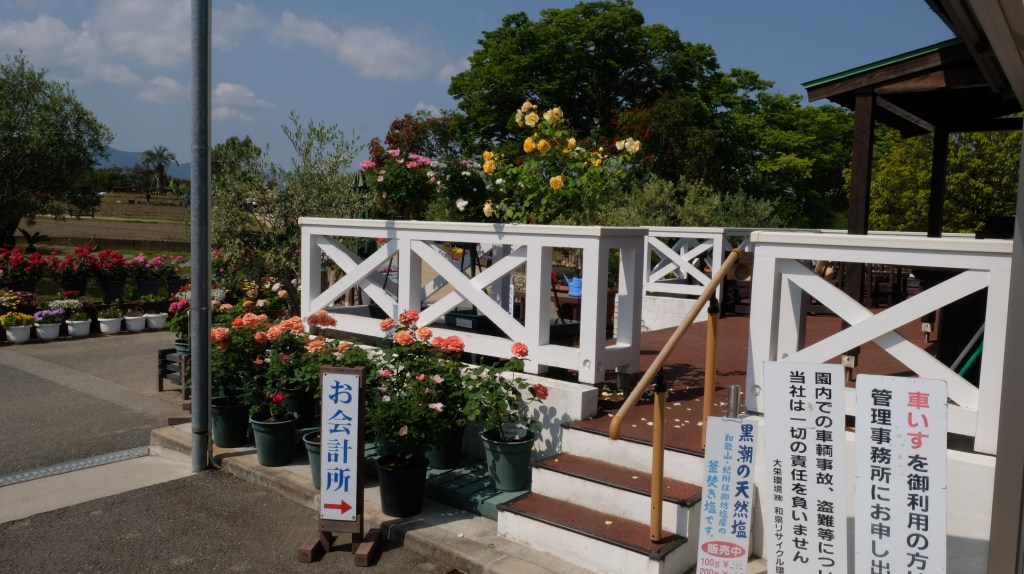
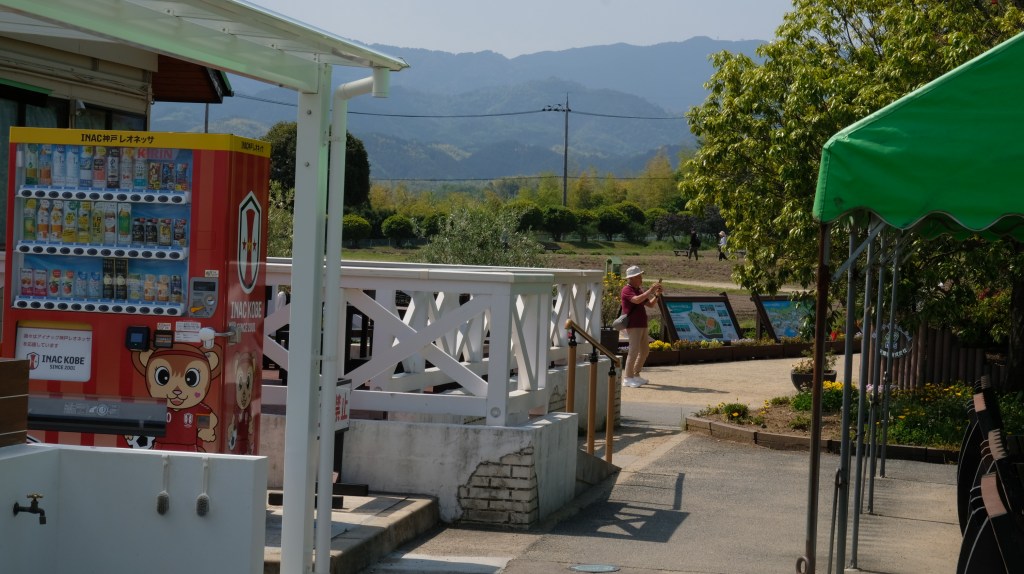
While Hiromasa devoted his days to this labour-intensive project, I found myself with a little more free time. I wrote another blog and worked remotely for my employer in the Netherlands from behind my laptop. The weather was exceptionally sunny and warm, which one evening led to a sudden and completely unexpected thunderstorm. I have never seen rain fall so heavily here in Izumi, and it resulted in some remarkable photographs with my camera. Later, I paid another visit to the large flower garden, Izumi Recycle Environment Park, where, among other things, the lavender was already in full bloom. Every time I walk around there, I tell myself that I should visit more often, but for some reason I never quite manage it.
Back at the Fujise tatami workshop, the UNIQLO project was still in full swing. Thanks to Hiromasa’s experience and craftsmanship, the specially commissioned tatami mats turned out beautifully. He had also discovered an unusual roll of heri fabric in storage, woven with golden threads and decorated with a matsunoki (松の木, pine tree) motif. This rare edging fabric was incorporated “not only as a decorative element, but also as an expression of craftsmanship, material, and space”. Source: https://www.instagram.com/p/DY_8oVjmCl2/?img_index=1
Only once these specially shaped tatami mats had been completed could Issei begin applying the agreed design to the igusa surface. To do this, he used a wood-burning tool, or pyrography pen, with which imagery is burned into the natural surface. Issei refers to this technique as Yaki Tatami (焼畳), or “roasted tatami”. The igusa used for the project originated from Kumamoto on the southern island of Kyushu. This region is generally regarded as producing the highest-quality igusa in Japan. During our visit to the Yamatetsu tatami workshop in Wakayama, Hiromasa had purchased several surplus rolls.
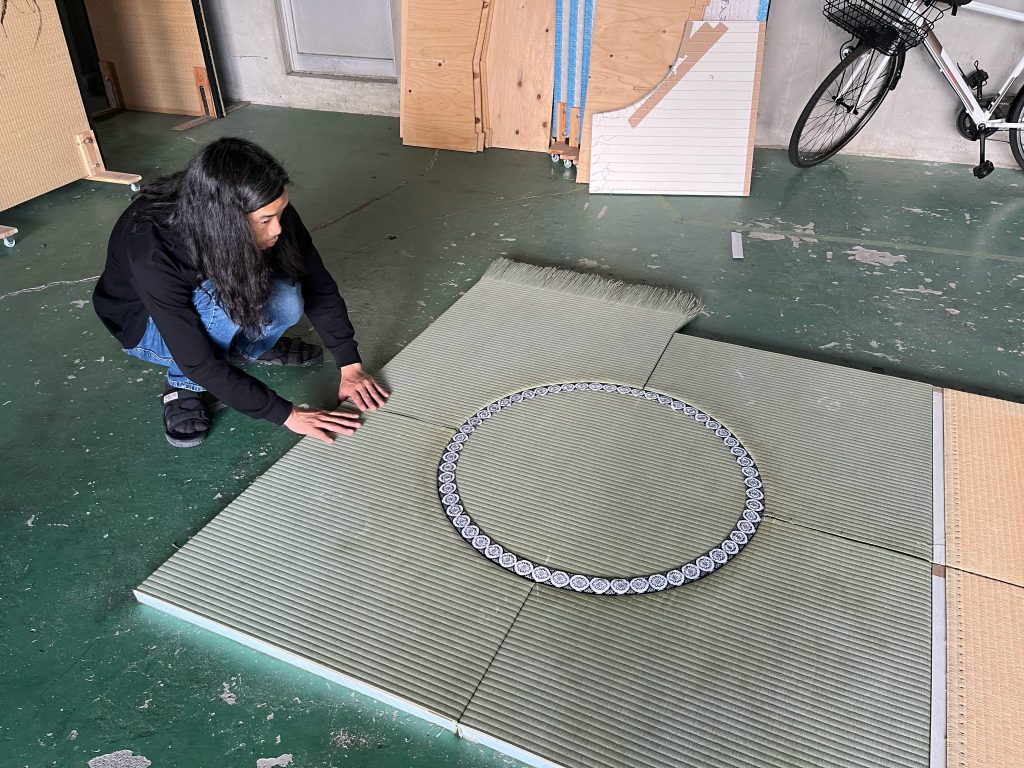
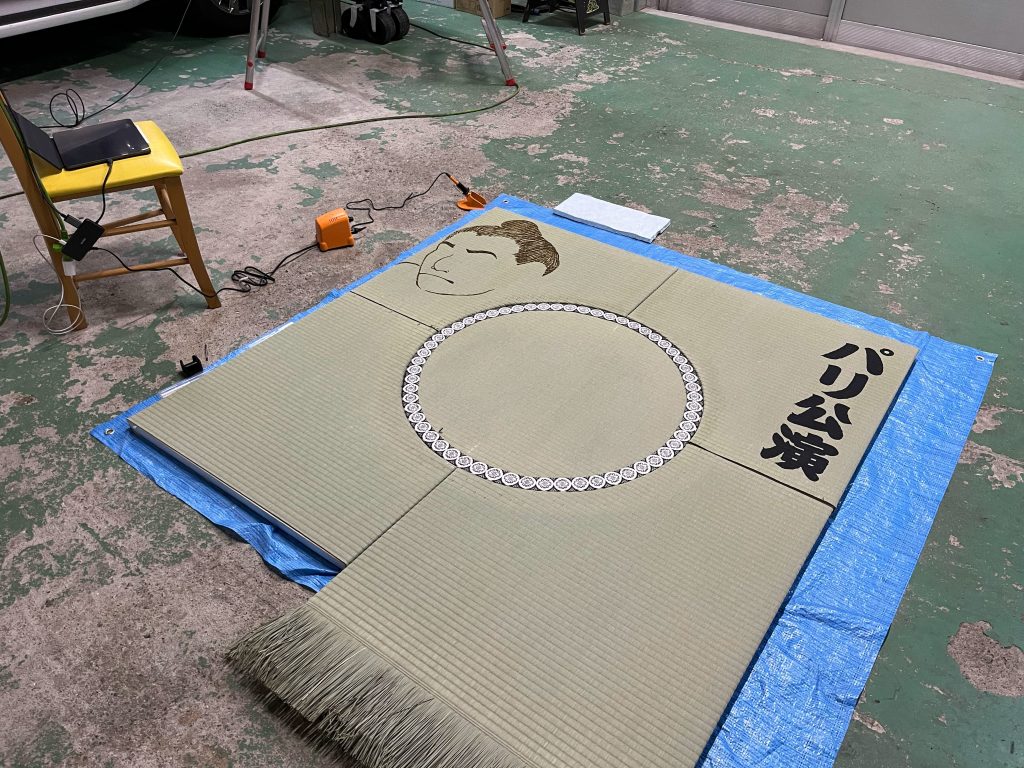
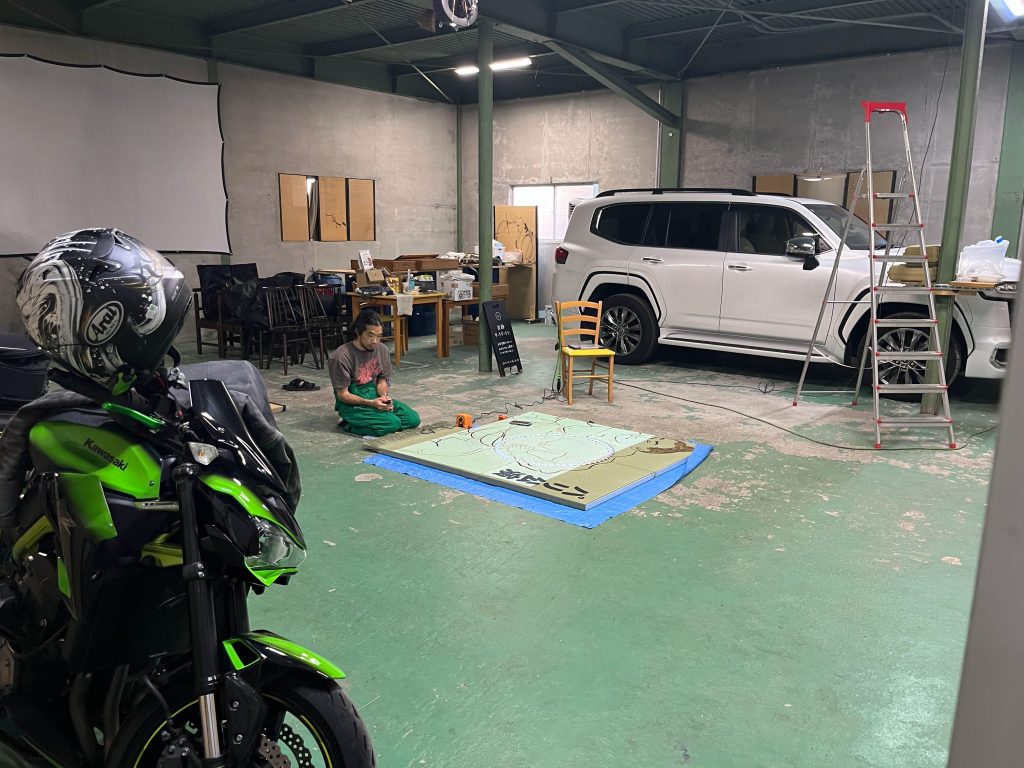
The entire project was completed just in time, allowing Issei to fly to Paris with the tatami installation on Monday, 18 May. It was wonderful to witness father and son finishing the work at the last possible moment and seeing how pleased they both were with the final result. I would have liked to bid Issei farewell before he departed for Paris, but unfortunately that was not possible. I had a trip to Kyoto planned, with one main objective: seeing the film Rental Family, a film recommended to me by the director’s sister when we met on Mount Makio.
I set off for the former capital of Japan by bicycle on Sunday, 17 May. It would be my first visit to Kyoto and, despite – or perhaps because of – the city’s immense popularity, it had never been particularly high on my list of places to visit. Nevertheless, it was bound to happen eventually, so I decided to turn it into an enjoyable cycling excursion. The distance from Izumi to central Kyoto is approximately 70 kilometres, most of which follows the Yodogawa (Yodo River).
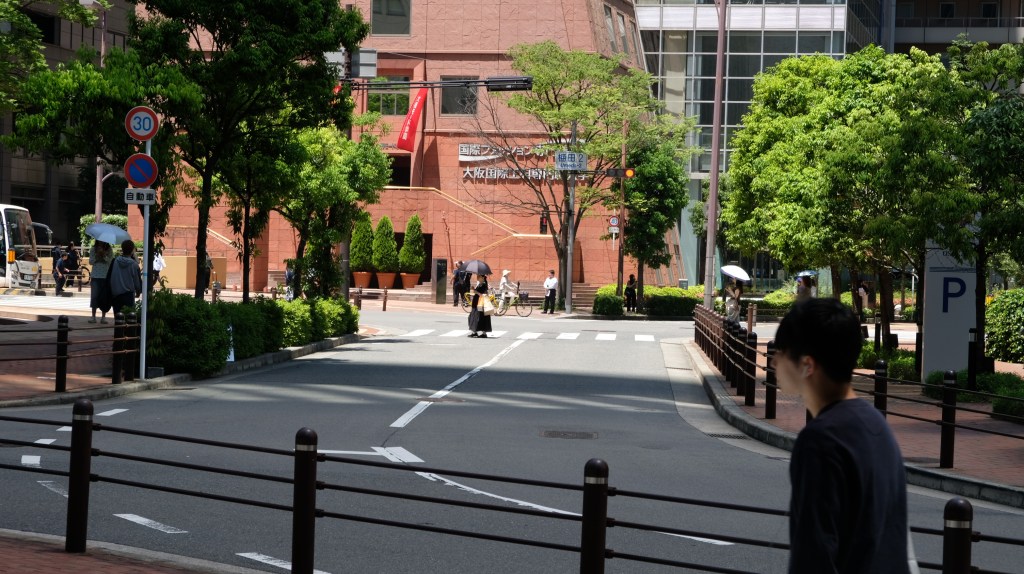
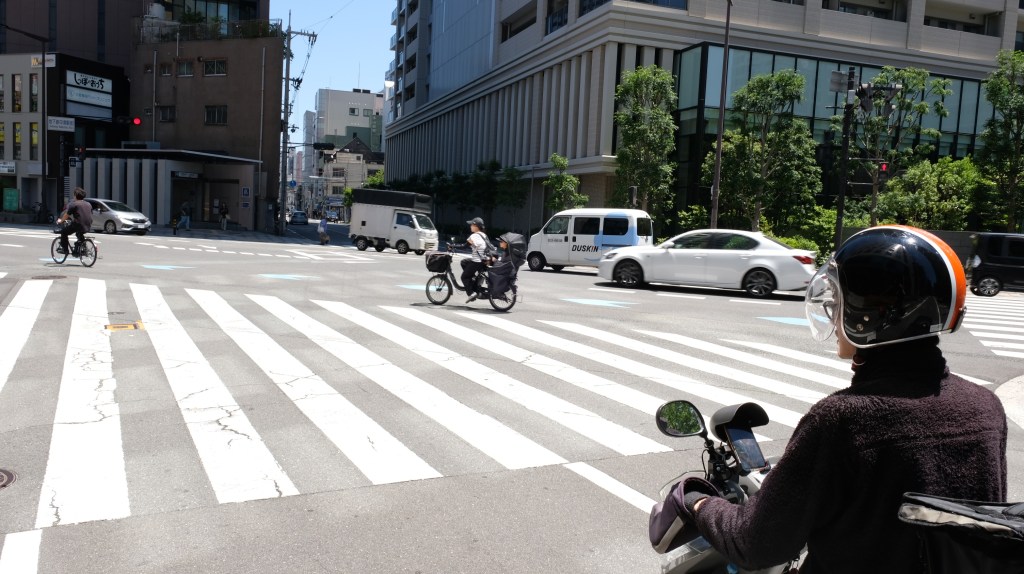
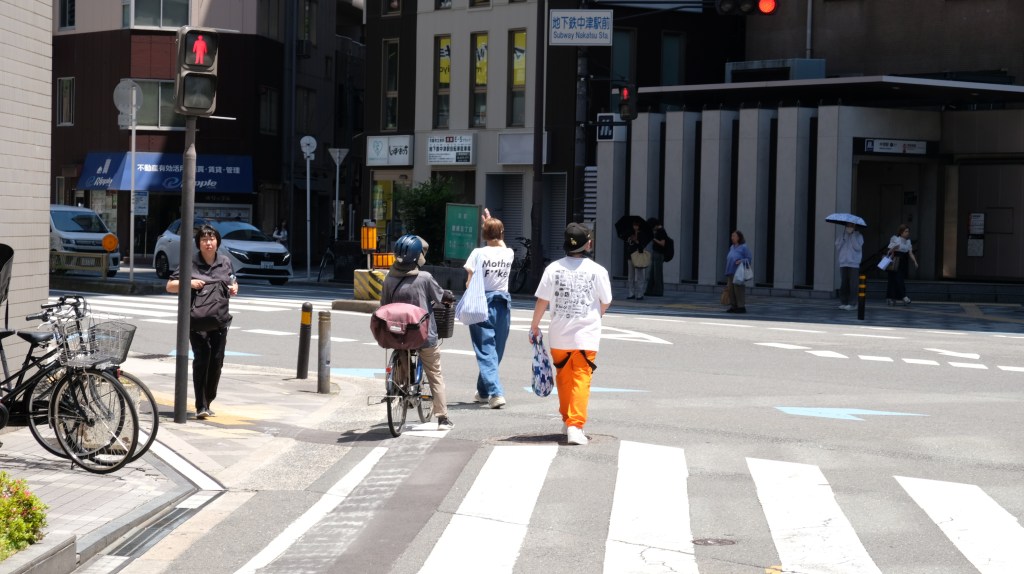
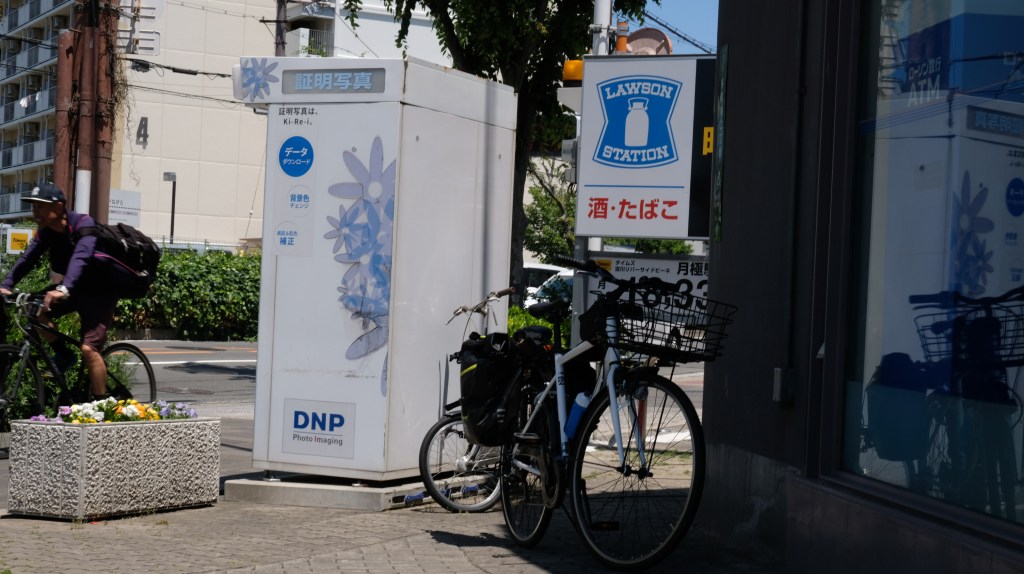
The least enjoyable part of the journey comes right at the beginning. Since Izumi lies far to the south of Osaka Prefecture, I first had to cycle roughly 30 kilometres through increasingly dense urban areas. Countless traffic-light-controlled junctions make it impossible to maintain momentum, and you frequently find yourself waiting at red lights. Even on a Sunday morning, it is an exhausting experience, though undoubtedly more manageable than it would have been on a weekday.
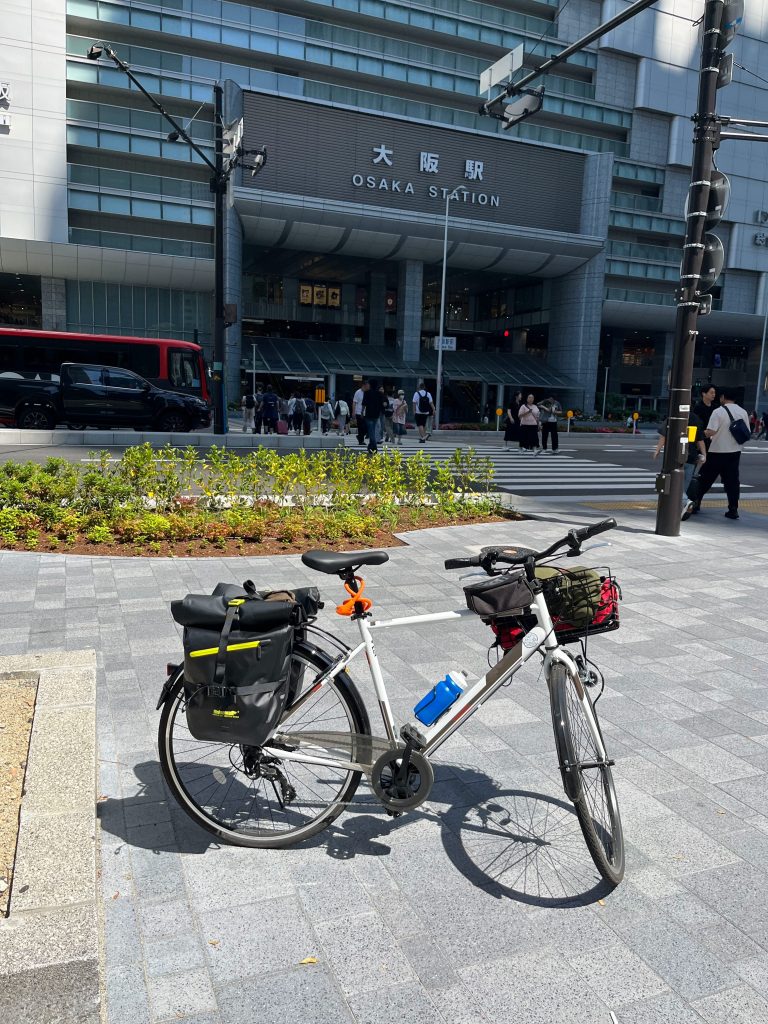
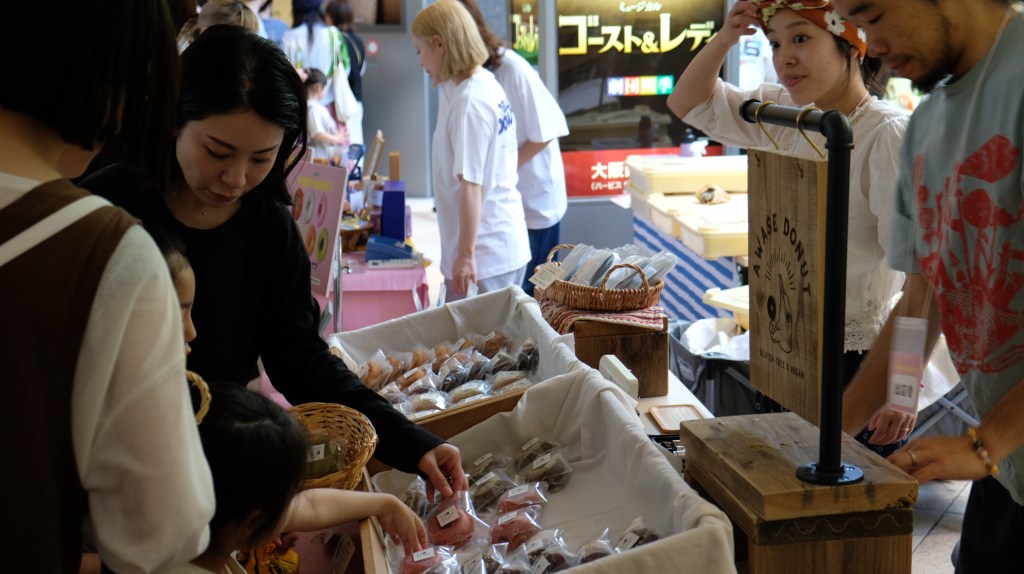
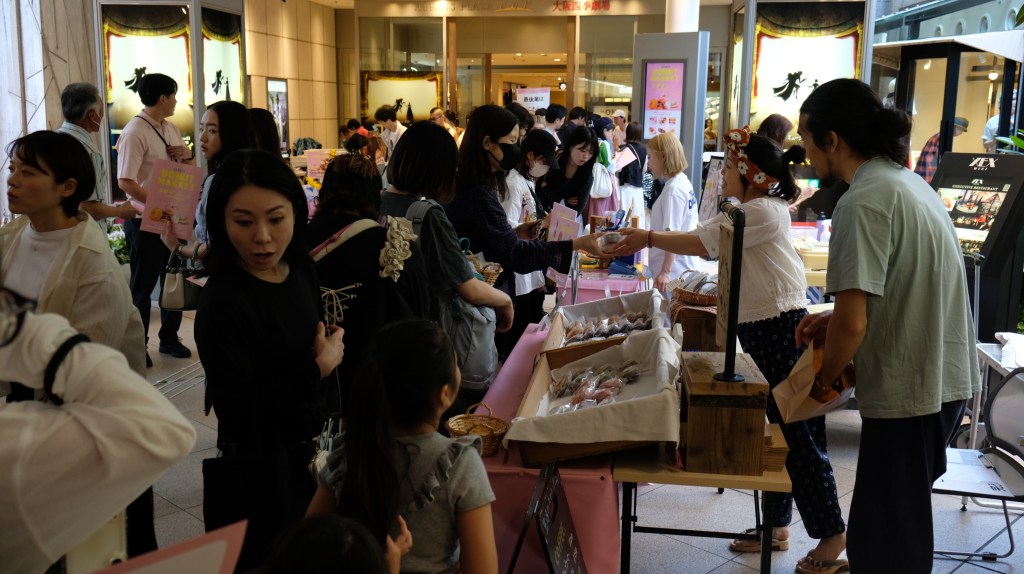
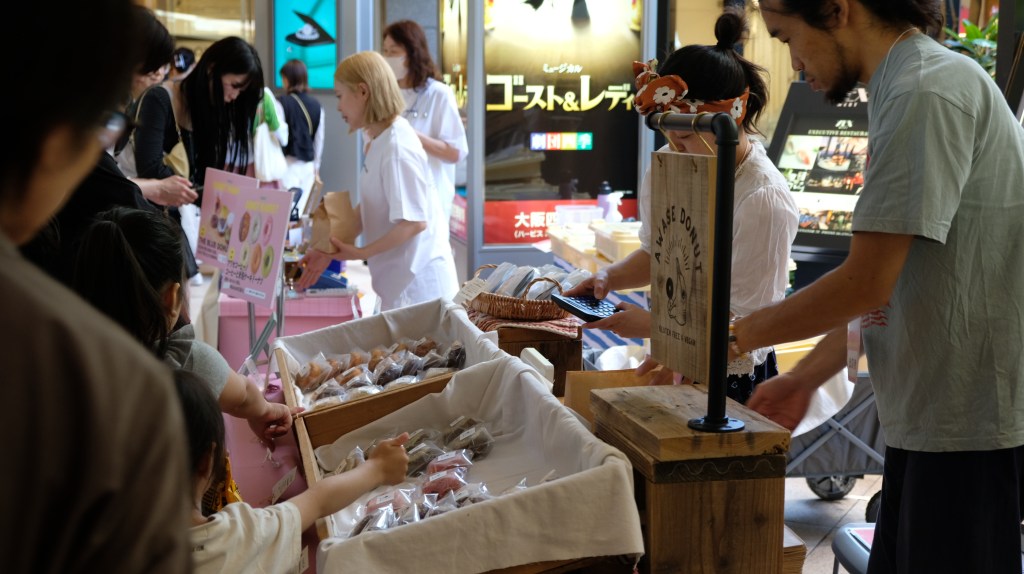
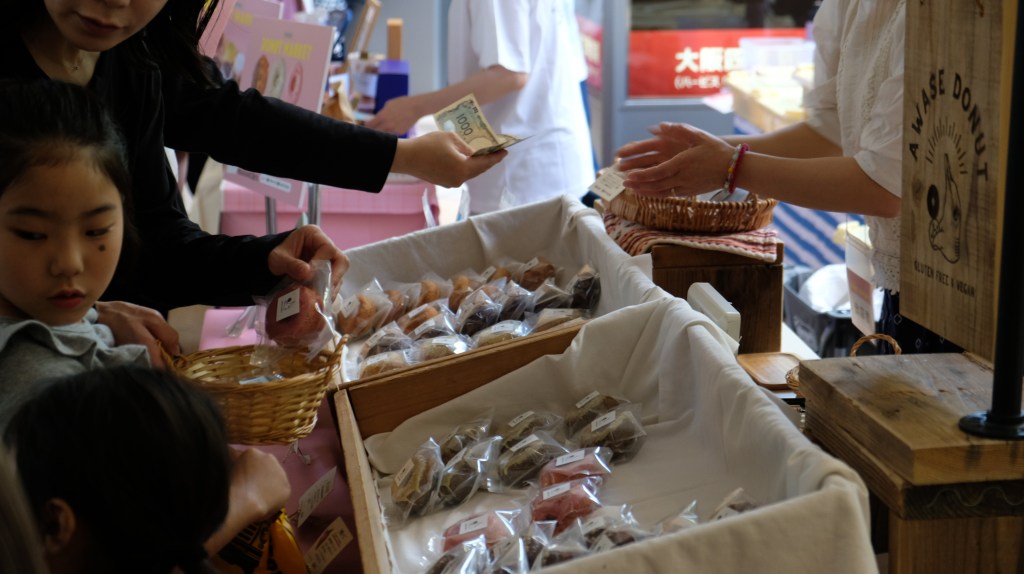
My first stop was located in the heart of Osaka, at a special doughnut event. Kana, together with Issei, was selling her highly regarded gluten-free doughnuts there, and since the event in Umeda happened to be on my route, it was an obvious place to stop after nearly three hours of cycling. Under her brand name, Awase, Kana had spent days preparing more than 200 doughnuts for this two-day event. Fortunately, all that effort paid off. The event was extremely well attended, and the doughnuts sold out completely within a matter of hours on both days.
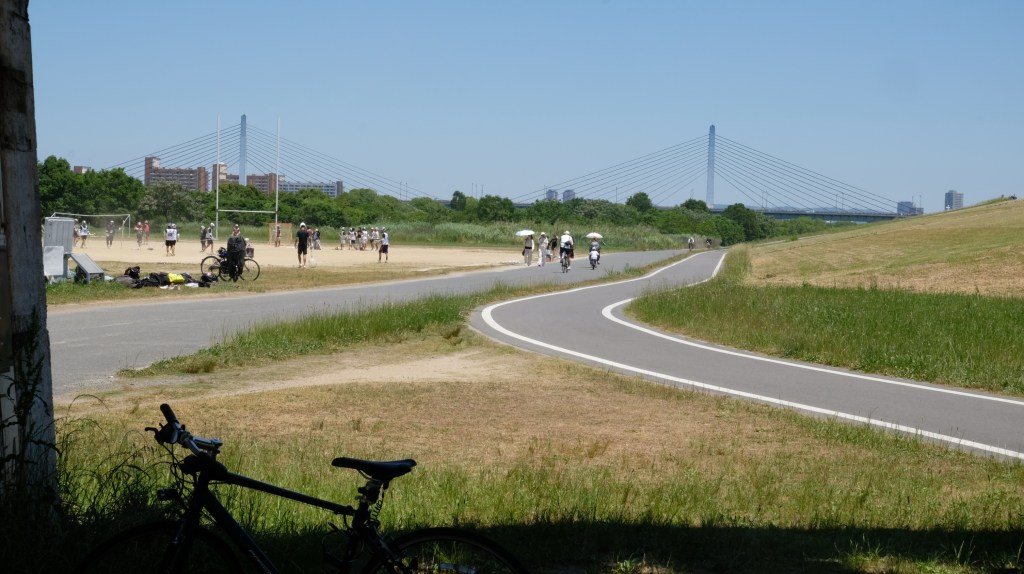
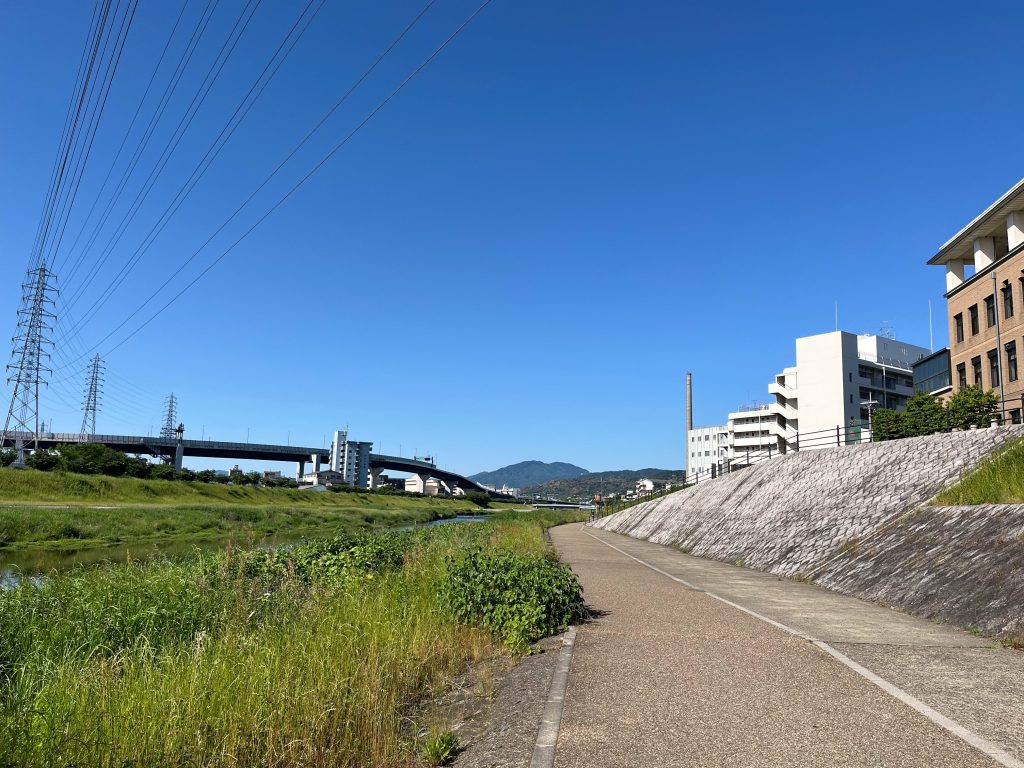
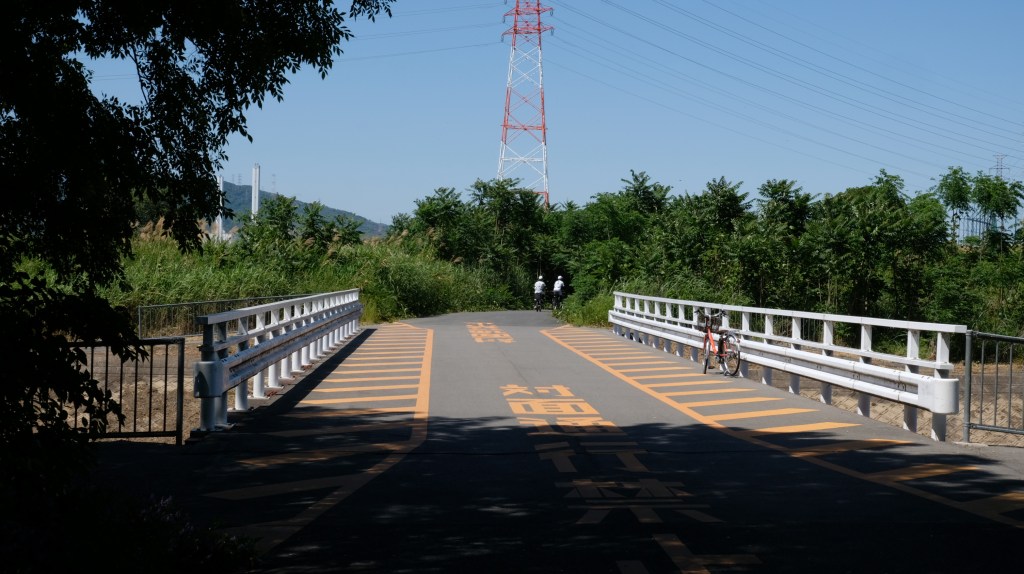
With the busiest section of the ride behind me, I continued towards the Yodogawa. From there, I could finally enjoy the cycling properly, despite the temperature having climbed to around 30 degrees Celsius. Along the river runs a dedicated cycle route to Kyoto, entirely free of motor traffic. There are, however, countless baseball diamonds and sports grounds, busy at weekends with young and old athletes, anglers, and recreational visitors. Everything is laid out on a grand scale, yet without the presence of konbinis (7-Eleven, Lawson, FamilyMart and the like) that provide the familiar comforts of Japan’s urban environments. To be honest, it is quite refreshing to be without these conveniences – and temptations – constantly around you. It serves as a genuine refuge for residents wearied by the bustle of the immense metropolis that is Osaka.
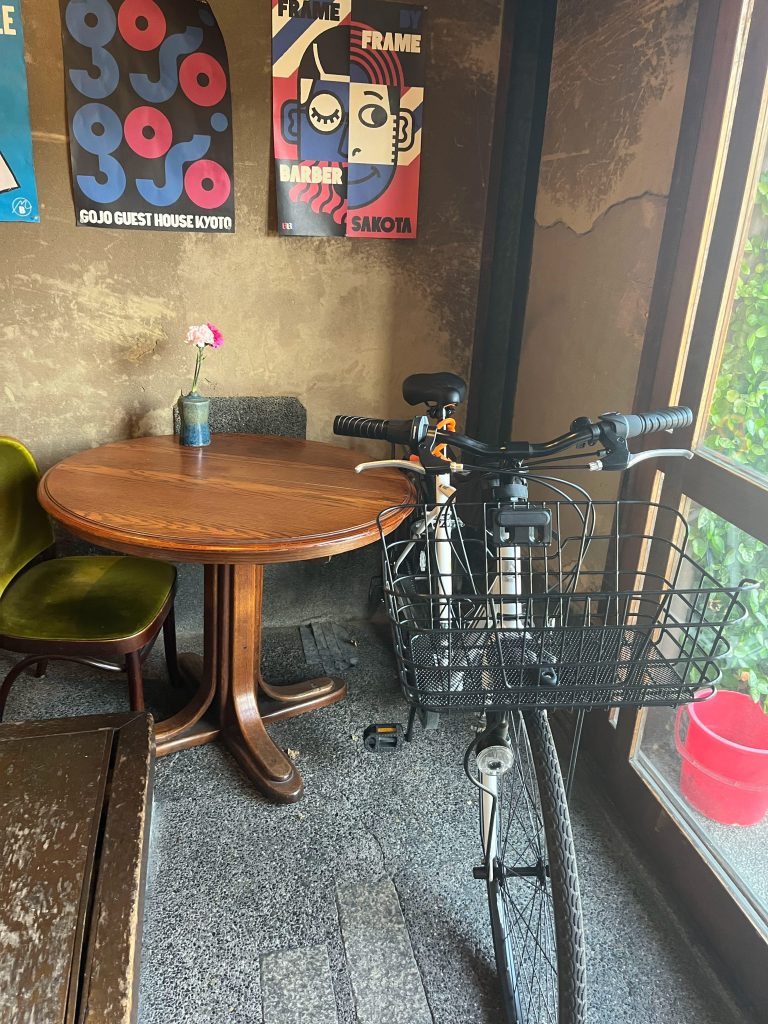
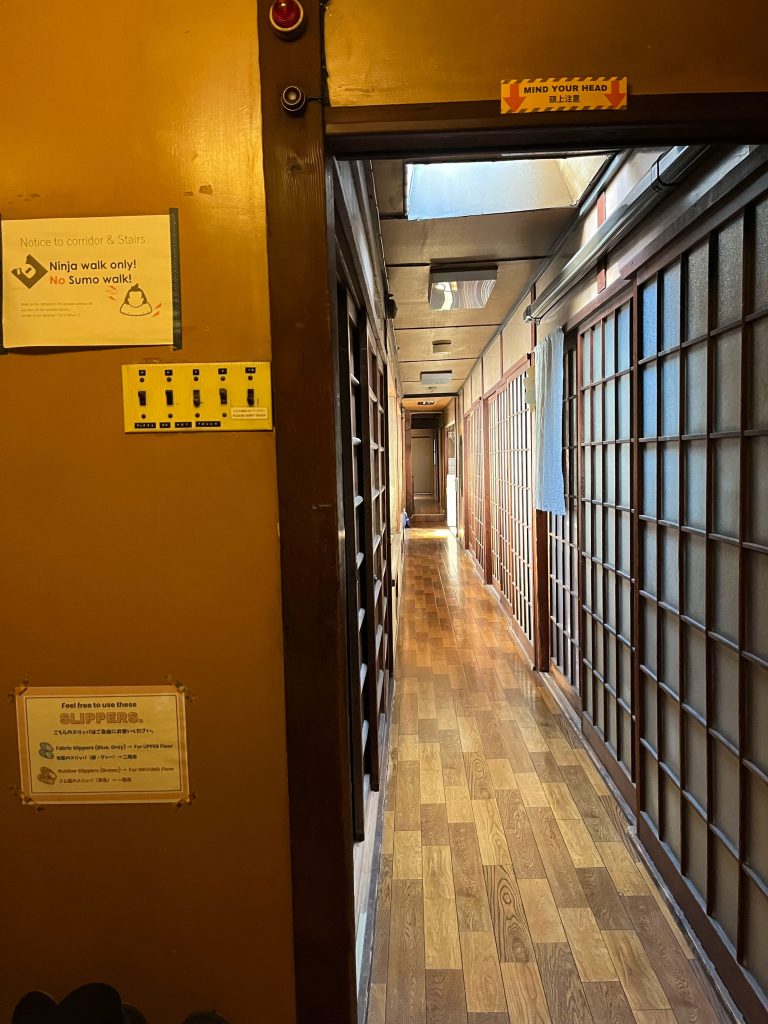
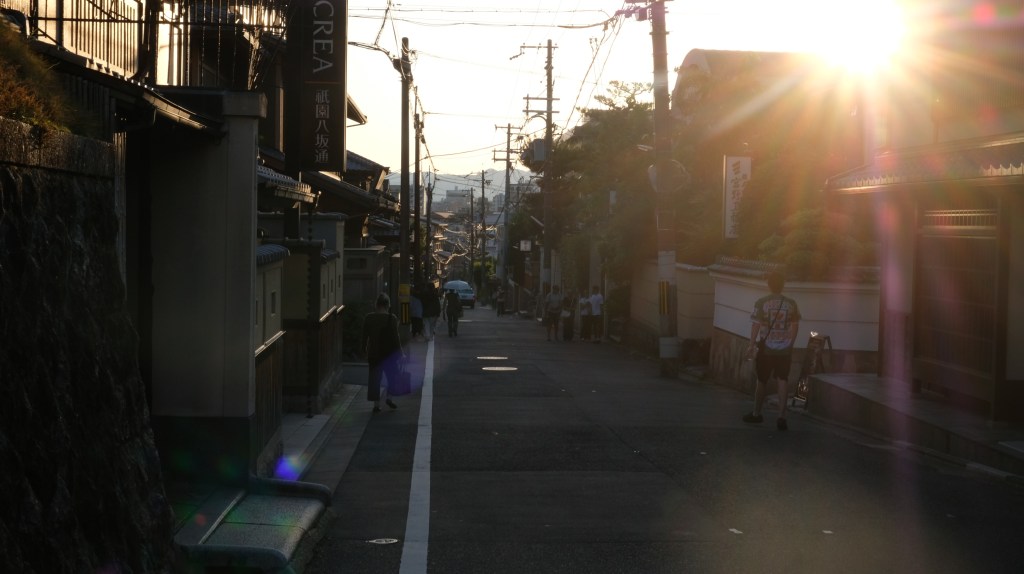
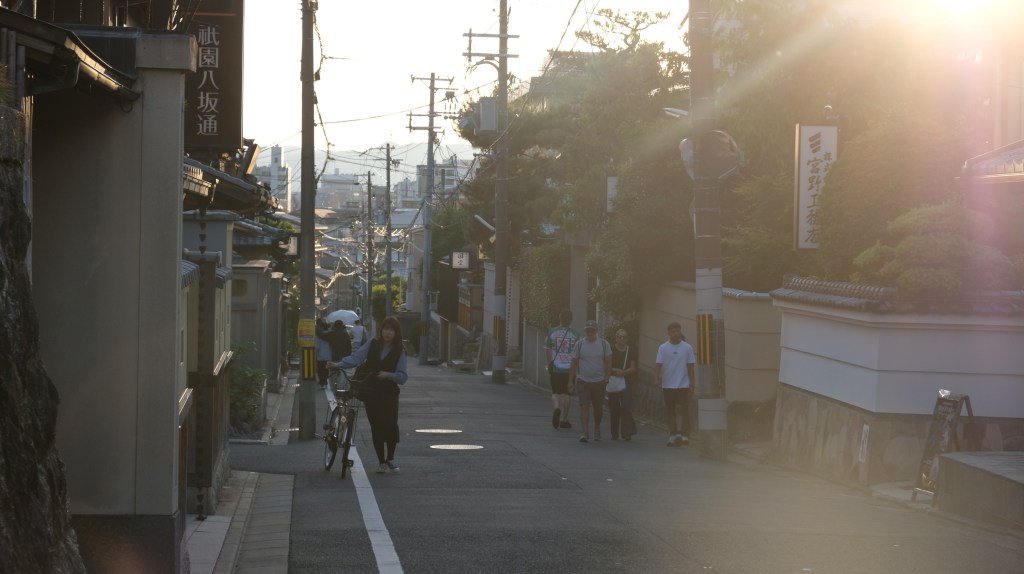
After a long ride beneath the blazing sun, I arrived in Kyoto late in the afternoon at my accommodation: Gojo Guesthouse. It was an old building that I had specifically chosen because of its tatami-floored rooms. However, despite its authenticity, stepping into my room revealed an atmosphere of faded glory. The tatami mats were undeniably worn and well past their prime. As it turned out, I was staying during the final three days of the guesthouse’s existence; the day after my departure, it would close its doors permanently after more than twenty years.
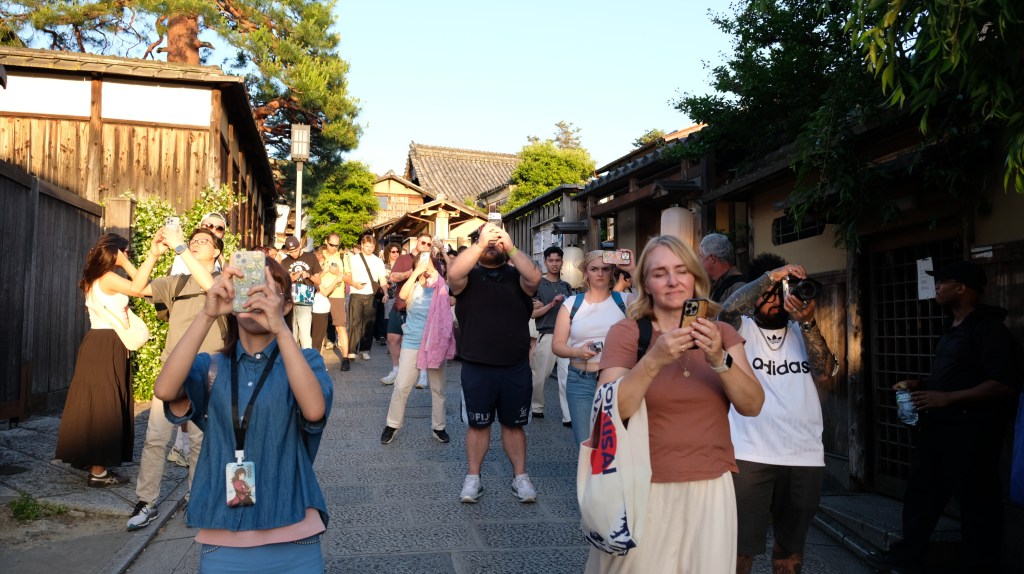
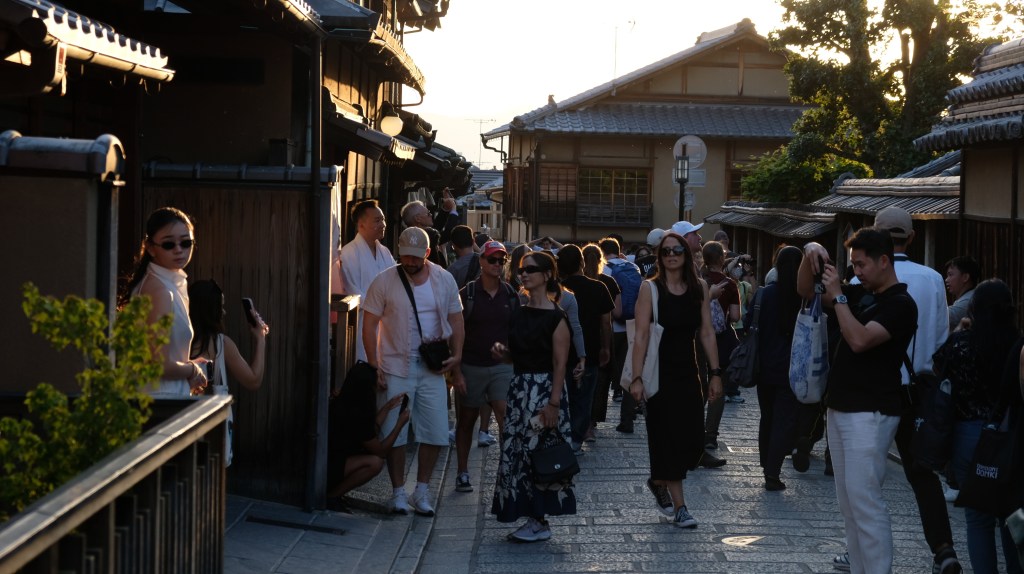
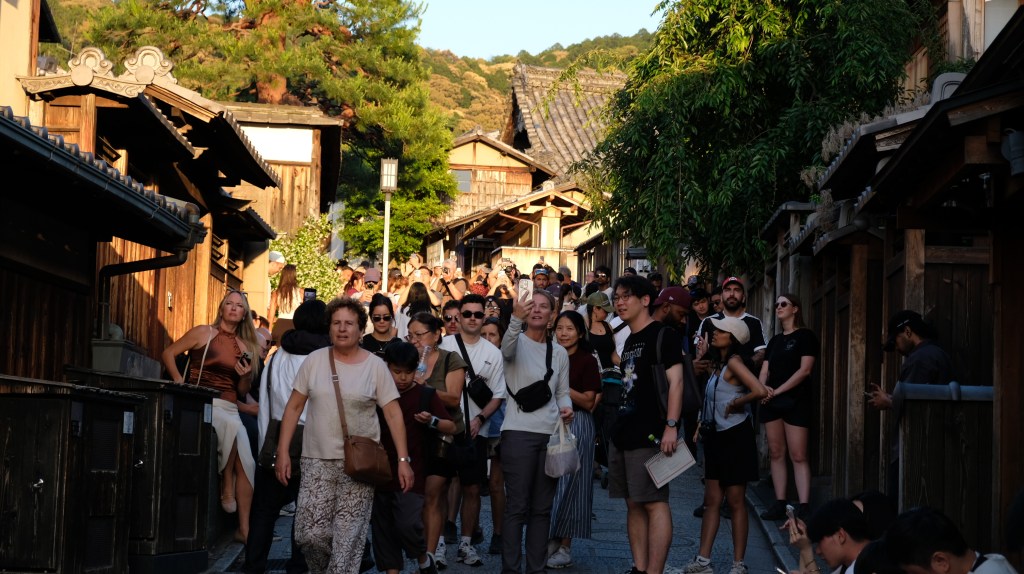
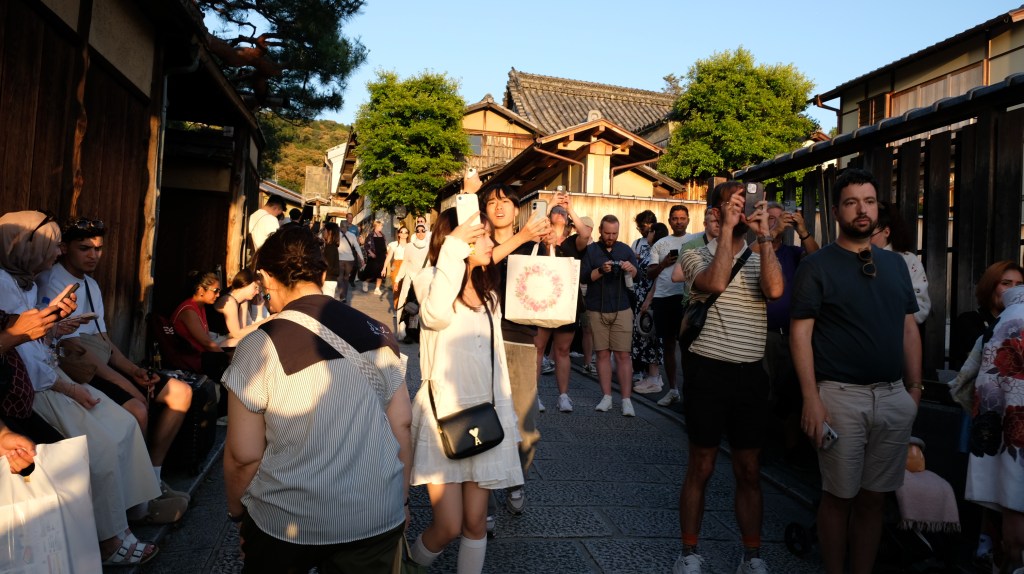
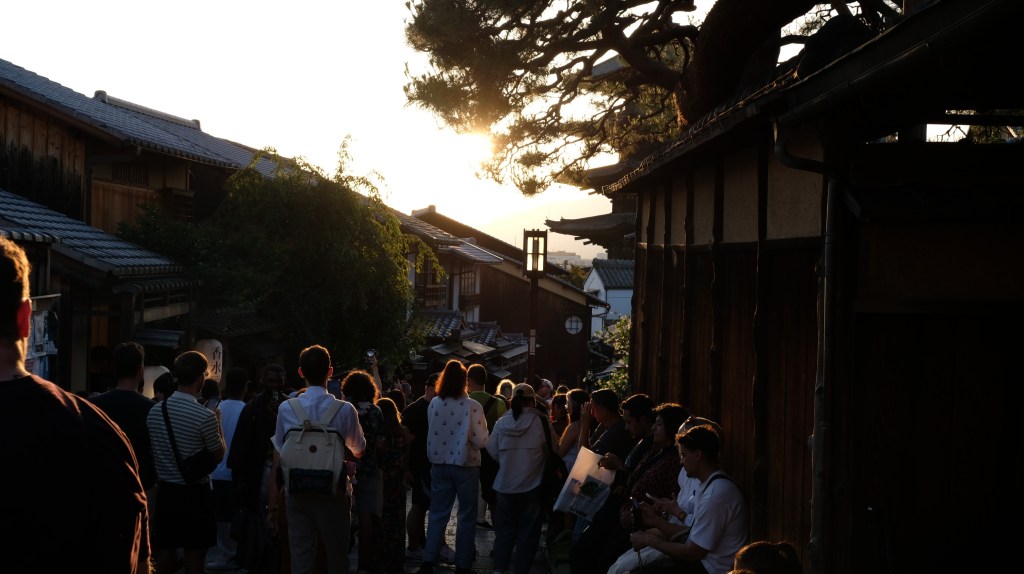
That evening, I decided to venture out and visit one of Kyoto’s well-known attractions nearby: Yasaka Pagoda. It looked magnificent in photographs, but naturally I was not the only one who had noticed. When I arrived around sunset, the area was packed with tourists eager to capture images of this iconic location. The poses people adopted and the sheer number of individuals photographing exactly the same view made for a memorable spectacle.
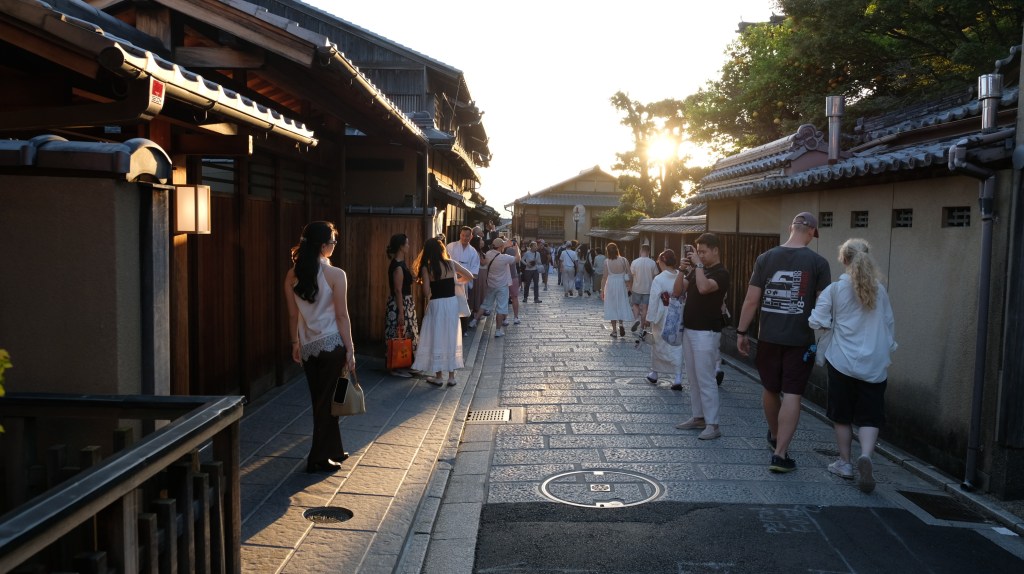
I could not help but laugh. Walking towards this crowd of photographers briefly creates the illusion that you are the centre of attention yourself, even if only for a fleeting second. Still, I must admit that it was indeed a beautiful evening and a stunning view worthy of photography, even if the magic of such places can feel somewhat diminished by modern tourism and the hundreds of photographs being taken every minute.
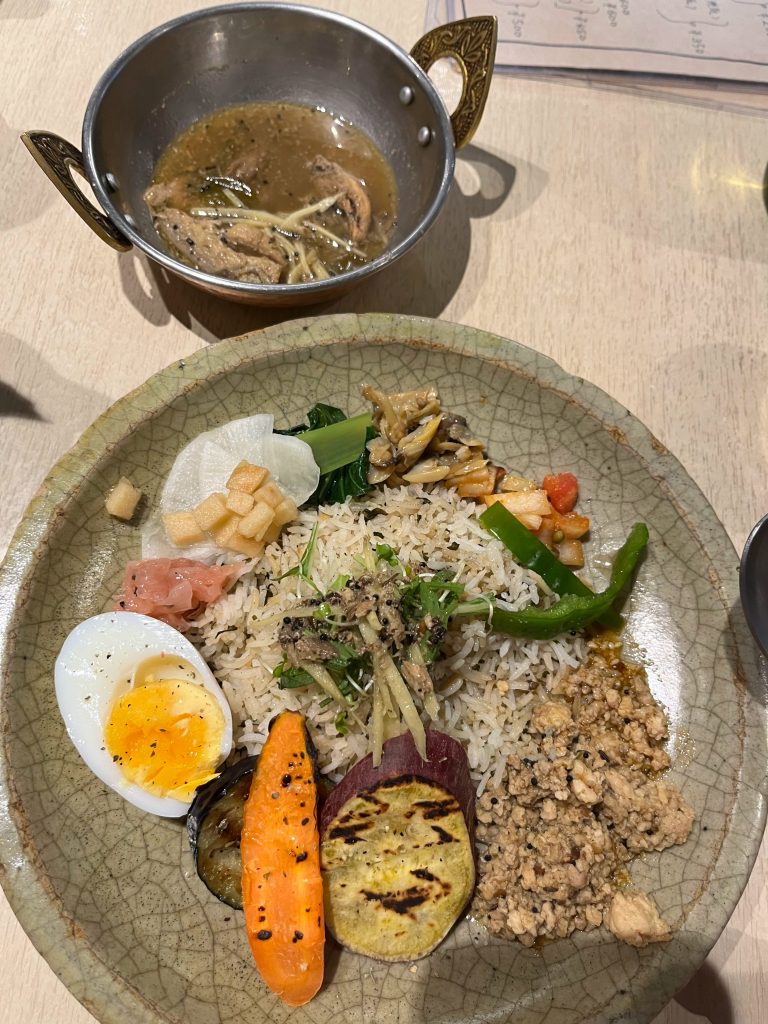
The following morning, I found a Japanese curry restaurant that opened at half past seven for breakfast. Over the previous weeks, I had developed something of an obsession with curry, both Japanese and Indian, and Kyoto proved to be an excellent place to indulge it. I had never eaten curry for breakfast before, but the dish served at Spice Gate at 7:30 a.m. was no ordinary curry. It resembled a full English breakfast reimagined in a distinctly Japanese style, packed with spices, ingredients, and flavours. I could quite happily eat something like that every morning.
Towards the end of the morning, I cycled north along the Kamogawa River to the small independent cinema Demachiza. This part of the city is surprisingly tranquil and an excellent escape from Kyoto’s more intense tourist activity. However, that was not my reason for being there. I had come to watch the Japanese-American film Rental Family, in one of the last cinemas in Japan still screening it.
Most of the dialogue is in English, making it perfectly accessible for a foreigner like me who does not speak Japanese. A significant portion is also in Japanese, however, and without English subtitles I inevitably missed some details. Nevertheless, I am extremely glad that I made the effort to see the film in the cinema. It is certainly one of the best films I have watched in years, largely because the atmosphere feels so familiar and because Japan is portrayed in such a realistic manner. Many thanks, therefore, to the director and her sister for recommending this unexpected side quest during our conversation on the summit of Mount Makio several weeks earlier.
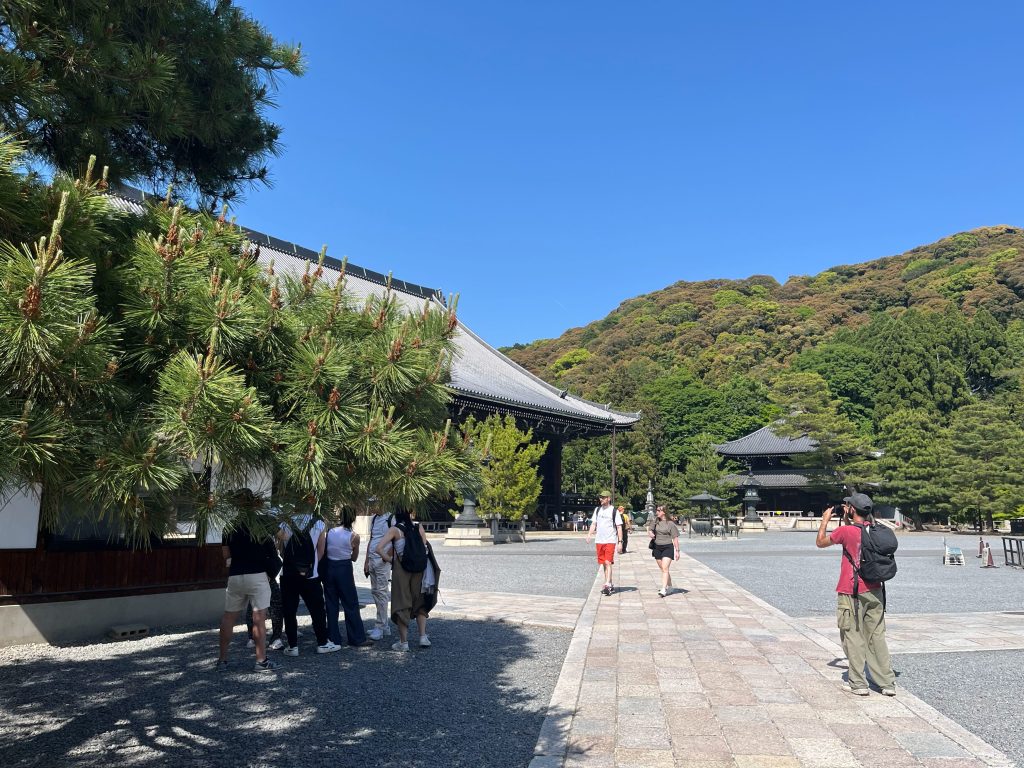
Before leaving for Kyoto, I had naturally marked a number of interesting places on my map. There were far too many to visit in a single day, so I limited myself to Chion-in, an important Buddhist temple with an impressive garden. The other locations can undoubtedly wait for a future visit. At the time, I did not realise that I would return to Kyoto three more times over the following three weeks, but more on that another time.
That evening, during the final moments of sunlight, I once again enjoyed cycling along the banks of the Kamogawa. It is a popular yet remarkably peaceful stretch of greenery and flowing water that evokes a profound sense of nostalgia in me. Despite all the magnificent historic buildings I saw in Kyoto, this river remains my favourite place in the city.
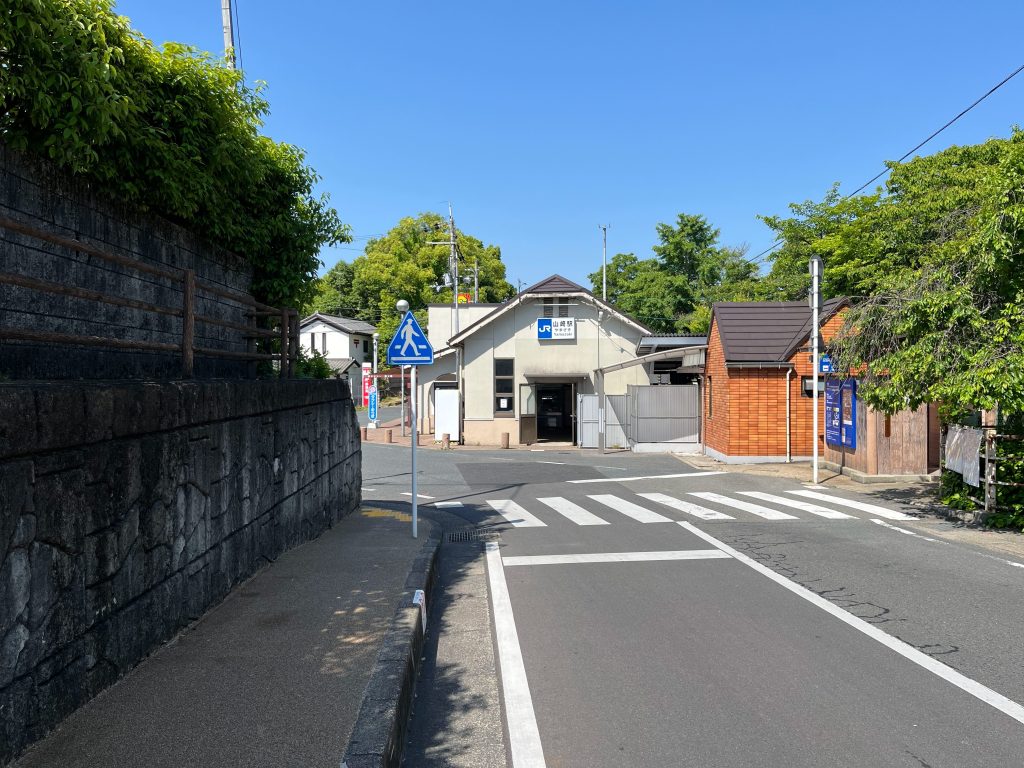
After a second night at Gojo Guesthouse, I climbed back onto my bicycle early in the morning for the 70-kilometre journey home. Along the way, I made a brief stop in the town of Ōyamazaki to visit Myōki-an Temple. It is a significant site because it contains a historic and exceptionally small tea room. This tiny tea room, covering the area of just two tatami mats, is said to have been built by Japan’s most famous tea master, Sen no Rikyū, in the sixteenth century. Unfortunately, it was only possible to view the site from the outside, so I had to settle for a cup of black coffee at the nearby station café instead.
The weather remained extremely hot and sunny, and with several breaks along the way it took me around eight hours in total to return to Izumi. My neck and arms certainly felt the effects. The final 20 kilometres passed painfully slowly through the busy traffic of Osaka and Sakai as I cycled up the “great slope” (大阪) back towards Izumi.
No, I do not think I am quite mad enough to cycle to Kyoto again…


Leave a Reply