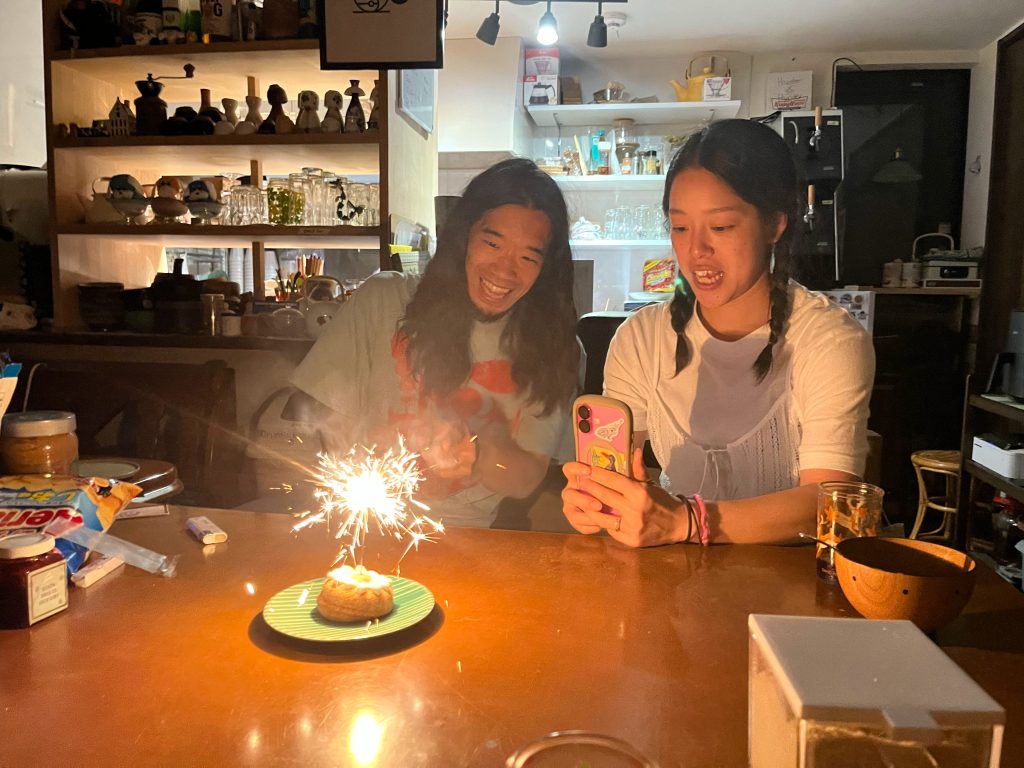
On 24 May, Fujitatami Guesthouse quietly celebrated its ninth anniversary. Apart from Issei, Kana and the German volunteer Celina, there were no other guests to celebrate the occasion with us. The four of us therefore took a moment to mark this small milestone together. As it happened, the lack of guests suited me rather well. On 26 May, the television crew from Tokyo would be returning to Izumi for the third time, this time partly to document my progress as a tatami apprentice. I was going to show them that I had now learnt how to make a half-sized tatami mat (largely) on my own.
The first day of their visit, however, featured a rather special outing. Behind the scenes, Yoshiki, the director, had been arranging a visit to a place where tatami mats are found in abundance. After unsuccessfully approaching several nearby temples—which preferred not to have a television crew filming inside their grounds—he eventually had something quite nice for us in the cards: Kyoto’s centuries-old Nijō Castle.
Nijō Castle is far more than just another Japanese castle; it is a site of immense historical significance. Built in 1603 as the official residence of Tokugawa Ieyasu, the first shōgun (将軍) of the Edo period, it remains one of Japan’s most important historic landmarks. It is one of the country’s best-preserved original castles and an enormous draw for visitors from around the world. Somehow, Yoshiki had even managed to arrange a private tour before the castle officially opened for the day.

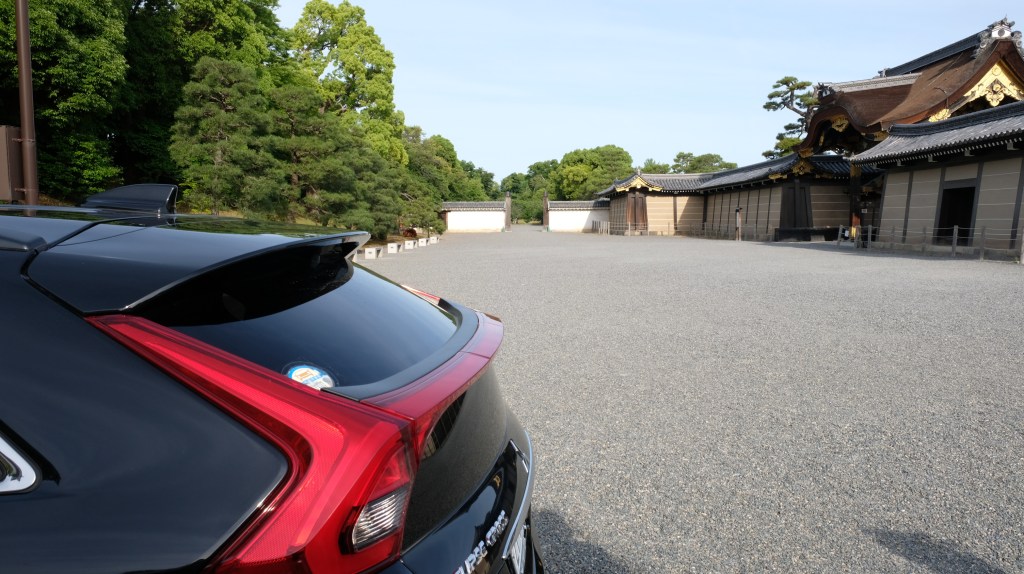
So, in the very early hours of the morning, we set off from Izumi for Kyoto. At a quarter past five, we drove away in a fully loaded car: Hiromasa, the three-member television crew, and me. We arrived well before opening time and were welcomed almost like visiting royalty. The castle’s great gate was opened especially for us by members of staff, allowing us to drive straight onto the grounds—something permitted only in the most exceptional circumstances, given the historical importance of the site. Hiromasa was visibly delighted and admitted that he had never experienced anything like it himself. The television crew were clearly just as excited.
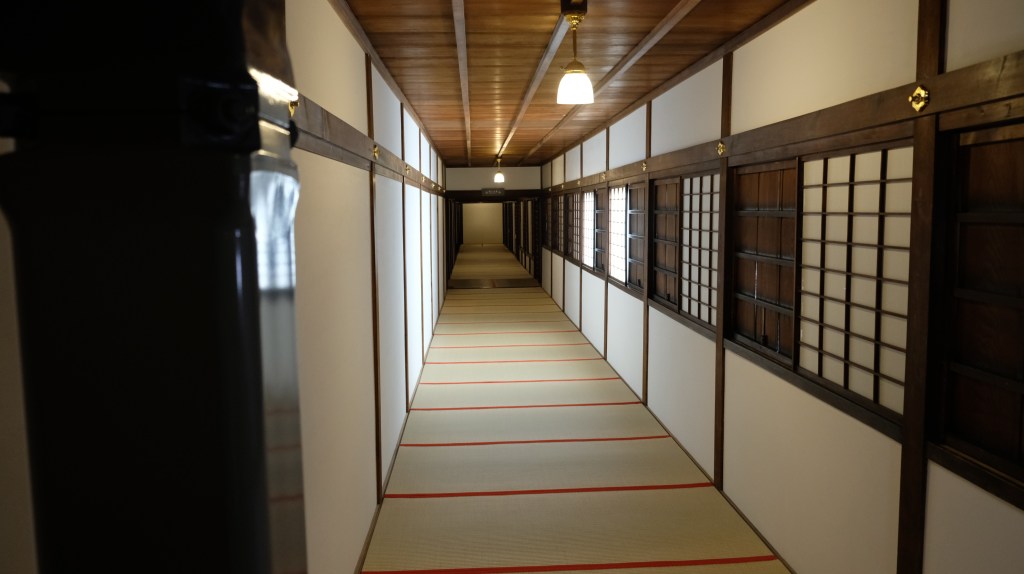
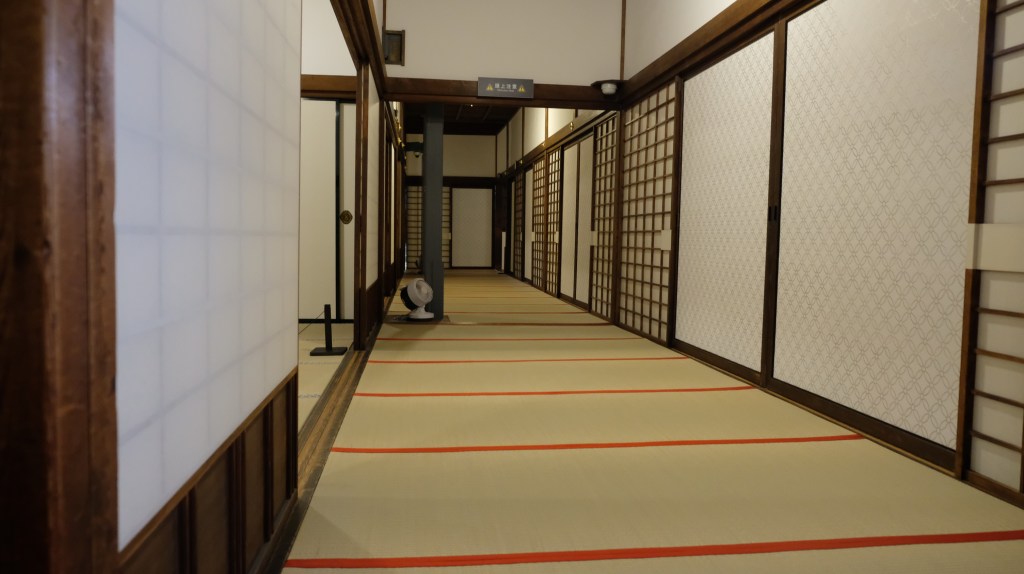
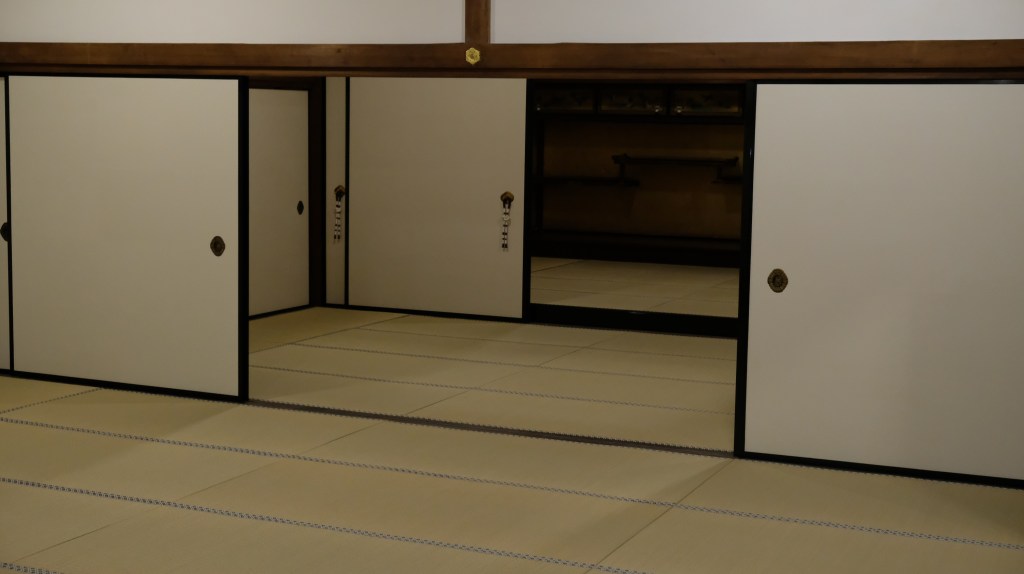
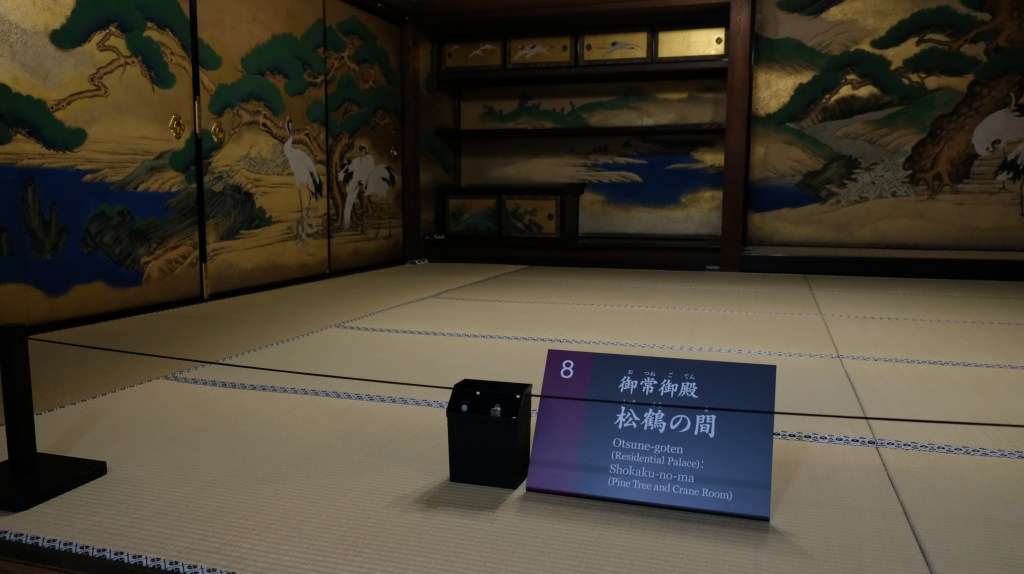
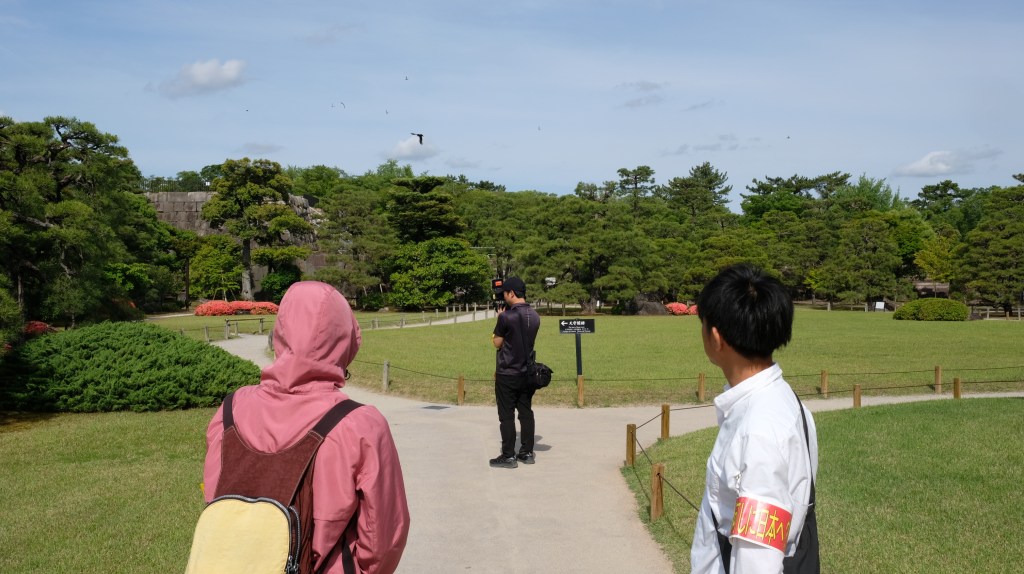
After parking the car, two friendly members of staff escorted us through the expansive gardens to the entrance of the building we had come to see. There, too, the large entrance doors were opened exclusively for us, while we enjoyed the serene peace and silence at the very heart of both Kyoto and Japanese history. Once inside, our excitement only grew as we took in the breathtaking beauty of the interior. Almost everywhere, in both the rooms and the corridors, the floors were covered with tatami mats of the highest quality, finished with exquisite decorative borders. The mats in the corridors even featured silk borders dyed a regal shade of crimson. Every detail made it clear that this was a truly palatial building, created for the highest ranks of seventeenth-century Japan.

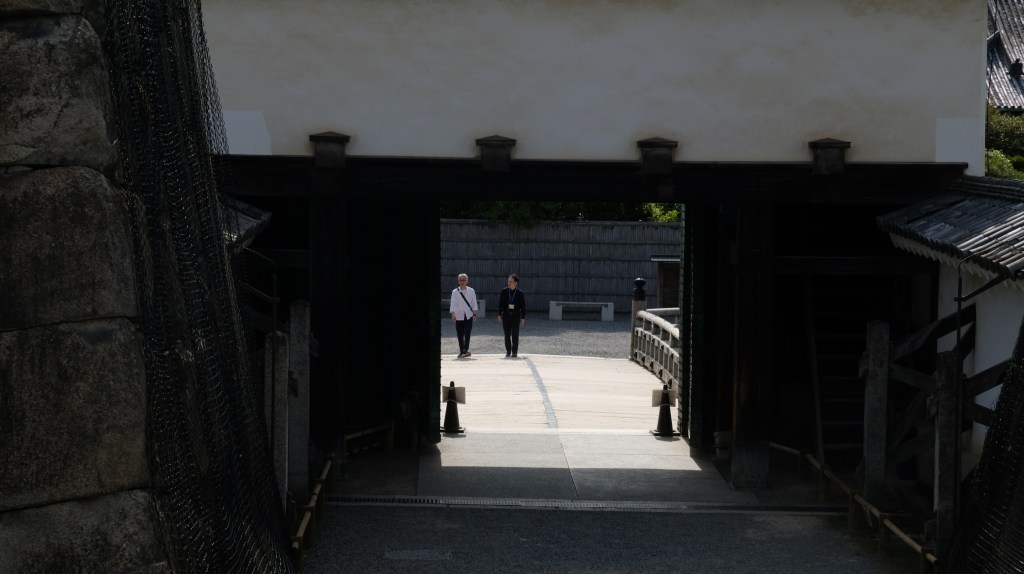
Normally, this is a place you can only admire while surrounded by hundreds of other tourists, but we had the privilege of wandering through the magnificent palace in complete tranquillity, just as the shōgun and his distinguished guests would have done centuries ago. It was more than worth the early start. Since we had only about an hour before the building opened to the general public, our friendly hosts gently reminded us to keep an eye on the limited time available.
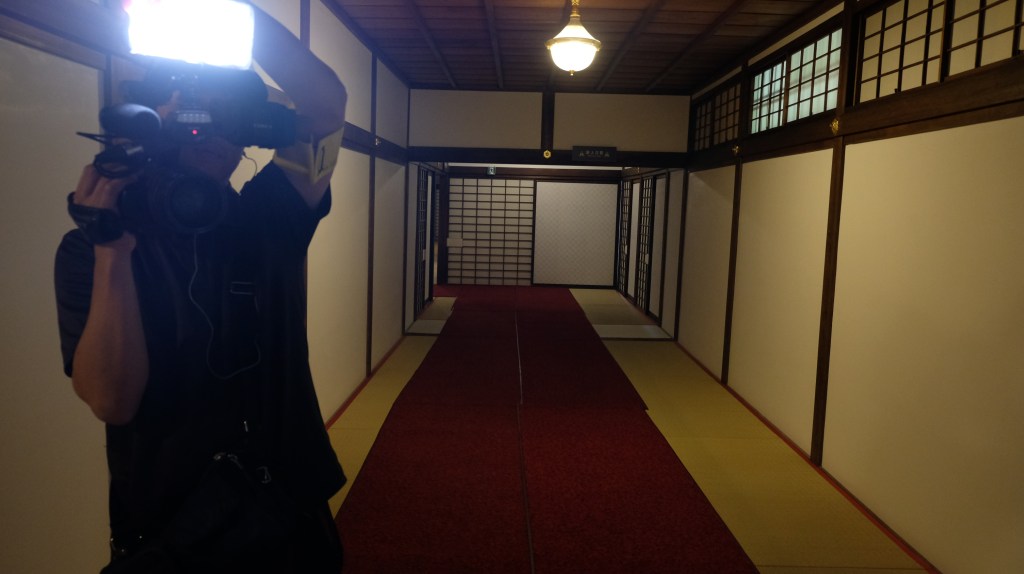
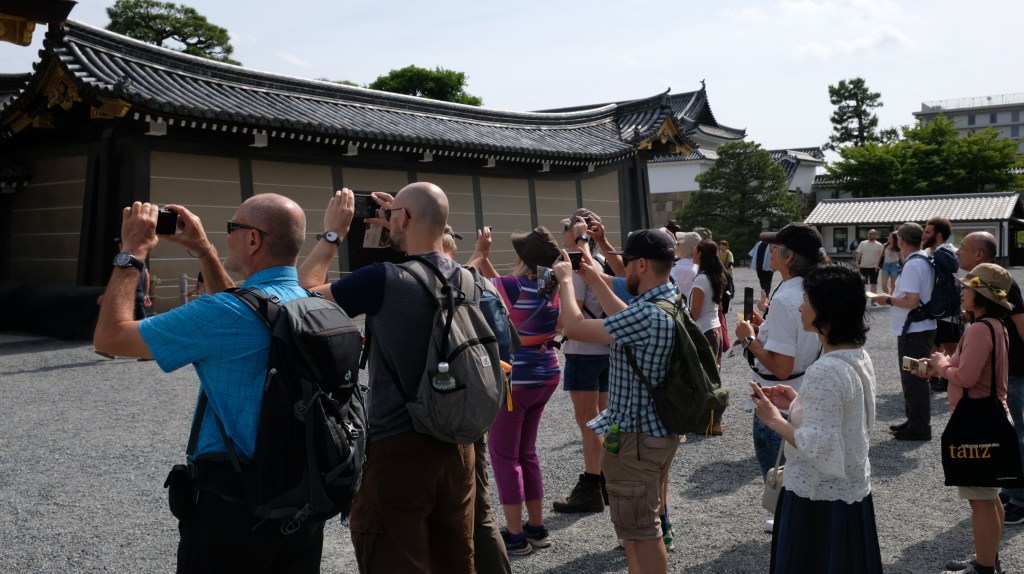
Yoshiki, however, decided on his own initiative to take one last stroll through the castle with his cameraman, much to the visible frustration of the staff who were showing us around. In the end, though, we made it back to the castle entrance just before opening time, where we watched the first visitors stream through the gates as ever larger groups began to arrive. After standing there for a few moments, grinning as we watched the crowds gather, we made our way back to the car, which had by then been moved to the official car park. It was time to return to Izumi, where we had an afternoon appointment to deliver new tatami mats to a valued customer.
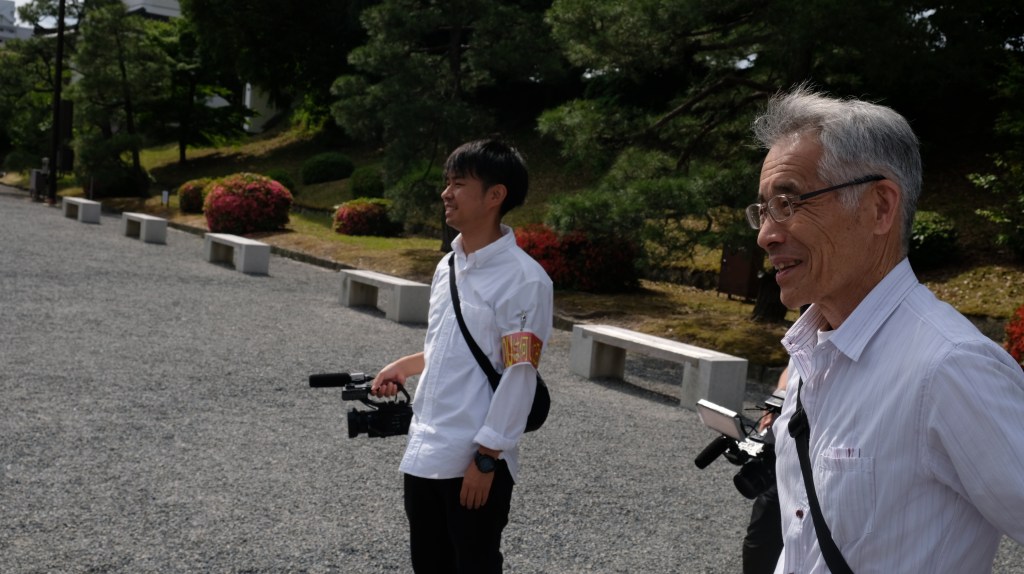


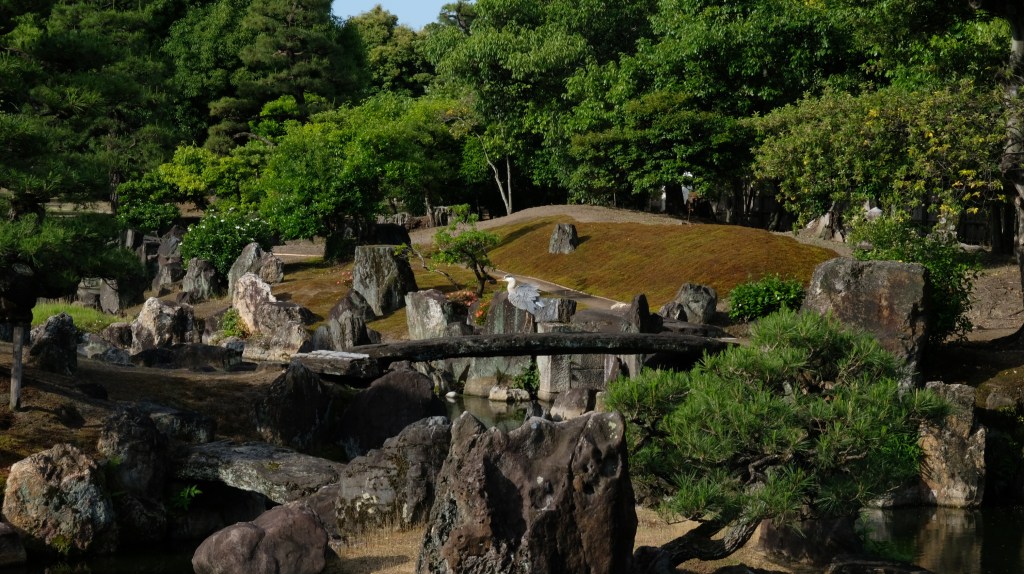

Amid the constant chatter in Japanese during the drive back, I found it impossible to keep my eyes open. This time, however, I didn’t mind not being able to follow the conversation—I was able to catch up on some much-needed sleep without anyone noticing.
After our lunch break, we set off to visit the customer who had by then been waiting for his tatami mats for several weeks. Bremens, the former traveller whose home we had previously visited with the television crew to take measurements, was in exceptionally good spirits when we arrived with his five newly made tatami mats.
Tuesday was the day of the ‘test’. That morning, I arrived at the tatami workshop with the television crew, where Hiromasa was already waiting for me. Everything had been prepared in advance: a rice-straw core, an igusa covering, needle and thread, and the rest of the tools needed for making a tatami mat. Measuring would not be part of the test; it was solely about the sewing and cutting. By then, I had already made many tatami mats and had pushed a needle through them hundreds of times. Even so, the presence of the television crew—and the knowledge that this was a ‘test’—made me a little nervous. There was no avoiding it now. Before the day was over, I had to complete a tatami mat from start to finish, carrying out all three stages—kamachi, hirazashi, and kayashi—one after another.
The kamachi stage, attaching the igusa covering to the rice-straw core, began well enough. Then, however, my luck deserted me as I tightened the threads. Not once, not twice, but three times the thread snapped—something that had never happened to me before during this part of the process. By the third break, I genuinely had no idea how to continue. Hiromasa was reluctant to offer any guidance because, after all, this was supposed to be a test. I was probably visibly frustrated, acutely aware that every pair of eyes—and every camera—was fixed on me. Then I heard my sensei encouraging me with the words, “Ga zo door.” He actually said it in Dutch, because I had taught him the phrase a few weeks earlier. In the end, my sensei did give me just enough help to get me back on track, allowing me to continue with the test.
It took a little while to regain my composure, but with everything I had learnt over the previous two months (I mean, one week), I knew there was no reason why I couldn’t simply make another tatami mat. The workshop had fallen almost completely silent, as the television crew didn’t want to disturb my concentration, and before long the whole atmosphere began to resemble a meditation session. I worked steadily through each stage, from hirazashi to kayashi, one step at a time. You could have heard a pin drop in what was normally a lively and noisy workshop. In the middle of this serenity, Celina, the German volunteer, appeared carrying a tray with teacups and a pot of one of my favourite teas—kuromoji.
The unexpected tea break could not have come at a better moment, and I was genuinely grateful to Celina. But, of course, even this was not quite as spontaneous as it appeared. Yoshiki had asked her to make the tea and bring it to the workshop, partly to give me a bit of encouragement, but naturally also to capture some pleasant extra footage to break up what had otherwise been a rather monotonous day.
For me, the hours seemed to fly by, but it still took a full seven hours before I pushed the needle through the mat for the very last time, pulled the final length of thread tight, and trimmed away the excess.
“Finish,” I announced aloud with obvious relief, looking towards the television crew.
After spending so many hours waiting for a slow-moving beginner, I don’t think they quite believed at first that I had finally managed it. There was barely any time to celebrate, though—it was now time for the verdict.
According to my master, Hiromasa, I had done “not bad”. Officially, however, I would have failed the test because I had received assistance after the thread snapped repeatedly at the beginning. The stitching was not perfectly straight everywhere either, although that is, of course, invisible from the top of the mat. The finished surface itself looked good: the decorative border had been attached neatly, straight and taut, and the igusa lay smoothly over the rice-straw core. On top of that, I had managed to complete the entire test without injuring myself or leaving any bloodstains on the tatami—another reason someone would automatically fail the official examination. The master’s final verdict was a narrow pass.


Successfully completing the test was celebrated with a very special variation of Kana’s rice-flour doughnuts. That day, she had made a small batch using igusa powder—in other words, genuine edible igusa! Hopefully, this means I’ll come across as slightly less eccentric when I tell people how enthusiastically I declared, upon arriving in Japan, that I thought igusa was “delicious”. The television crew were now able to discover for themselves that igusa really is edible. It was quite a unique culinary experience. The doughnuts had a distinct yet delicate tatami aroma, while the flavour was sweet with a subtle grassy note. They proved successful enough for Kana to add them to her regular repertoire, allowing more people to experience the wonderful aroma of igusa in an entirely new way over the coming months.

For the cameras, we officially said goodbye to the television crew there and then. Later that evening, however, without any cameras present, we rounded off the day with a visit to one of my favourite restaurants in Izumi: Kamado. It is run—quite literally—single-handedly by an intriguing gentleman who does everything himself and works tirelessly to serve his customers as quickly as possible. The crew from Tokyo were thoroughly impressed by his yakitori and chicken soup, and the drinks disappeared just as quickly. Those final hours together felt bittersweet. I was relieved that I would soon no longer have to perform in front of the cameras, yet at the same time I found it rather sad to think that I might never see these wonderful people again.
The following morning, however, they knocked on the guesthouse door one last time. They still had a few final questions to ask and wanted to record some additional soundbites. I also had to provide a few closing comments for the final edit—preferably with rather more enthusiasm than I had apparently shown while walking around Kyoto’s castle. Once that was done, they finally departed, this time with no plans to return. It feels as though one chapter has now come to a close. I am no longer preparing or practising for a tatami test, so over the coming months I will have to find new ways to challenge myself and keep moving forward.
New chapters await…


Leave a Reply