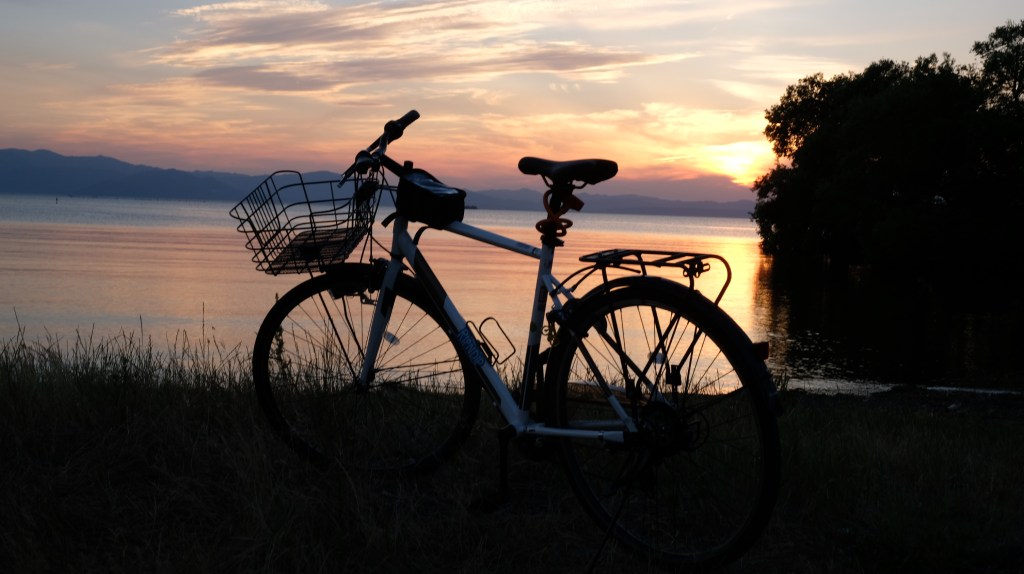
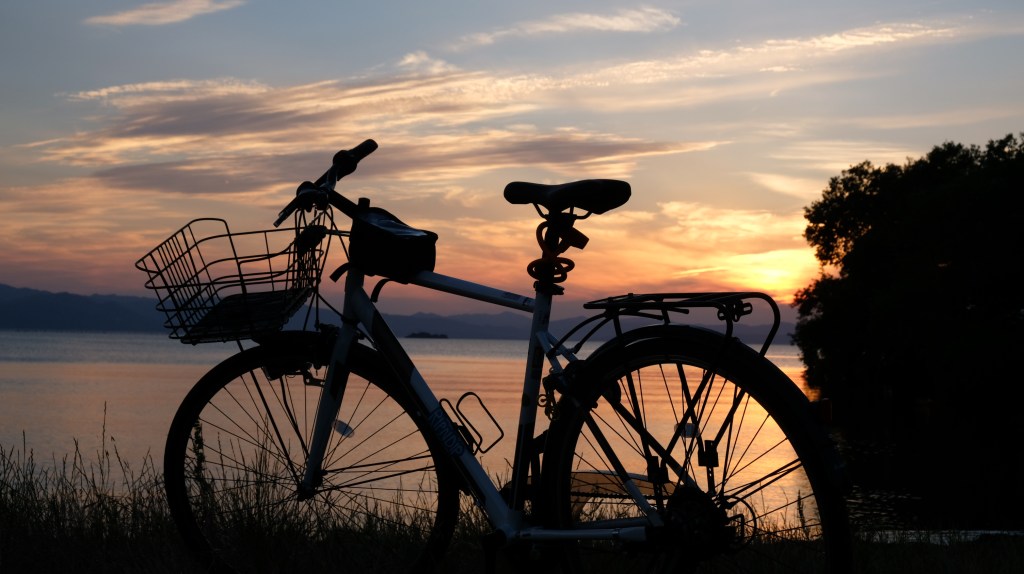
After (somewhat) successfully passing my first tatami test, my sensei granted me a week’s break. At first, I intended to use the opportunity to walk the Kumano Kodo, a pilgrimage route through the mountains of Wakayama Prefecture. Two years earlier I had been unable to complete the four-day trek because of a knee injury. However, as I didn’t really have the right equipment this time either—a tent, sleeping gear, walking boots, and so on—it would probably have turned into an expensive and rather unwise undertaking, simply to restore my sense of pride. Besides, I already had my own bicycle here in excellent condition, into which I had invested a fair number of yen.
A cycling trip therefore seemed like the better plan. As I had previously marked an interesting place on Google Maps that I wanted to visit, it didn’t take me long to decide on my destination: Chikubushima. It is a small island situated in the northern part of Lake Biwa, Japan’s largest lake, in Shiga Prefecture. In addition to hearing about it through the film Rental Family, the director’s sister had also recommended the island when we met on the summit of Makiosan. After a bit of research and planning, Chikubushima seemed the ideal destination for a cycling trip of around seven days.
What would make the journey even more enjoyable was that I would also be cycling around the entire lake. This circular route is popular with both road cyclists and recreational riders. Known as Biwaichi, the national cycling route is approximately 190 kilometres long. As I would be setting off from Izumi by bike, there would be another 180 kilometres or so to cover in total on the outward and return journeys. My first stop would be Kyoto—the third time in a short period that I would be visiting the former capital. The forecast looked excellent for the first few days, although a typhoon was also on its way…
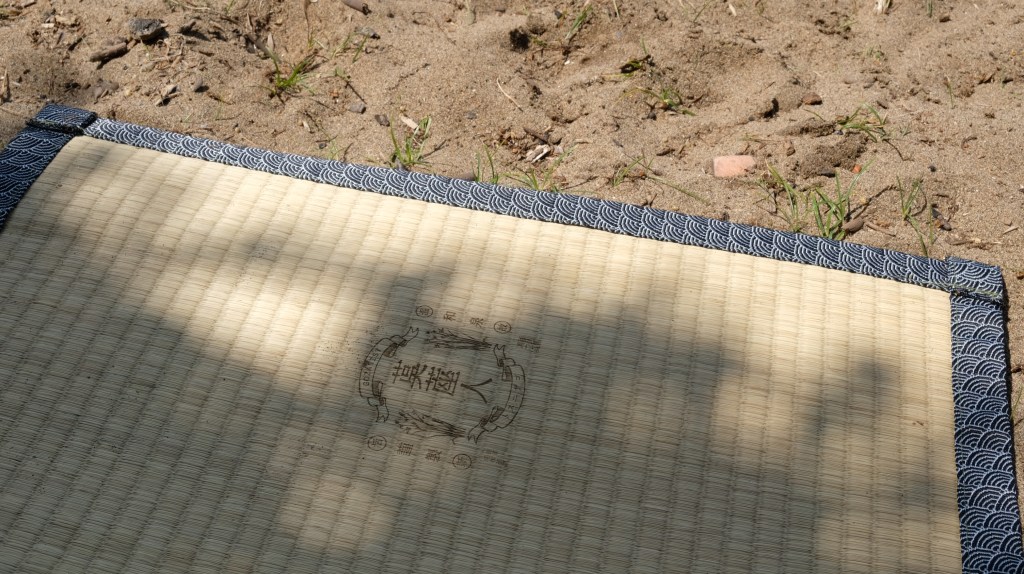
I set off on Sunday, 31 May. This time I also brought along a goza mat, woven from igusa rush and finished with heri, the decorative fabric used to edge tatami mats. Thanks to the texture of the igusa, it looks very much like a tatami mat, although it is really more like a yoga mat that can be rolled up and weighs very little. I thought it would be perfect for use on the beach—and perhaps it might also serve as a bit of advertising for the family business.
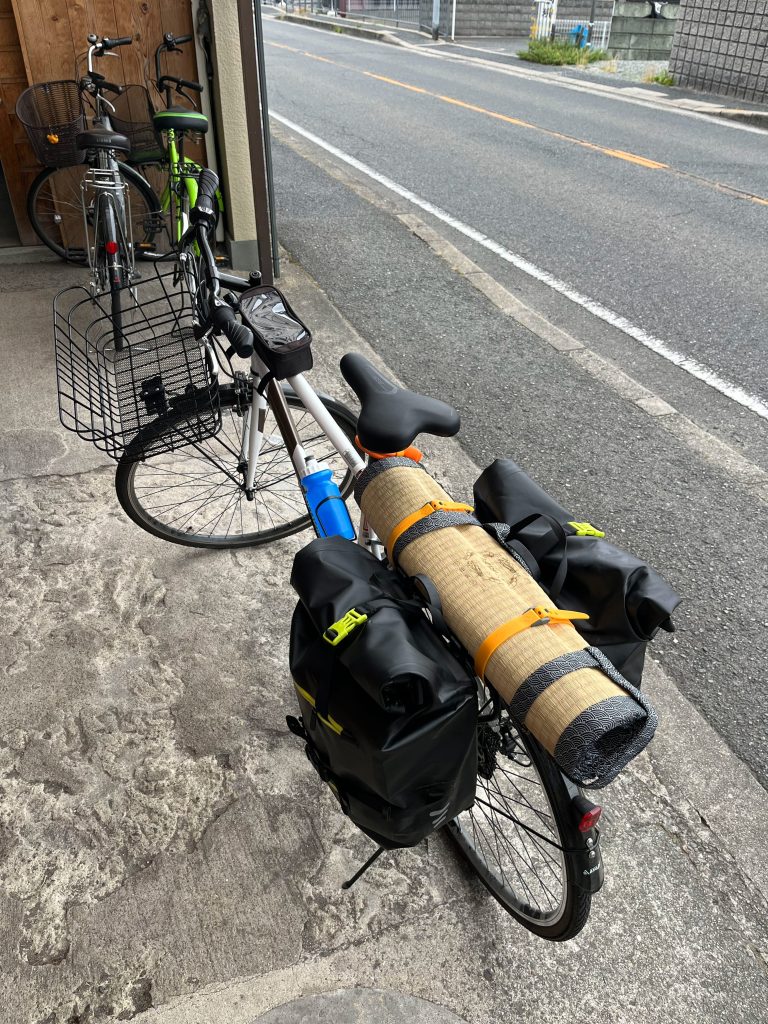
The first day’s ride to Kyoto was an easy one. By now I knew the route from Izumi through Sakai and into Osaka well. Near Osaka Castle—which, incidentally, I have still never visited—a triathlon was taking place, making it a pleasant spot to stop for a cup of coffee. I also managed to embarrass myself while ordering in the café. In Japan, you can often answer staff with daijoubu desu (大丈夫です), meaning “that’s fine” or “it’s okay”, but not in every situation. I was asked what size coffee I wanted, and I replied with that habitual phrase. The young woman looked at me rather wearily and repeated the question in hesitant English, at which point I realised I had made a fool of myself.
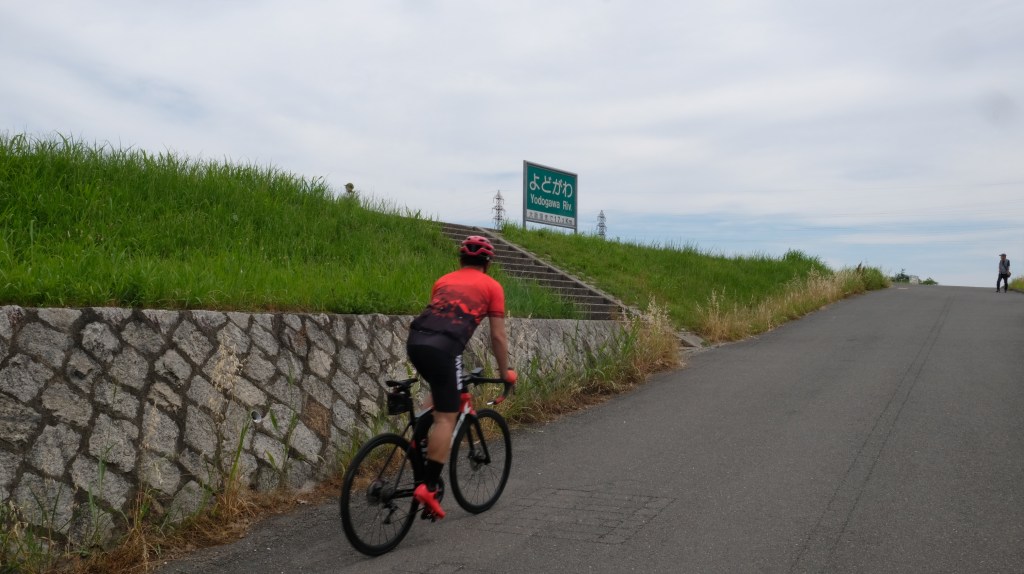
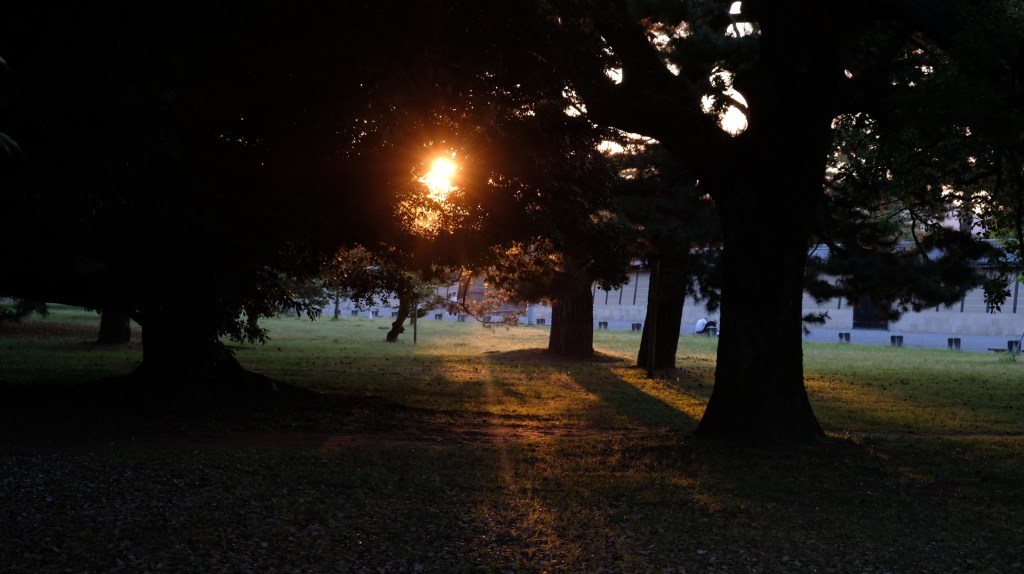
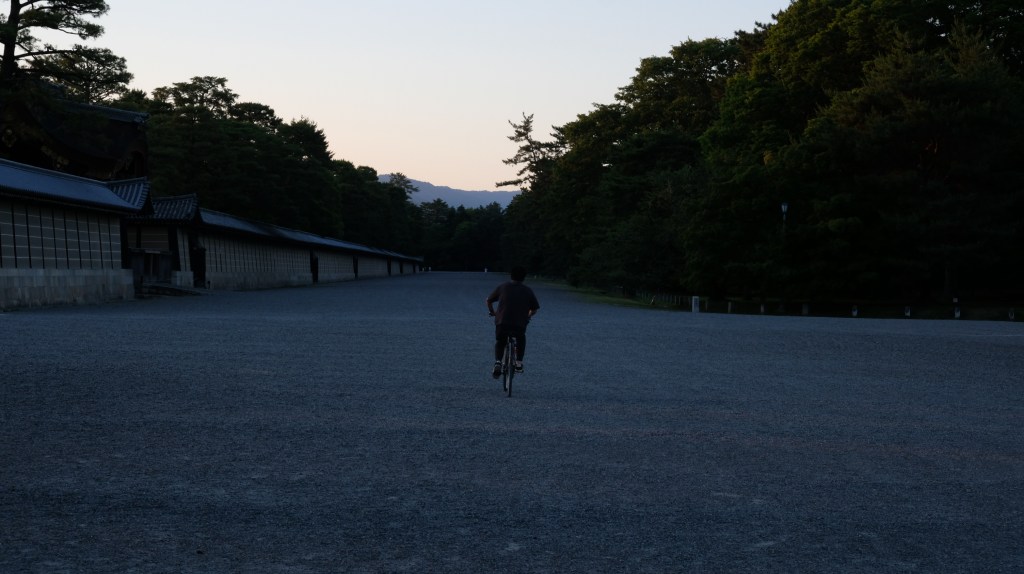
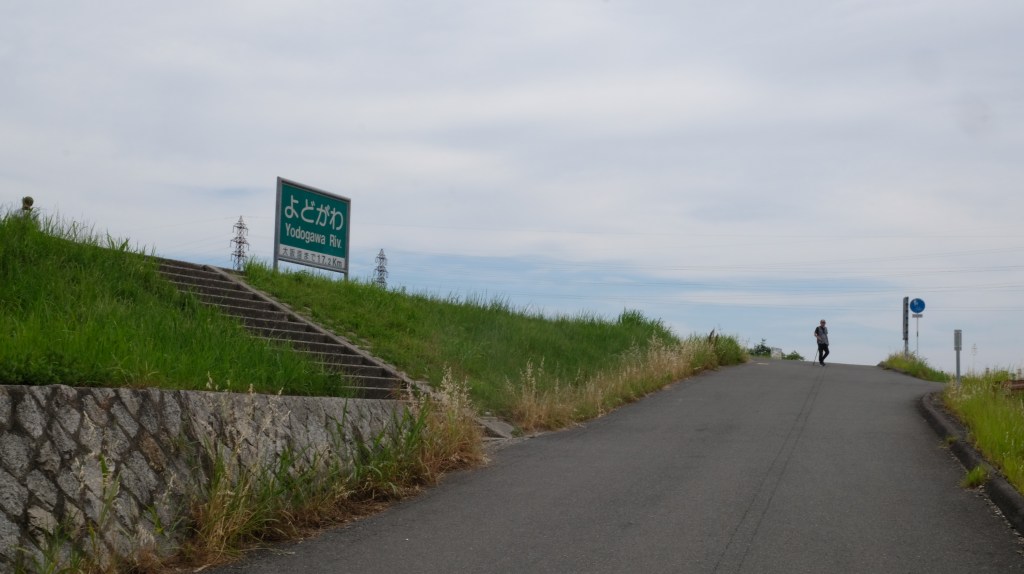
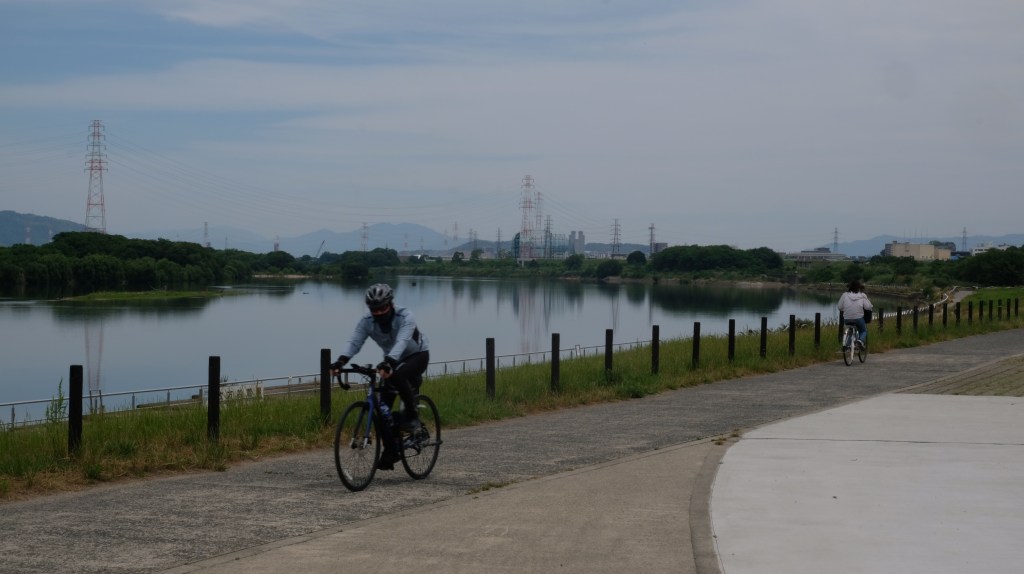
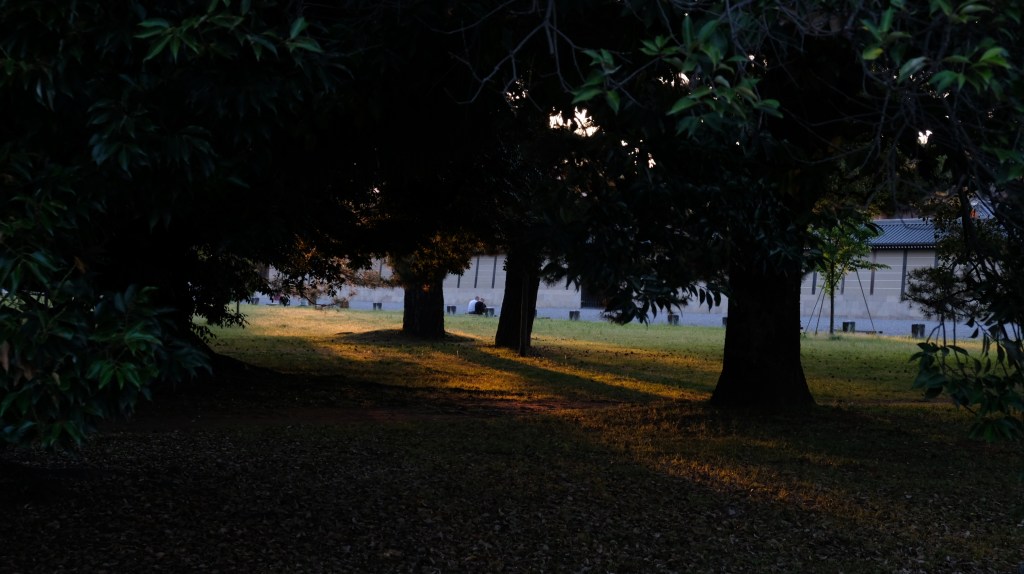
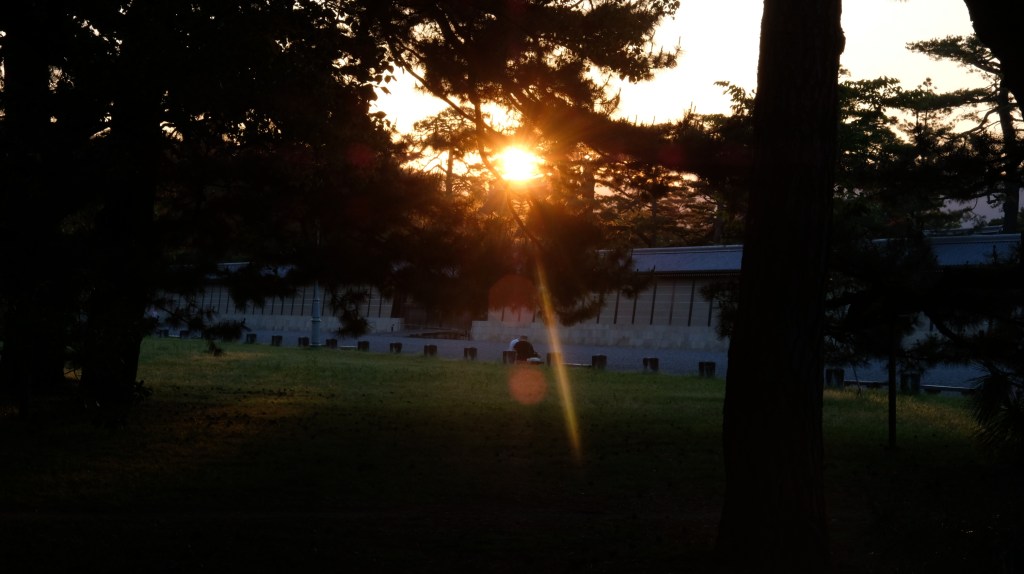
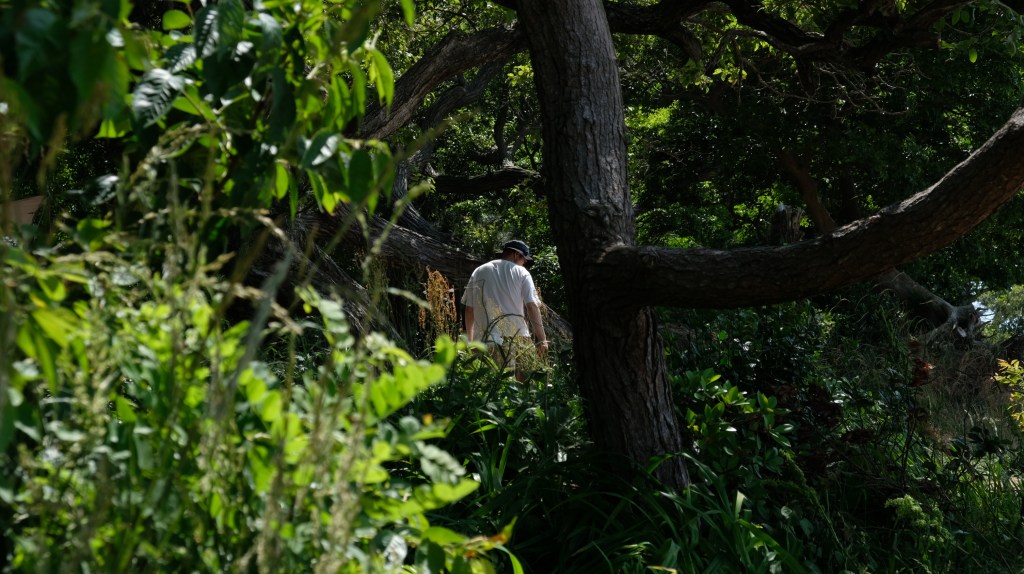
After a leisurely ride along the Yodo River, I reached Kyoto early in the afternoon. That evening I wandered through Kyoto Gyoen National Garden with my camera, where it was wonderfully peaceful. The expansive grounds, with their broad gravel paths, imposing walls and countless pine trees bathed in the warm orange glow of the evening sun, created an almost timeless atmosphere.
The second day of my journey finally took me beyond the densely populated cities of Osaka and Kyoto. After a fairly demanding climb over the mountains behind Kyoto, I arrived in Otsu, where an ancient bridge—Seta-no-Karahashi—marks the traditional starting point of the Biwaichi cycling route. The hardest part of the day was behind me, the weather was glorious, and I was delighted to have finally reached Japan’s largest lake, which would remain on my left-hand side for the next few days.
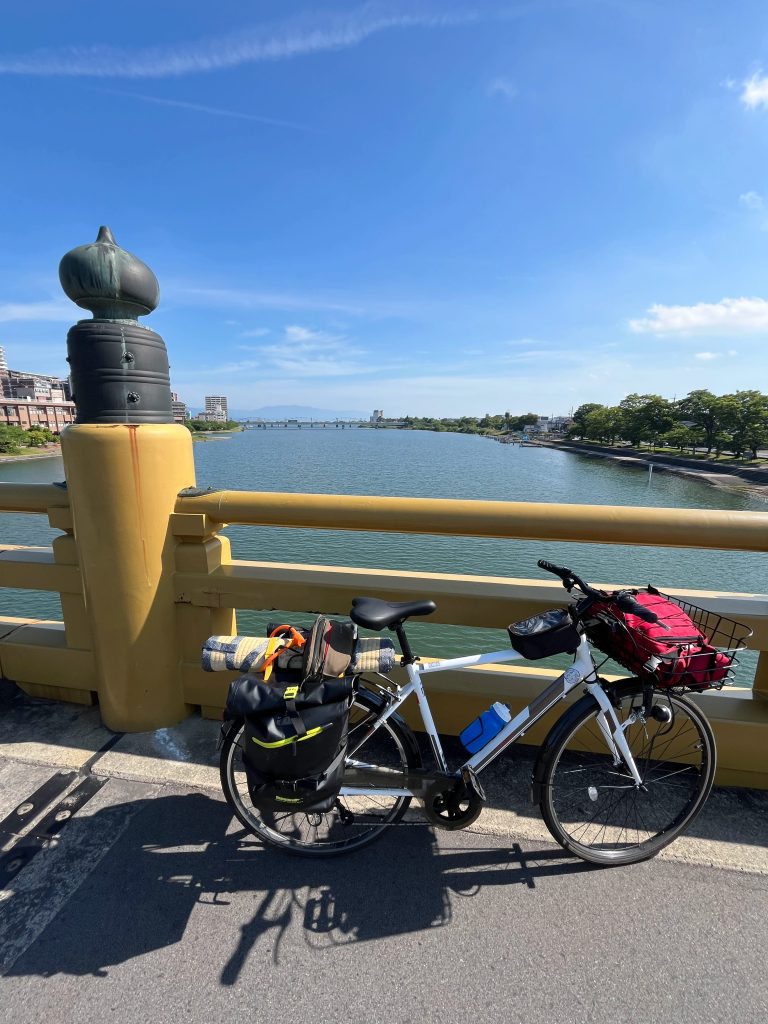
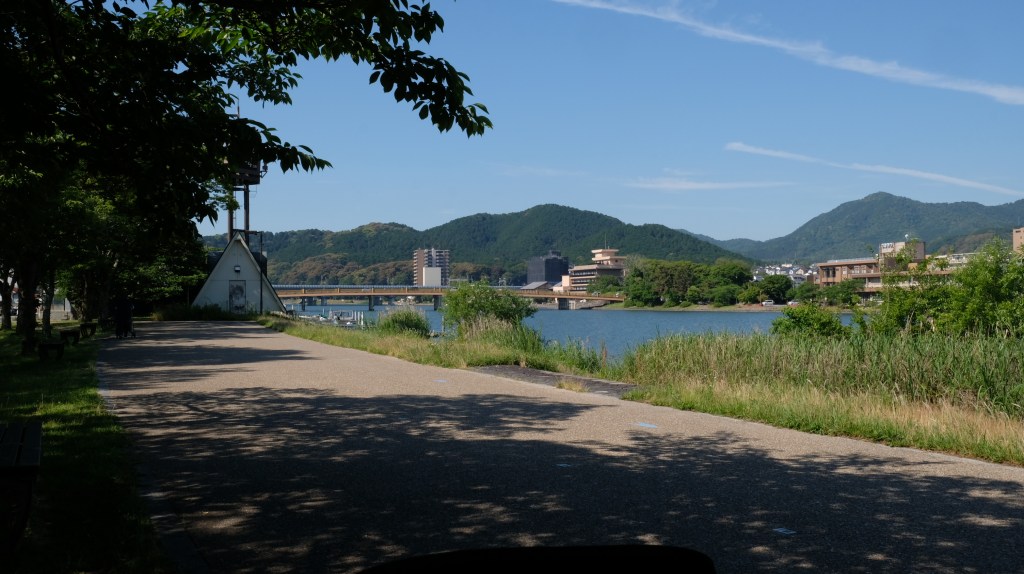
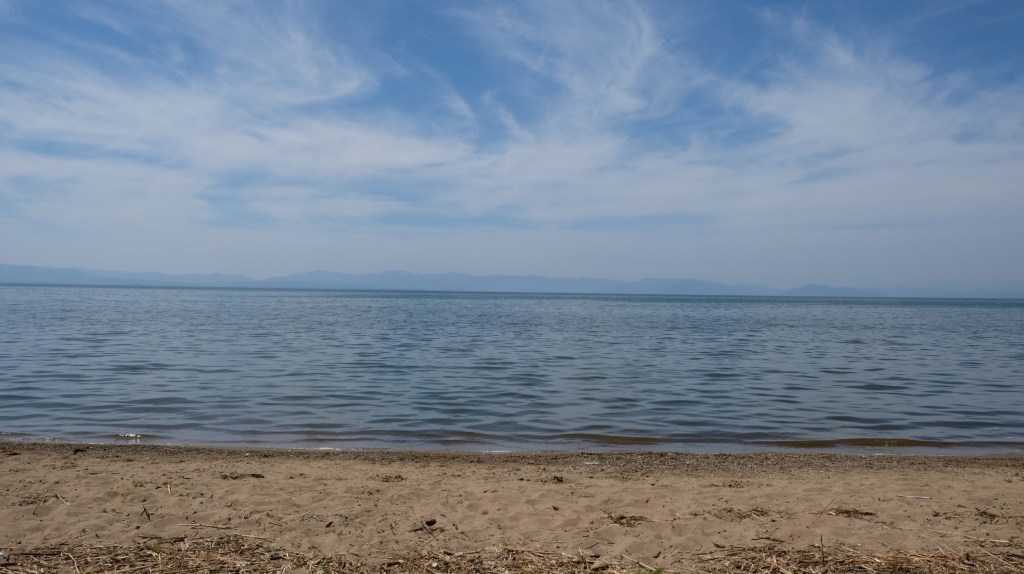
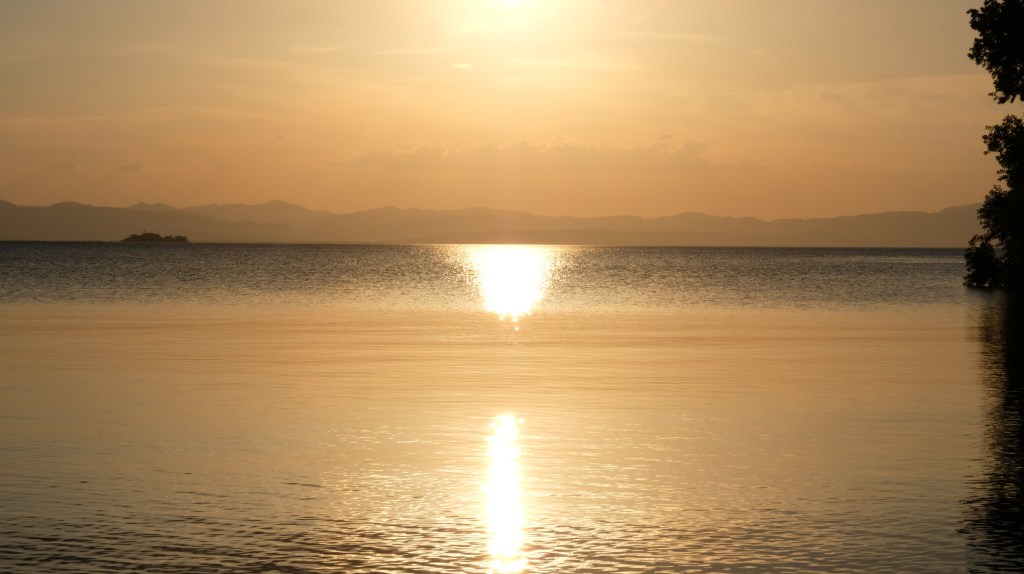
With the sun shining brightly, it became quite hot on the bike. Fortunately, Japan offers no shortage of places to replenish your fluids, whether at a Lawson convenience store, a vending machine, or one of the many restaurants, both local and nationwide chains. Even so, there are plenty of stretches along the route that are far less populated and much less developed. Those, however, are also the most beautiful sections, making you feel as though you’ve briefly crossed into another country. Accompanied by a Spotify playlist I had specially put together for this trip, I cycled—sometimes struggled—along winding roads almost entirely free of traffic, enjoying magnificent views across the vast lake and the timelessness of the surrounding landscape.
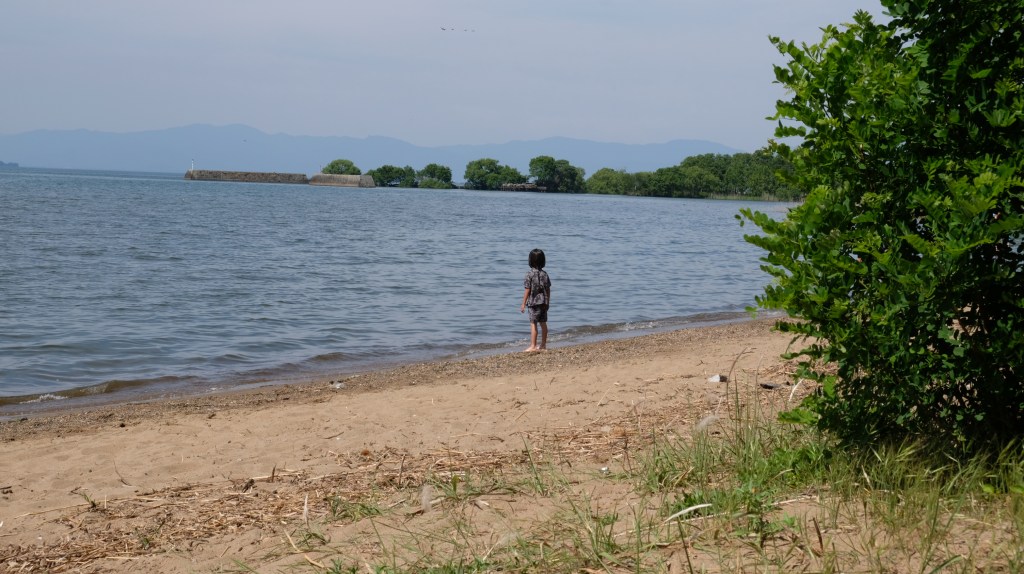
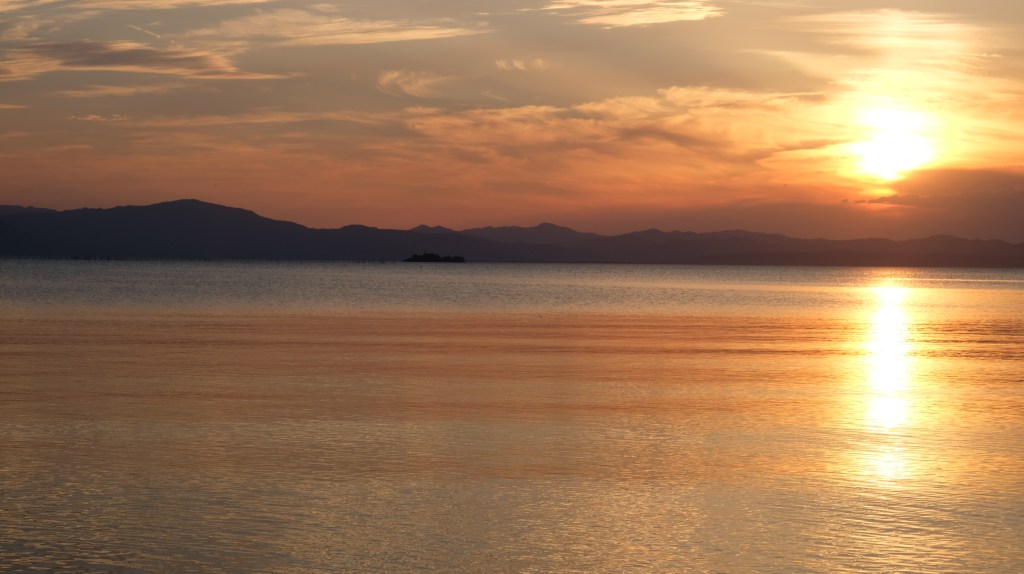
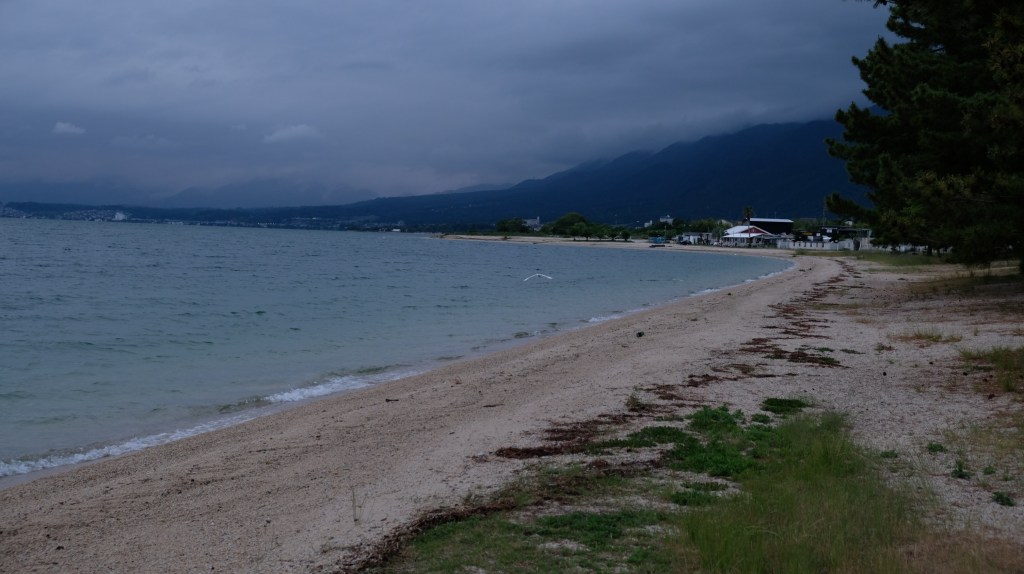
I wished this day could have lasted forever. I stopped at two beaches along the lake for a quick swim and, at last, to make proper use of the goza mat I had brought with me. There was still no sign of the approaching typhoon, and it certainly didn’t look as though I would need my waterproofs the following day. Chikubushima was drawing ever closer, and I was looking forward immensely to visiting this remarkable little island.
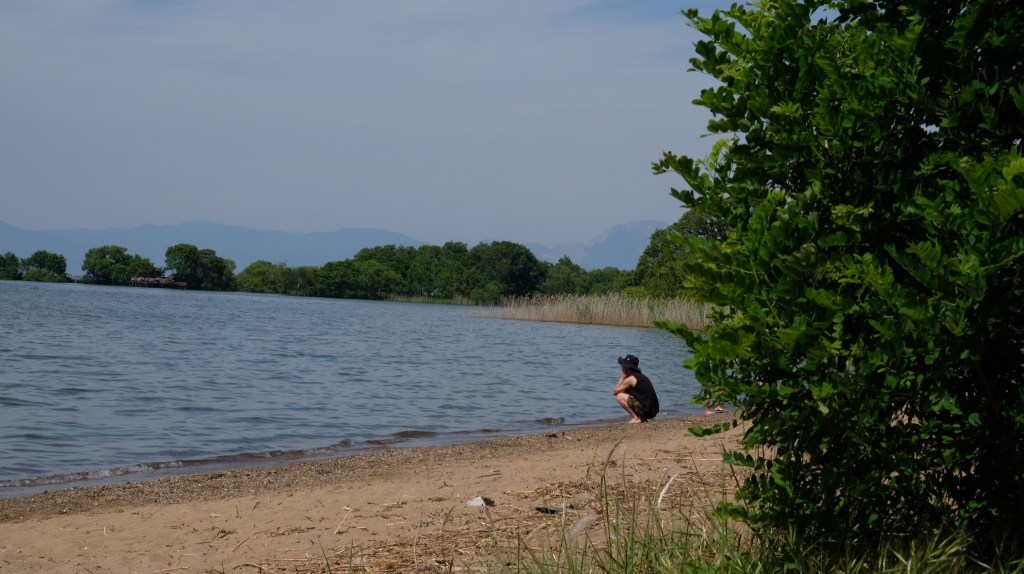
Towards the end of the afternoon I arrived in Hikone, where I stayed in the guesthouse of a retired secondary school music teacher. He had travelled extensively and spoke excellent English, though he was getting on in years and, judging by his frequent weary sighs, was struggling somewhat with his health. After I had settled in, two other cyclists arrived who were also riding the Biwaichi, albeit in the opposite direction. One of the two young men—both from England—was on a long-distance cycling tour of Japan, while his friend had only recently arrived to accompany him for part of the journey. I’ve already forgotten their names, but it was nice to chat with fellow cyclists for the first time during my trip.
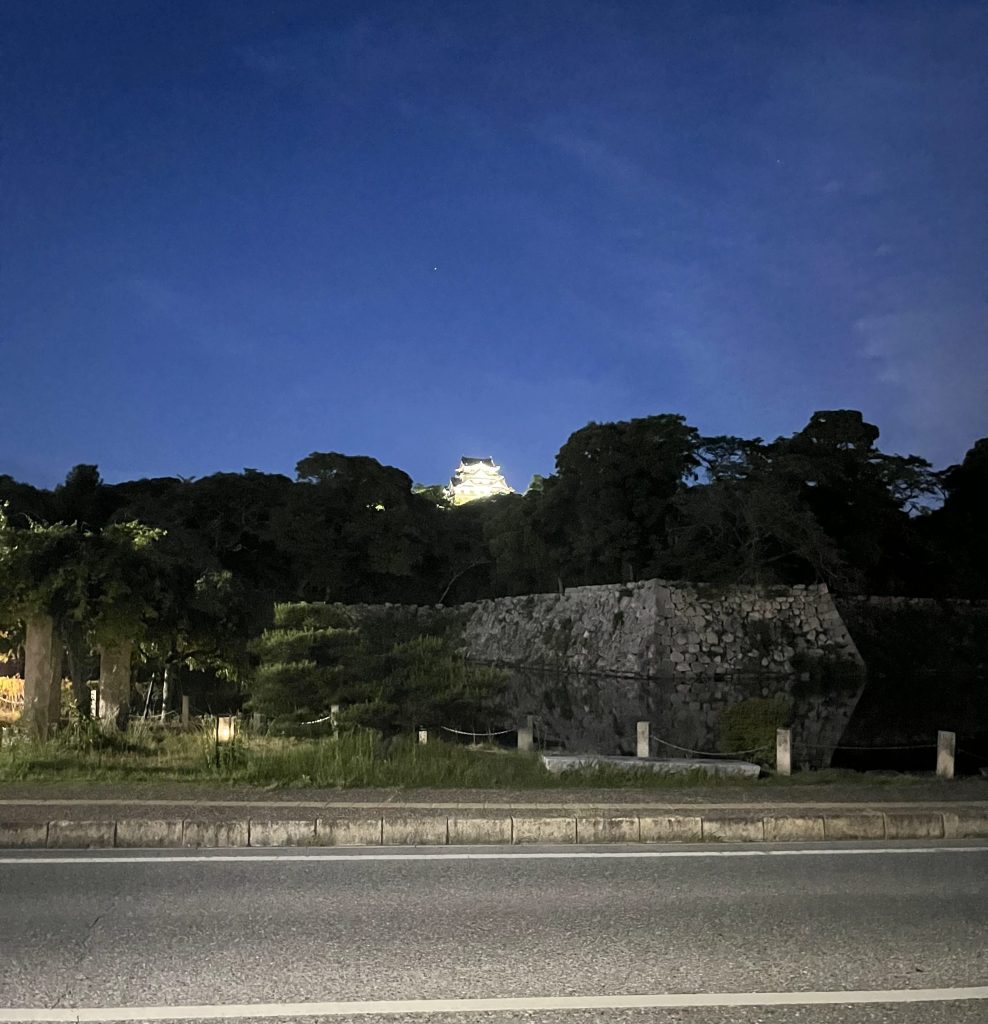
The following morning, the third day of my tour, the weather had changed completely. The glorious sunshine had given way to grey skies and steady rain. Nevertheless, before setting off for my next destination, I wanted to visit Hikone Castle, one of the few castles in Japan that has survived in its original form. From the kitchen of the guesthouse I could see the castle rising enchantingly above the town through the drizzle. Wearing my waterproof jacket and leaving my camera behind, I cycled to the entrance, arriving just before opening time. A few moments later, I became the first visitor of the day to walk through the castle grounds. The approach was every bit as magical as the view of the castle itself, and the rain only enhanced the atmosphere. I still regret not being able to capture proper photographs with my camera.
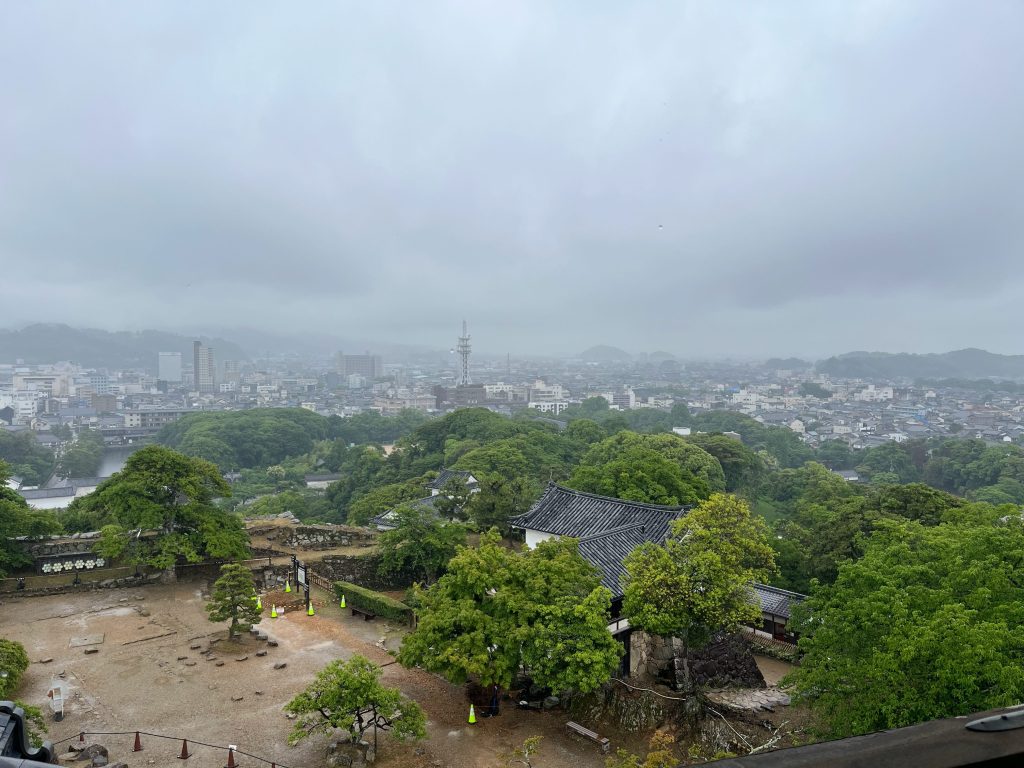
After my brief visit to Hikone Castle, I got back on my bike and headed for Nagahama, just 15 kilometres further north. Having cycled around 70 kilometres on each of the previous two days, this almost felt like a rest day. Wearing my poncho, I pedalled into a strong headwind towards my next accommodation. Unfortunately, the poncho wasn’t designed for strenuous exercise, so I ended up absolutely soaked with sweat anyway.
According to my itinerary, this was the day I was supposed to take the ferry from Nagahama Harbour to Chikubushima. Sadly, that plan came to nothing. At the harbour I was told that all sailings had been cancelled for the day—and for the following day as well. The winds were simply too strong because of the approaching typhoon following in my wake. At that moment it became clear that I would not be reaching the main goal of my trip.
Disappointed, though understanding the circumstances, I cycled to my accommodation in the centre of Nagahama: Guesthouse Mikata. I arrived in a picturesque little street where the guesthouse stood on the corner beside an even more charming canal. The owner happened to be outside saying goodbye to two other cyclists. He immediately noticed something unusual about my bicycle. “Why did you bring tatami with you?” He spoke excellent English, so I was able to explain exactly what it was and why I had brought it along.
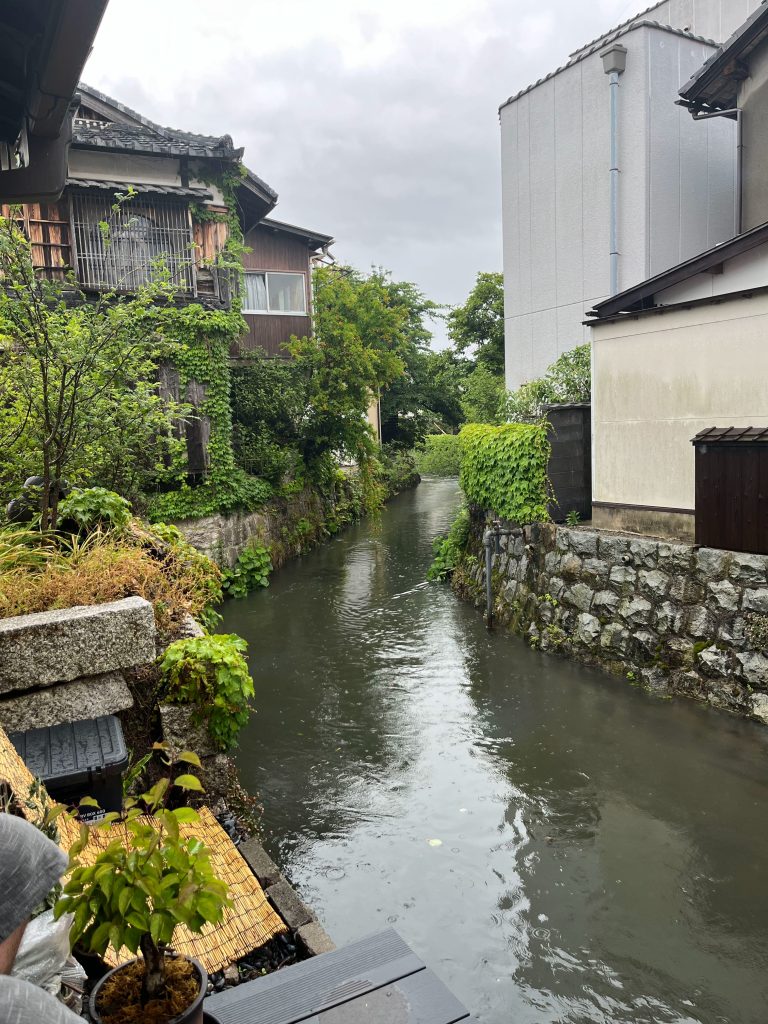
Perhaps that was why he offered to take me to a small tatami workshop run by an acquaintance of his. The new tatami mats for the recently opened guesthouse had been made there, something that was immediately obvious from the moment I stepped into my room: the fresh fragrance of igusa rush was the very first thing I noticed. Naturally, I couldn’t pass up an opportunity like that, so later that rainy afternoon we walked through the drizzle, umbrellas in hand, to the workshop.
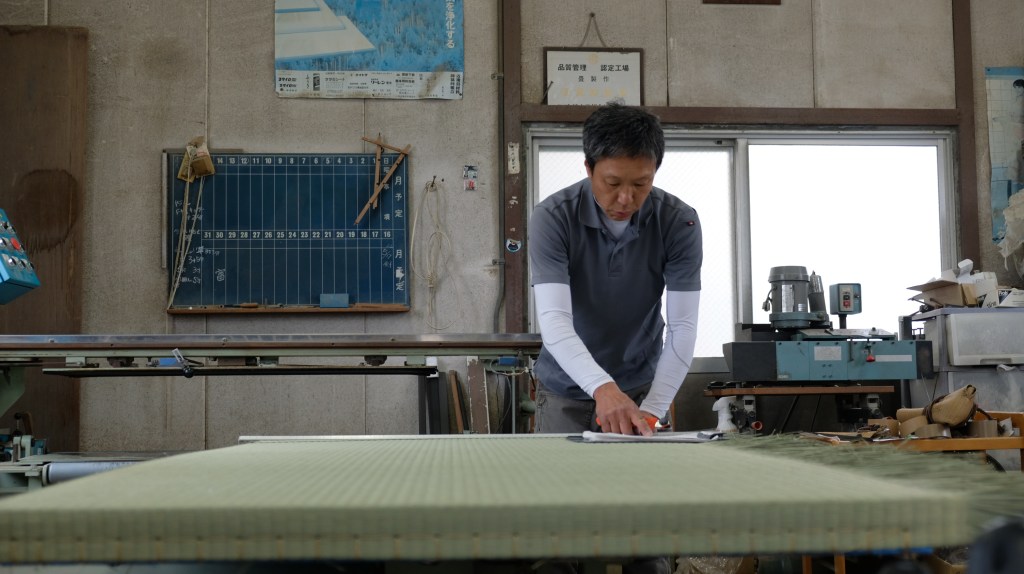
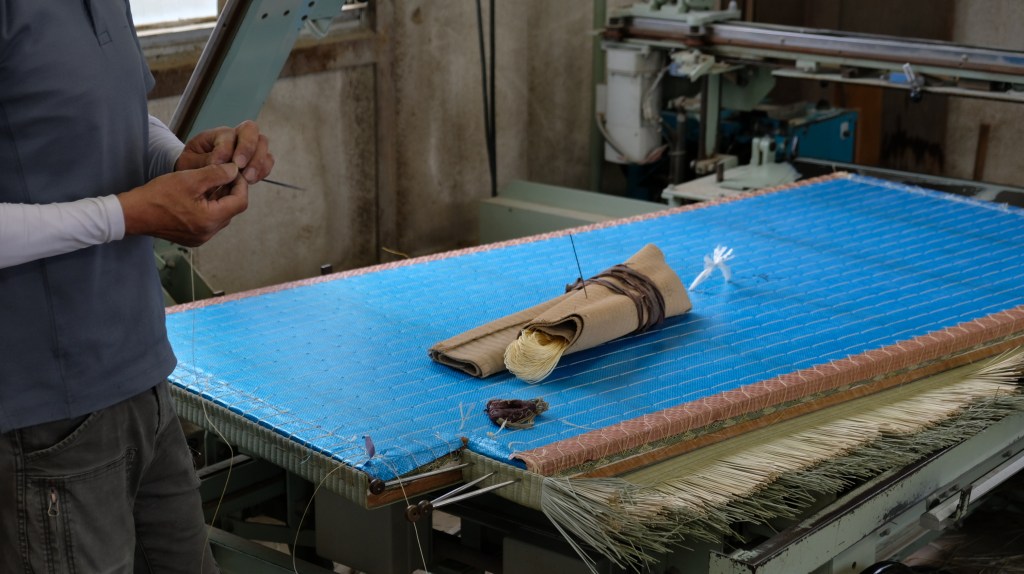
The owner was a fourth-generation craftsman who now ran the business on his own. He was genuinely surprised by our visit, and equally surprised by the knowledge I had acquired about this increasingly forgotten craft. Most Japanese people are familiar with tatami mats, but very few know anything about how they are actually made. When we arrived, he was replacing the igusa covering on used rice-straw cores, a process that also involved a fair amount of hand stitching.
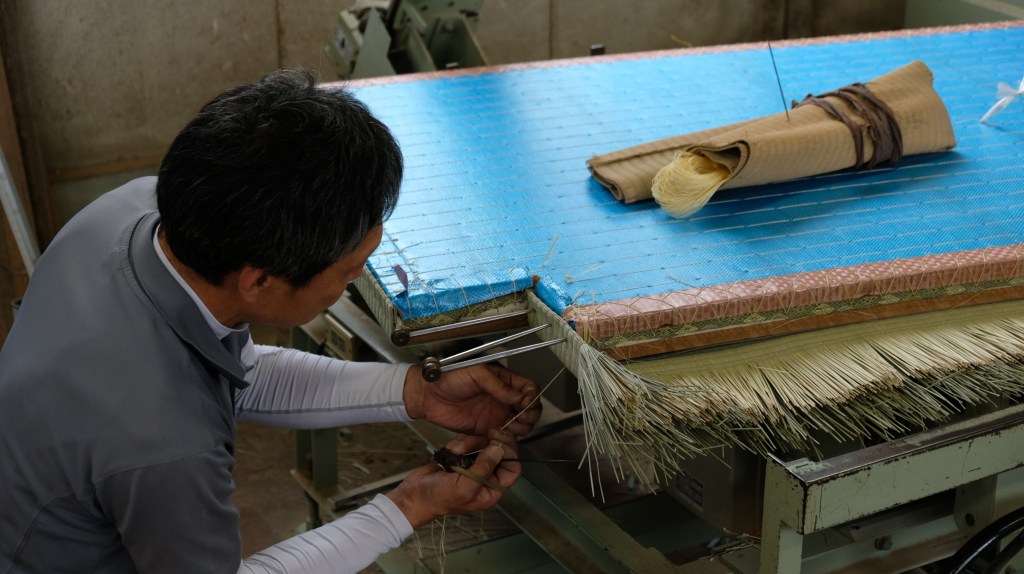
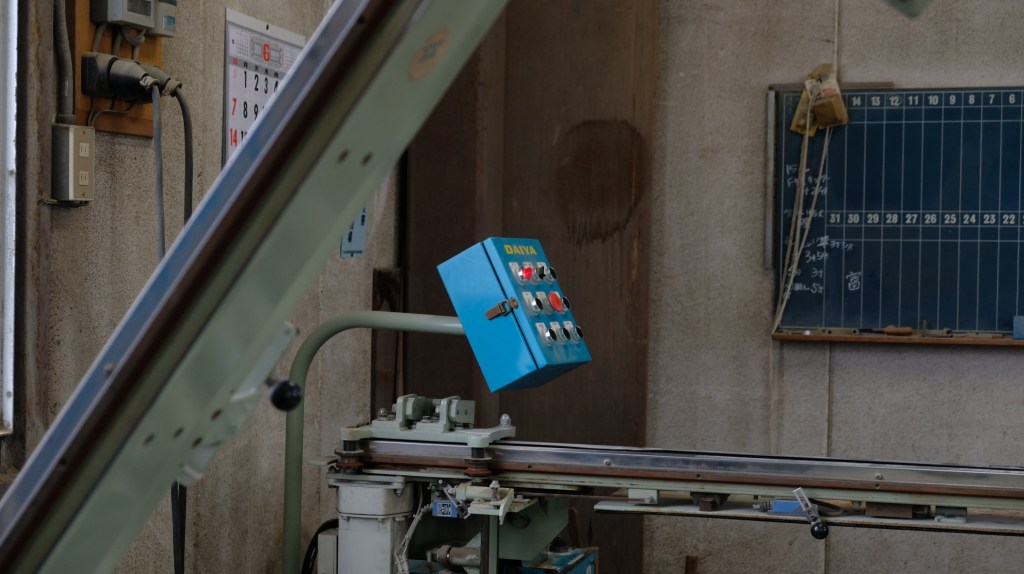
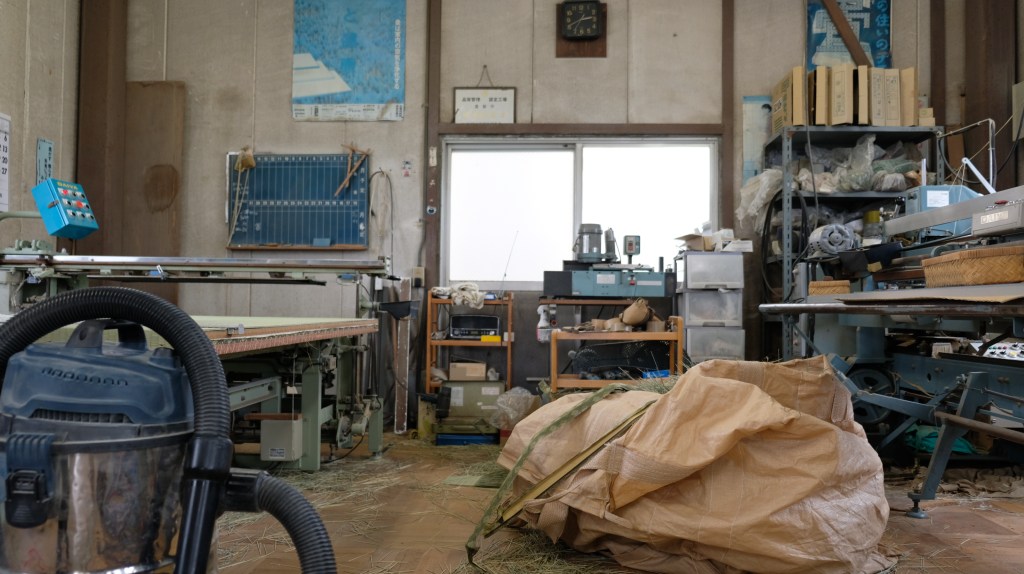
The workshop itself felt remarkably familiar to me. Three well-known machines, a large wall calendar, the specialist tools, the stacks of materials, and the Japanese radio quietly playing in the background all reminded me of my own training workshop. I also spotted some special heri edging that is used exclusively for temples and tokonoma alcoves. The cheerful but modest craftsman admitted that he felt a little nervous with people watching him work, but I certainly couldn’t spot a single mistake. His many years of experience were evident in every movement.
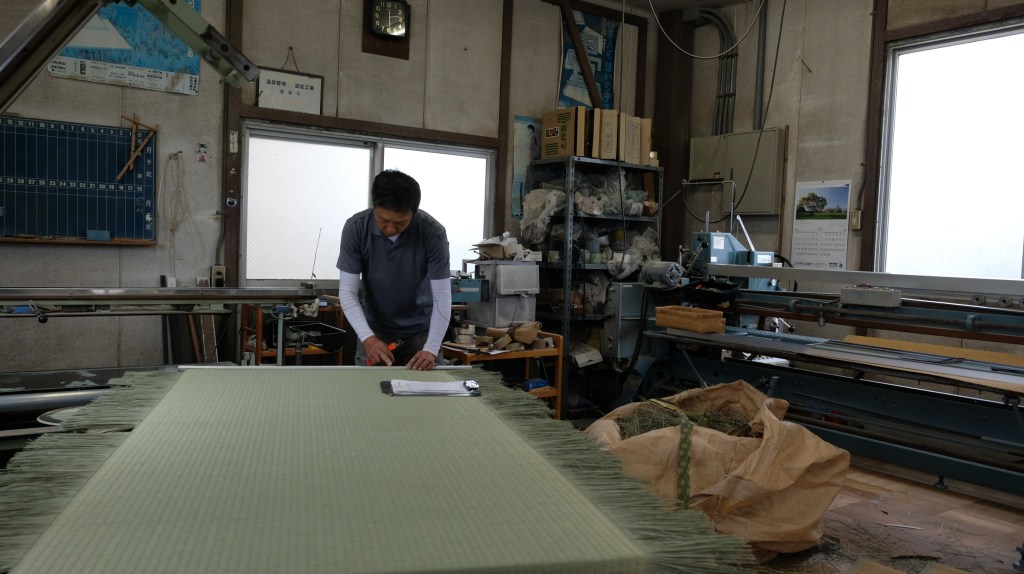
He told me that his workshop is the last remaining tatami workshop in Nagahama. Over the years, all of his direct competitors have closed their doors, and, sadly, he believes it is probably only a matter of time before his workshop meets the same fate. His children have chosen different careers that offer better financial prospects and will not be taking over the family business. Like my own sensei, he understood their decision, but it was clear that he was saddened by the thought that the family tradition would come to an end.
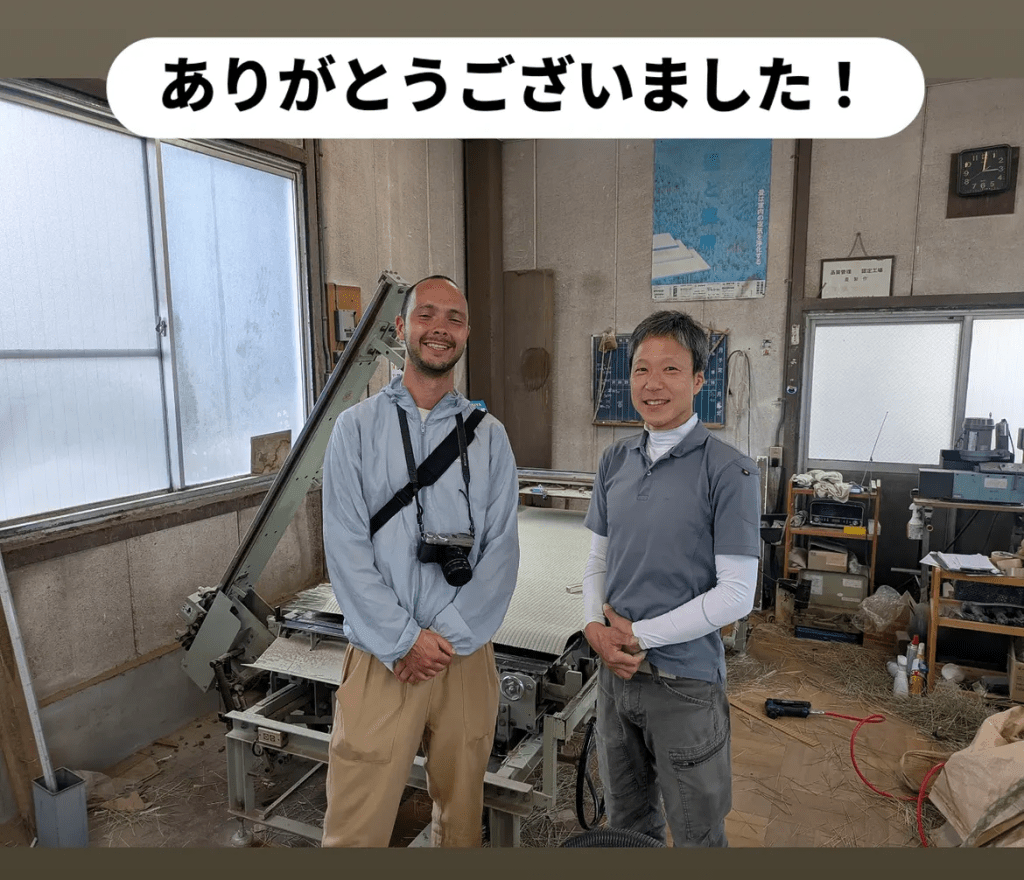
Like my own sensei, he had learned the trade from his father in a class alongside other tatami apprentices. As things stand, however, he no longer has the time to train a new generation himself. When he eventually retires, the people of Nagahama will have no choice but to order their tatami mats from elsewhere.
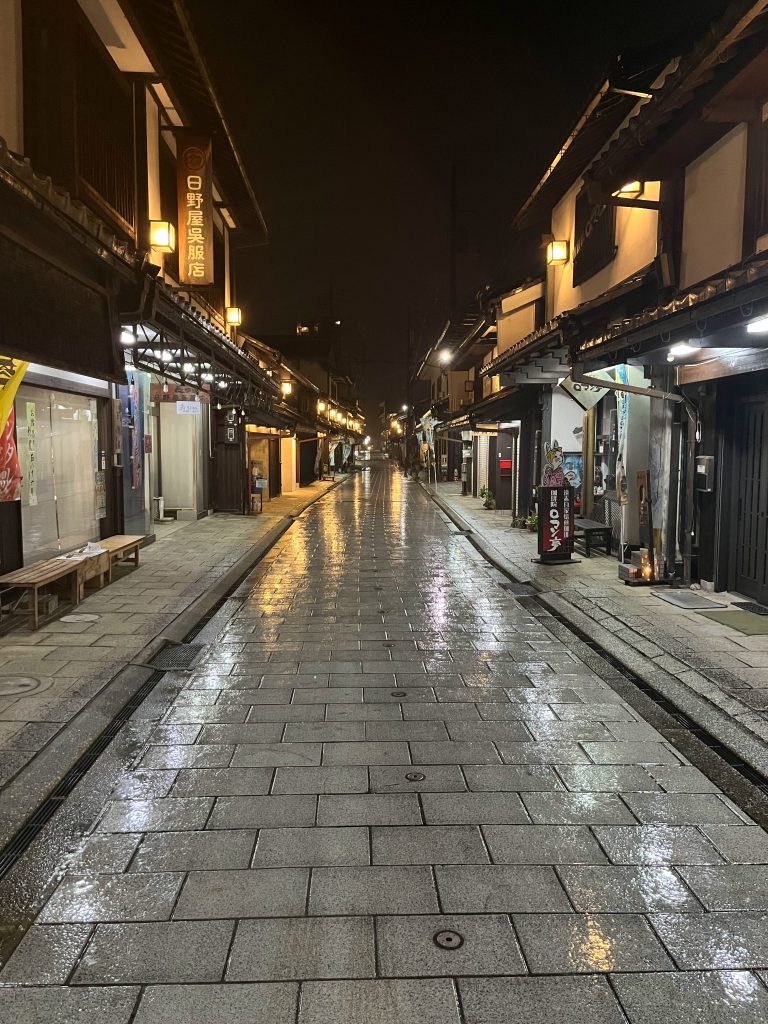
It was still raining by the time evening fell. The streets of Nagahama were deserted; the day-trippers had all gone home and the shops had closed. Umbrellas are indispensable in Japan, and fortunately they are also everywhere. Grateful to be sheltering beneath one borrowed from the guesthouse, I watched the empty streets in silence. After dinner at an izakaya, I returned to the guesthouse, where I had a brief conversation with a young man from Mexico who had moved to Aichi with his mother when he was four years old. He spoke neither Spanish nor English, but enthusiastically showed me on a map all the places he had already visited in Japan. Only a handful of prefectures remained unchecked.
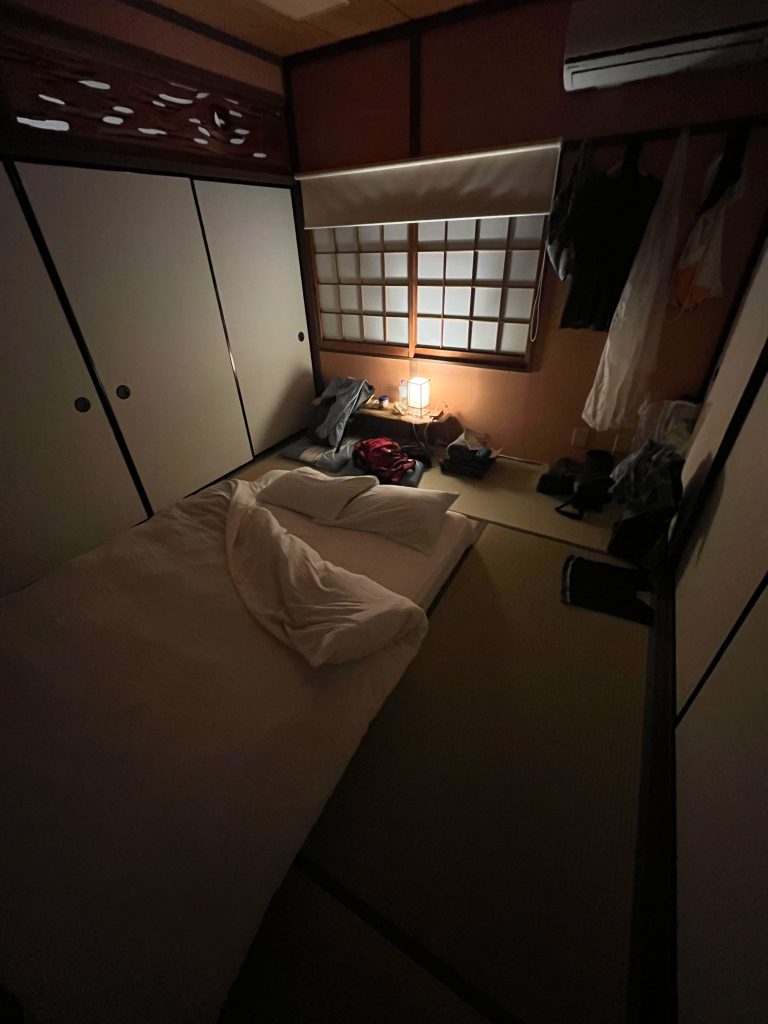
By then I was still undecided whether to cycle the 70 kilometres to my next accommodation the following day, given the approaching typhoon. After an excellent night’s sleep in the brand-new tatami room, I eventually decided to wait for the last of the rain to pass before setting off in the morning after all.
Expecting more rain, I first visited the local Don Quijote to buy a proper waterproof suit. Looking back, the 4,000 yen (around £20) I spent on it turned out to be one of the most pointless purchases I have ever made. There was hardly any rain that day, nor during the rest of the week. Instead, the headwind became my greatest adversary.
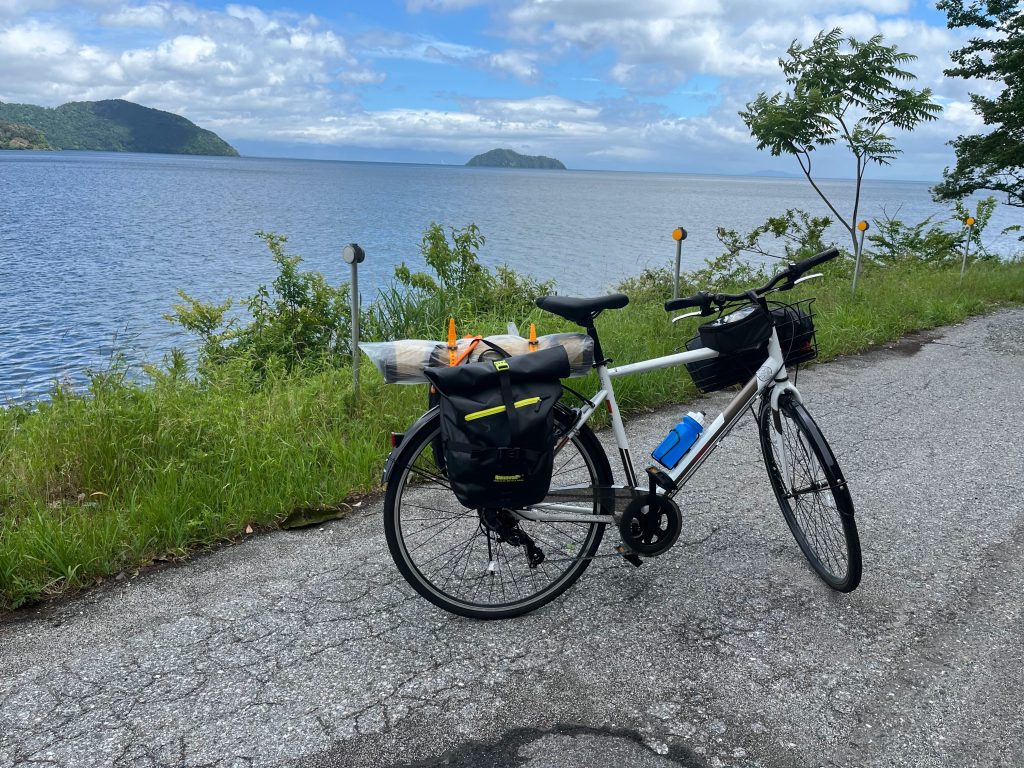
Once I had rounded the northern tip of the lake, the wind finally turned in my favour, allowing me to pick up the pace. I reached J-Hoppers Guesthouse, just north of Otsu, earlier than expected. I would stay there for the next two nights to rest. It certainly wasn’t beach weather, so the goza mat remained rolled up for the rest of the trip, but I thoroughly enjoyed the local onsen as well as two Japanese-style curry restaurants. At the second restaurant, Oberton, the owner gave me a recommendation for my return to Kyoto the following day: a visit to Café MOLE, where he had previously worked.
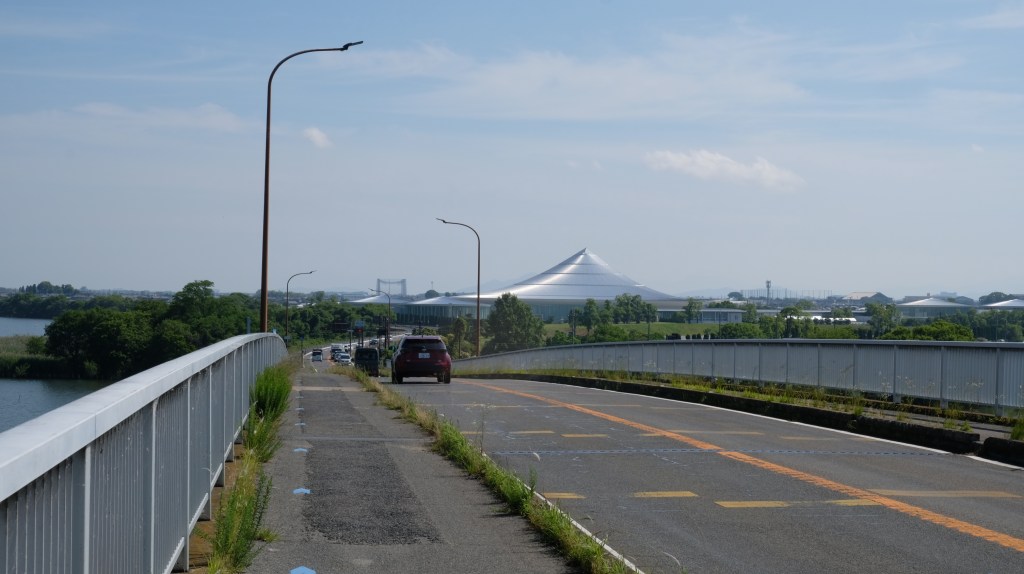
After leaving J-Hoppers, I was genuinely on the homeward leg of my journey, with only one more stop in Kyoto ahead of me. Curiously enough, this would already be my fourth visit to the city within a single month. Strictly speaking, I didn’t complete the Biwaichi route, as I turned off early towards the former capital instead of cycling all the way back to Seta-no-Karahashi. Those final 15 kilometres simply weren’t worth it. It was warm, and I still had a substantial climb to tackle between Otsu and Kyoto during the roughly 50-kilometre ride.
Once I had reached the summit about halfway through the journey, however, it was downhill all the way. I barely had to pedal, coasting at speed through the first suburbs of Kyoto. After passing through several neighbourhoods, I soon found myself back on familiar ground in the city centre. I immediately missed the peace and quiet of Lake Biwa, but at the same time it was satisfying to feel that, after just under a week, I had come full circle.
As it was still well before check-in time at my hostel, I decided to visit one of Kyoto’s best-known attractions: Kinkaku-ji, the famous temple whose upper floors are covered in gold leaf, just north of the city centre. Before heading there, I ate my lunch on the banks of the Kamogawa, the nostalgic river that flows through the heart of Kyoto. At least the weather had stayed dry that day, and the temperature was pleasantly mild.
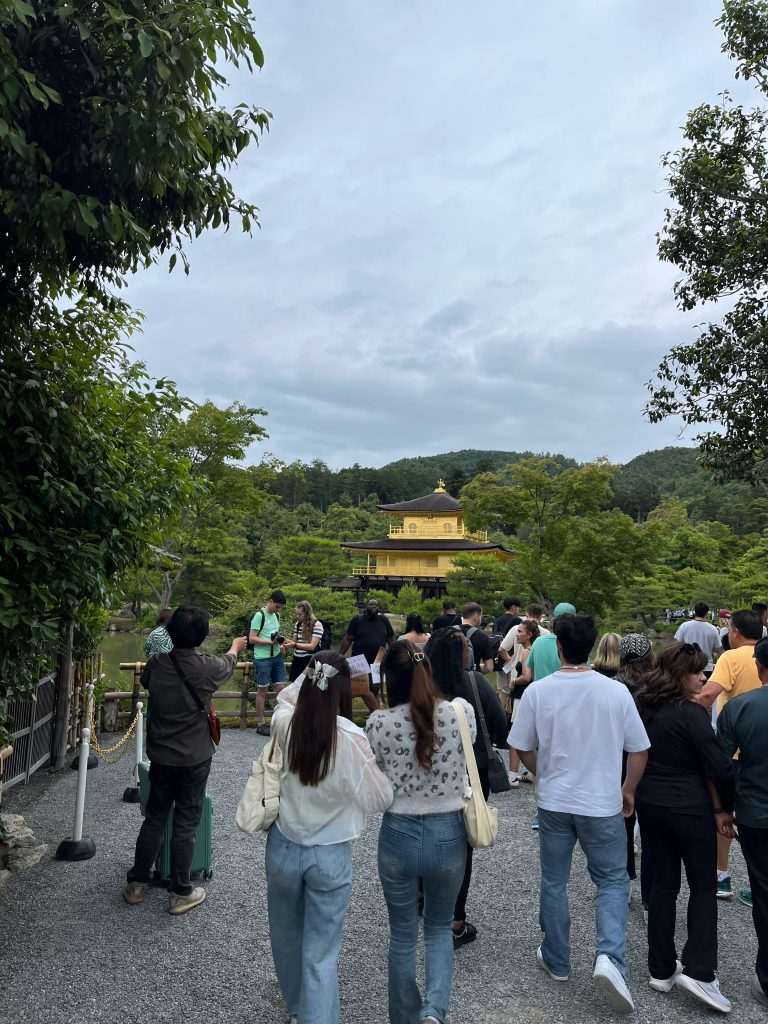
Loaded down with my bike and all my luggage, I arrived at the bustling entrance to the golden temple. It was even busier than I had expected. Admission wasn’t exactly cheap either. I’m still not sure whether seeing this remarkable temple was worth the entrance fee, the effort, and having to battle through the crowds of tourists. Then again, I feel much the same about Kyoto as a whole. If I only had a limited amount of time to spend in Japan, I think I would choose to visit other cities instead. Nagahama, for example.
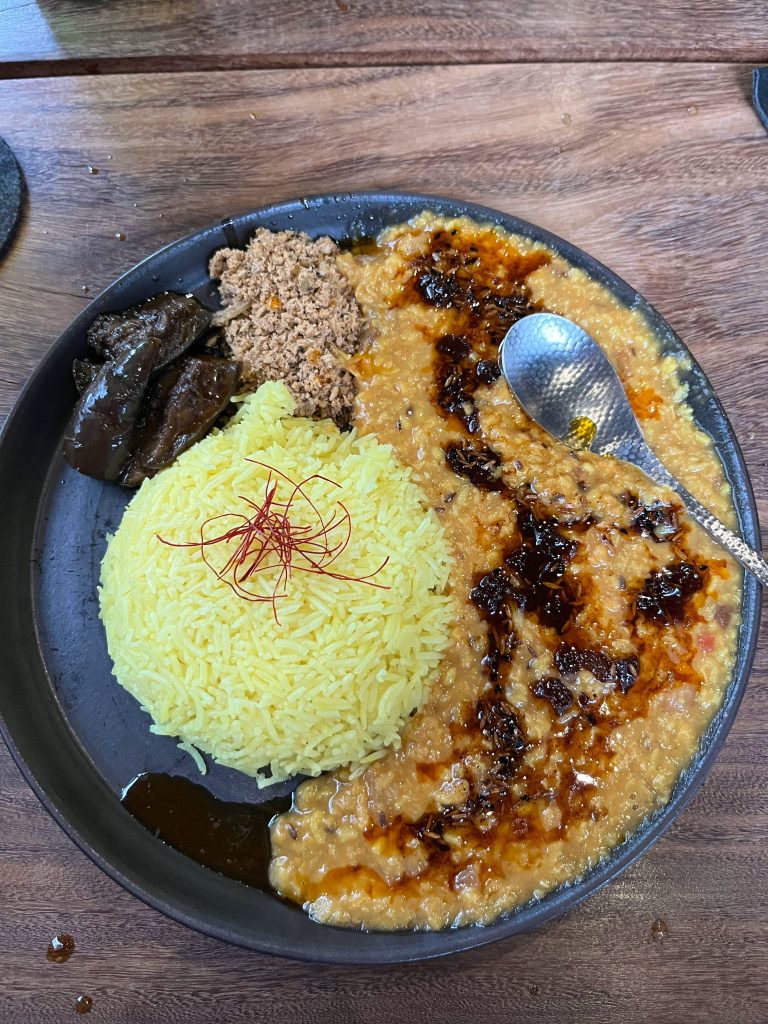
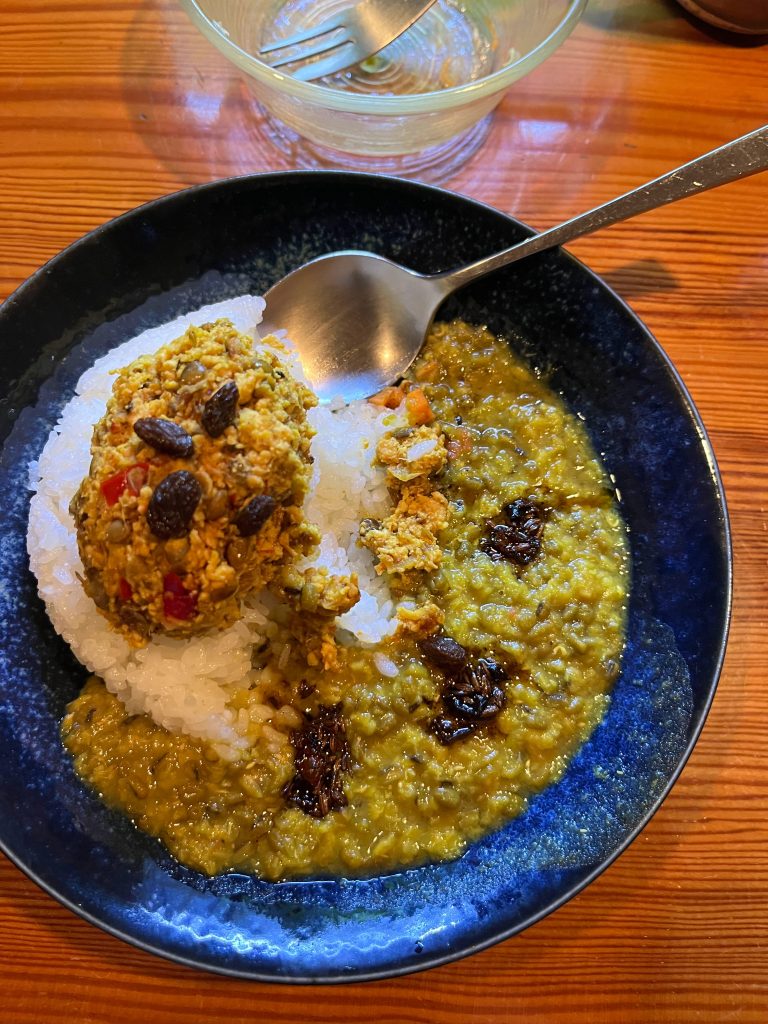
After my brief visit to the temple, I escaped the crowds and cycled to my final side quest: Café MOLE. It turned out to be an excellent recommendation. The café was tucked away behind a lush collection of plants on a quiet, remarkably long street. Inside, jazz records were playing while a small group of elderly ladies chatted away. I ordered a beer and a curry from the young woman who was running the café entirely on her own. It took a little while before my meal arrived, but as soon as it was placed in front of me I found myself transported back to the peaceful atmosphere of Lake Biwa that I was already beginning to miss. It was immediately obvious where the owner of the curry restaurant Oberton had learned his craft.
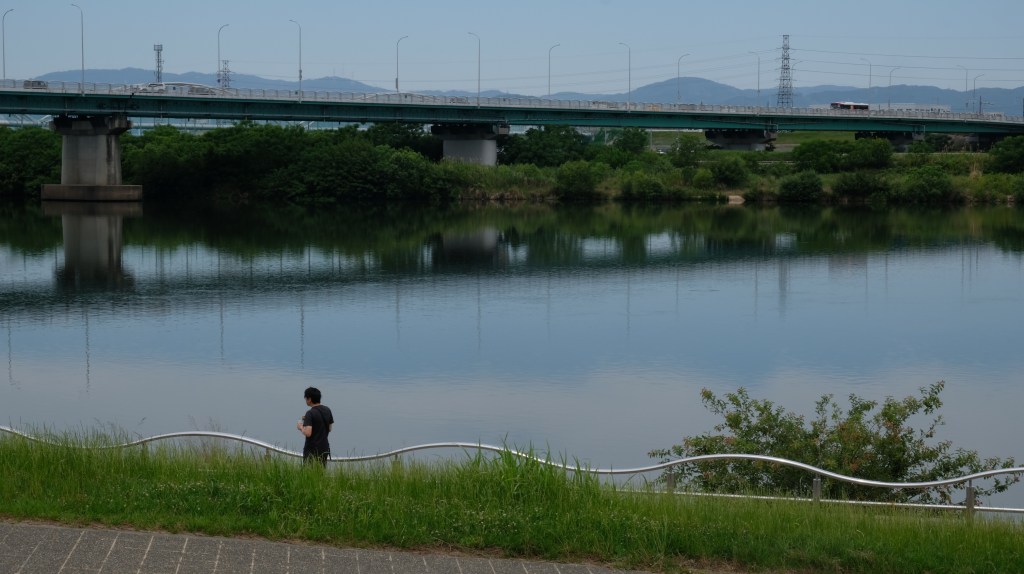
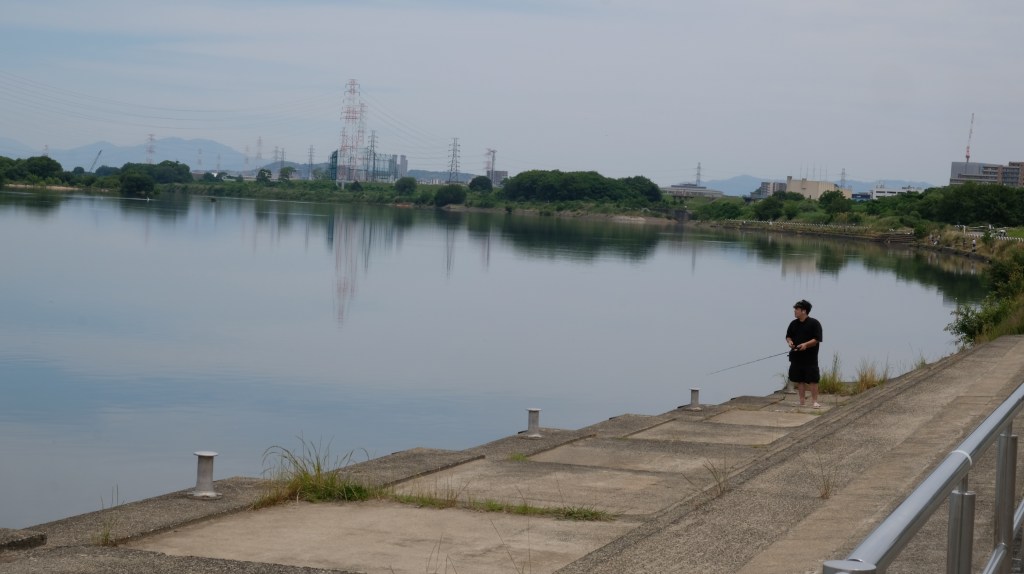
The following morning, I set off on the final leg of my journey home with a deep sense of satisfaction. I had been looking forward to cycling alongside the Yodo River once again. When I reached it, I made my way towards Osaka with time on my side. Along the route I struck up a conversation with a man riding a recumbent bicycle—still a rare sight in Japan. His name was Koji, and he spoke excellent English. Curious about where I was heading, he asked about my journey, so I explained that I was on my way back after spending a week cycling around Lake Biwa.
He told me that he had completed the same route several times on his recumbent bicycle, each time in a single day. “Cycling uphill is just very hard.” He said it with a quiet sense of pride when talking about his preferred style of cycling. He also shared plenty of advice about Japan’s cycling culture and recommended several beautiful cycling destinations around the country. After our enjoyable conversation, he left me with a useful remark: “Japanese people want to talk with white people, but we just don’t know how to. We’re too shy and think we need to speak perfect English.”
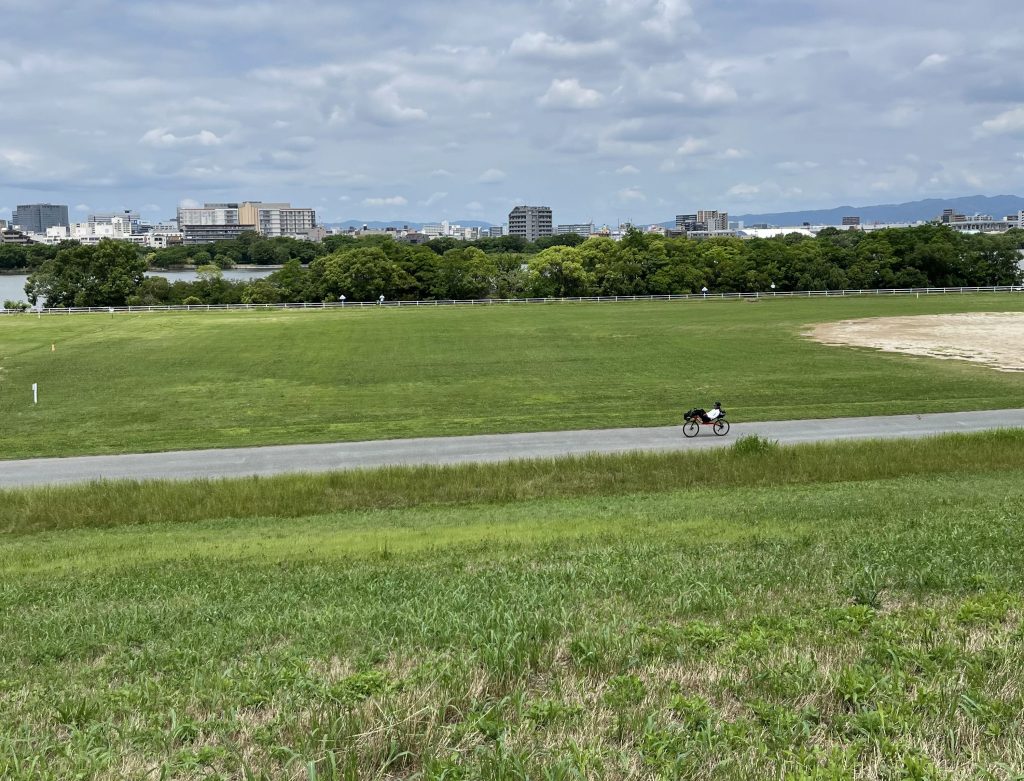
We both continued along the riverside towards Osaka, although Koji disappeared into the distance on his recumbent bike at nearly twice my speed. I still had well over two hours of cycling ahead of me through one of the busiest cities in the world, but I knew exactly what awaited me at the end of it: returning to Izumi, where the following week I could quietly resume my life as a tatami apprentice.
 sleeping on grass (草の上で寝る)
Leave a comment