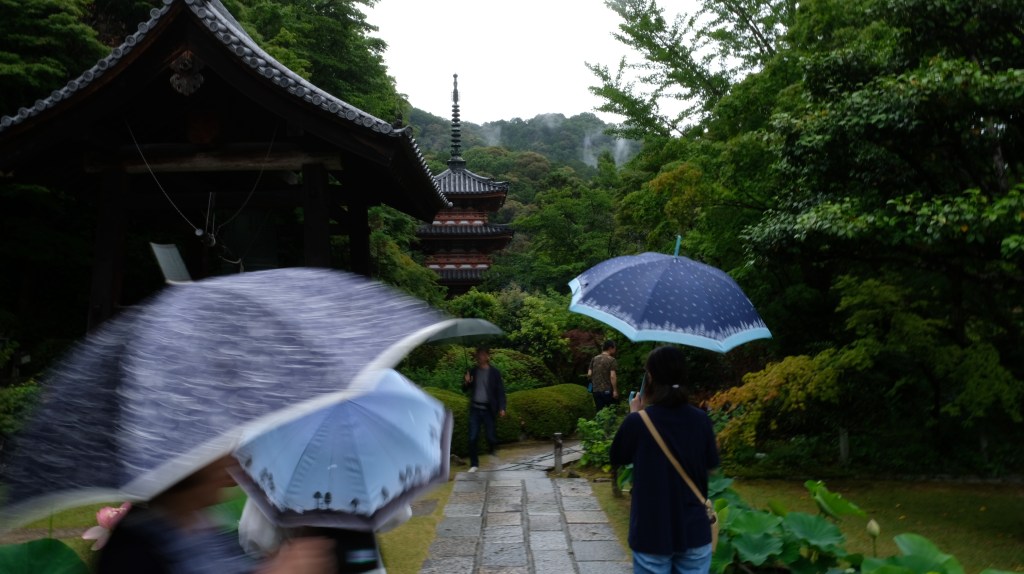
During the month of June, the rainy season was in full swing. The gloomy, humid and wet weather had a rather oppressive effect. I was looking forward to sunnier days, but as I write this in the brutal heat of August, with fierce sunshine every day, I find myself looking forward to a bit more rain again. Just like in the Netherlands, it’s never quite right. I always hear Japanese people saying it these days too: “atsui desu ne?” – “It’s warm, isn’t it?”, to which the answer is invariably: “atsui desu”. Perhaps people complain about the weather a little less here than in the Netherlands, but it is a topic of conversation every day.
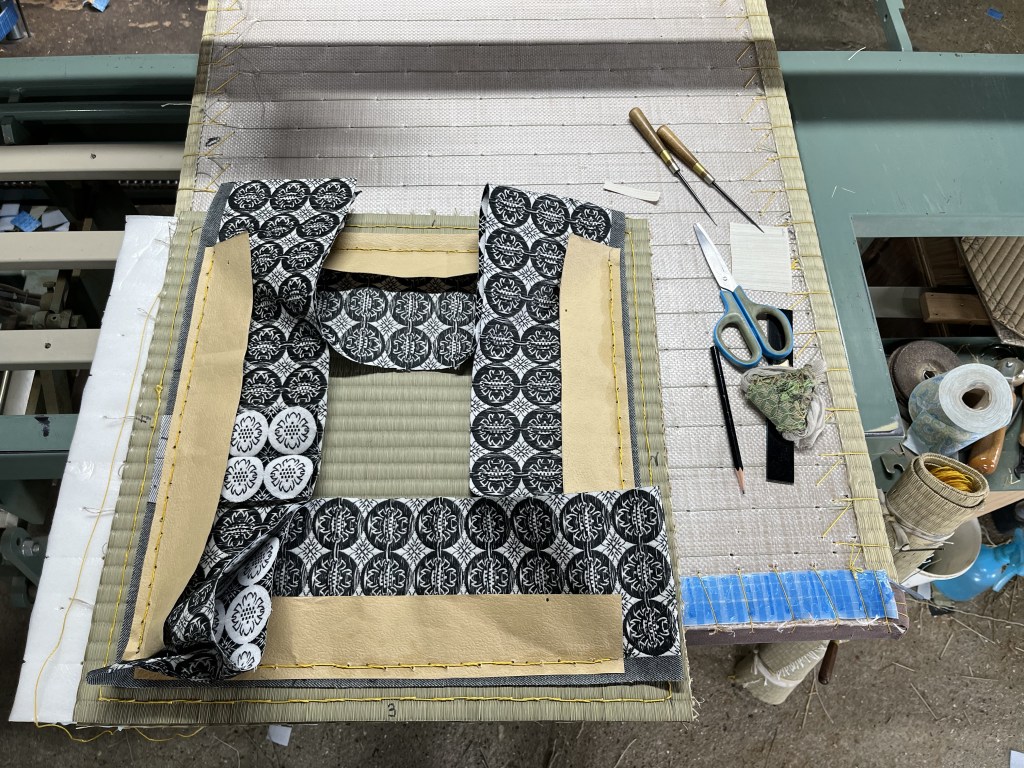
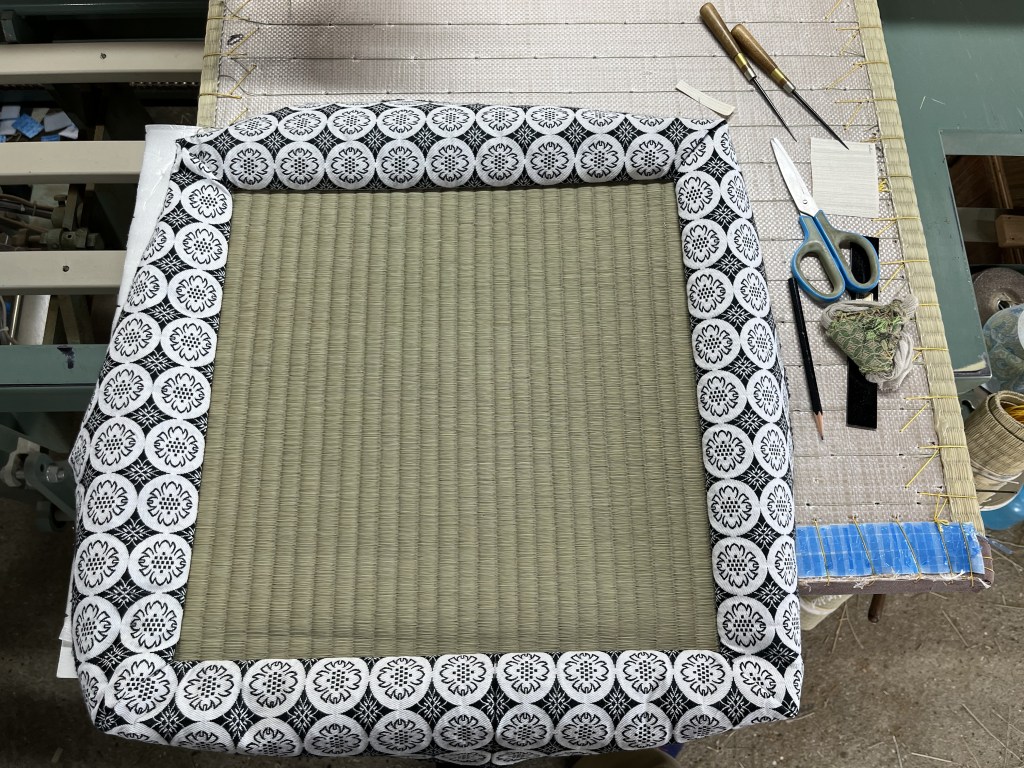
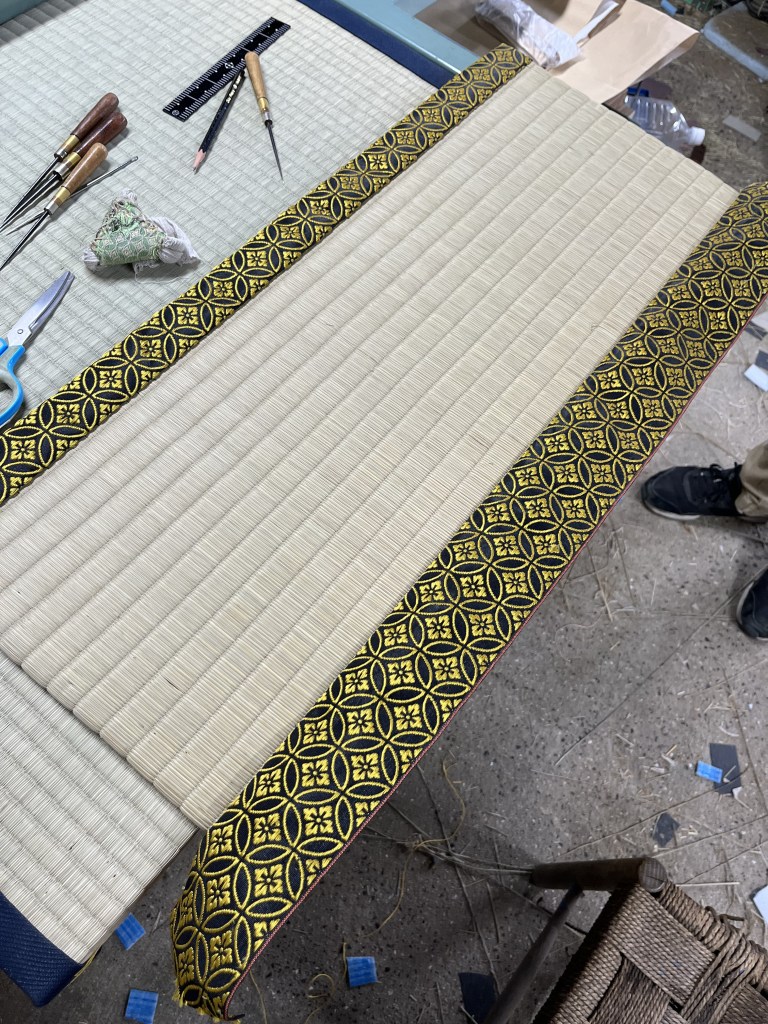
As June was already more than two months ago, my memories are less fresh and detailed. After returning from my cycle ride around Lake Biwa, I resumed my work with tatami. I worked on other forms of tatami, including the previously discussed tokonoma, but now also a square shitone. These are mainly forms of tatami used in Japanese Buddhist temples. A shitone is a special, often square tatami mat that is extra thick. It is used by the monk as a meditation cushion. It is surrounded by a religious fabric with a circular pattern.
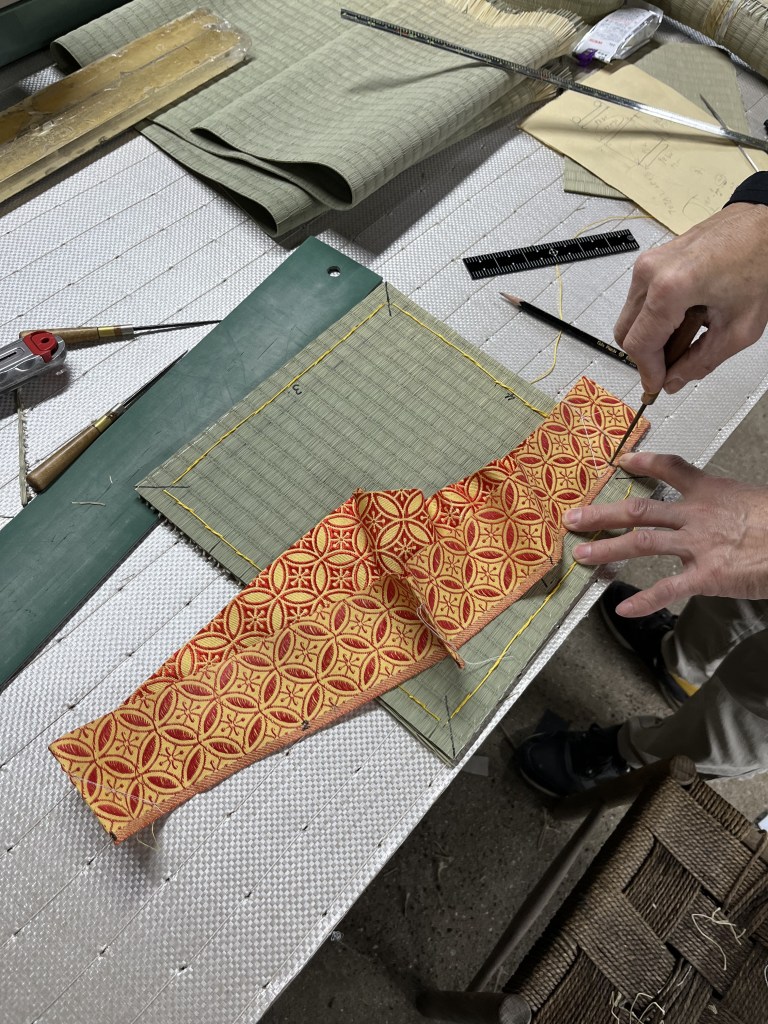
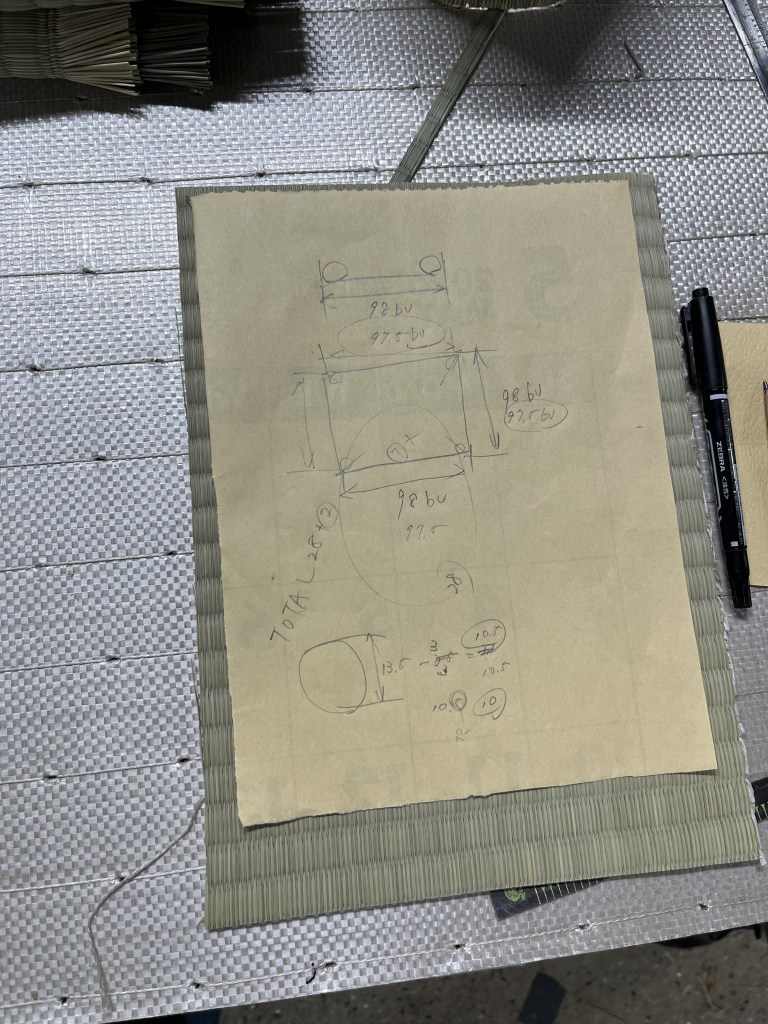
This circular pattern essentially determines the dimensions of the shitone. Because the pattern needs to continue perfectly all the way around the shitone, the idea is to first determine how many circles (mon) the shitone should have along each side, and to measure this using the traditional Japanese unit shakkan-hō (bu, sun, shaku). This ensures that the pattern lines up perfectly at every corner. Apart from this precise measuring and the associated cutting and trimming, making the (square) shitone is not particularly difficult. I found it quite a meditative activity.
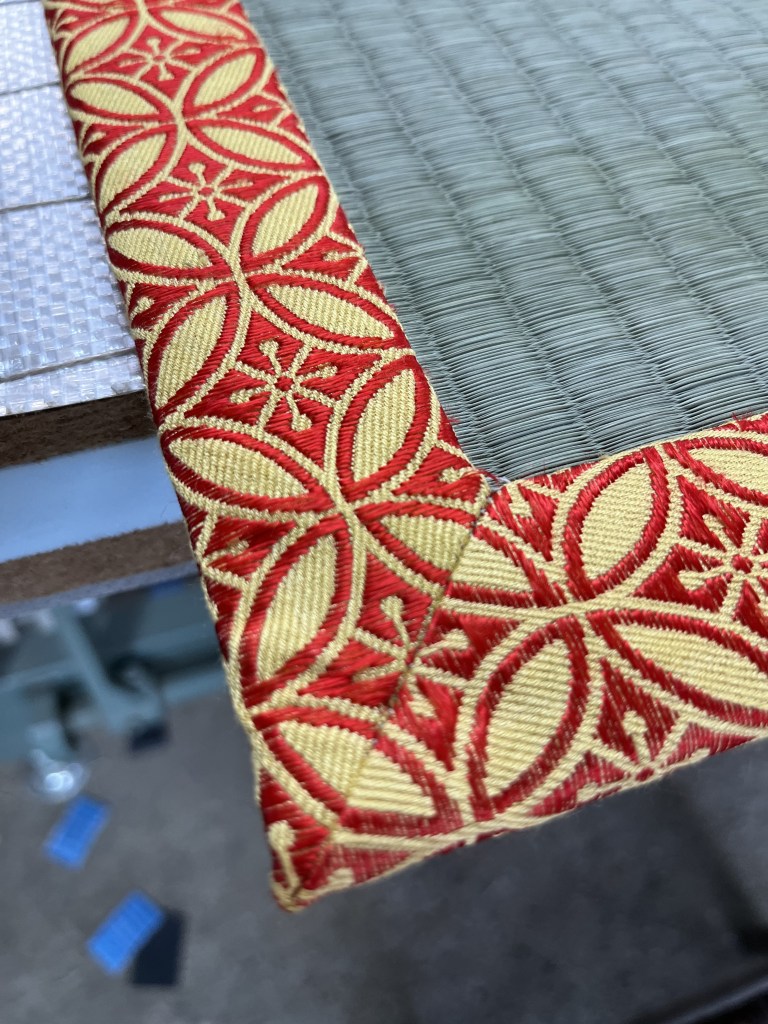
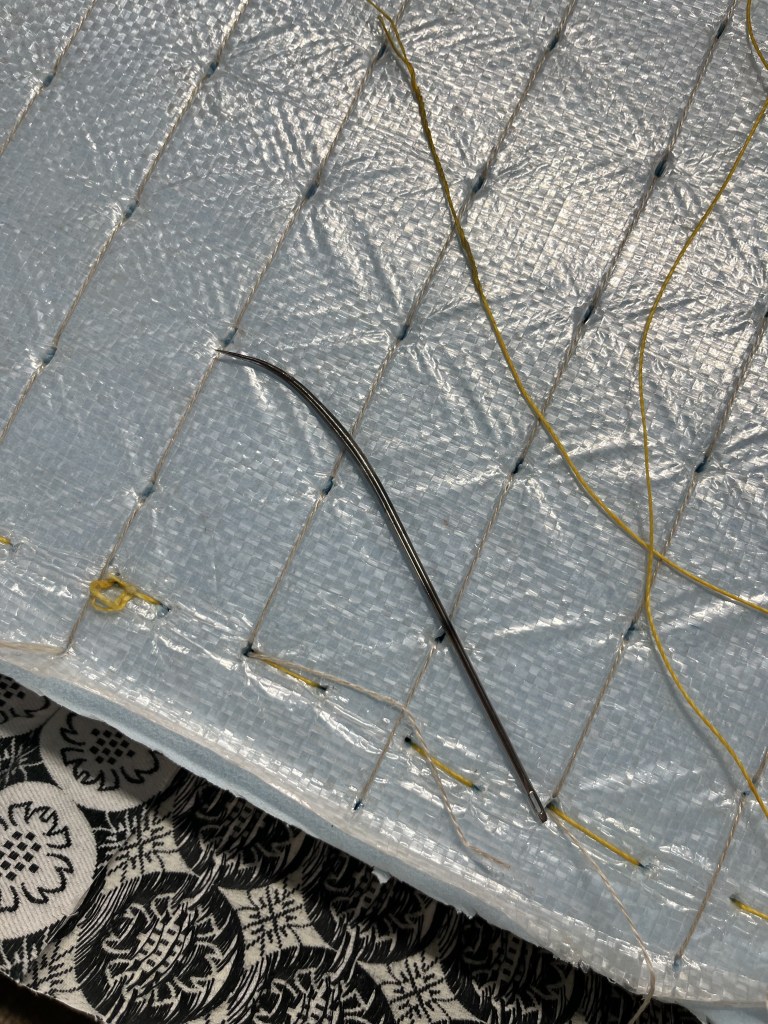
What is particularly special about the sewing involved in making this form of tatami, however, is that a curved needle is used alongside the regular straight needle. This is because the igusa surface has to be sewn onto a thicker base layer. During the final part of the stitching (kayashi), the thread needs to pass both into and out of the same surface (the underside), which cannot be achieved with a straight needle.
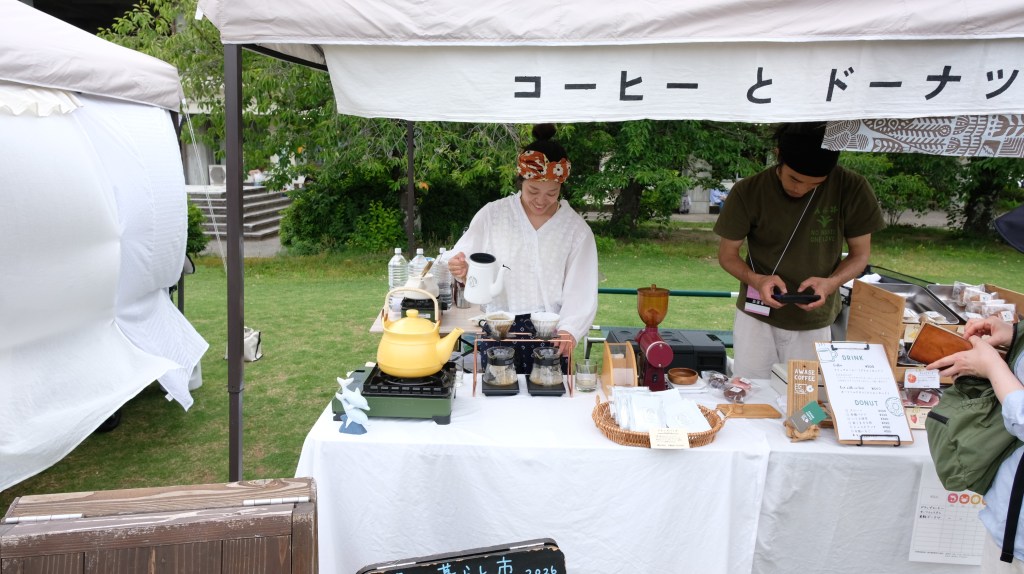
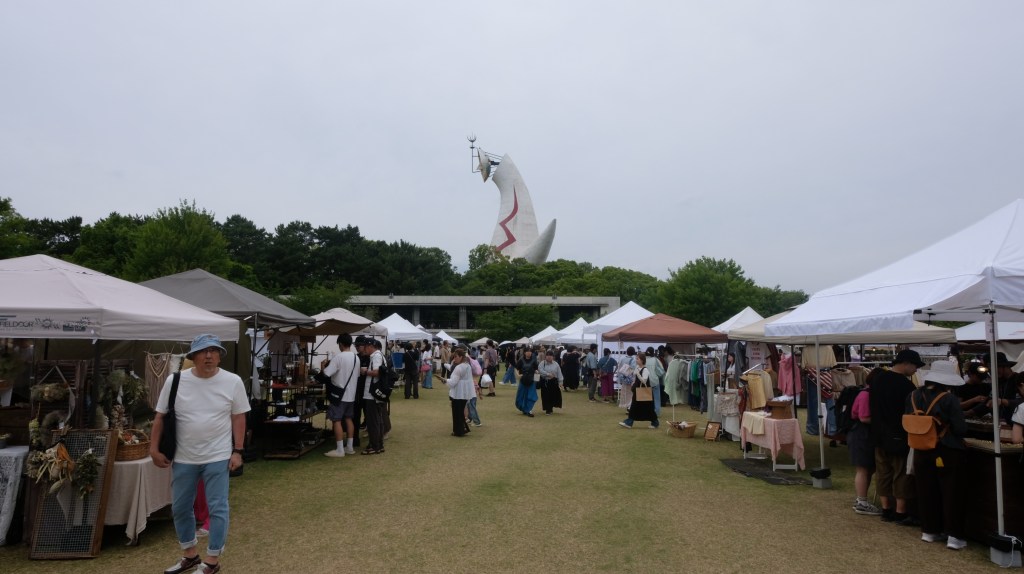
In between, the five of us – Emil (the Swedish volunteer at Fujitatami), Miggs, Hiromasa-san and Kana-san – visited a pottery event in the large park north of Osaka where the World Expo was held in 1970. The park is also home to a striking, enormous statue that was built at the time as part of the expo. Kana-chan was selling her coffee and doughnuts here together with Issei.
Our new tatami friend in Wakayama, Shota-san from Yamatetsu Tatamishop, was also visited once again by Hiromasa and me, partly to buy some more high-quality igusa from him. Unfortunately, I still miss a lot of what is being discussed, but I do pick up the occasional little detail and new word. Shota told us that he was planning to go to Kumamoto to be there for the harvesting of the fresh igusa. It is something I definitely need to do myself at some point while I am in Japan. Of course, we also showed Shota what I had been working on over the previous few days. That is why we had brought one of my unfinished shitone with us. When we said goodbye, Shota gave me an extra roll of Kumamoto igusa as a gift. I can use it to make even more tatami pieces.


Later that month, the four of us headed to Uji. It is an old town just south of Kyoto with a rich history, including Japan’s oldest teahouse, which dates back to 1160. However, for the past year or two, Uji has also attracted loads of tourists because of the opening of the Nintendo Museum. Miggs, the American on the exchange programme, had managed to secure tickets for himself well in advance. Issei and Kana were going to drive him there, and I was happy to tag along for another visit to Uji, even though I didn’t have a ticket for the Nintendo Museum myself.
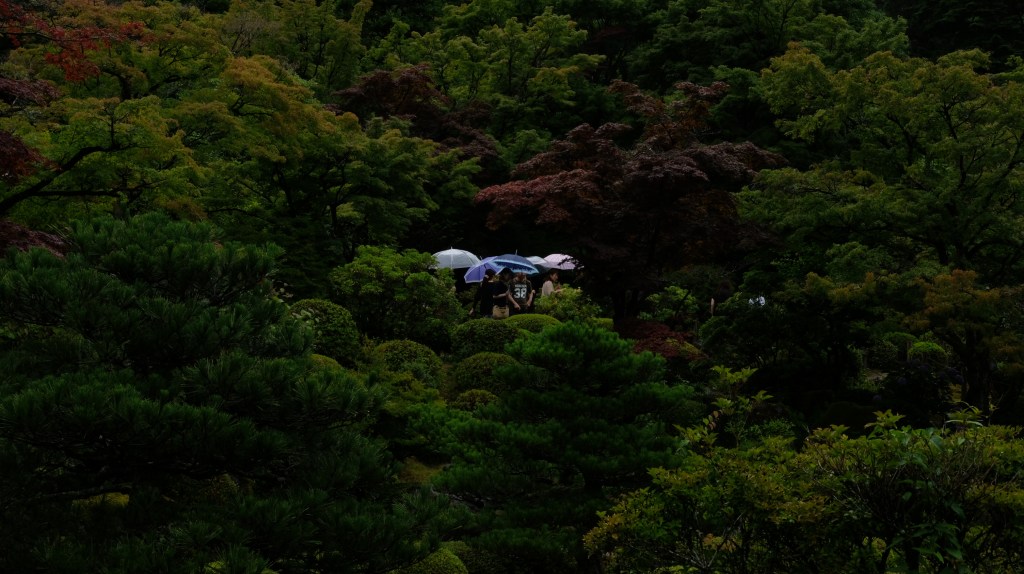
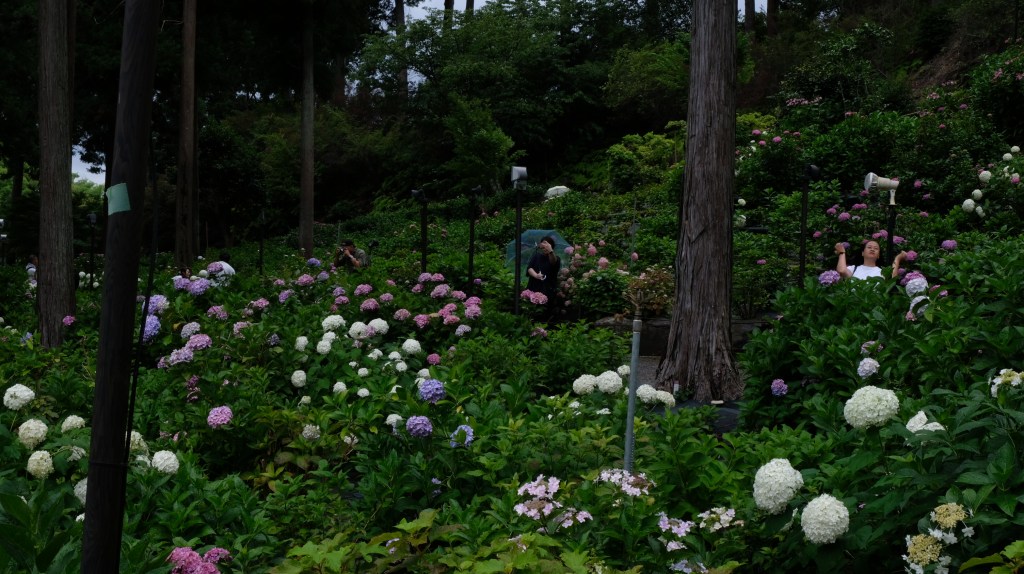
What I particularly wanted was to return to see the hydrangeas in full bloom in the garden of a temple famous for them: Mimurotoji Temple. Just like two years ago, when I visited the temple around the same time of year, there was a pleasant light rain that added to the atmosphere. Despite it being fairly busy, the mood was relaxed and it was quiet, apart from a gentle hum of conversation. The Japanese garden is beautifully designed, and the eyes are treated to an abundance of greenery and purple, blue and white hydrangeas.
As the rain grew steadily heavier, we dropped Miggs off at the Nintendo Museum, after which we visited Japan’s oldest teahouse, Tsuen. It is situated on the banks of the Ujigawa, next to Uji Bridge. A cup of green tea naturally tastes even better here.
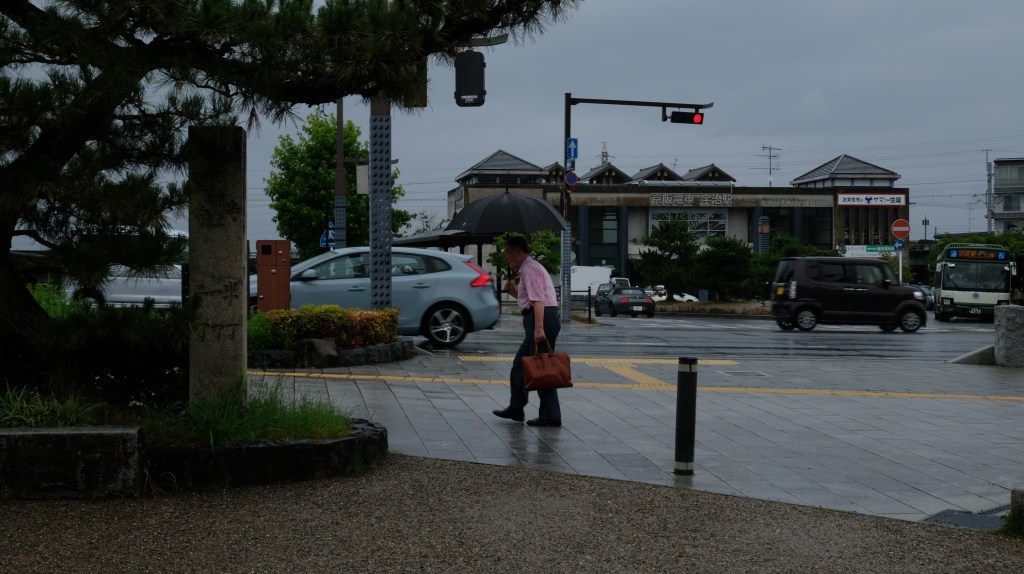
As you might expect in Japan, next to green tea, quite a lot of rice is consumed here. In fact, the Japanese word for ‘rice’ (gohan) is also used for ‘meal’: asagohan (breakfast), hirugohan (lunch) and bangohan (dinner). In many smaller towns, such as Izumi, you therefore see rice fields dotted between the buildings, most of which are planted around the beginning of June in Osaka’s case. These days, rice planting is mainly done by machine, but in some cases rice is still planted by hand, which is called taue 田植え.
Miki-san, a very friendly couple who are new friends of Issei and Kana, have a piece of land half an hour’s drive from Izumi, in Kanan (a truly rural area compared with Izumi), where they practise biodynamic farming principles, including for growing rice. We were allowed to help them plant the young rice seedlings by hand in the muddy paddy field. Naturally, Emil and I had not brought any wellies to Japan, so we were allowed to borrow Issei’s battered Crocs. We might as well have gone barefoot in the mud bath that the rice field still was at that point.
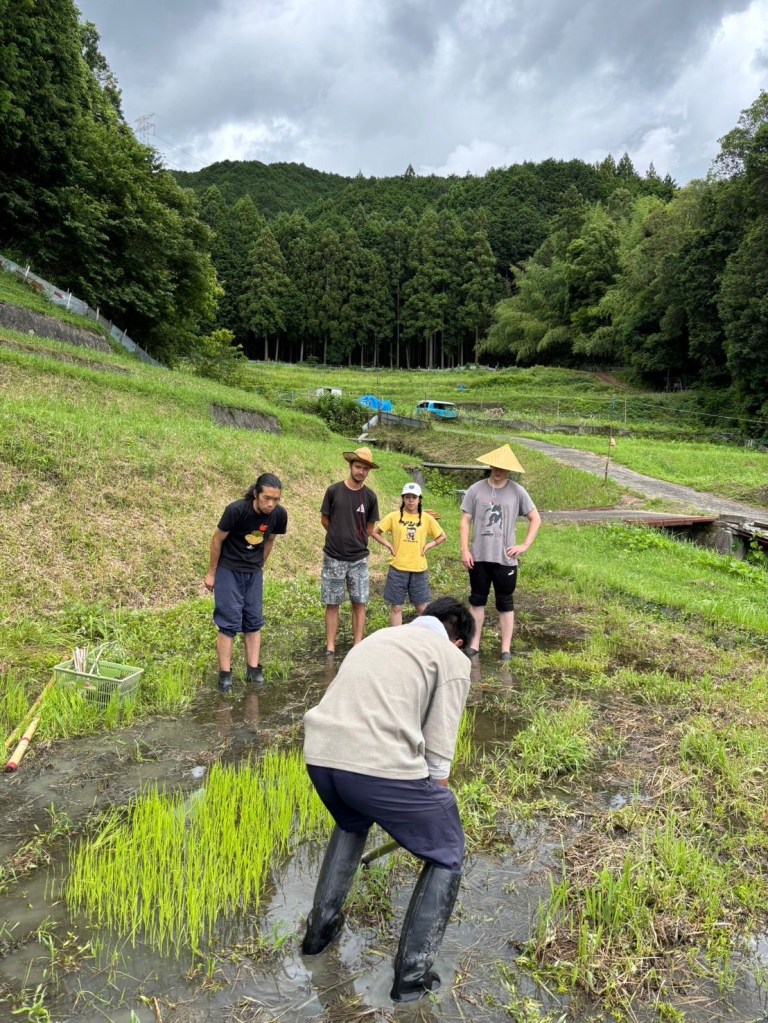
But once we had accepted that our feet were going to get wet, we could get on with placing the seedlings in straight lines, at the appropriate distance from one another, in the soil. It was still the rainy season, making the climate very oppressive, as well as hot and humid. Taue is hard work, so hopefully it will pay off. After planting just a single row each, we decided that was quite enough for us. My back was already starting to feel it, too.
As a thank-you, the friendly rice farmers gave us a bag of potatoes and some fresh makomo stems, a Japanese plant that can be used for various purposes. At first, I saw the possibility of making tea from it, but apparently there are other uses that are considerably more interesting… We thanked Miki-san and the others for trusting us as rice planters and jumped into the car. By this point, I also desperately needed a wee, and unfortunately there was no toilet out there in the countryside among the hills.
A few evenings later, in the rain, I walked to a yakitori restaurant just down the road. It is called Kouzen. I met up there with my new friend Kodai, who had brought his young son along too. Kodai has a little garden of his own where he grows fruit and vegetables as a hobby. After we had eaten and drunk well, Kodai gave me three freshly picked cucumbers from his own garden. Fresh produce feels good, and it is nice to know where your food comes from. I wonder whether the rice will give me the same sense of satisfaction in a few months’ time, when it is harvested and perhaps eventually ends up on my plate.
Accompanied by the sound of cars driving through puddles, we hurried back towards Fujitatami. Unfortunately, the bus that Kodai and his son needed also passed by before they could reach the bus stop. Despite it not being late, it was the last bus of the evening. Luckily, Kodai has a lovely wife who came to pick him and his son up by car. Just a few more days of rainy season before the Japanese summer starts…


Leave a Reply