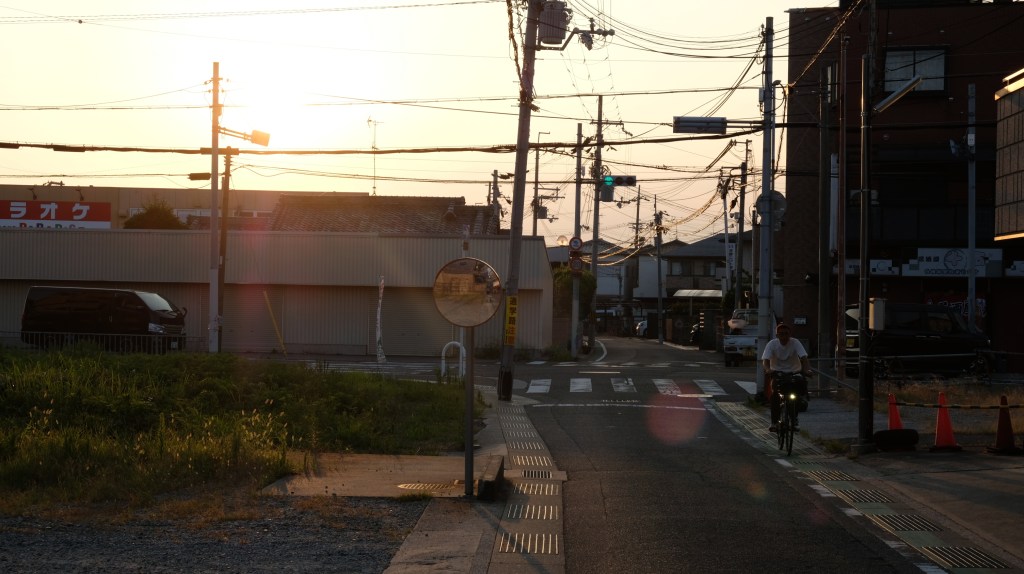
Most days in July had a repetitive feel and followed each other at a slow pace. I skipped my morning walks; it was simply too hot to do that for fun. All the more so because the tap water had warmed up so much that even a cold shower after exercising was no longer cold. Daily, equipped with a small towel around my neck, I went to the tatami workshop on weekdays, or joined Hiromasa to deliver tatami mats. I made sure the fridge was topped up every day with mugicha, of which several litres were consumed each week.
During this warm month, there was another long-term guest at the guesthouse alongside Berta. A young Japanese woman who had come for the so-called ‘artist residency’ in Fujitatami—an opportunity for visual artists to use tatami as a material or source of inspiration in their art project, or simply as a canvas, just as Issei does. The name of the new artist is Miyachi-san, and she came during the month of July for an original tatami art project, of which I initially understood very little.
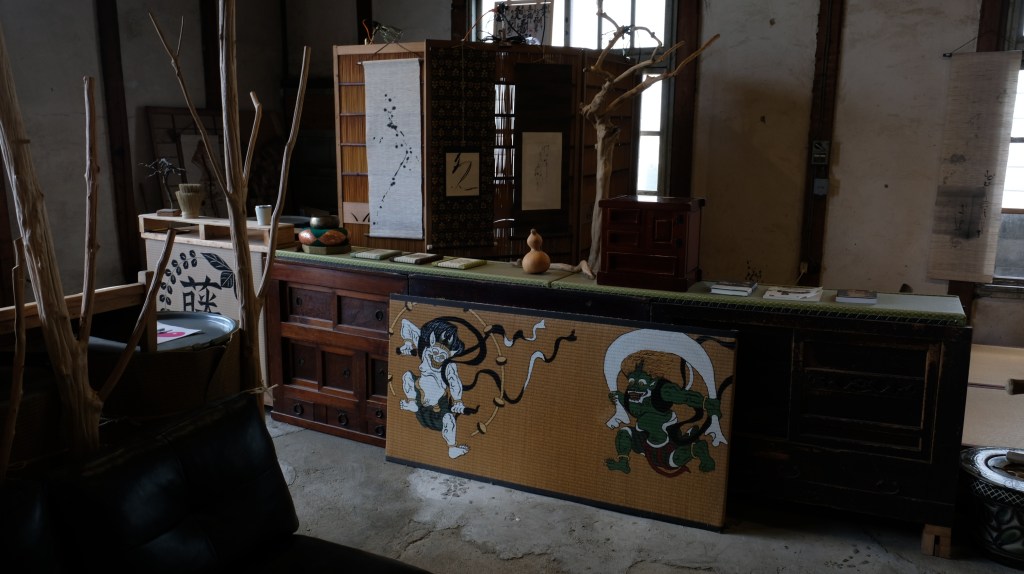
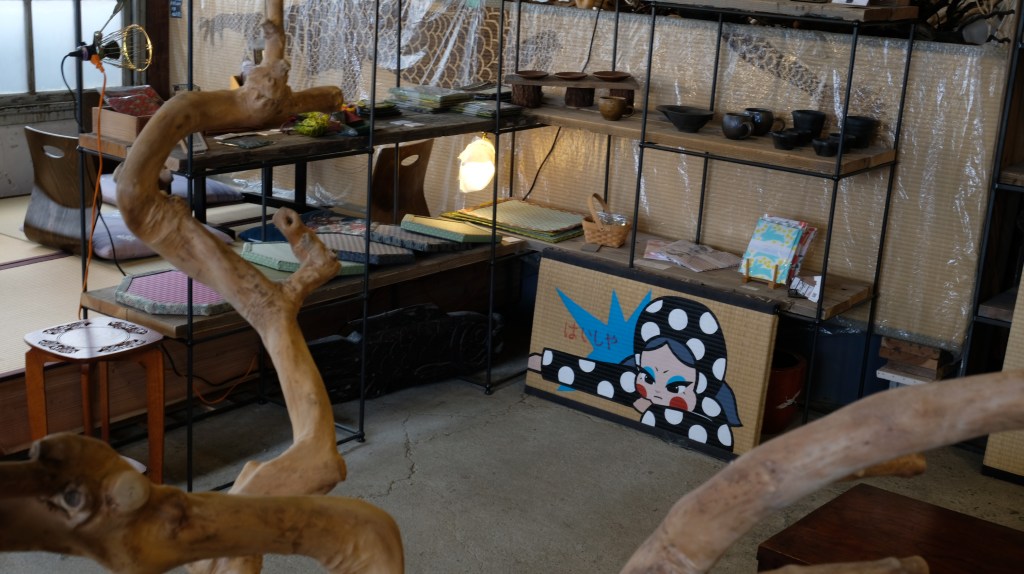

Miyachi-san was working like a seasoned artist making her own ink and used exclusively natural materials, such as charcoal. I also saw her a lot burning lines with a pyrography pen into a large, elongated white cloth hanging from the ceiling. She worked with painstaking precision, but I couldn’t discern any meaning or shape in her unfinished work. It was only when she asked Kana, Berta, and me to assist her that the penny finally dropped.
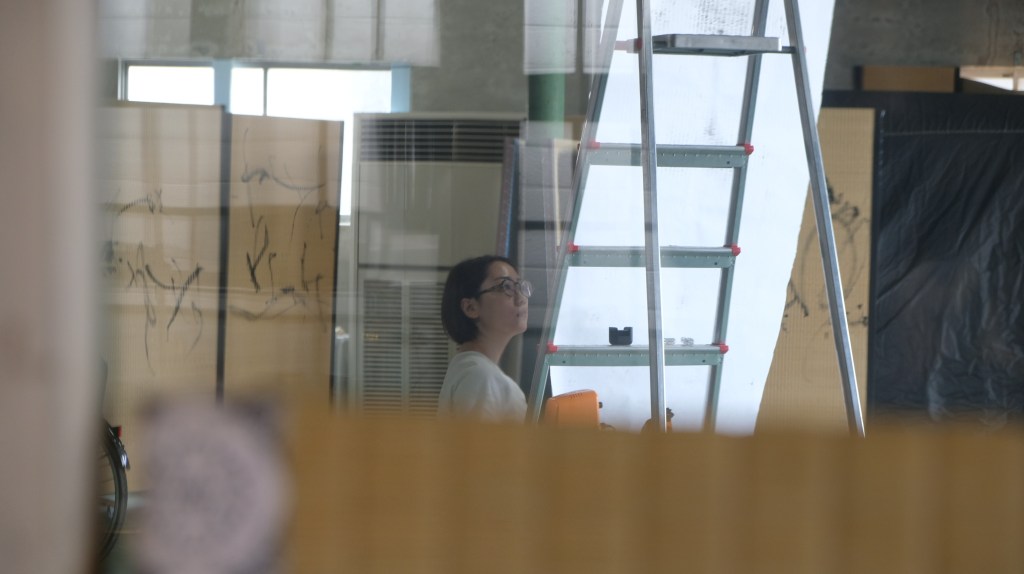
“Burning the traces of the human body recorded with these materials is an act that serves to confront, through the body and action, the modern cycle of 'stuff': from nature to man, then from man to man, to ultimately be burned.”
Miyachi-san
We were asked to lie down one by one on a tatami mat at different times. Between our bodies and the tatami lay a white, elongated cloth and a thick layer of freshly made ink that Miyachi had applied to the tatami mat. In essence, we were a kind of living stamp with which our silhouette (or shadow) was printed onto the cloth. The silhouettes consisted of horizontal lines as a result of the distinctive woven igusa top layer that we had pressed onto the paper with our body weight.
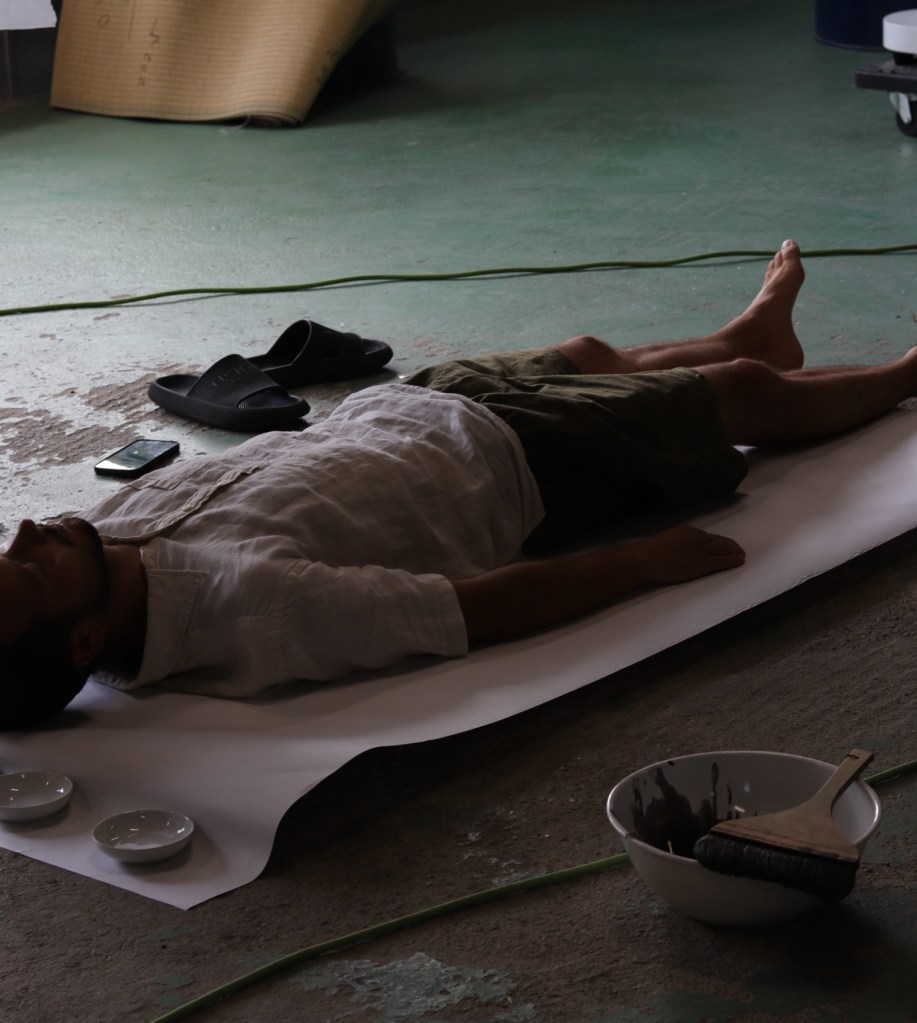
These lines were later burned with extreme precision using the pyrography pen. There was a specific thought behind the burning. I finally understood what the artist had been working on over the past few weeks, and the end result was four large canvases featuring the ephemeral phantoms of tatami users. The project can also be seen on her Instagram page.
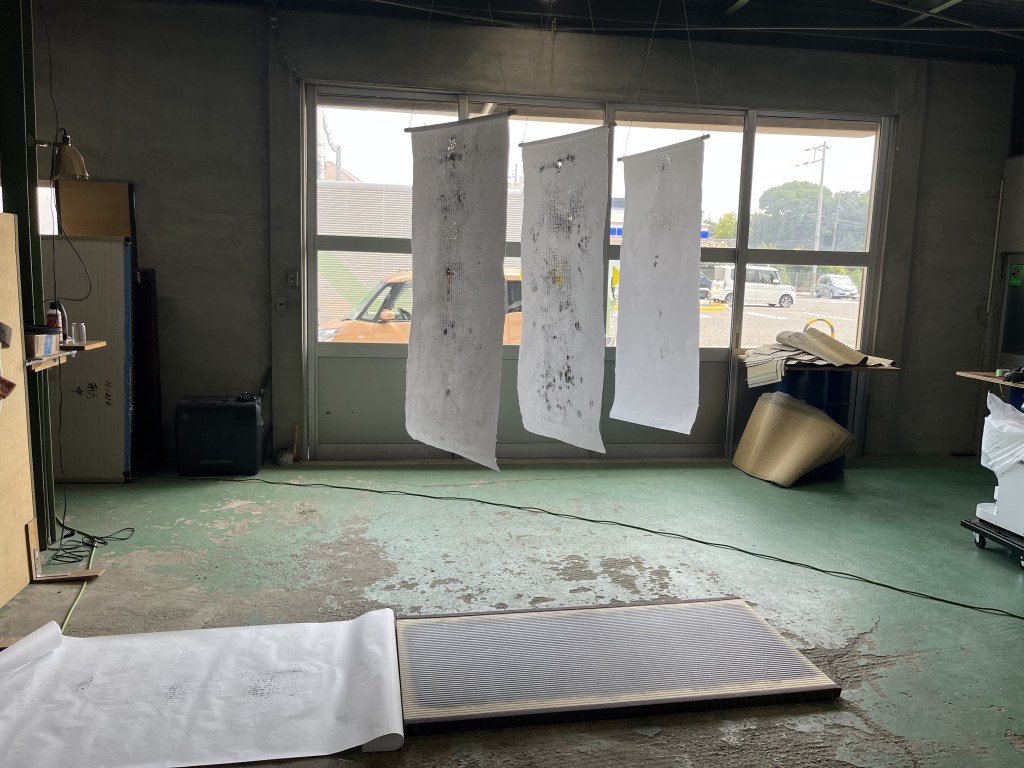
“Originally, tatami mats were made entirely of natural materials. When they grew old, they were used as fertiliser on the fields and returned to nature. However, due to technological progress, they came to be made of materials such as plastic, aimed at making them light and durable. Although this has made life easier, the bond between man and nature seems to have been diminished as a result.”
Miyachi-san
As mentioned earlier, we still had a whole load of makomo stalks, given to us by the Miki-san farmers after the rice planting. In the meantime, another acquaintance of Issei and Kana had stopped by Fujitatami, who runs his own small organic shop in Izumisano. We told Zen-san about the makomo and that we had made tea with it. He then mentioned that makomo naturally contains certain fungi, including the fungus used to make natto—fermented soya beans. I was all ears.
Making natto was apparently easy, too. Simply submerge the makomo in boiling water for twenty minutes to kill off other types of fungi, as natto fungus is the only one that can survive such very high temperatures. (Zen-san mentioned that the fungus might even be of extraterrestrial origin, which immediately made me think of ethnobotanist Terence McKenna.) Next, place the soaked soya beans inside the stalks in a ventilated container and ensure the temperature remains constantly between 32 and 38 degrees. In the Japanese summer, that is naturally no problem at all. Just three days later, the signature slimy goo had formed over the beans and it had officially turned into natto, to everyone’s delight or disgust, as not everyone is a fan of this edible goo.
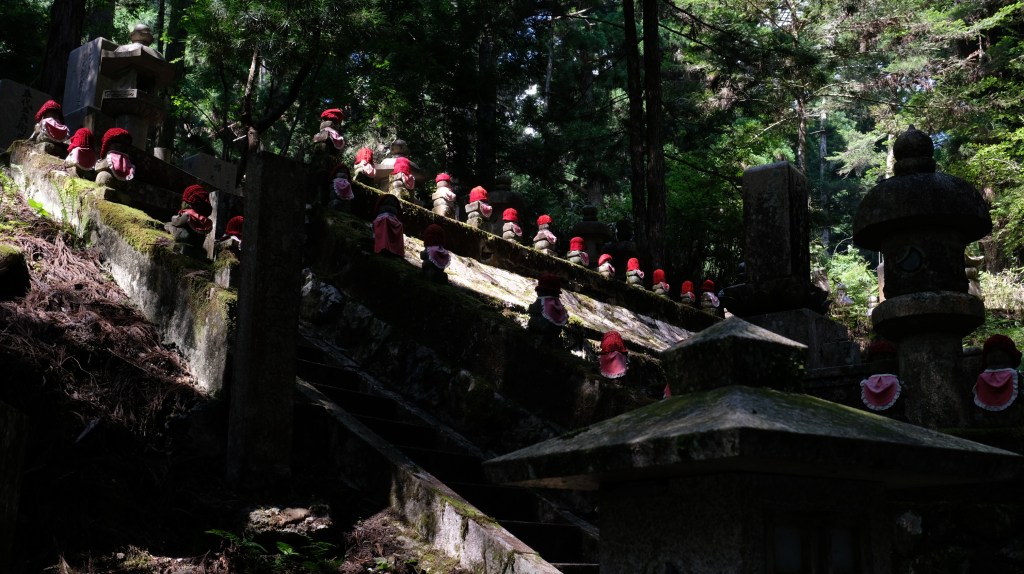
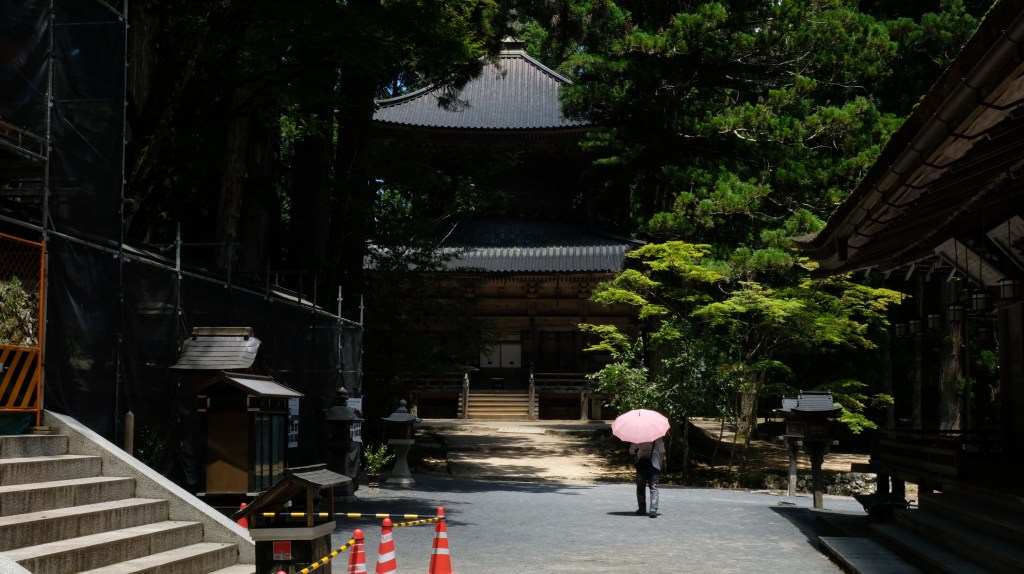
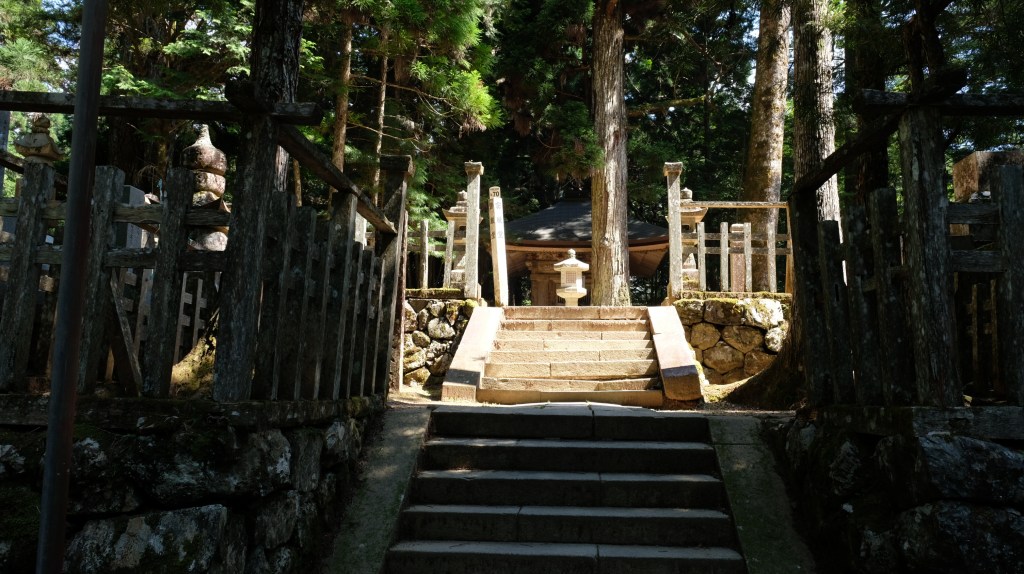
To seek a bit of cooling on a day off, Berta and I took the train to Koyasan. A journey of about 3 hours, but once at the top in the mountain village, it was immediately worth the trip. It wasn’t so much cool, but above all it was no longer so hideously hot. The numerous ancient trees combined with the altitude made the sun feel somewhat pleasant again in this mystical mountain village.
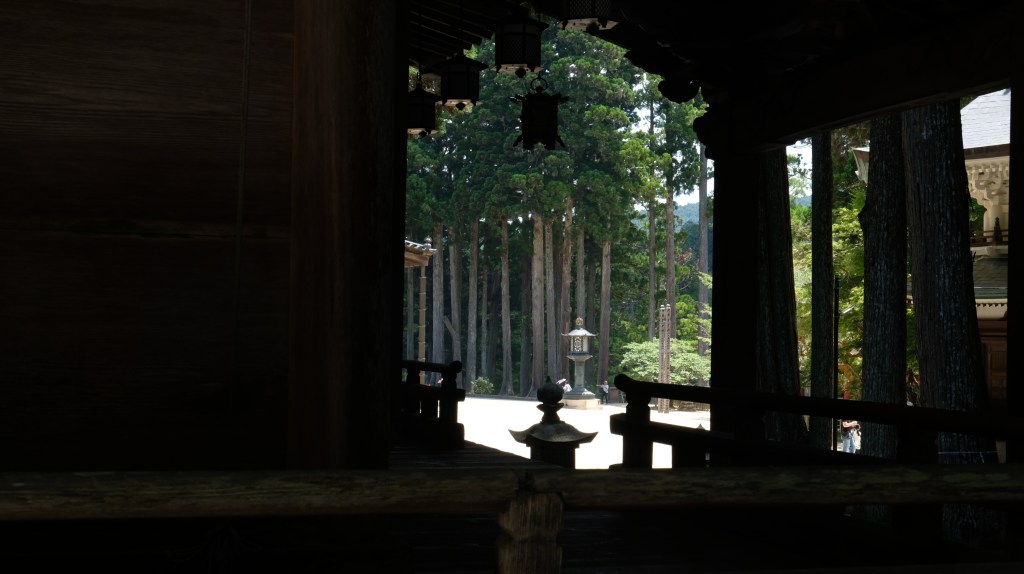
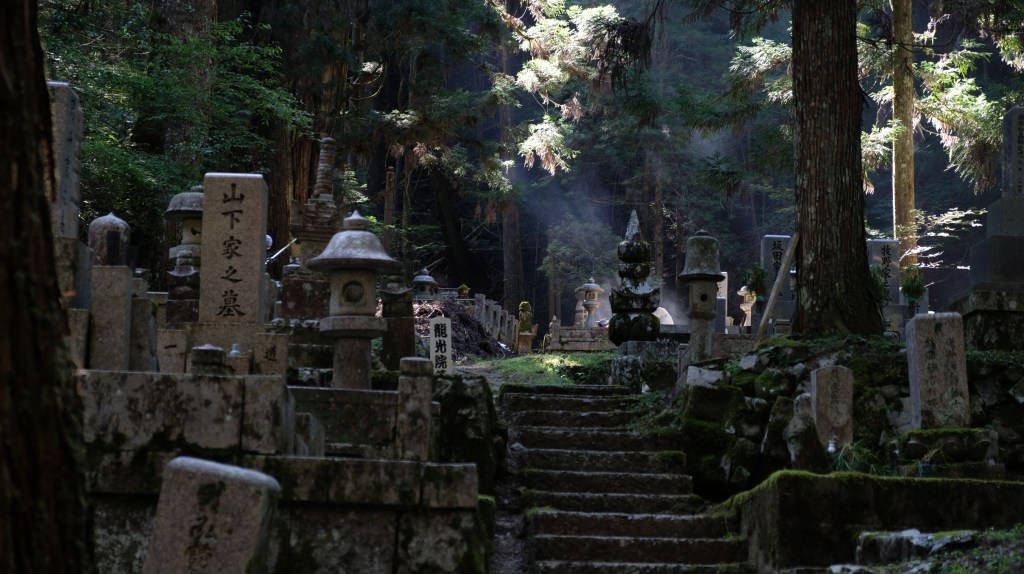
At the famous temple grounds, we happened to bear witness at precisely the right moment to a group of shaven-headed young men loudly and decisively chanting mantras while sitting in a sort of mid-stream basin of a brook. Monks in training. A small crowd soon gathered around the spectacle, with staff strictly ensuring that onlookers did not take photos or videos of the scene.
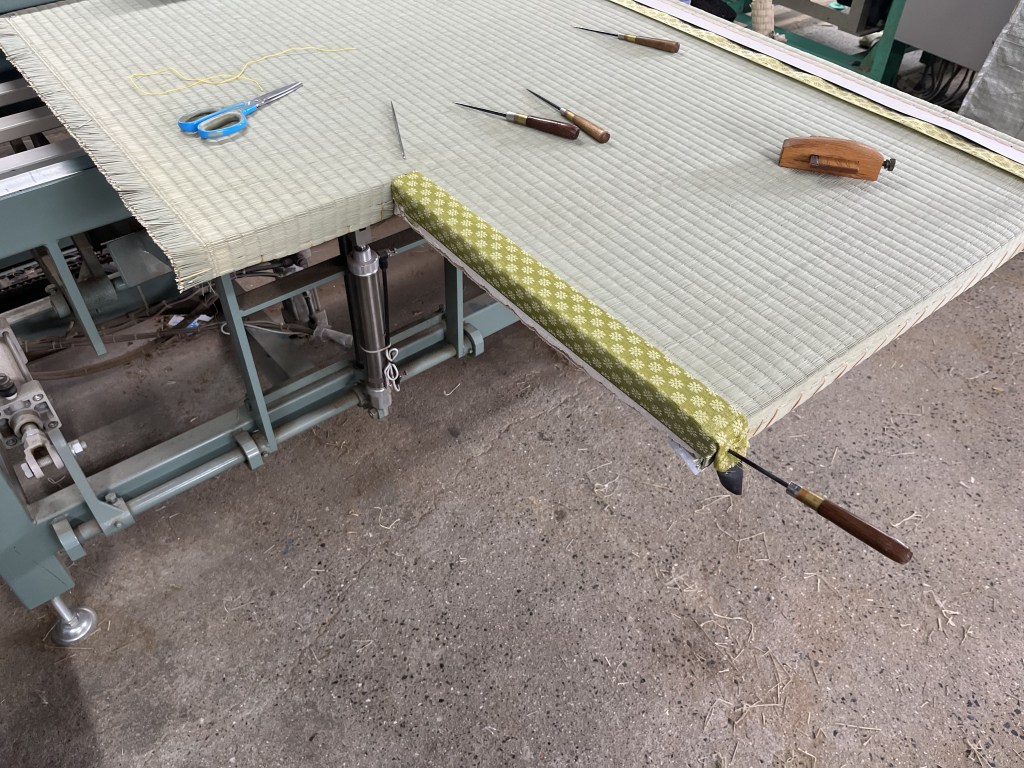
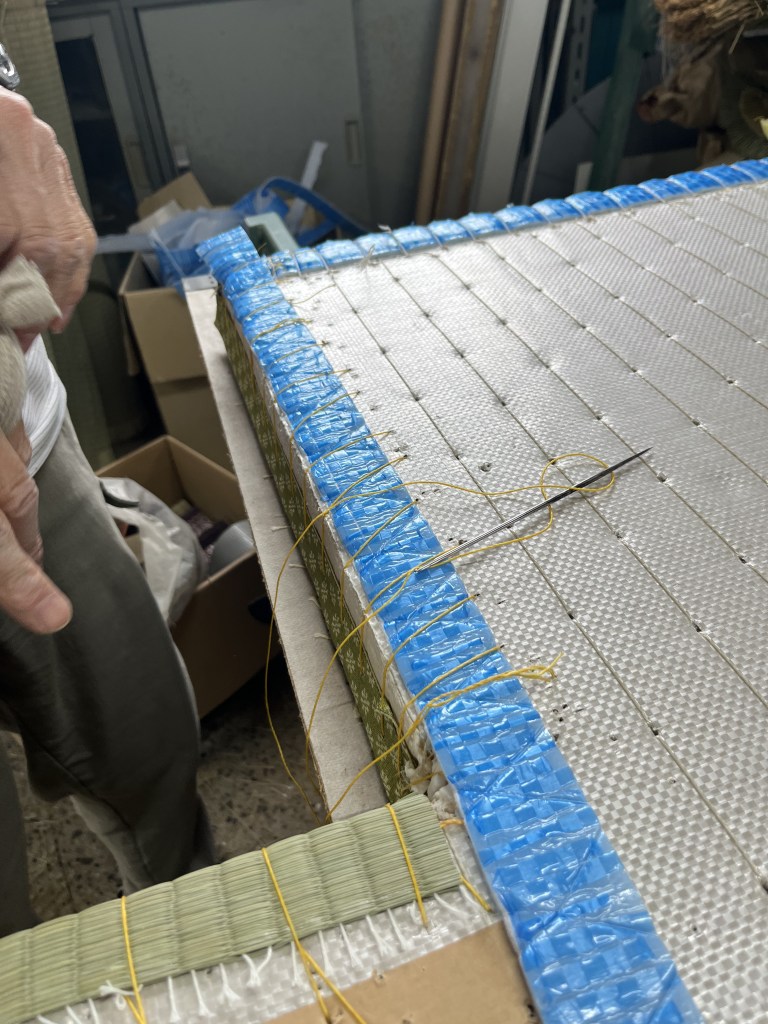
In the tatami workshop, I unexpectedly got to do my bit with some hand-stitching for a tatami mat that was actually intended for a customer. The mat in question had a cut-out corner due to a pillar in the room where it was to be laid. Since the large sewing machine cannot stitch this section, it has to be done by hand. So for the first time, I was able to put my learned skills into practice, naturally under the watchful eye of the master.
A day later, on 28 July, something occurred in the south of Japan that the population essentially fears on a daily basis. In Kumamoto, on Kyushu, a relatively severe earthquake took place, causing a great deal of damage, many injuries, and even dozens of deaths. A major tragedy that deeply affected all of Japan.
For the national tatami industry as well, it is a disastrous event, as the Japanese igusa producers—by far the vast majority of whom are located in Kumamoto (a share of around 95% of national igusa production)—have had to halt their production activities. As a result, the costs of tatami production are driven up even further, while the price of a tatami mat does not rise in line with production costs. Additionally, the industry is now made even more dependent on Chinese igusa.
Previously, igusa production was spread much better across the Japanese regions, but nowadays many farmers have stopped cultivating igusa for tatami production. Consequently, apart from Hiroshima and Okayama, Kumamoto is the only prefecture where production still takes place on a noteworthy scale. And if that area is then struck by a disaster, the fragility of the igusa and tatami culture becomes painfully clear. The question is whether the tide can be turned by distributing production better across multiple Japanese prefectures. And alongside that comes the question of whether Kumamoto is willing to give up its monopoly position for the sake of Japanese tatami culture.



Leave a Reply