Summer is still in full swing, or perhaps it has only just truly begun. Experts (Hiromasa and Issei) say that high temperatures will certainly persist well into September. So the Osaka sun will be relentlessly hot for at least the coming weeks. めっちゃ 暑い meccha atsui!
On 29 July, we set off on a long road trip from Izumi to Fukushima, north of Tokyo, to attend a striking multi-day festival. On the way, we stopped in the Ikebukuro district in Tokyo, where we met up with Berta, who had already left Izumi and was soon returning to Catalonia. As we had set off in the middle of the night, meeting for a drink in the morning worked out perfectly. After this, a few more hours of driving awaited us.
The festival/campsite is located in a very remote natural setting and lacks most of the conveniences Japan offers in many places: supermarkets, konbini (convenience stores), showers, and toilets with bidet functions. There was even said to be no mobile phone signal at the location. We therefore bought the necessary groceries in the last town before arrival and visited an onsen (hot spring) to feel genuinely fresh one last time for the coming days.
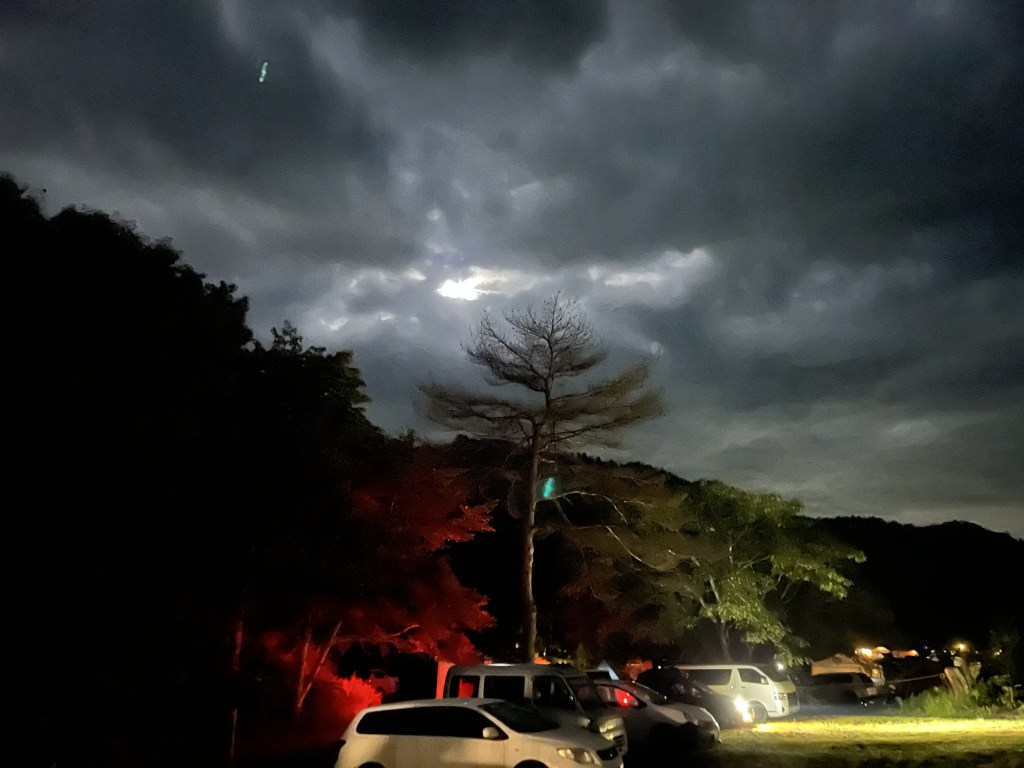
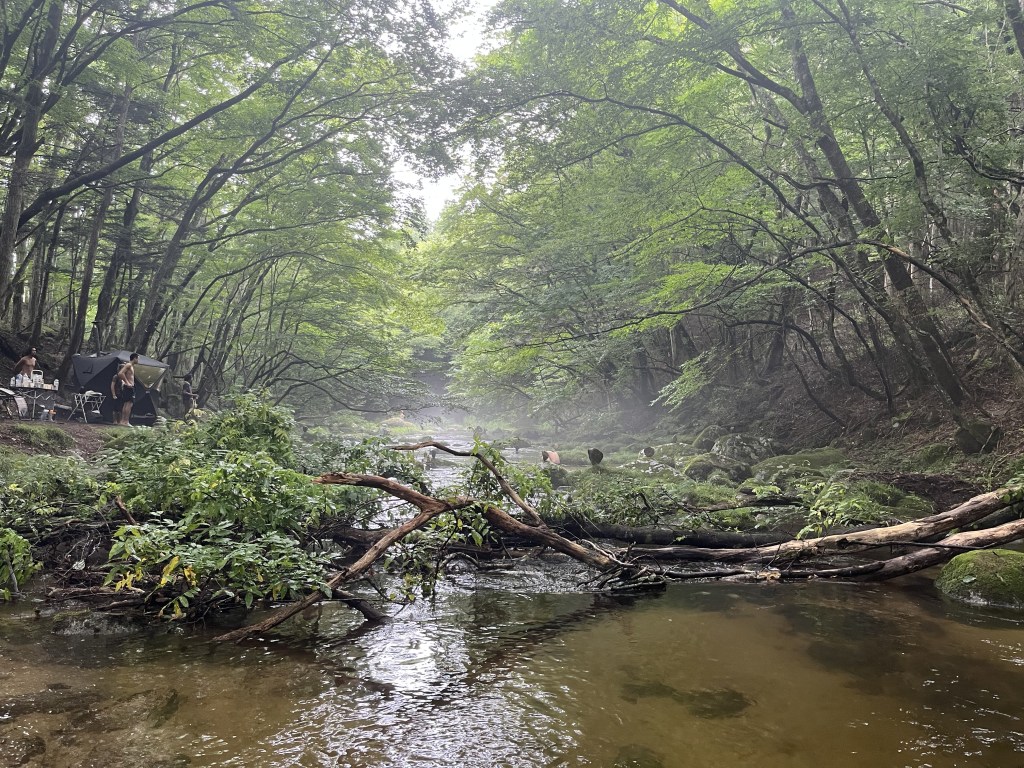
As a result, we only arrived at the remote site after dusk had given way to darkness. A few car headlights provided some visibility, and through the clouds shone the light of the full moon, to which the festival owes its name: mangetsusai, or the ‘Full Moon Festival’. There was indeed no phone signal or internet, no Lawsons or 7-Elevens, but the temperature was pleasantly cool, and a beautiful, clean river flowed past the remote site. Furthermore, there was no shortage of hippies and other alternative folk at the festival. And many of them possessed a (mostly) subtle yet driven entrepreneurial spirit.
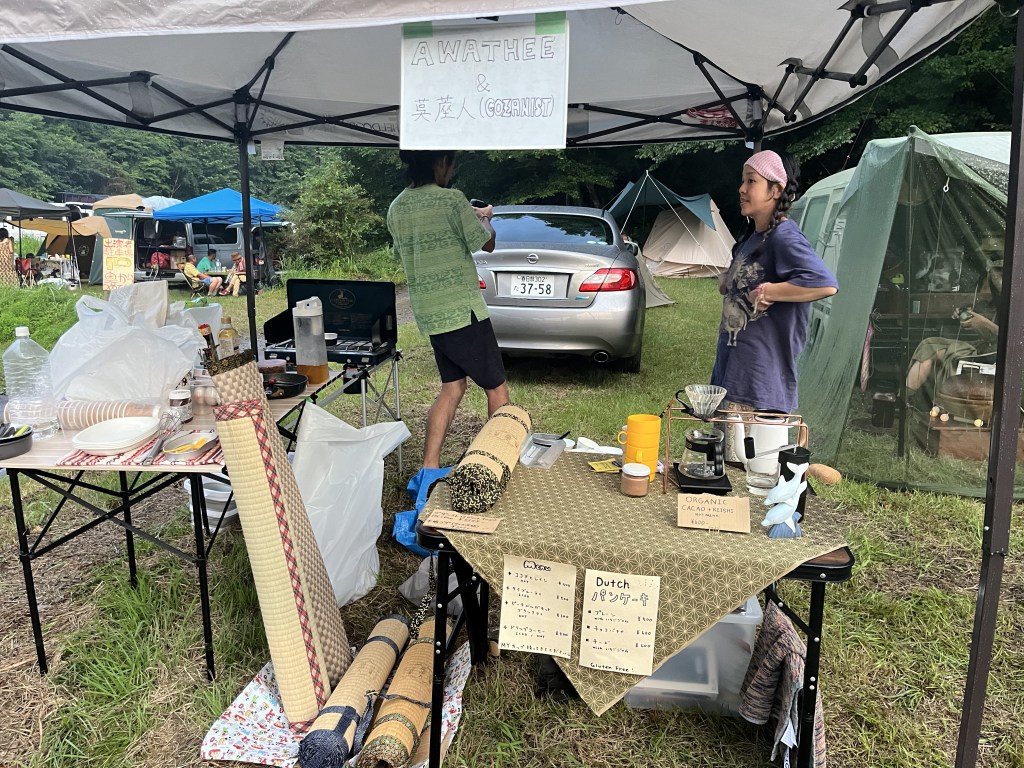
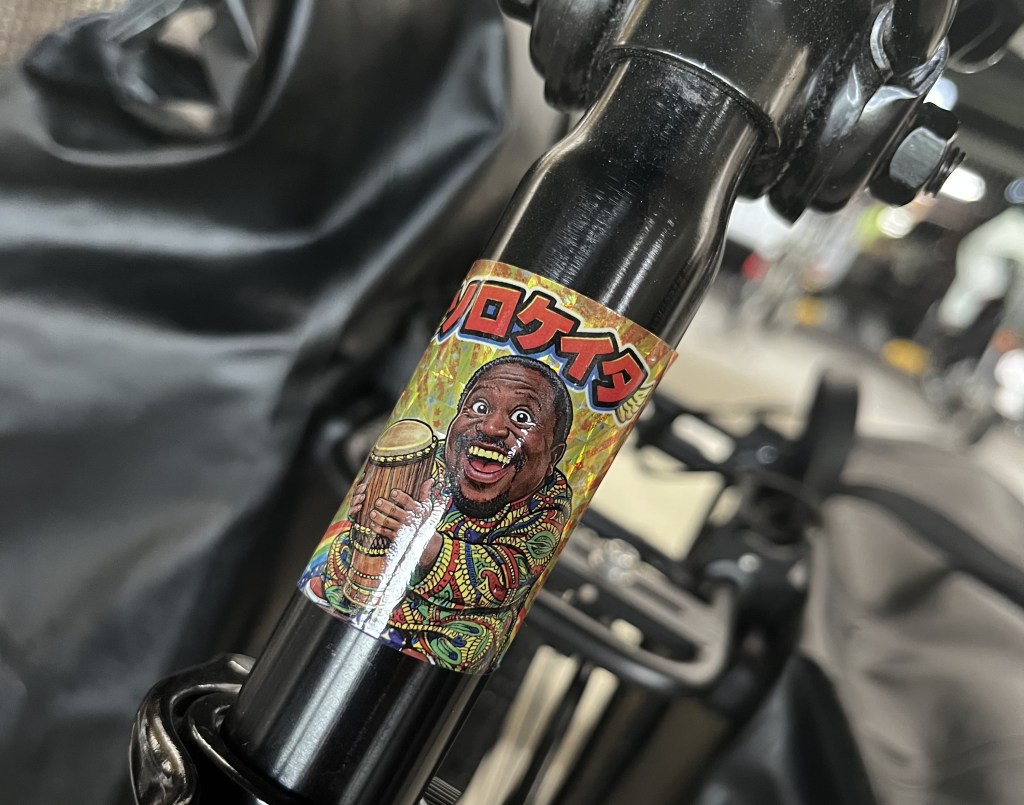
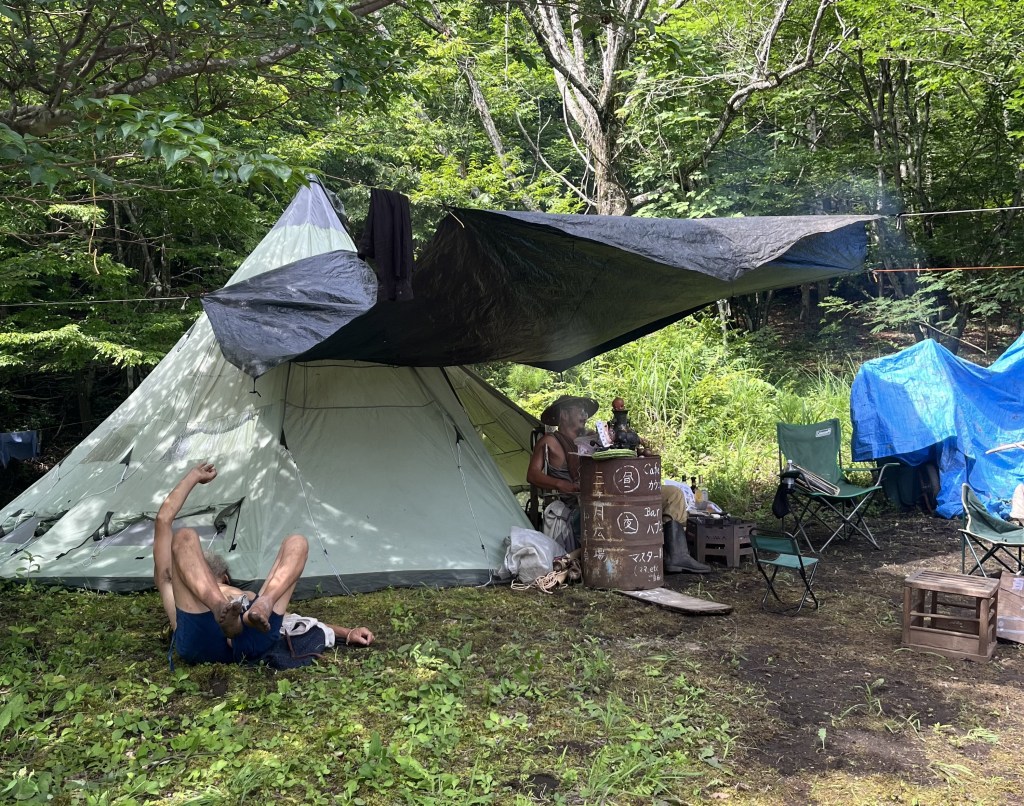
Visitors were allowed to sell goods, food, and drinks themselves on the site, like a sort of car boot sale. We had also brought goods to sell, in the form of coffee, tea, pancakes, and tatami mats. Naturally, we were customers of some trading visitors too, as one had to eat and drink. Besides that, I let myself get ripped off by a jovial djembe player who sold me a single sticker for 500 yen. The sticker now sits proudly on the seat post of my bicycle, serving as a regular reminder of my lack of assertiveness at the time. “Iranai” (I don’t need it) is something I should say (and think) a bit more often, as Issei and Kana did tell him.
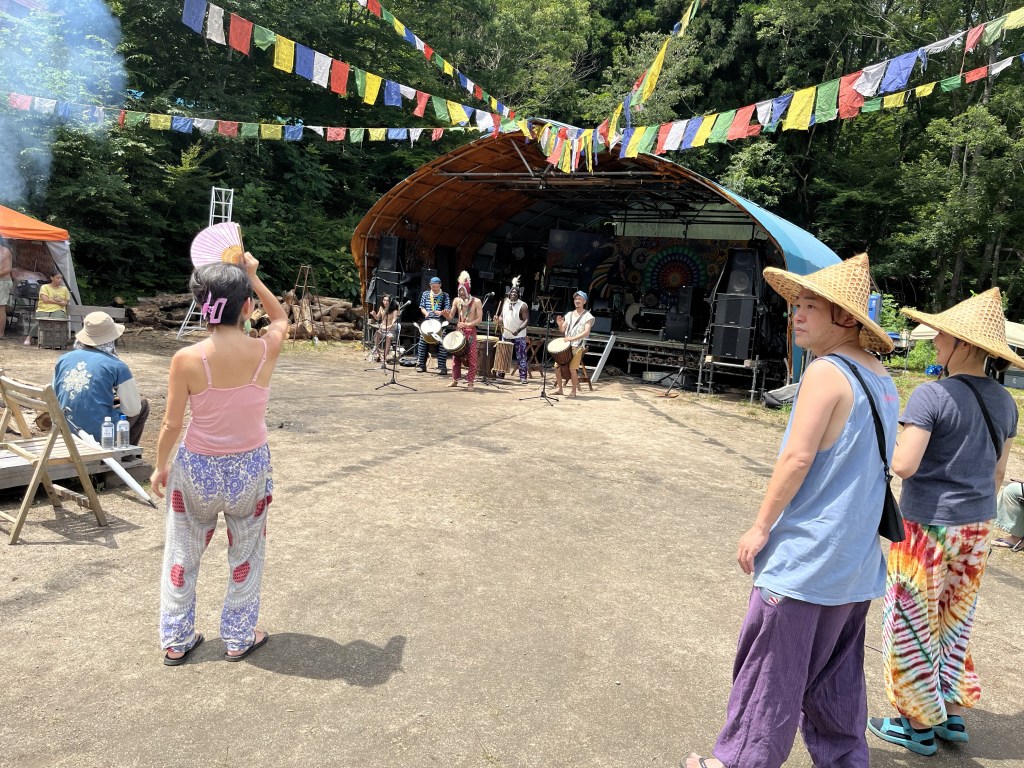
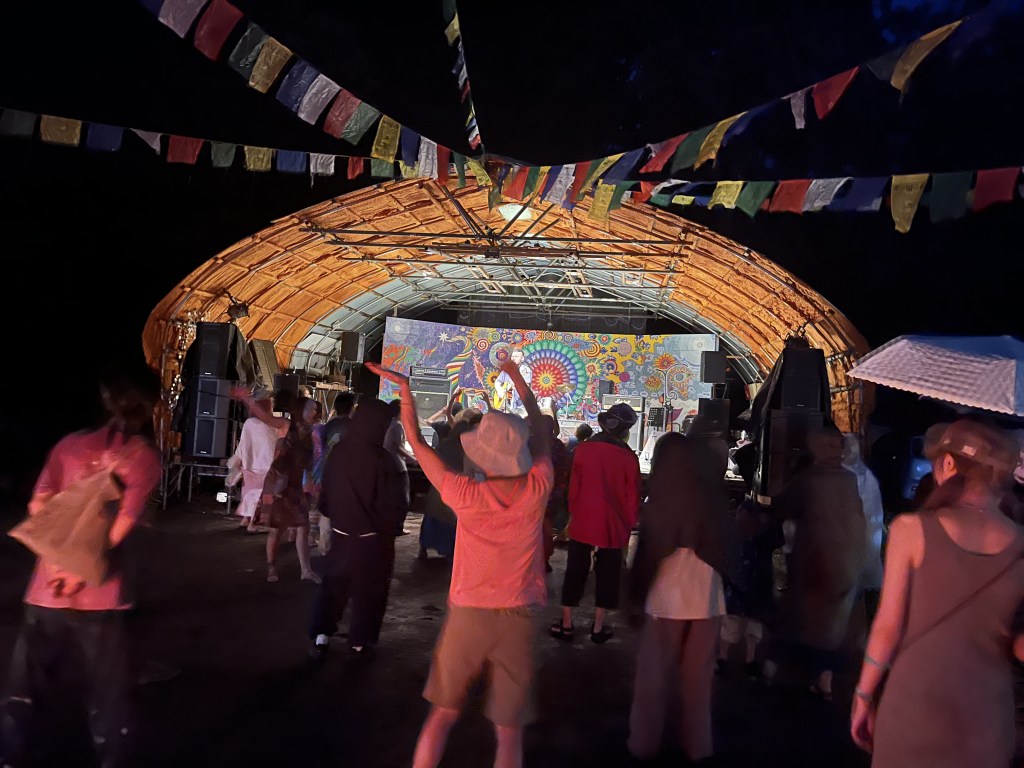
There were fantastic performances by musicians, plenty of people with long hair, and a genuinely free ‘anything goes’ atmosphere. Completely different from how I had experienced Japan up to that point. It reminded me a bit of what Woodstock in 1969 might have felt like, but on a smaller scale. We also met interesting people with whom, as it would later turn out, we formed lasting connections. Issei and Kana definitely have a knack for establishing new, beautiful connections with seemingly random people that would later prove to be immensely meaningful. I could dedicate an entire blog post to the three days we spent at the festival site, but for now, this will have to suffice.
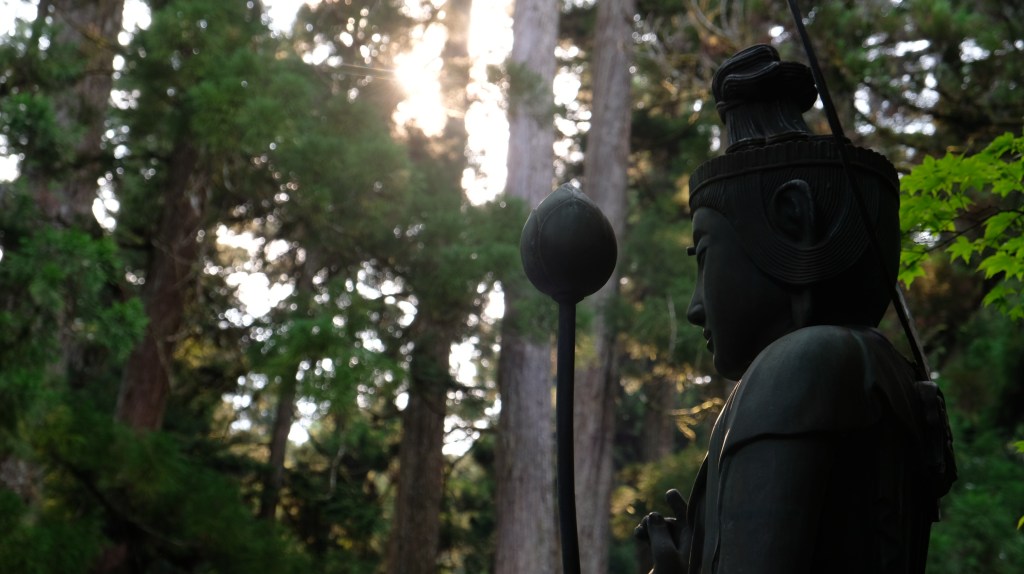
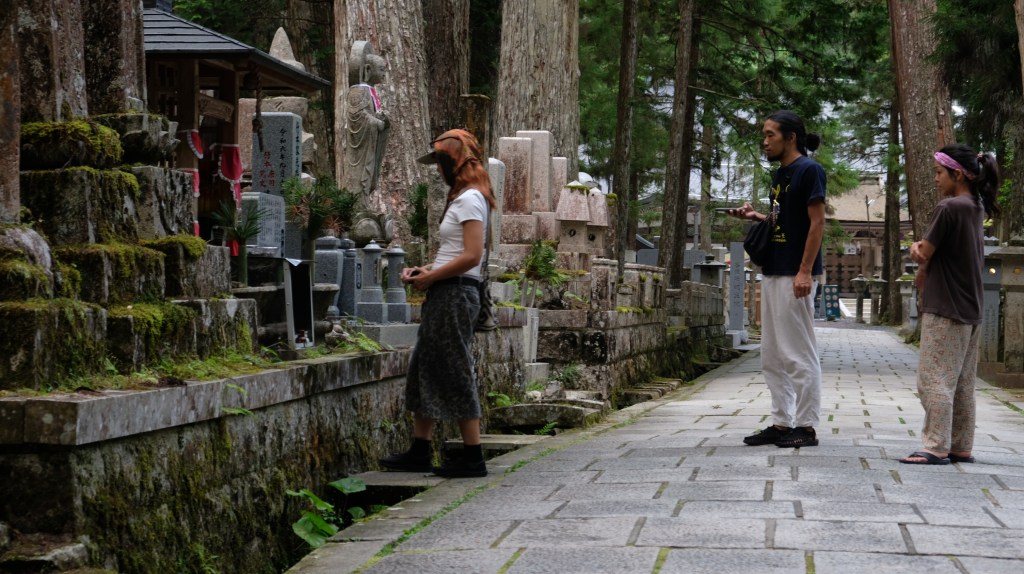
Back at our base in Izumi, a Japanese lady named Asami was holding down the fort during the festival days. Originally from Ise, Mie Prefecture, she is moving to Hokkaido this month to work and do some winter sports. On 3 August, the four of us visited Koyasan again, which was already my third time this year. And it remains a joy to go there. Energy flows a bit more freely here due to the presence of all those ancient trees, especially in summer. Back in Izumi, you certainly feel recharged after a visit to Koya, but the summer heat in the urban areas is a slap in the face every single time.
Working in the tatami workshop is perhaps the most bearable thing to do, given that the air conditioning is simply kept on there. It also helps that the adjacent department store/warehouse (Lokodo / Tonari no Souko) is being rented for a large part of the month by an aspiring café owner. His name is Taka-san, but because I often forget this, I usually just call him Globe-san, after the name of his café. Here too, the effect of the aircon can be felt slightly, but the specialty coffee, matcha, and hojicha that Globe-san makes are particularly worth the visits. As a tea enthusiast, I was naturally curious about where the tea came from, and it turned out not to be from the famous Uji, but from nearby Nara Prefecture—Tsukigase, to be precise. A spot I must keep in mind for a potential future excursion…
Back in the present, it feels as if time has stood still, with temperatures remaining constantly high, day and night. Apart from light and dark, there is little noticeable change in the days. Every day feels the same. Your body sweats constantly, and there is little to no energy to do anything. A lot of time is spent sitting still, drinking cold tea that turns lukewarm in next to no time, and looking forward to autumn, which still seems so far off. I have drastically underestimated the Japanese summer in Osaka.
But bit by bit, time moved on unnoticed nonetheless, and the day had arrived when my good friend Jordi came to visit me in Japan from the Netherlands! He has two weeks off work, and we have a 10-day road trip through Hokkaido planned. I mainly wanted to go there to escape the brutal summer, and Jordi was happy with whatever for his first time in Japan.
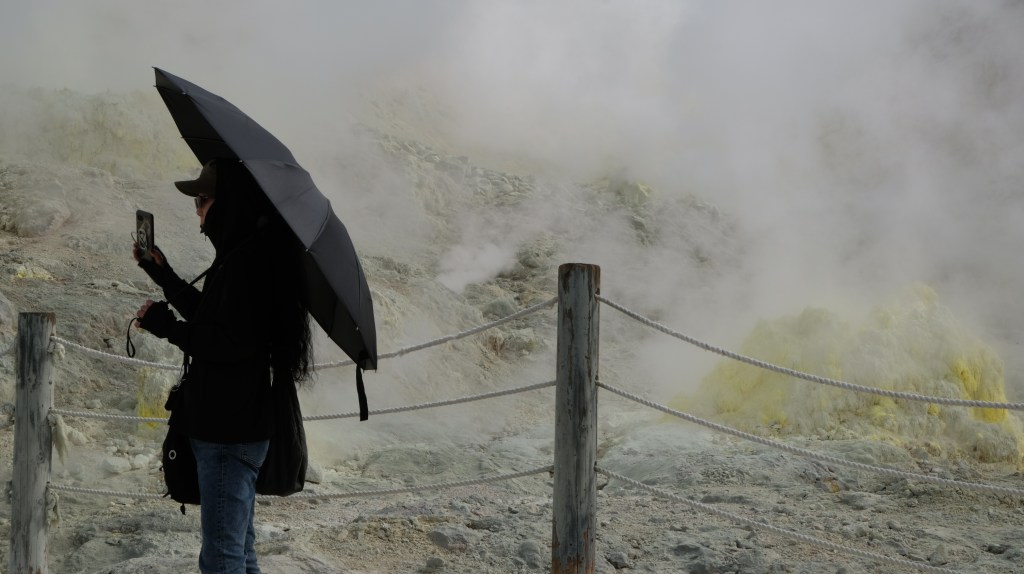
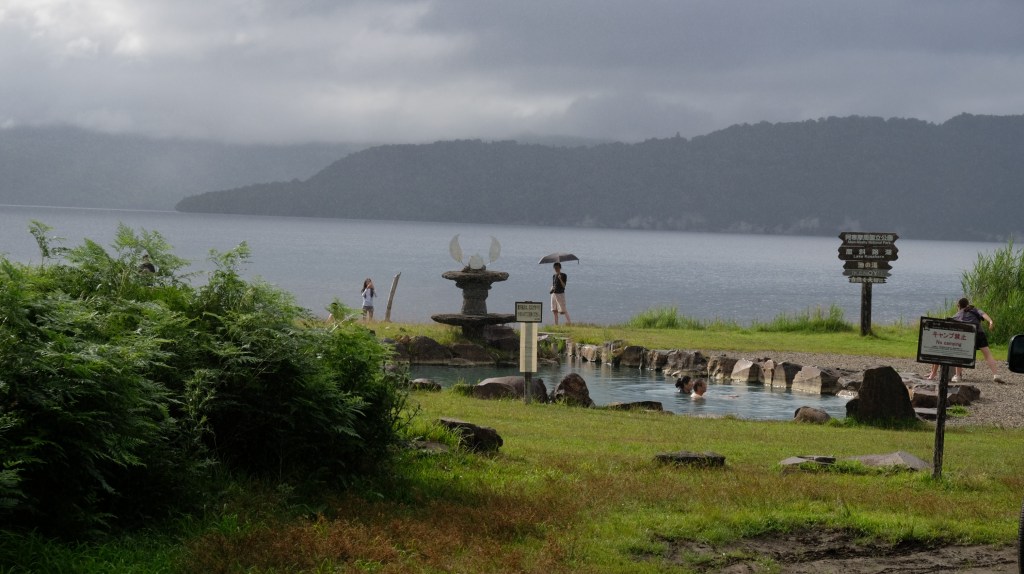
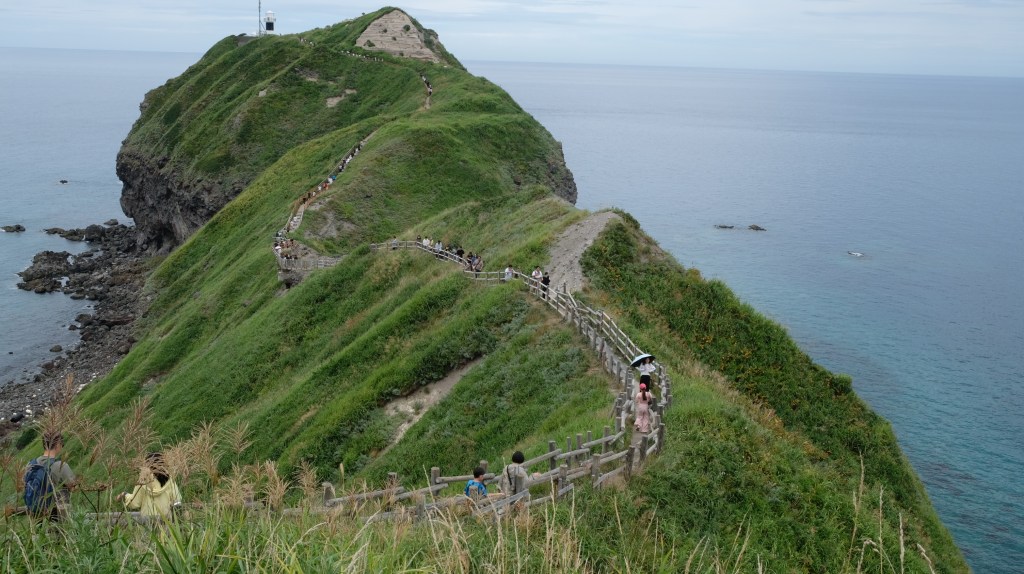
In a rental car, we spent 10 days from 9 August driving around Japan’s northernmost island. We visited wild onsens, active volcanoes, ate fresh fish and seafood, and treated ourselves far too well to local beer. On top of that, due to his resemblance to the Norwegian footballer Erling Haaland, Jordi was genuinely stopped or stared at by people every single day. Without exaggeration, every day I heard the remark “Haalando mitai”, meaning “he looks just like Haaland”.
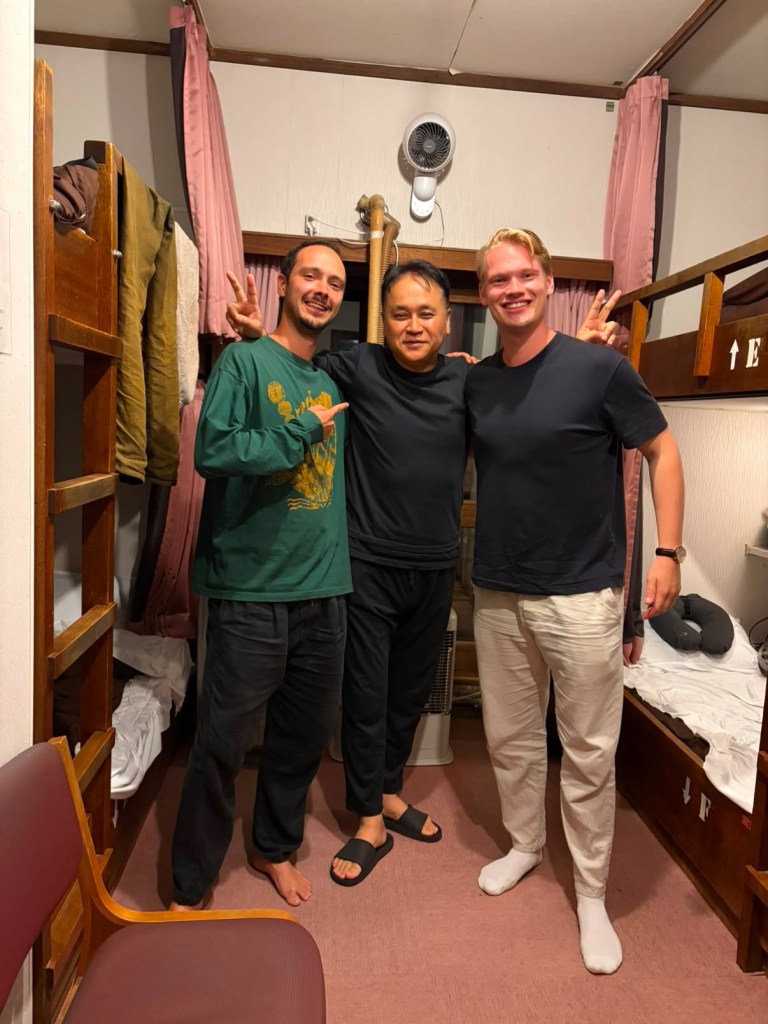
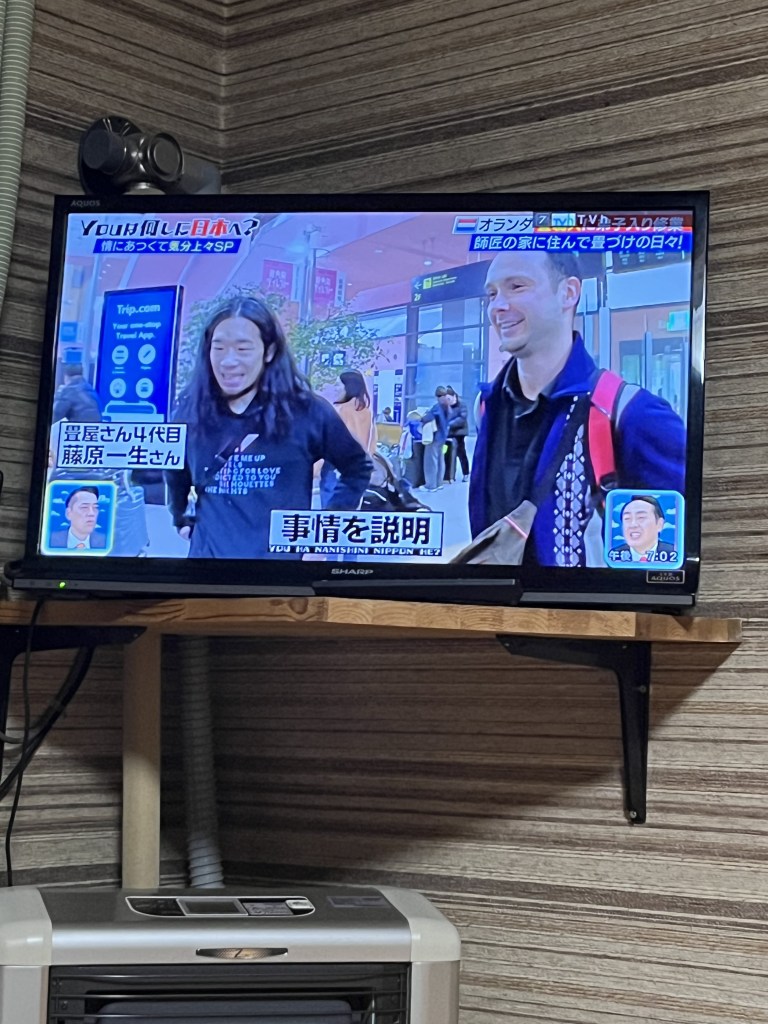
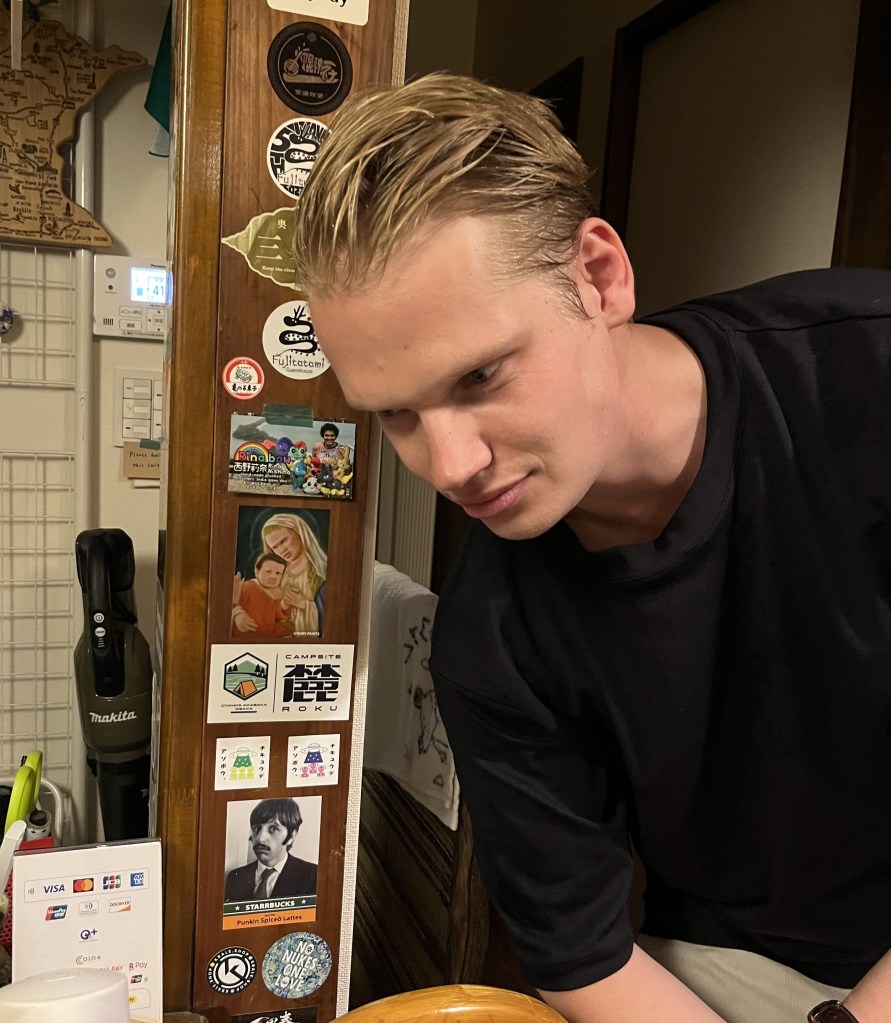
17 August was also the day that the anticipated episode on TV Tokyo was scheduled to air. Together with Jordi in Hokkaido, we were finally able to see what Yoshiki-san, the producer, had made of the extensive footage of my tatami training. By then, it felt so long ago since it had all been filmed, and it was funny—and at times embarrassing—to watch it back. From that evening onwards, our privacy as a famous duo was naturally over. Time flew by here, however, and before we knew it, we were on the plane back to Kansai Airport. Back to the humid heat of Osaka.
Jordi left the next day for Namba, where he was going to spend a few days on his own. After returning to Izumi, I briefly fell into a bit of a slump. Issei and Kana were visiting friends in Sweden, and there were no other guests or volunteers at the guesthouse. It was extremely quiet at Fujitatami, the exact opposite of how I had experienced it here on many previous days. Furthermore, ending a special connection that had developed here earlier brought about a confronting feeling.
It forced me to sit for a while with returning heartbreak and doubts about why I am sitting here right now: as a long-term foreigner in a culture I haven’t fully grasped by a long shot, practicing a traditional craft, and questioning whether I can actually do anything with it once I’m back in the Netherlands. For days, almost weeks on end, I had to battle low spirits and walk around with doubts. I knew that during those days things wouldn’t get any easier if I stayed sitting idle on my own in Izumi and resumed the summer as it was before Hokkaido. Action was needed to get time moving again.
A few days after returning from Hokkaido, on Jordi’s penultimate night in Japan, the three of us Dutchies (including a new friend, Stijn, whom I had met months ago at Kansai Airport) ate and drank together and had a great time. After visiting a number of small bars in Namba, I almost missed the last train back to Izumi towards midnight. The following evening, I already had to see Jordi off at the airport, which wasn’t entirely easy. Perhaps it never really is, given that airports are generally places from which long journeys begin, making goodbyes in such a setting hit harder and feel more real.
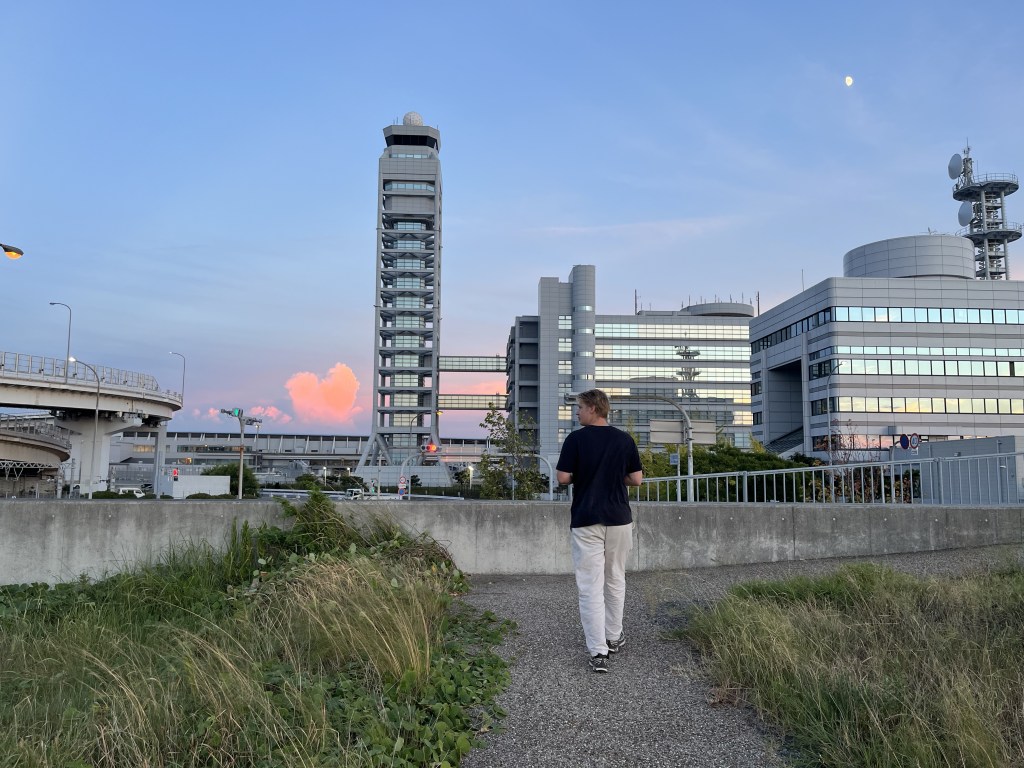
With a small lump in my throat, I boarded the train to head home alone once more, returning to an empty hostel. In the carriage, I noticed an advertisement for an exhibition featuring Japanese prints and a name that, for some reason, really caught my attention: Suikoden, translated into English as ‘Water Margin’. Usually, these kinds of public posters don’t prompt me to do anything, but this time I decided it would be good to act on my sudden interest sparked by the advert. It would do me good to go out and do something like a tourist again, heading into the city for the first time in a long while for a daytrip.
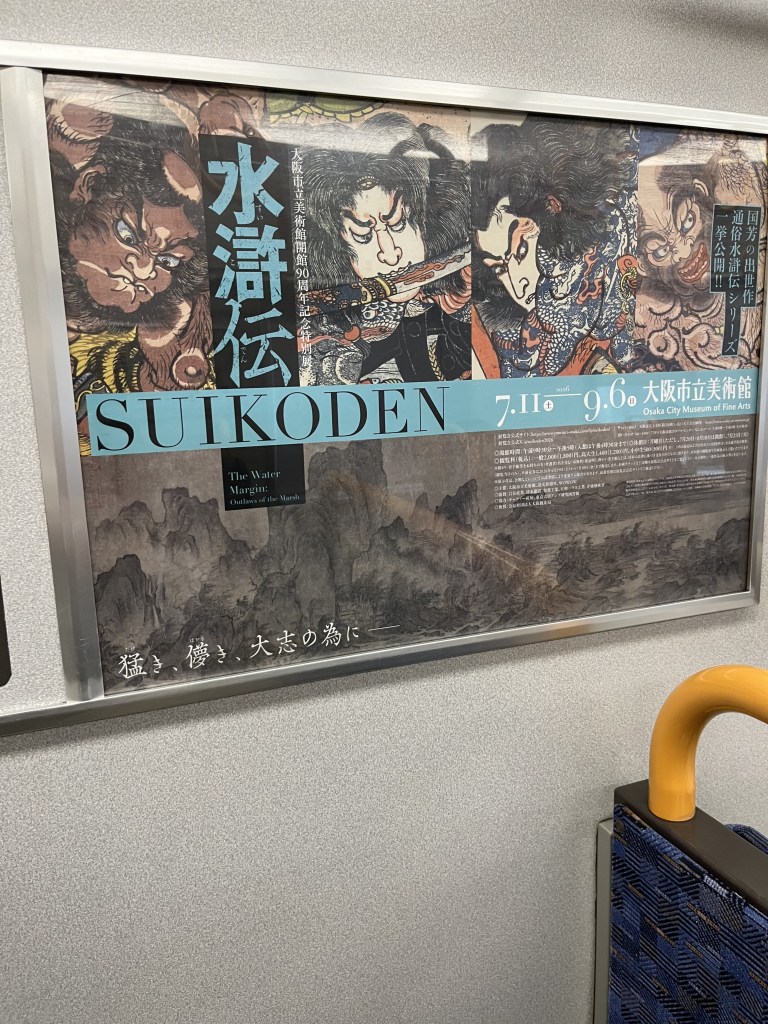
On 23 August, I took the train to Tennoji, where the Suikoden exhibition was on display at the Osaka City Museum of Fine Arts. The exhibition turned out to be broadly about one of the 15th-century Chinese literary classics (Shuihu Zhuan, in Japanese Suikoden) which tells the story of 108 heroes fighting against corrupt authorities. Based on the information I was able to find about it, the story can be seen as an early inspiration for resistance, which is why it was censored and banned from being read during various periods in history. The work is praised, among other things, for its highly detailed descriptions of the unique characteristics of all 108 individual main characters, who act in ‘sometimes’ questionable ways (especially when viewed through a modern lens).
In the first half of the 19th century, Utagawa Kuniyoshi created a famous ukiyo-e series based on these 108 figures. These 108 prints were displayed in one large room, making for an impressive display. In this way, the characters—and the story itself—came to life in a deeply artistic manner. The character that stood out to me the most was nicknamed the “Flowery Monk”, a monk fully tattooed with cherry blossoms on his back, shoulders, and arms. During the exhibition, I read that these various tattooed figures also hugely influenced the culture surrounding tattoos and masculinity in Japan. It makes me think of the notorious yakuza, for whom tattoos are also part of an identity that stands in direct opposition to the established authorities.
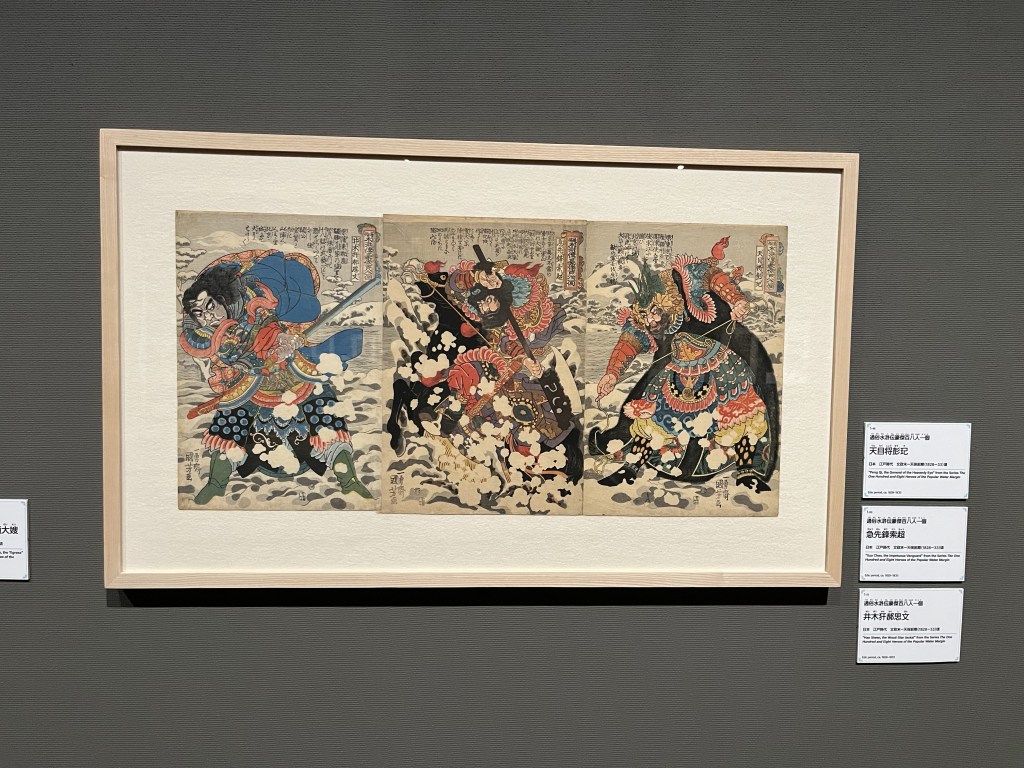
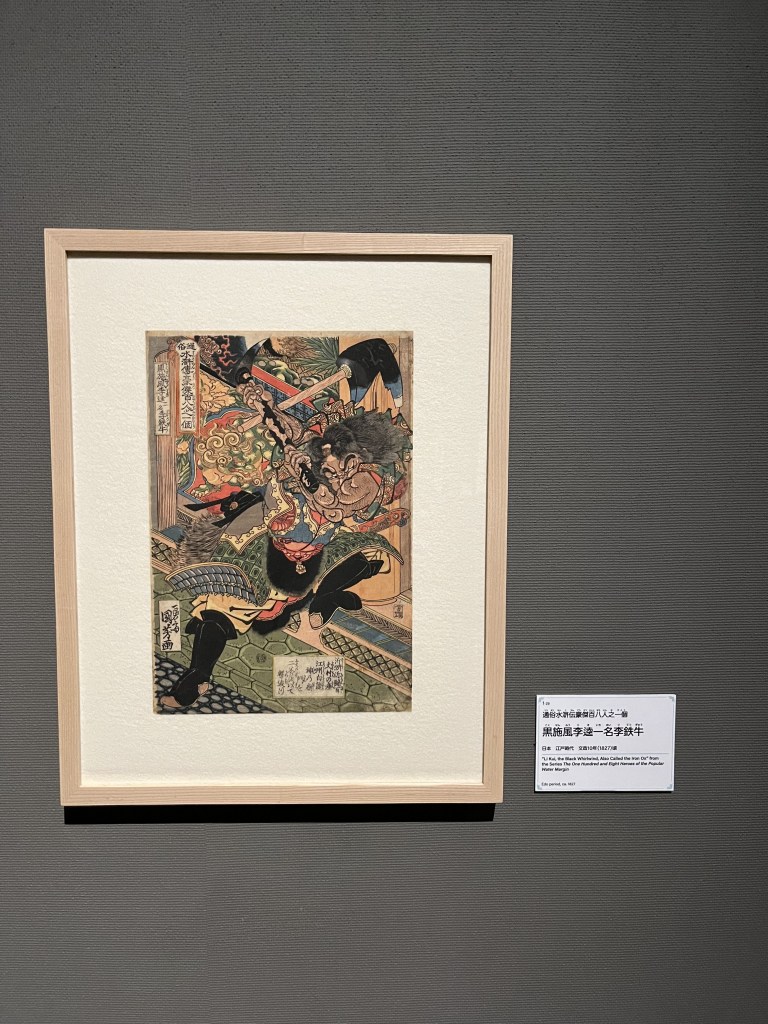
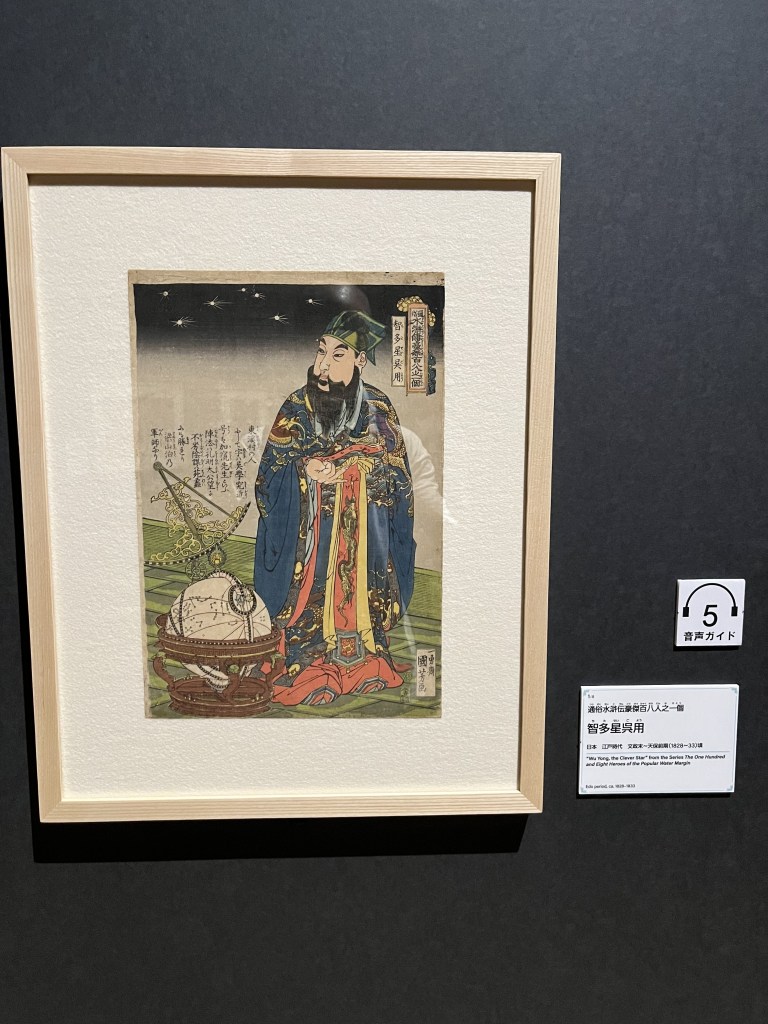
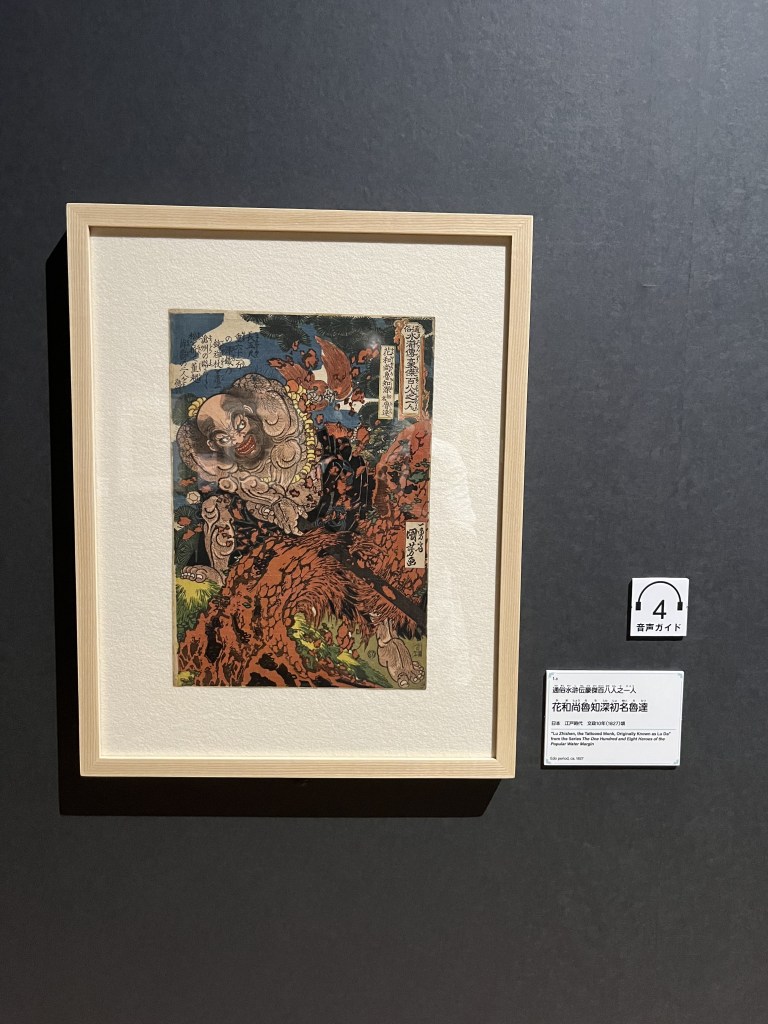
What pleased me even more was the pleasant temperature inside the museum. How had I not thought of this earlier? Of course, busy, commercial places are kept cool to keep people comfortable. It might sound trivial, but a whole new world opened up to me after this museum visit: the city! After spending nearly two hours in the cool museum, without having sweat for so long consecutively in Osaka for ages, I was able to face the heat outside again. I had never expected that a day trip to the city could recharge me for the coming week, and that I would look forward to the next weekend to visit the city again.
During the final week of August that followed, I was busy with tatami as usual. Mainly helping Hiromasa with various jobs, two of which are worth mentioning. Firstly, alongside tatami commissions, Hiromasa occasionally receives requests to repair doors or door frames in schools—or at least to oversee the repairs. This time, he was allowed to replace an old, squeaky sliding door at his old secondary school in Izumi. The building is very old and looks inside and out exactly as it did back when Hiromasa walked there every day with his rucksack. A very nostalgic visit.
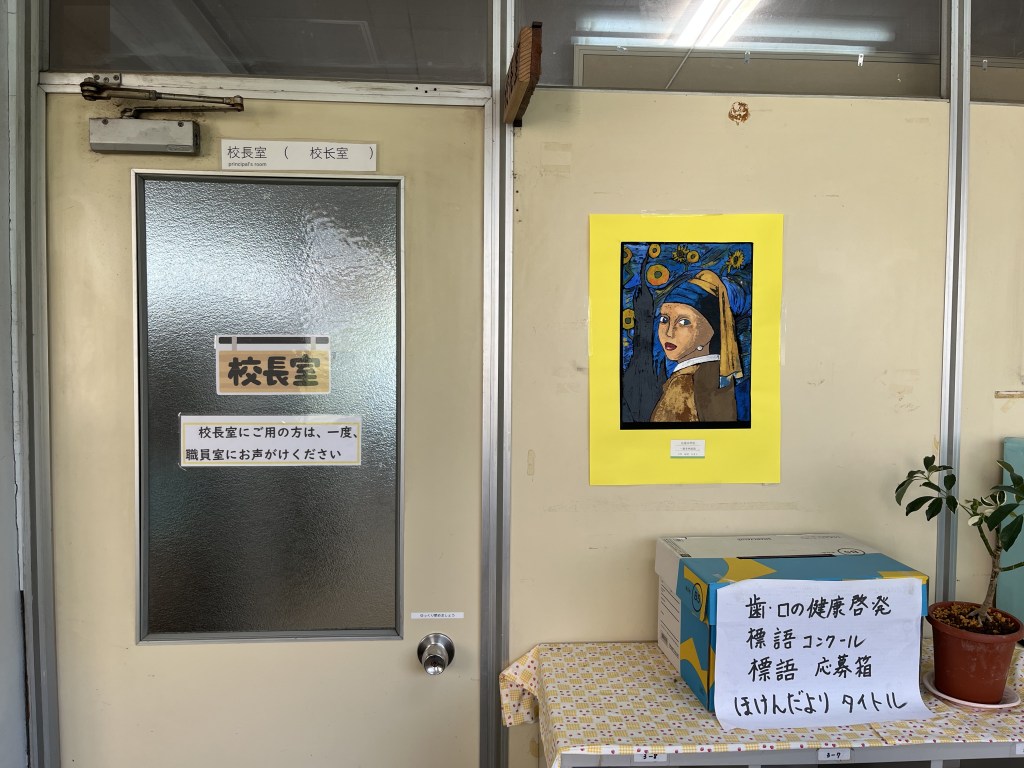
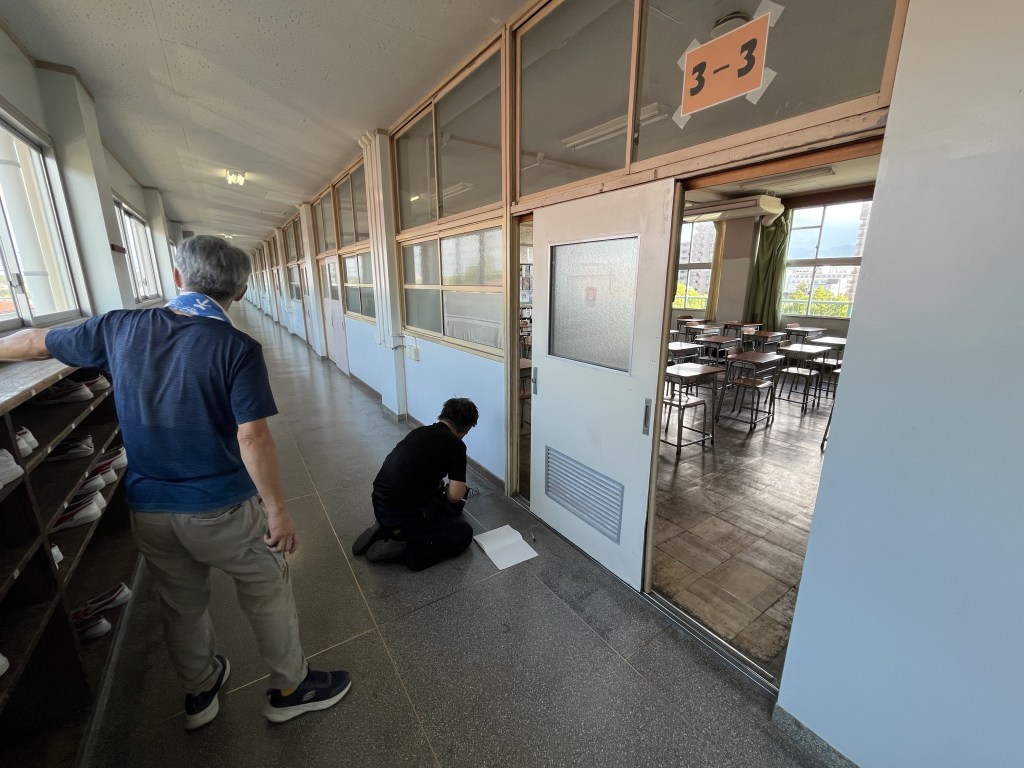
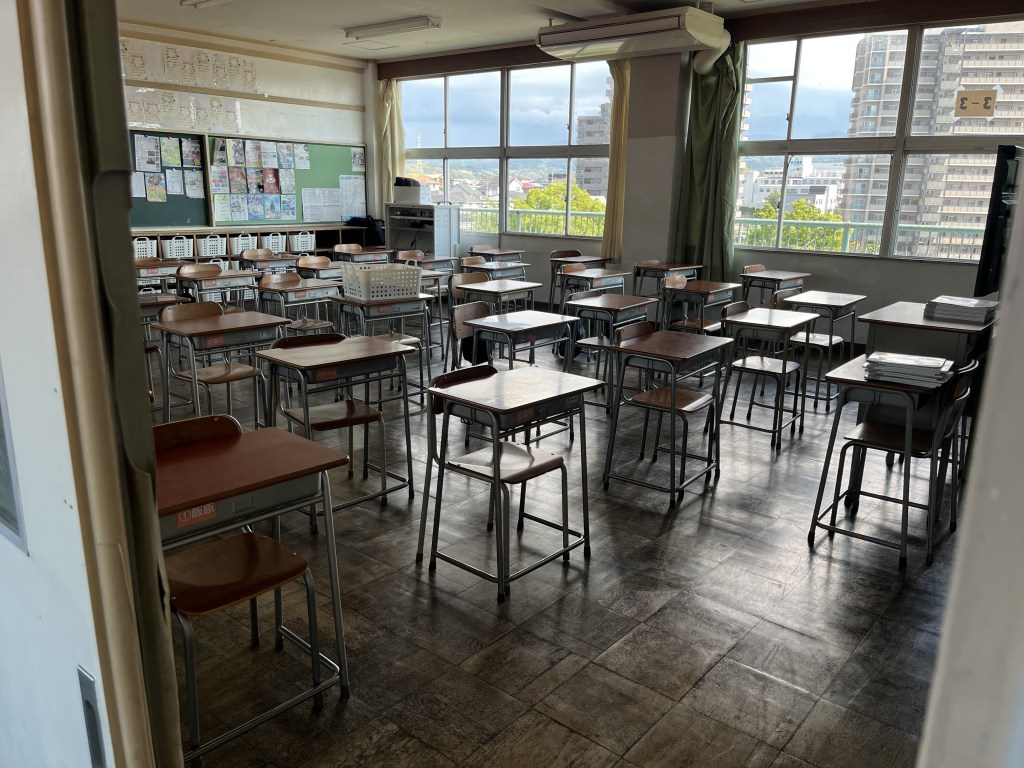
Together with a ‘door craftsman’, as far as I could gather from my broken Japanese, he carried out the necessary measurements on 24 August. After this, the right materials and parts could be sought out, and the quote for the local council could be drawn up. In the days—even weeks—that followed, I occasionally heard Hiromasa on the phone discussing this job with the client. Apparently, arranging something as plain as replacing a door doesn’t go smoothly in Japan. It really needs to be done as cheaply yet high-quality as possible, and to guarantee that, there is a lot of back-and-forth calling. To be continued in September.
The second job worth mentioning is a direct result of the Japanese TV show broadcast on 17 August. Hiromasa was, naturally, featured as a tatami master, as was the round tatami mat he made for Uniqlo earlier this year. A viewer of the programme had noticed the round tatami mat and saw Hiromasa as the perfect person to execute another unconventional tatami. This client, Yoshikawa-san, lived not far from Izumi, namely in Sakai, and is himself a gifted traditional gardener. A true craftsman as well. In a few days, Hiromasa was going to take me to the location of Yoshikawa-san’s special project for the crucial initial measuring work.
Very slowly, movement seems to be returning to the temporarily stalled machine. August has already come to an end, and we are now well past the midpoint of summer. Autumn is coming into view, and the rediscovery of familiar possibilities, along with meeting interesting new people, keeps the momentum going. With Hiromasa’s new tatami project and the inevitable arrival of autumn, September promises to be a fine, special month.


Leave a Reply